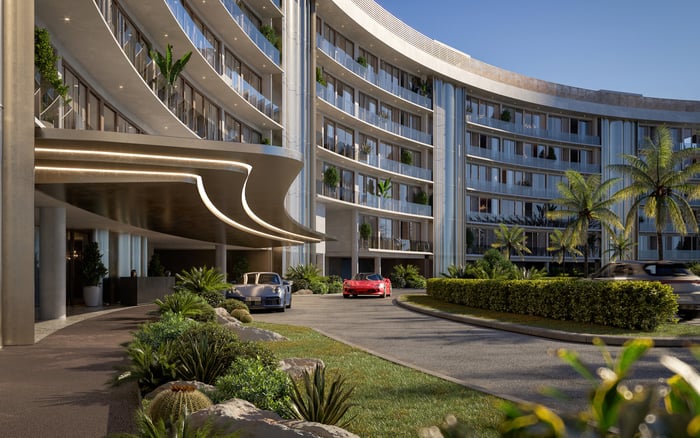
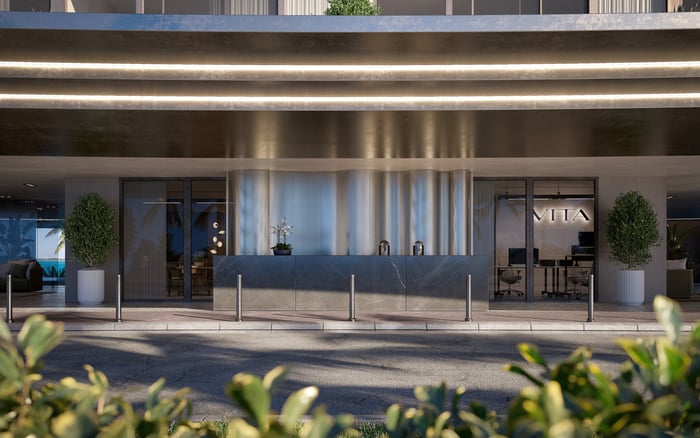
An editorial view of Grove Isle as a quiet luxury address for buyers arriving from New York and California, with emphasis on privacy, restraint, waterfront calm, and long-term livability.
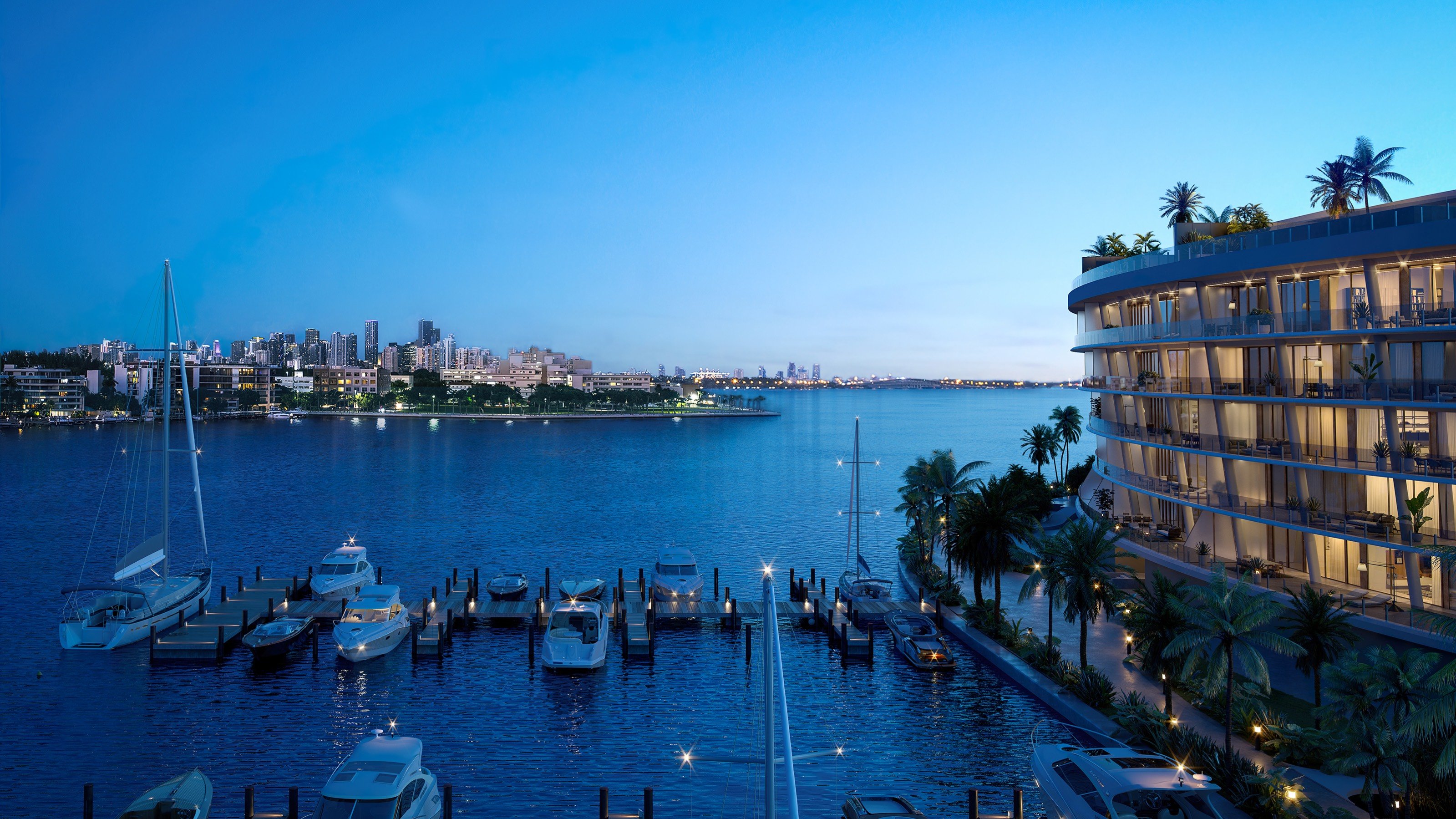
Grove Isle is not the obvious Miami answer for every luxury buyer, and that is precisely its appeal. In a market often defined by height, branding, and architectural volume, the Grove Isle conversation is quieter. It centers on arrival, privacy, water, mature landscape, and the ability to live well without announcing the fact.
For buyers arriving from New York and California, that distinction matters. Many are not simply relocating for sunshine. They are recalibrating daily life after years in markets where privacy, convenience, and access often come with constant friction. The most sophisticated among them are not seeking a louder version of what they left. They want a softer landing: elegant, secure, connected, and deliberately understated.
That is the quiet luxury case for Grove Isle. It is less about spectacle than composition. The right buyer recognizes the value of restraint, of a setting that feels removed without being isolated, and of a residential rhythm that privileges calm over performance.
New York and California migration matters because it brings a different standard of expectation to South Florida. These buyers tend to understand density, service, architecture, and scarcity. They are accustomed to paying for neighborhoods, not just square footage. They often value time more than theater.
In that context, Grove Isle is compelling because it does not need to compete with the region’s most visible towers. Its logic is more residential. The buyer is not necessarily seeking the tallest building, the busiest amenity deck, or the most photographed lobby. The buyer is weighing privacy, city access, waterfront atmosphere, and the ability to host family without living in a resort corridor.
For this audience, quiet is not absence. Quiet is control. It means a home environment that can support business calls in the morning, dinner outdoors in the evening, and a weekend pace that does not require escaping the address itself.
Within the broader Coconut Grove conversation, Grove Isle occupies a distinct lane. The appeal is not simply proximity to the Grove lifestyle, but the ability to enjoy a more composed residential setting while remaining connected to the cultural, dining, boating, and family-oriented rhythms that make the area enduring.
Coconut Grove has long carried an identity apart from Miami’s more vertical districts. It suggests shade, walkability in pockets, bay breezes, and an old-world subtropical ease. Grove Isle extends that sensibility in a more private direction. It is for the buyer who wants the Grove, but not always the full visibility of the Grove.
This is where the language of quiet luxury becomes practical. It is not minimalism for its own sake. It is the editing of daily experience. Less exposure. Fewer transitions. More emotional ease. A home that feels like a retreat, without requiring a retreat from Miami.
Quiet luxury in South Florida is often misunderstood. It does not mean plain. It means intentional. It is found in the line of a terrace, the quality of light across a living room, and the way a residence handles guests, staff, pets, cars, deliveries, and the private routines of a high-functioning household.
On Grove Isle, the buyer is likely to focus on the lived experience more than the promotional language. Is the arrival calm? Does the home feel protected? Is the water view part of daily life rather than a decorative claim? Does the building culture align with a resident who values discretion?
Waterview is not merely a view category here. For the quiet luxury buyer, it becomes part of the architecture of time. Morning water, evening light, and visual distance can carry as much weight as a more conventional amenity checklist.
The same is true of a marina environment, where applicable. The boating conversation in Miami can be flashy, but for many Grove Isle buyers it is more about access, ease, and continuity with a coastal lifestyle. The point is not to perform leisure. The point is to live near it naturally.
New York buyers often arrive with a finely tuned sense of neighborhood hierarchy. They know the best address is not always the most public address. They understand the premium placed on privacy, controlled access, and the ability to step out into a world that feels complete.
For them, Grove Isle can read as a South Florida expression of residential selectivity. It is close enough to the city’s energy to remain relevant, yet removed enough to feel restorative. That balance is especially important for buyers who still maintain business, family, or cultural ties in the Northeast.
The purchase is frequently not just a move. It is a portfolio decision, a family decision, and a lifestyle decision. It may involve hybrid work, seasonal use, visiting children, aging parents, or the desire to establish a Florida base that does not feel temporary. In that sense, Grove Isle’s appeal is not merely aesthetic. It is strategic.
California buyers often bring another lens: landscape, indoor-outdoor living, wellness, and informality without sacrificing quality. They may be less impressed by density for density’s sake, and more attentive to how a residence feels across the day.
For this buyer, Grove Isle can feel intuitive. The setting supports a rhythm that is both urban-adjacent and nature-aware. It allows the owner to participate in Miami without living inside the city’s most performative zones. The best version of the lifestyle feels polished but not rigid, private but not disconnected.
That is an important distinction. California migration is not only about changing states. It can be about preserving the parts of coastal living that work while gaining a different civic, financial, and cultural framework. Grove Isle offers a way to translate that sensibility into Miami terms.
The name Vita at Grove Isle naturally enters the conversation because buyers tracking the area are attentive to how new residential offerings shape perception and long-term desirability. Even when a buyer is not focused on one building alone, a notable residential project can sharpen attention around an entire enclave.
This is where boutique thinking becomes relevant. The most discerning buyers are not merely counting amenities. They are asking whether the building experience feels personal, whether scale supports privacy, and whether the address will remain emotionally desirable after the first impression fades.
Grove Isle’s strongest future appeal will likely depend on that balance: contemporary expectations paired with the discretion that made the setting compelling in the first place. If the experience becomes too loud, the thesis weakens. If it remains composed, the address can continue to speak to buyers who are tired of overexposure.
For many New York and California buyers, the phrase second home no longer implies occasional use only. It may mean a residence that can absorb longer stays, remote work, family visits, and a gradual shift in personal center of gravity.
That changes what buyers demand. A pied-à-terre can be charming with compromises. A true second base cannot. It needs storage, service, privacy, comfortable entertaining areas, strong daily functionality, and a setting that feels livable after the novelty of arrival has passed.
Grove Isle’s quiet luxury case is strongest when evaluated through that lens. It is not simply a place to escape to. It is a place that can become part of the owner’s operating system. For the buyer who wants Miami access without Miami intensity at every hour, that is a meaningful distinction.
The right approach is disciplined. Buyers should look beyond broad market narratives and focus on fit. How often will the residence be used? Is boating part of the lifestyle or merely an attractive backdrop? Is the household seeking anonymity, community, or a blend of both? Does the residence support entertaining, privacy, work, and family life with equal grace?
The quiet luxury buyer should also be careful not to over-index on trend language. Grove Isle is not compelling because quiet luxury is fashionable. It is compelling because the underlying preferences behind quiet luxury are durable: privacy, proportion, water, ease, and a sense of residential self-possession.
For migrating buyers, those qualities can be more important than the headline reasons people move. The decision is not only where to buy in South Florida. It is what kind of life the purchase is meant to protect.
Why does Grove Isle appeal to quiet luxury buyers? It offers a discreet residential sensibility, where privacy, water, and calm can matter more than visibility or spectacle.
Why do New York buyers pay attention to Grove Isle? Many New York buyers understand the value of selective settings, controlled arrival, and neighborhood character beyond square footage.
Why do California buyers respond to this setting? The appeal often lies in the blend of coastal atmosphere, indoor-outdoor ease, and a lifestyle that feels polished but not overproduced.
Is Grove Isle mainly a seasonal choice? It can serve seasonal owners, but many luxury buyers now want a second residence capable of functioning like a primary home.
How important is privacy in this market segment? Privacy is central, especially for buyers who want Miami access without the constant exposure of more public luxury corridors.
Does quiet luxury mean fewer amenities? Not necessarily. It means amenities and services should feel useful, elegant, and integrated rather than theatrical.
What should buyers compare before choosing Grove Isle? They should compare lifestyle fit, building culture, views, access, service, and how the residence supports daily routines.
Is waterfront living the main draw? Waterfront atmosphere is a major part of the appeal, but the broader value is the combination of calm, access, and discretion.
How should investors think about Grove Isle? The strongest case is tied to enduring lifestyle demand from buyers who prioritize privacy, quality, and long-term livability.
What makes the Grove Isle decision different from buying in a tower district? Grove Isle is less about urban spectacle and more about a composed residential setting that can feel removed yet connected.
For a discreet conversation and a curated building-by-building shortlist, connect with MILLION.
If branded residences are on your mind — as a home or as an allocation — we would be glad to share what we are seeing, privately.
Begin a quiet conversation