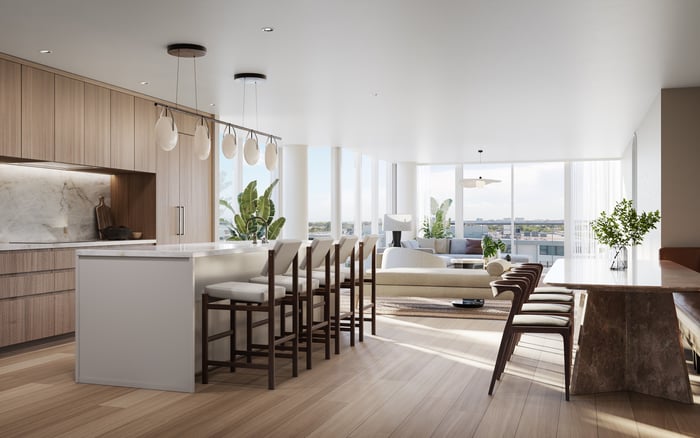
A buyer-focused comparison of Cove Residences Edgewater and The Well Bay Harbor Islands through the lenses of smart-home infrastructure, privacy expectations, service responsiveness, and lifestyle fit.
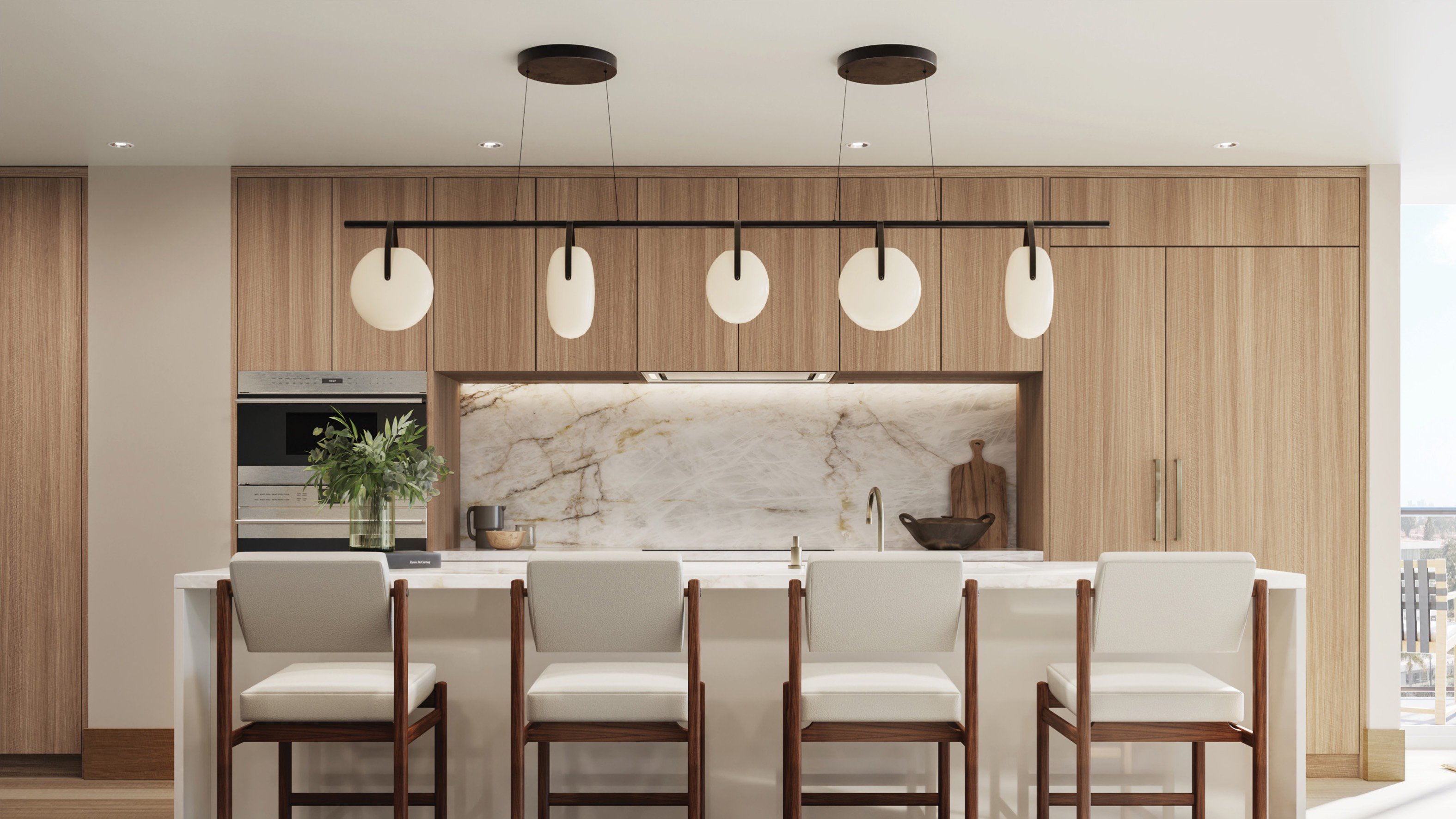
When buyers place Cove Residences Edgewater beside The Well Bay Harbor Islands, they are not simply comparing two residential names. They are weighing two expectations of daily life: one shaped by urban immediacy, the other by a more composed residential rhythm. The sharper question is not which address sounds more impressive, but which environment will better support the way an owner actually lives, works, hosts, travels, and protects personal privacy.
In South Florida’s luxury market, smart-home readiness has become a baseline conversation, but the most sophisticated buyers are moving beyond visible gadgetry. They want to understand how systems behave when a home is occupied, when staff is present, when family members use separate profiles, when guests arrive, and when something fails at 9 p.m. on a holiday weekend. That is where the lifestyle contrast becomes most revealing.
Cove Residences Edgewater will naturally be evaluated through the lens of an Edgewater lifestyle, with proximity, pace, and convenience likely central to the buyer’s priorities. The Well Bay Harbor Islands invites a different reading, one more closely tied to privacy, wellness-minded routine, and a quieter sense of arrival. Neither position is inherently superior. The right answer depends on whether the owner values high-frequency access or a softer residential cadence.
A smart residence is not defined by a tablet on the wall. It is defined by infrastructure, redundancy, interoperability, and the ease with which a household can evolve over time. For new-construction buyers, the decisive questions are practical: are the systems designed to be upgraded, are third-party devices welcome or restricted, and can the owner separate lighting, climate, shades, access, audio, security, and wellness settings without creating unnecessary complexity?
In a Cove Residences Edgewater comparison, a buyer may prioritize seamless control for a high-mobility lifestyle. That can mean fast entry, remote management, intelligent climate settings before arrival, and the ability to coordinate household staff, deliveries, and guests with minimal friction. The best version of smart-home readiness is invisible. It saves time without requiring the resident to become an IT manager.
At The Well Bay Harbor Islands, the smart-home conversation may feel more personal. The expectation is not simply convenience, but calm. Buyers may ask how technology supports sleep, air quality, lighting scenes, privacy settings, and daily rituals without turning the home into a showroom of screens. In that context, readiness is measured by restraint as much as capability.
Data privacy is now a luxury amenity, even when it is not marketed as one. A residence that knows when owners arrive, how they set the temperature, when shades open, who enters the home, and which rooms are occupied is collecting behavioral information. For prominent residents, executives, public families, and international owners, that information deserves the same seriousness as physical security.
The Edgewater buyer may be comfortable with more connected convenience, particularly if the household moves quickly between meetings, dining, travel, and guests. Yet that convenience should still be governed. Buyers should ask who can access resident data, whether building-level systems are separated from in-unit systems, how vendor access is logged, and what happens when ownership changes.
The Well Bay Harbor Islands buyer may approach the issue from a more discretion-first perspective. In a more retreat-oriented lifestyle, privacy is part of the emotional architecture. The owner may care less about maximum automation and more about control: what is shared, what is stored, what is deleted, and what remains purely local to the residence.
Data privacy also extends to service culture. A well-trained team understands that discretion is not silence alone. It is the disciplined handling of schedules, names, preferences, arrivals, vendors, family members, and recurring habits. The best buildings make privacy feel effortless because protocols are clear before a sensitive situation arises.
Service responsiveness is the quiet metric that can separate a beautiful building from a genuinely livable one. In luxury real estate, the distinction is not simply whether someone answers the phone. It is whether the response is informed, proportionate, discreet, and resolved without the owner having to repeat the same request.
An Edgewater residence may be judged by speed and coordination. The owner who chooses this setting may value an efficient service chain, rapid communication, and immediate support around access, maintenance, transportation, guests, and household logistics. Responsiveness here is closely linked to momentum. The property should reduce friction in a fast-moving week.
The Well Bay Harbor Islands may be judged more by anticipation. The owner may expect fewer interruptions, more intuitive timing, and a service rhythm that protects quiet. In this lifestyle, responsiveness can mean knowing when not to intrude. It can mean resolving a request while preserving the feeling of retreat.
This is where boutique expectations often become important. A smaller-feeling service culture, whether in scale or attitude, can create a stronger memory of personal preference. But boutique only matters if the team has the tools, authority, and training to act. Warmth without execution is not service. Technology without judgment is not hospitality.
The location contrast also influences how residents perceive technology and service. Edgewater suggests a more connected urban frame, where convenience and access tend to matter deeply. Buyers may focus on how easily the residence supports daily movement, how quickly staff can coordinate practical needs, and whether digital systems make the home feel ready the moment they arrive.
Bay Harbor Islands suggests a more residential pause. Bay Harbor is also a shorthand many buyers use when describing a preference for a quieter island setting without fully withdrawing from the broader Miami orbit. In that environment, technology should feel less like command and more like comfort. The systems should enhance privacy, not advertise themselves.
Waterview considerations can also influence the emotional read of both choices. Buyers often associate water, light, and outlook with restoration, but the supporting systems still matter. A home can have a serene view and still feel operationally frustrating if access control, climate management, vendor coordination, or after-hours response is weak.
The deeper point is that lifestyle is not only visual. It is procedural. It is how the home opens, how it cools, how it protects information, how staff communicate, how maintenance is handled, and how much attention the owner must spend to make everything function as intended.
The most effective tour is not limited to finishes. Buyers comparing Cove Residences Edgewater and The Well Bay Harbor Islands should ask to understand the technology ecosystem in plain language. What is standard? What is optional? What can be customized? What happens if a preferred vendor changes? How are updates handled? What is the resident’s control versus the building’s control?
Privacy questions should be equally direct. Who sees access logs? How are guest credentials managed? Can staff permissions be temporary? Are resident preferences visible across departments? Can the owner opt out of certain digital conveniences without losing essential service? These questions are not confrontational. They are part of modern luxury due diligence.
Service questions should be framed around real-life scenarios. A late arrival. A visiting family member. A recurring wellness appointment. A vendor who needs access while the owner is abroad. A system malfunction before guests arrive. The answers will reveal whether the service culture is scripted or genuinely responsive.
For the right buyer, Cove Residences Edgewater may feel more aligned with immediacy, movement, and connected urban living. For another, The Well Bay Harbor Islands may feel more aligned with restraint, privacy, and a service rhythm that supports personal restoration. The smartest purchase is the one where technology, discretion, and response all match the owner’s private tempo.
Which residence is better for smart-home buyers? Neither should be judged by devices alone. Buyers should review infrastructure, update pathways, resident controls, and support protocols.
Why does data privacy matter in a luxury residence? Connected homes can reveal patterns around access, comfort, guests, and daily routines. Discretion now includes digital as well as physical privacy.
Is Edgewater more suited to a fast-paced lifestyle? Edgewater is commonly evaluated through an urban lens, where access and convenience can be central. Buyers should confirm that service and systems support that rhythm.
What makes The Well Bay Harbor Islands different in this comparison? The Well Bay Harbor Islands is best assessed through a calmer, privacy-conscious lifestyle lens. The key is whether its service and technology support that expectation.
Should buyers prioritize automation or simplicity? The best answer is usually controlled simplicity. Automation should reduce effort without creating dependence on complicated interfaces.
What service questions should be asked during a tour? Ask how requests are tracked, escalated, completed, and protected for privacy. Real scenarios reveal more than general promises.
How should staff access be handled in a smart residence? Staff access should be permission-based, time-sensitive, and easy to revoke. Owners should understand who controls those permissions.
Can a wellness-oriented home still be highly connected? Yes, if technology supports comfort without intrusion. The experience should feel calm, not constantly managed by screens.
What is the biggest mistake buyers make in this comparison? Many focus on visible finishes while underestimating operations. Service responsiveness and privacy protocols shape daily satisfaction.
How should a buyer make the final choice? Choose the residence whose systems, staff culture, and neighborhood rhythm match daily life. The right fit should feel intuitive and durable.
For a discreet conversation and a curated building-by-building shortlist, connect with MILLION.
If branded residences are on your mind — as a home or as an allocation — we would be glad to share what we are seeing, privately.
Begin a quiet conversation