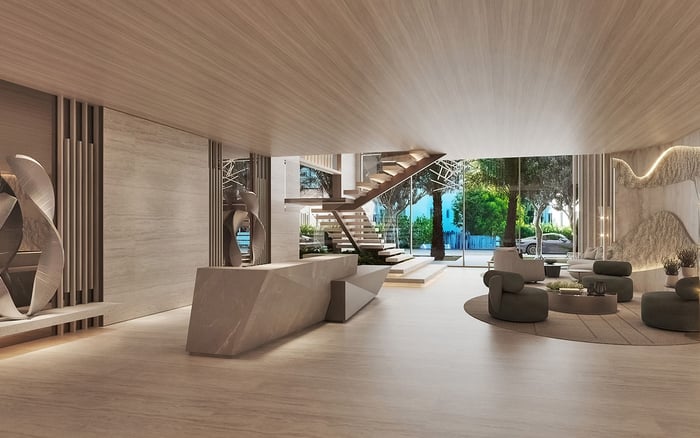
A refined look at why backup cellular routers belong in the modern South Florida luxury home, not as visible gadgetry, but as quiet infrastructure for continuity, security and service.

The most convincing luxury homes are increasingly defined by what never needs to be discussed. Doors open as expected. Cameras remain reachable. Climate systems respond before discomfort is felt. Lighting, shades, elevators, gates, irrigation, entertainment, access control and remote management all depend on a layer of connectivity usually hidden in a closet, rack room or low-voltage cabinet.
That is why the backup cellular router deserves a more serious place in the luxury real estate conversation. It is not a decorative upgrade, and it is rarely the feature that sells a residence in a glossy presentation. Yet it can be the difference between a home that feels fully managed and one that becomes unexpectedly manual the moment the primary internet connection is unavailable.
Quiet luxury is not about visible complication. It is about invisible competence. A better backup cellular router fits that philosophy precisely.
For a casual household, an internet interruption may mean inconvenience. For a fully automated South Florida residence, it can touch almost every system the owner expects to behave elegantly. Security alerts, smart locks, service access, climate checks, pool controls, leak sensors, voice systems and remote cameras all become less useful when the home cannot communicate reliably.
At the ultra-premium level, homes are also occupied in more fluid ways. Owners may travel frequently. Family members may arrive separately. Household staff, property managers, designers, private chefs, maintenance teams and security professionals may need access without the owner being physically present. In that world, connectivity is not simply entertainment infrastructure. It is operational infrastructure.
The best backup cellular routers are selected and installed with that reality in mind. They do not make technology more conspicuous. They allow the household to continue behaving normally when the main connection does not.
The word to understand is failover. In a well-designed network, the home uses its primary internet service under ordinary conditions. If that service drops, the router can shift essential traffic to a cellular connection, allowing selected systems to remain online. When the primary service returns, the network can revert without requiring the owner to intervene.
The luxury distinction is not merely having a cellular device somewhere in the home. It is whether the backup path has been thoughtfully integrated. Does the system prioritize essential functions over nonessential traffic? Are security devices, access systems and management tools treated differently from streaming and guest usage? Is the backup unit mounted where it can receive a strong signal? Is there a plan for power continuity, ventilation and remote monitoring?
These are not glamorous questions, but they are deeply aligned with the expectations of a high-service residence. A home that quietly protects its own continuity feels more composed.
Across Brickell, Miami Beach, Sunny Isles, Coconut Grove, Palm Beach and Fort Lauderdale, luxury buyers are evaluating residences that depend on increasingly sophisticated technology. High-rise homes may rely on building systems, private elevator access, smart package rooms and app-based permissions. Waterfront estates may layer gates, cameras, docks, landscape systems and separate service areas. Larger residences may include multiple network zones, detached structures, wellness spaces and entertainment suites.
A backup cellular router should be considered in relation to the way the property actually lives. A pied-à-terre with a concise automation package may require a focused solution for security, access and climate. A staffed estate may need a more robust approach, with defined priorities for cameras, gates, environmental sensors and management interfaces. A residence with frequent guests may require separation between owner, staff and visitor networks, so backup capacity is not consumed by the wrong traffic at the wrong time.
The correct question is not simply, “Does the home have backup internet?” The better question is, “Which systems remain useful if the primary connection is down?”
A better backup cellular router is part of a system, not a loose accessory. It is placed with intention, connected to the main network cleanly and configured around the household’s hierarchy of needs. The owner should not need to move equipment, reset devices or call several vendors to understand what is happening.
In a refined installation, the router is typically supported by professional documentation. The property manager or technology contractor should know where it is, how it is powered, which cellular service it uses, what devices depend on it and how alerts are handled. The owner does not need to master the technical architecture, but the home’s support team should be able to explain it in plain language.
Discretion also matters. Visible cables, exposed consumer equipment and improvised placement undermine the point. The most elegant solution is the one that works consistently from the background, with adequate signal, proper organization and a service plan that matches the home’s expectations.
For buyers, backup connectivity belongs in the same conversation as lighting control, security, generator planning, audiovisual design and low-voltage infrastructure. It is easiest to address before a renovation is complete, before millwork is closed and before a household becomes dependent on a patchwork of temporary solutions.
Ask whether the residence has an integrated cellular failover strategy. Ask what happens to cameras, locks, thermostats, entry systems and leak sensors if the main internet connection is unavailable. Ask whether the system has been tested. Ask who receives alerts. Ask whether the owner network, staff network and guest network are separated. Ask whether the router is merely present or actually configured for the way the home is used.
For sellers and developers, the same thinking can support a more polished presentation. Buyers rarely want a long technical lecture. They do appreciate knowing that the residence has been planned with continuity, privacy and operational intelligence in mind.
The strongest case for a backup cellular router is not fear. It is composure. A sophisticated home should not feel brittle. It should have layers. If one system pauses, another should preserve the essential experience long enough for service to be restored or for a professional to respond.
This is particularly important for owners who expect the property to be managed with discretion. They may not want notifications for every small event, but they do want the right people to know when something requires attention. Backup connectivity helps preserve that chain of awareness.
In the end, the router is not the luxury. Continuity is the luxury. The ability to leave the residence, cross time zones, welcome guests, authorize access and trust that core systems remain reachable is part of what separates a merely expensive home from an intelligently prepared one.
What is a backup cellular router? It is a router that can use a cellular connection as a secondary internet path when the primary home connection is unavailable.
Is this the same as using a phone hotspot? No. A proper backup router is integrated into the home network and can support selected systems without relying on an owner’s phone.
Why does it matter in a luxury residence? Luxury homes often depend on connected systems for security, access, climate, lighting and remote management, so continuity has practical value.
Should every smart device stay online during failover? Not necessarily. Essential systems should be prioritized, while nonessential entertainment or guest traffic may be limited.
Where should the router be installed? It should be placed where it can receive a reliable cellular signal while remaining cleanly integrated into the home’s network infrastructure.
Can a backup cellular router improve security? It can help keep security-related systems reachable when primary service is interrupted, provided the network is configured correctly.
Who should manage the system? A qualified technology professional, property manager or low-voltage specialist should document and monitor the installation.
Should buyers ask about this during due diligence? Yes. Buyers should ask which systems remain operational if the primary internet connection is unavailable.
Is this only for large estates? No. Condominiums, pied-à-terres and townhomes can also benefit when access, climate and security systems are remotely managed.
What is the quiet-luxury takeaway? The best technology is often the technology the owner never has to think about because it simply keeps the residence composed.
If you'd like a private walkthrough and a curated shortlist, connect with MILLION.
If branded residences are on your mind — as a home or as an allocation — we would be glad to share what we are seeing, privately.
Begin a quiet conversation