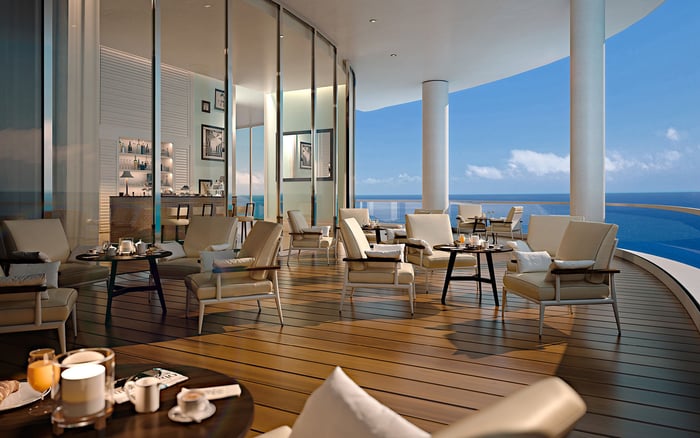
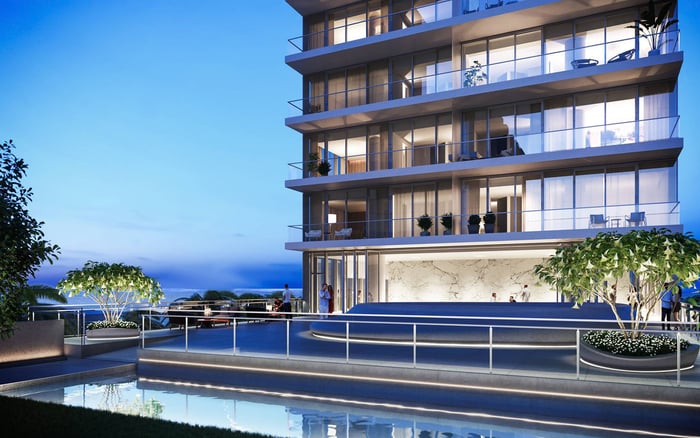
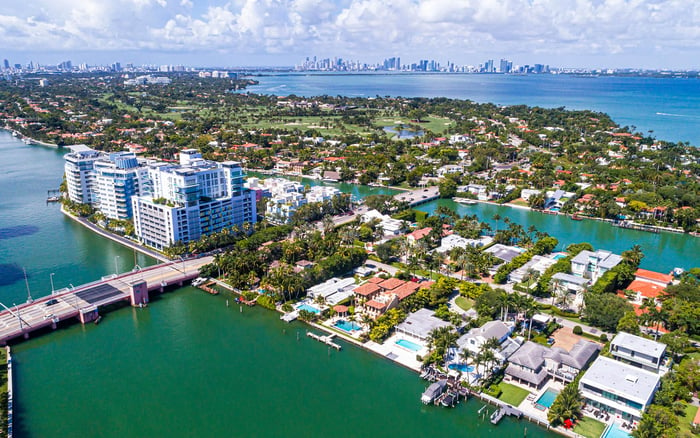
A buyer-focused look at how public, private, and hybrid restaurant access can alter the true cost, privacy profile, and daily experience of South Florida oceanfront living.
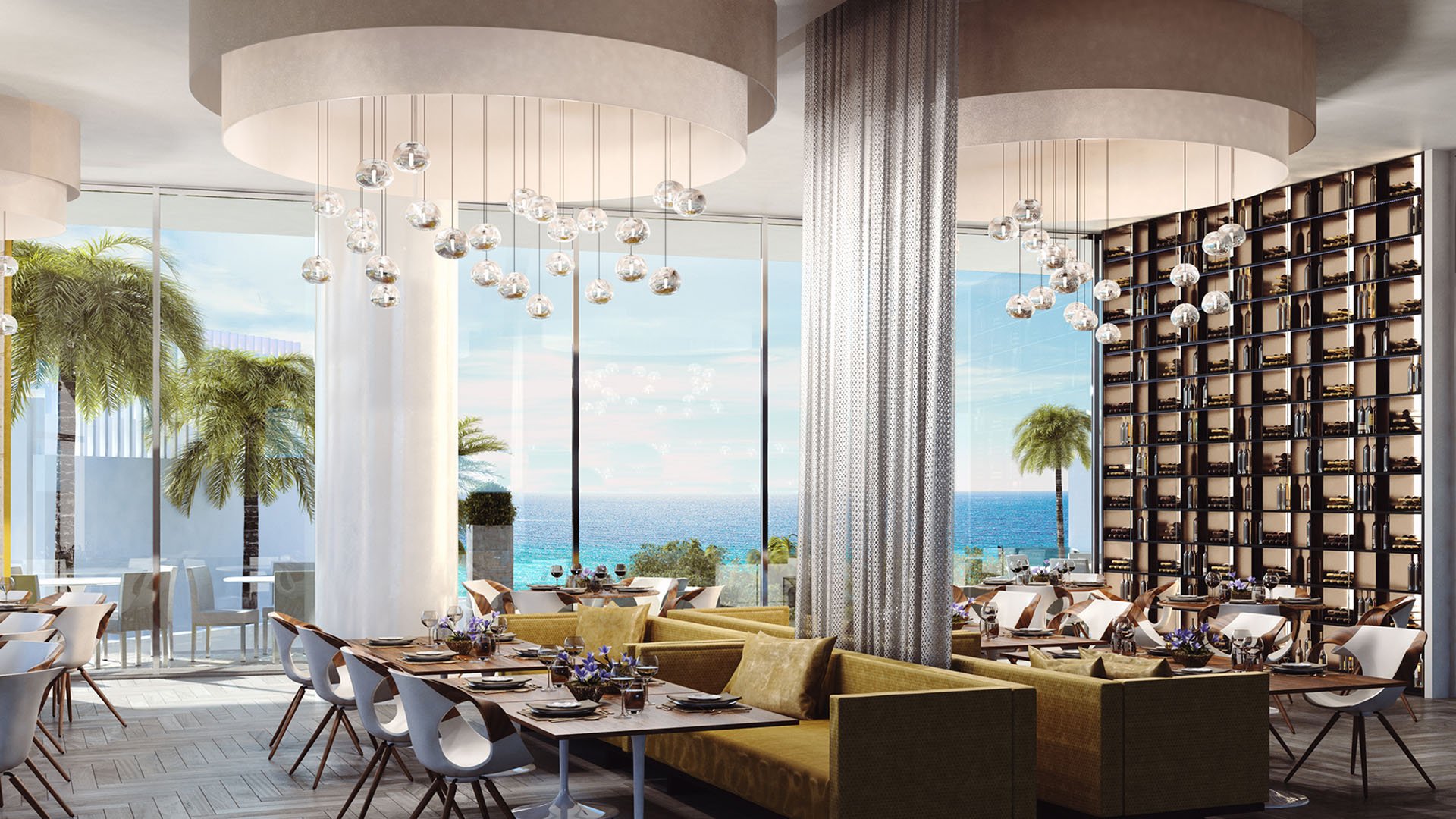
In South Florida, the oceanfront residence is no longer judged only by ceiling height, terrace depth, arrival sequence, or the quality of beach service. Increasingly, buyers study the hospitality layer: who serves breakfast, who pours the evening Champagne, who can reserve a table, and who is allowed through the door.
That last point can be more consequential than it first appears. A restaurant reserved for residents carries one cost profile. A restaurant that welcomes nonresidents carries another. A hybrid venue, with resident privileges alongside a public dining room, sits somewhere in between. The distinction can influence staffing, security, insurance, valet operations, licensing, noise management, and the intangible but powerful question of privacy.
For a buyer comparing oceanfront residences in Miami Beach, Sunny Isles Beach, Fort Lauderdale Beach, Pompano Beach, Surfside, Bal Harbour, or Hallandale Beach, restaurant access should be treated as part of the real cost of ownership, not merely a lifestyle flourish.
The first model is residents-only dining. It is usually the cleanest from a privacy perspective because the building controls access tightly and demand is more predictable. The tradeoff is that the resident body may be responsible for supporting a service that cannot rely on outside revenue. If the restaurant is underused, owners may still feel the expense in the operating budget.
The second model is public or nonresident-access dining. This can give a property the pulse of a private resort and a more social atmosphere. It may also allow the restaurant to operate with a broader customer base. Yet outside traffic requires discipline. Nonresident guests need arrival protocols, host control, elevator separation if applicable, restroom access, parking or valet capacity, and clear boundaries between the dining venue and residential areas.
The third model is hybrid. A building may offer a public-facing venue while preserving resident-only lounges, private dining rooms, beach clubs, or reserved seating. This can be the most nuanced arrangement, and often the one that requires the closest reading of the governing documents. The issue is not simply whether outsiders can dine there. It is how they arrive, where they wait, which spaces they can see, and whether resident access is truly protected at peak hours.
Restaurant access can affect ownership cost in direct and indirect ways. Direct costs may include staffing, security, cleaning, elevator oversight, access-control systems, pest control, waste handling, insurance, licensing support, and valet or parking coordination. Indirect costs can be subtler: additional wear on common areas, more complex staffing schedules, more management time, and a greater need to enforce rules.
A residents-only restaurant may feel calmer, but it still requires labor and operational consistency. A public restaurant may create revenue opportunities, but it can also require infrastructure that a purely private building might not need. Neither model is inherently better. The important question is whether the cost and revenue logic is transparent.
Buyers should ask whether the restaurant is part of the condominium budget, a separate commercial component, a hotel operation, a leasehold arrangement, or an amenity subsidized by owners. They should also ask who bears shortfalls, who benefits from profits, who controls menu pricing, and who decides operating hours.
In the ultra-premium market, privacy is not an abstract preference. It is a form of value. Some buyers want the hush of a residential lobby where every face is familiar to staff. Others want the energy of a destination dining room downstairs, provided the residential experience remains protected.
That choice can influence resale. A discreet buyer may pay more for a building where the restaurant is private and access is tightly governed. A different buyer may value the convenience and prestige of a lively hospitality setting. In branded residences and condo-hotel structures, the restaurant may be part of the broader resort identity, while in boutique condominiums the dining amenity may be designed primarily for owner use.
When evaluating properties, the correct question is not, “Is there a restaurant?” It is, “Whose restaurant is it in practice?”
The same restaurant-access model can feel different by location. In Miami Beach, an oceanfront or waterfront dining venue may interact with a dense hospitality environment, visitors, nightlife, and a strong culture of reservation-driven social life. A buyer looking at The Perigon Miami Beach, for example, should think carefully about how a building’s amenity philosophy aligns with the desire for privacy, service, and ease of arrival.
In Sunny Isles Beach, vertical oceanfront living often emphasizes large residences, dramatic views, and resort-caliber services. Buyers comparing buildings such as St. Regis® Residences Sunny Isles should study whether any food-and-beverage experience is designed as a resident sanctuary, a broader hospitality venue, or a layered combination.
Fort Lauderdale Beach brings a different rhythm, with waterfront leisure, boating culture nearby, and a growing appetite for polished residential hospitality. At projects such as Four Seasons Hotel & Private Residences Fort Lauderdale, the buyer’s due diligence should focus on how hotel-style services and private residential expectations are separated, shared, or prioritized.
Farther north, Pompano Beach is becoming more relevant to buyers who want oceanfront newness with a different pace. In that context, a project like W Pompano Beach Hotel & Residences invites a practical review of how hospitality energy is balanced with owner comfort.
Restaurant access is often described beautifully in sales presentations, but the controlling details live elsewhere. Buyers should review declaration language, association budgets, shared facilities agreements, easements, commercial-unit rights, hotel or brand agreements if applicable, and rules governing guests, reservations, deliveries, events, music, signage, loading, and operating hours.
Parking is especially important. If nonresidents can dine on site, the building needs a credible plan for vehicles, rideshare arrivals, valet staging, and special-event surges. Security is equally central. The most elegant arrangement is one in which nonresident diners enjoy a polished arrival while never drifting into residential corridors, elevators, pools, beach areas, or owner lounges without permission.
Insurance should also be reviewed. A restaurant open to outside guests can change the risk profile. Liquor service, late hours, kitchen operations, and event use may all require careful allocation of responsibility. The question is not whether these issues are manageable. In a well-run property, they often are. The question is whether the owner understands who pays when management becomes more complex.
The most expensive restaurant model is not always the one with the largest budget line. It is the one that misaligns with how the owner actually lives.
A seasonal owner who entertains frequently may find enormous value in having a sophisticated restaurant that can host friends, family, and business guests without leaving the property. A full-time resident seeking serenity may care less about culinary theater and more about acoustic separation, elevator privacy, and guaranteed seating. An investor may focus on whether restaurant access supports rental appeal, while a long-term owner may prioritize the building’s atmosphere over any perceived income offset.
This is why the true cost of a South Florida oceanfront residence must include more than maintenance fees, taxes, insurance, and assessments. It includes friction. How long does it take to get a car on a Friday evening? Can residents secure a table during season? Are private areas genuinely private? Does the lobby feel residential or transactional? Are staff serving owners first, or managing a public venue first?
In luxury real estate, these details compound. Over years of ownership, small operational choices become part of the property’s identity.
Before purchasing, buyers should ask direct questions. Is the restaurant private, public, or hybrid? Who owns it? Who operates it? Can nonresidents reserve tables? Are there event rights? Are residents guaranteed priority? How are deficits and profits handled? What spaces can outside guests access? How are valet, deliveries, trash, and kitchen exhaust managed? What happens if the operator changes?
The best buildings answer these questions with clarity rather than charm. They make access feel effortless because the legal, physical, and staffing architecture has already been resolved. For the buyer, that clarity is part of the asset.
Why does restaurant access affect the cost of ownership? It can influence staffing, security, insurance, parking, cleaning, and management needs. Those costs may appear directly in budgets or indirectly in the daily operation of the property.
Is a residents-only restaurant always better? Not always. It may offer more privacy, but owners may carry more of the operating burden if the venue has no outside customer base.
Can a public restaurant increase value? It can appeal to buyers who want hospitality energy and convenience. The value depends on how well public access is separated from private residential life.
What is a hybrid restaurant model? A hybrid model allows some nonresident access while preserving certain resident-only spaces or privileges. The details should be confirmed in the building documents.
What should buyers review before purchasing? Buyers should review budgets, rules, shared facilities agreements, commercial rights, event policies, parking plans, and access-control procedures.
Does restaurant access matter more in oceanfront buildings? It often feels more important because beachfront settings attract social use, guests, and hospitality expectations. The impact depends on layout and management.
How does this apply to branded residences? Branded residences may include a stronger hospitality layer, so buyers should understand which services are private, shared, or public-facing.
Is condo-hotel ownership different? Condo-hotel settings can involve hotel-style food-and-beverage operations. Buyers should study how residential privileges are protected within that structure.
Can restaurant noise become an issue? It can, particularly with outdoor seating, music, events, or late hours. Acoustic design and operating rules are essential.
What is the simplest rule for buyers? Treat the restaurant as part of the ownership structure, not a decoration. Its access model can shape both carrying costs and daily quality of life.
For a tailored shortlist and next-step guidance, connect with MILLION.
If branded residences are on your mind — as a home or as an allocation — we would be glad to share what we are seeing, privately.
Begin a quiet conversation