A discreet, buyer-focused case for treating the dog-wash room as a serious luxury utility space in South Florida homes, where finish, flow, storage, and maintenance can shape daily comfort as much as showpiece amenities.
The best luxury amenities are not always the most theatrical. Some are quiet, practical, and nearly invisible until daily life makes them indispensable. The dog-wash room belongs in that category. In South Florida, where terraces, gardens, marinas, sidewalks, sand, and sudden rain can all be part of a pet’s routine, a better place to rinse, dry, groom, and organize the family dog is not a novelty. It is considered residential infrastructure.
A serious dog-wash room does more than protect the primary bath from muddy paws. It separates pet care from entertaining spaces, helps preserve delicate flooring, gives household staff or owners a predictable workflow, and supports a cleaner transition between outdoors and indoors. For buyers who live with dogs, it can be as meaningful as a generous pantry, a secondary laundry zone, or a well-planned service entry.
This is the practical luxury case: a dog-wash room is not indulgence for its own sake. It is a way to reduce friction in a home expected to perform beautifully every day.
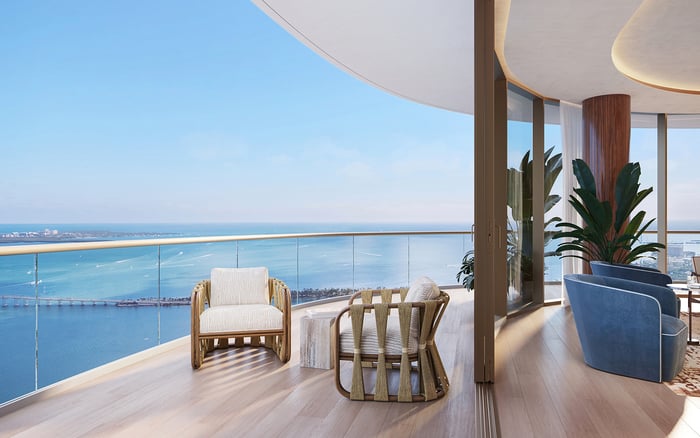
South Florida living is unusually porous. Even in vertical residences, life often moves between lobby, elevator, beach path, pool deck, balcony, waterfront promenade, or private garden. In single-family homes, the transition can be even more direct, from lawn to loggia to family room in seconds. Dogs bring that outdoor life with them.
A thoughtful pet-care zone recognizes this rhythm. It gives owners a place to rinse away salt, sand, grass, and street dust before they reach rugs, stone floors, upholstery, or bedroom corridors. It also avoids the awkwardness of washing a dog in a guest bath or bending over a shower never intended for the task.
In a buyer brief, pet access, outdoor space, construction type, neighborhood, and terrace criteria can all matter because the strongest residences are judged by how comfortably they support real routines. A pet-friendly building or home is not only one that permits dogs. It is one that anticipates the way dogs move through a household.
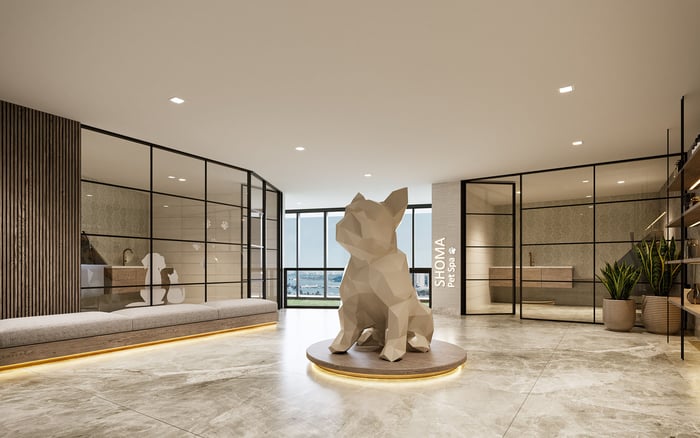
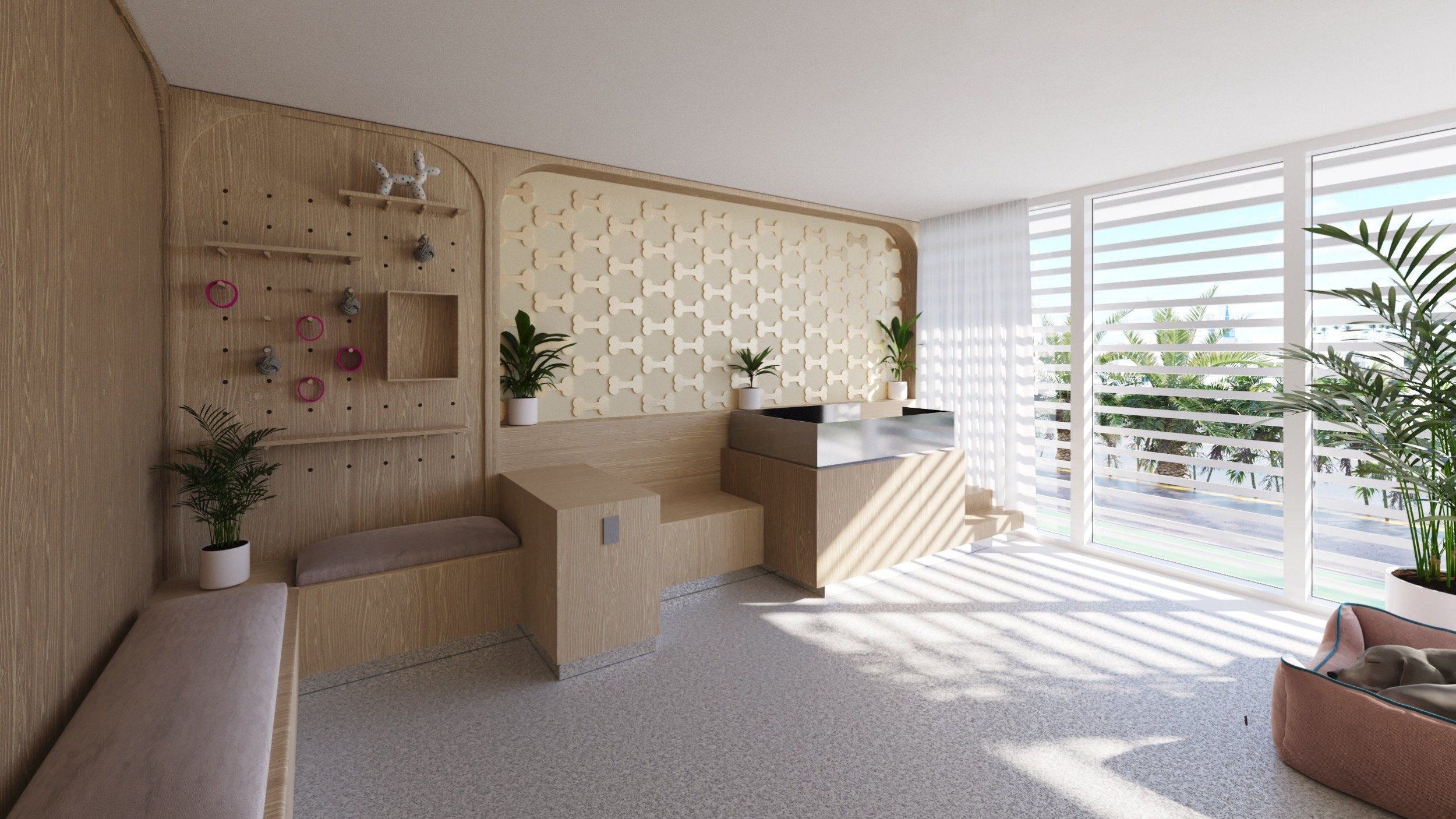
A dog-wash room should not feel like a miniature spa installed for marketing photography. The best versions are disciplined. They are placed near the point of entry, scaled for the animal, and finished for repeated use. A raised wash platform can reduce strain for smaller and medium-size dogs, while a walk-in basin may be more appropriate for larger breeds. Non-slip surfaces matter. So does a hand shower with enough reach to rinse efficiently.
Drainage is central. A beautiful room that drains poorly quickly becomes a maintenance problem. The floor should tolerate moisture, splashing, grooming residue, and cleaning products. Walls near the wash zone should be durable and easy to wipe. Cabinetry should be designed for leashes, towels, shampoos, brushes, supplements, waste bags, and travel carriers, not simply decorative storage.
Lighting also deserves attention. Grooming requires clarity, and drying requires patience. A well-lit room with a properly placed outlet, space for towels, and ventilation can turn a chore into a calm five-minute ritual. Poor planning turns it into a wet negotiation.
The dog-wash room becomes more valuable when it is connected to the right supporting spaces. Near a mudroom, it can serve the household after beach walks and garden time. Near a laundry room, it makes towels easy to wash immediately. Near a service corridor, it can keep the main entertaining axis uninterrupted. In a waterfront residence, it may belong close to the outdoor shower, garage, or side entry.
For condominium buyers, the logic is slightly different. The private residence may not have a full dog-wash room, but buyers can still evaluate whether the floor plan offers a workable pet station. Is there a secondary bath with an accessible shower? Is there a laundry closet large enough for dedicated pet storage? Is the terrace easy to clean? Does the path from elevator to unit allow a practical return from a walk without crossing the most formal living areas?
A refined home does not force every practical activity into the most visible room. It choreographs daily life so service functions feel graceful.
The dog-wash room is a test of luxury restraint. High-gloss drama may photograph well, but the room needs surfaces that can tolerate water, claws, towels, and frequent cleaning. Porcelain, textured stone, sealed surfaces, marine-minded hardware, and cabinetry with resilient finishes can all make sense when selected with care. The goal is not to make the space look clinical. The goal is to let it age quietly.
Color matters too. A pale, serene palette can work if the materials are forgiving. Darker floors can hide wear but may show mineral marks or lint. Patterned surfaces can soften the utilitarian nature of the room, provided they do not complicate cleaning. A small bench, a recessed niche, or a discreet hook rail can bring order without clutter.
Luxury buyers often understand material performance in kitchens and baths. The same eye belongs here. If a finish would feel too precious for repeated splashing, it is probably wrong for the dog-wash room.
Pet ownership comes with objects. Even minimalist households accumulate food containers, grooming tools, medications, travel bowls, coats, life jackets, towels, bedding, and seasonal items. Without a designated system, these objects migrate into kitchen drawers, garage shelves, laundry baskets, and entry tables.
A better dog-wash room absorbs that visual noise. Closed cabinets keep supplies out of sight. Open cubbies can hold folded towels. A pullout bin can organize food or cleaning products. Hooks placed at the right height can store leashes without creating a tangle. With enough counter space, the room can become a staging area before travel, vet visits, or weekend plans.
This is where the feature becomes more than a wash station. It becomes a household management zone for an important member of the family.
When touring a residence, buyers should resist treating the dog-wash room as a charming extra. It should be inspected like any other functional space. Stand where the dog would stand. Imagine entering with wet paws. Look at the turning radius. Check whether towels are within reach. Notice whether the room has ventilation, lighting, storage, and sensible flooring. Consider whether a large dog could use it without stress.
Privacy matters as well. In a home designed for entertaining, the pet-care zone should not require crossing the formal living room after every walk. In a condominium, the most important question may be whether the residence provides a dignified substitute, even if the building carries some pet conveniences elsewhere.
The test is simple: does the space make daily life easier, or does it merely photograph as an amenity? Practical luxury always favors the former.
Not every buyer has a dog, but many buyers understand the value of well-designed utility space. A dog-wash room can also serve other functions when planned intelligently. It may support gardening, beach gear, athletic equipment, children’s shoes, or household cleaning. That flexibility gives the room broader appeal than a single-purpose novelty.
The most persuasive version is not overly themed. Avoid paw-print tiles, cartoon hardware, or design choices that feel difficult to edit. A restrained, durable, beautifully proportioned utility room can be appreciated by pet owners and non-pet owners alike. If a future resident does not have a dog, the room can still function as an elegant rinse station, mudroom, or service utility area.
That is the heart of its resale argument. The dog-wash room is strongest when it reads first as excellent residential planning and second as a pet amenity.
For South Florida’s high-end buyer, the question is no longer whether a home has impressive amenities. The question is whether those amenities improve the way the home lives on an ordinary Tuesday. A better dog-wash room does exactly that. It protects finishes, respects routines, supports staff, reduces clutter, and makes the relationship between indoor elegance and outdoor living more seamless.
The most desirable homes are not simply larger or more photogenic. They are more resolved. They understand arrival, storage, movement, cleaning, privacy, and care. For households with dogs, a beautifully executed wash room is one of the clearest signs that the home was designed for real life, not just display.
Is a dog-wash room worth prioritizing in a luxury home? Yes, if dogs are part of daily life. It can protect finishes, simplify routines, and keep pet care out of primary baths and entertaining spaces.
Where should a dog-wash room be located? Ideally, it should sit near a practical entry, mudroom, garage, laundry area, or service corridor so wet paws do not cross formal rooms.
What is the most important design element? Drainage is critical, followed closely by non-slip surfaces, durable wall finishes, ventilation, and storage suited to real pet supplies.
Can a condominium residence still support good pet care? Yes. Even without a dedicated room, a smart floor plan can offer a secondary bath, laundry storage, or terrace access that makes pet routines easier.
Should the room feel decorative or purely functional? It should be both, but function comes first. The best examples are calm, durable, and consistent with the rest of the home’s design language.
What materials work best in a dog-wash room? Resilient surfaces that tolerate moisture and frequent cleaning are preferable. The room should look refined without relying on fragile finishes.
Does a dog-wash room help with resale? It can, especially when designed as a flexible utility space rather than an overly themed pet feature that only appeals to one type of owner.
How should buyers judge storage in the room? Look for space for towels, leashes, grooming tools, food items, travel accessories, and cleaning supplies without visible clutter.
Is this feature only for large homes? No. Compact residences can still benefit from a dedicated pet-care zone or a well-planned secondary space that supports rinsing and storage.
What is the best way to shortlist comparable options for touring? Start with location fit, delivery status, and daily lifestyle priorities, then compare stacks and elevations to validate views and privacy.
If you'd like a private walkthrough and a curated shortlist, connect with MILLION.
If branded residences are on your mind — as a home or as an allocation — we would be glad to share what we are seeing, privately.
Begin a quiet conversation