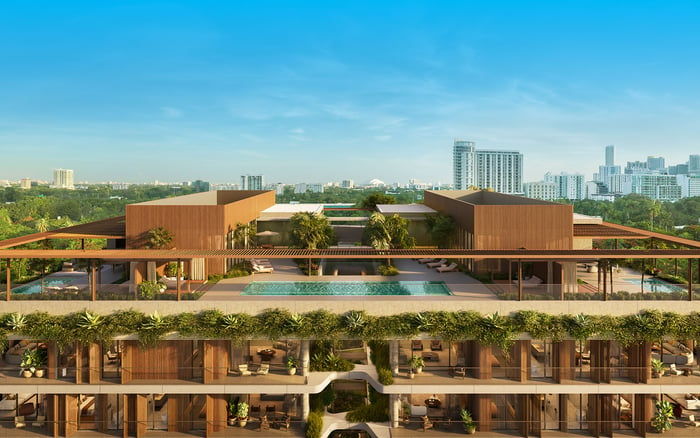
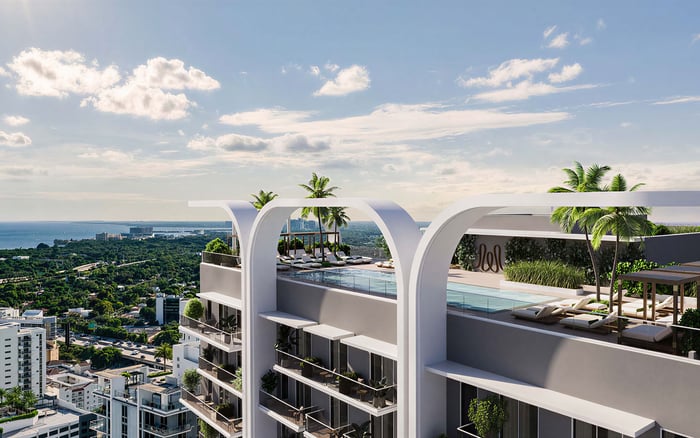
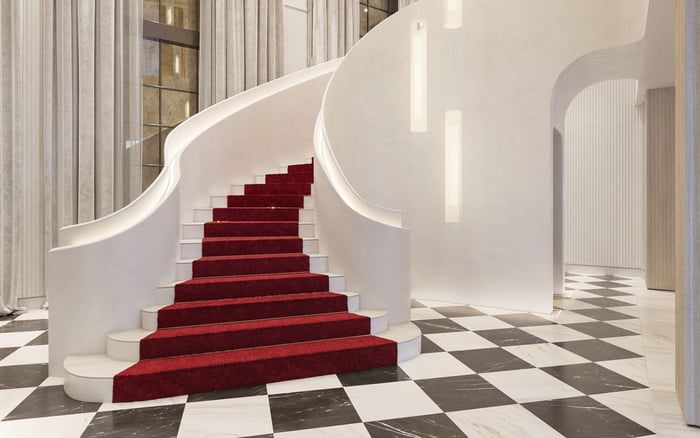
A refined buyer’s guide to evaluating terraces, summer kitchens, floor plans, privacy, materials, service flow, and long-term usability for indoor-outdoor entertaining in South Florida luxury residences.
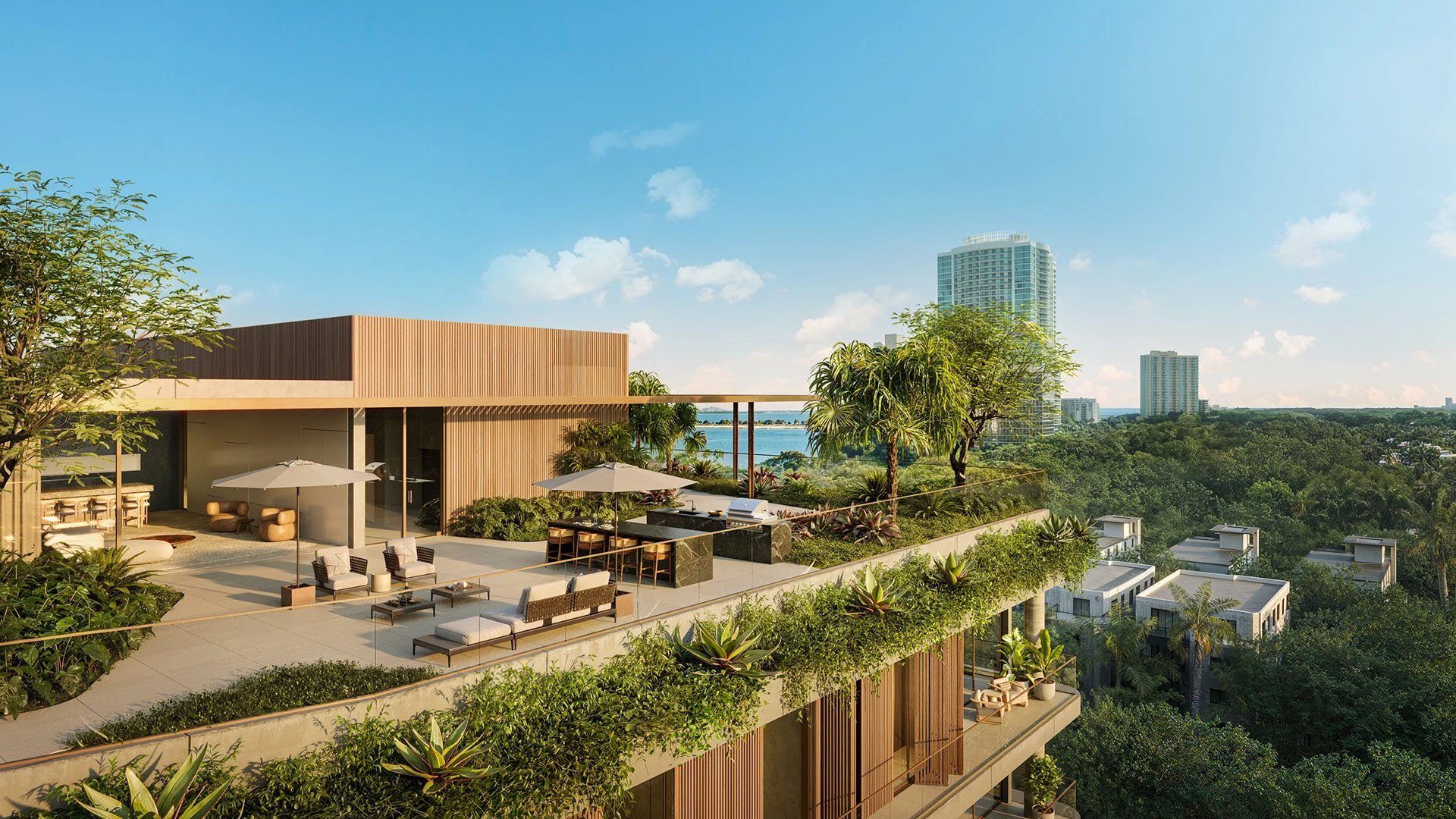
In South Florida luxury real estate, indoor-outdoor entertaining is not simply a terrace with a view. It is a choreography of arrival, circulation, shade, food service, seating, privacy, and atmosphere. The finest residences make the transition from salon to terrace feel natural, with doors that open generously, flooring that reads cohesively, and exterior spaces that function as true rooms rather than afterthoughts.
For buyers, the practical question is not whether a residence has outdoor space. It is whether that space will be used often, comfortably, and elegantly. A wide terrace may photograph beautifully yet feel exposed at midday. A compact loggia may prove more valuable if it is sheltered, well proportioned, and directly connected to the kitchen and main living areas.
The goal is to purchase a home that supports both daily rituals and formal hosting: morning coffee outside, sunset cocktails, family lunches, catered dinners, and quiet evenings when the city or water becomes the backdrop.
Views matter, but floor-plan discipline matters more. A successful entertaining residence usually begins with a clear relationship among the kitchen, dining area, living room, and outdoor space. The path from preparation to presentation should be short, intuitive, and dignified. If guests must pass through private corridors, or if service staff must navigate awkward turns, the home may feel less effortless than its finishes suggest.
Look for a main entertaining zone where doors open broadly and furniture can be arranged without blocking movement. The best plans allow several groups to gather at once: one near the kitchen, one at the dining table, one outdoors, and one in a lounge setting. This layered arrangement is especially useful in South Florida, where guests may move between air conditioning and open air throughout an evening.
Buyers comparing Brickell, waterfront enclaves, Miami Beach, and Coconut Grove should also consider how the plan suits the rhythm of the neighborhood. A high-rise residence may emphasize skyline drama and protected terraces, while a low-density home may offer deeper outdoor living and more garden adjacency.
Outdoor square footage should be judged by usability, not scale alone. Before being impressed by a large number, ask how the space can be furnished. Can it hold a dining table with chairs pulled out comfortably? Is there room for a sofa grouping that does not interrupt circulation? Is the grill or summer kitchen placed where smoke, heat, and service make sense?
A practical test is to imagine a dinner for eight, then a cocktail evening for twenty. Where do guests stand? Where are drinks served? Where do used plates go? Where can someone step aside for a private conversation? If the answers feel forced, the outdoor space may be more ornamental than functional.
Depth is often more important than length. A long, narrow balcony can be dramatic yet difficult to furnish. A deeper terrace can feel like an outdoor living room. In buyer notes, it is useful to distinguish among balcony, terrace, and pool features because each supports a different style of entertaining.
Comfort is the quiet luxury that determines whether a terrace is used weekly or only shown to visitors. Study sun exposure at the times you expect to entertain. Afternoon glare can affect seating placement, television visibility, and dining comfort. Covered areas, operable shading, and thoughtful landscaping can make outdoor space more adaptable.
Air movement also deserves attention. Some elevated homes feel breezy and fresh; others can feel overly exposed. In lower settings, privacy screens and planting may soften the experience, but buyers should not assume that every outdoor area will perform equally throughout the day.
Lighting is another essential layer. The best entertaining homes allow a terrace to transition from daytime brightness to evening intimacy. Look for subtle architectural lighting, task lighting near food preparation, and enough flexibility to avoid a single harsh setting. Sound matters as well. Water features, distance from traffic, building orientation, and interior acoustic separation can all influence the mood of a gathering.
A polished entertaining home should not require constant concern. Buyers should examine exterior flooring, cabinetry, hardware, fabrics, and railings with practical eyes. Outdoor materials need to suit sun, moisture, salt air, and frequent use. Beauty is only persuasive when it can be maintained with reasonable discipline.
Ask what is included, what is owner-installed, and what requires association approval. Built-in grills, outdoor refrigeration, planters, awnings, heaters, fans, speakers, and lighting may be subject to rules. In condominiums, the line between private enjoyment and building governance can be important. In single-family residences, the questions shift toward systems, drainage, landscape care, and long-term replacement planning.
Storage is often overlooked. Cushions, table settings, serving pieces, pool accessories, and storm-preparation items need a home. If there is no convenient storage near the entertaining area, the elegance of hosting can quickly become labor.
Indoor-outdoor entertaining depends on the kitchen even when the event feels casual. A beautiful kitchen that is isolated from the terrace may not perform as well as a simpler kitchen with excellent access. Buyers should evaluate counter space, refrigeration, pantry capacity, wine storage, and the route from kitchen to outdoor dining.
For larger gatherings, consider where catering would stage, where staff would enter, and whether guest circulation can remain separate from service movement. Residences with secondary prep areas, discreet corridors, or flexible dens can be especially useful. The point is not ostentation. It is calm.
A bar area can also elevate the experience. Whether it is a formal wet bar, a concealed beverage center, or a handsome console near the terrace doors, drink service should be placed where guests naturally gather. If the host is constantly crossing the room, the plan is working too hard.
The most desirable outdoor spaces offer atmosphere without exposure. In vertical living, study neighboring sightlines from adjacent towers, amenity decks, and nearby residences. In estate settings, consider walls, hedges, gate placement, and the distance between entertaining areas and neighboring homes.
Privacy does not always mean complete seclusion. Sometimes it means enough screening to let guests relax, enough distance to soften sound, and enough architectural framing to create a sense of enclosure. A terrace that feels like a stage may impress at first glance, but a terrace that feels like a private room will likely be used more.
Buyers should also consider how privacy changes at night. Glass becomes reflective, interiors become visible, and lighting can either protect or reveal. The strongest homes anticipate this shift.
On a second showing, slow down. Open the doors. Stand where a dining table would be placed. Check whether the threshold feels easy underfoot. Imagine carrying a tray from the kitchen. Notice whether outdoor chairs would block the view from inside. Listen for mechanical noise, street sound, or neighboring activity.
Then ask practical questions. What exterior improvements are permitted? Who maintains built-in outdoor elements? Are there limitations on grills, speakers, planters, or shade systems? What is the process for approvals? How is water managed on terraces and around pool areas? These answers can materially affect the ownership experience.
A residence with fewer dramatic gestures but better proportions, storage, shade, and service flow may outperform a more theatrical home. In true luxury, the host should never appear to be managing logistics. The architecture should do that quietly.
What is the most important feature for indoor-outdoor entertaining? Flow is the priority. The kitchen, living area, dining space, and outdoors should connect without awkward circulation.
Is a large terrace always better? No. A smaller, deeper, well-shaded terrace can be more useful than a large space that is narrow, exposed, or difficult to furnish.
Should buyers prioritize views or usability? The best residences offer both, but usability should lead the decision. A magnificent view loses value if the outdoor space is uncomfortable.
What should I ask about outdoor kitchens? Ask what is permitted, what is included, how utilities are handled, and whether association or municipal approvals may apply.
How do I evaluate privacy on a terrace? Visit at different times if possible and study neighboring sightlines, lighting, reflections, and the position of nearby amenity areas.
Are sliding doors and thresholds important? Yes. Door width, ease of operation, and threshold design shape how naturally guests move between indoors and outdoors.
What role does lighting play? Lighting determines evening atmosphere. Look for layered options rather than one bright setting for the entire outdoor area.
How should families think about pools and entertaining? Consider sightlines, seating, safety, shade, storage, and whether the pool area supports both active use and relaxed hosting.
Can a condo be as strong for entertaining as a house? Yes. A well-planned condo with generous openings, a usable terrace, and strong service flow can host beautifully.
What is the best way to shortlist comparable options for touring? Start with location fit, delivery status, and daily lifestyle priorities, then compare stacks and elevations to validate views and privacy.
If you'd like a private walkthrough and a curated shortlist, connect with MILLION.
If branded residences are on your mind — as a home or as an allocation — we would be glad to share what we are seeing, privately.
Begin a quiet conversation