A practical luxury-buyer guide to reviewing outdoor audio permissions, terrace design, neighbor sensitivity, and closing documentation before purchasing a South Florida penthouse.
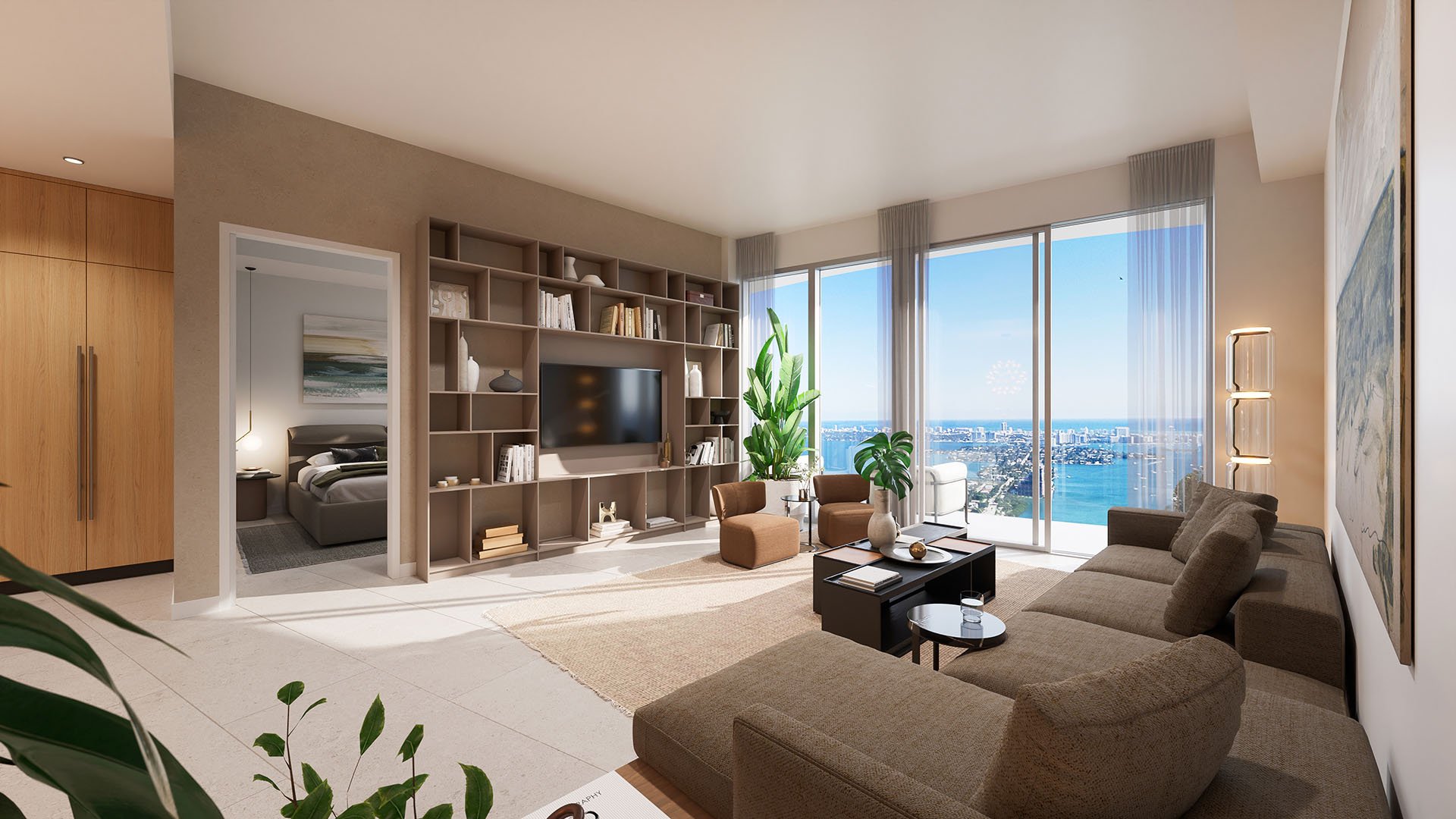
For a South Florida penthouse buyer, outdoor audio is rarely about volume alone. It is about control, discretion, privacy, and the ability to use a sky terrace or waterfront balcony without turning a refined residence into a compliance issue. The best systems are nearly invisible: directional, architecturally integrated, and calibrated to complement conversation rather than announce it to the building.
That is why outdoor audio belongs on the purchase checklist before a bid is written. A penthouse may offer the most coveted air, light, and views in the building, yet it remains part of a vertical community. Association rules, architectural review procedures, municipal noise standards, and neighbor expectations can all affect how music is installed and used. None should be treated as a minor post-closing detail.
In the upper tier of the market, this diligence is also a design question. At properties such as The Perigon Miami Beach, where outdoor living is part of the luxury premise, buyers should evaluate how terrace use, privacy, wind, and surrounding residences interact with any proposed sound plan.
Begin with the condominium declaration, bylaws, house rules, and any design or alteration guidelines. These documents may address nuisance standards, hours of use, exterior penetrations, balcony equipment, wiring, visible fixtures, contractor access, and the approval process for modifications. Even when outdoor speakers are not named directly, broader language around noise, exterior appearance, or common-element impact may still apply.
The second layer is association practice. A rule on paper is only part of the picture. Ask whether outdoor audio has been approved in other residences, whether approvals were limited to certain speaker types, and whether complaints have arisen around pool decks, rooftop lounges, or private terraces. A polished building may have a quiet culture even when the documents appear flexible.
The third layer is local regulation. South Florida municipalities can maintain their own standards for sound, disturbance, and enforcement. A buyer does not need to become a code specialist, but counsel and the closing team should confirm which rules apply to the building and whether outdoor entertainment creates any recurring risk.
For Brickell buyers considering high-rise residences such as St. Regis® Residences Brickell, the urban setting adds another dimension. The surrounding soundscape may be active, yet a building can still maintain strict internal expectations for terraces and amenity areas.
A serious buyer should ask the same questions an acoustic designer would ask. Where will people sit? Where are the nearest neighboring bedrooms? Does glass reflect sound toward another stack of residences? Is the terrace sheltered, open to wind, or wrapped around a corner? Can speakers be angled inward and set at lower output, or would the system depend on broad projection?
The most elegant installations favor restraint. Low-profile speakers, zone controls, volume limits, and app-based presets can help keep the experience personal. Subwoofers, ceiling penetrations, exposed conduits, and hard-mounted equipment should be reviewed carefully, especially where waterproofing, structural elements, or exterior aesthetics are involved.
A waterfront setting can feel private, but water and hard surfaces can carry sound in unexpected ways. Oceanfront buyers should not assume that distance alone solves the issue. At towers such as Bentley Residences Sunny Isles, the outdoor experience may be central to the lifestyle, which makes early acoustic planning even more important.
If the residence includes a plunge pool, summer kitchen, or oversized entertaining terrace, the review should account for both everyday use and event use. A dinner for six, a family afternoon, and a late-night gathering carry different risk profiles. The buyer should understand which uses are allowed, which require approval, and which are likely to create neighbor sensitivity.
South Florida is not a single audio market. Miami Beach, Brickell, Sunny Isles, Fort Lauderdale, Boca Raton, Palm Beach, and Bay Harbor each have different rhythms, densities, and buyer expectations. A boutique waterfront building may protect quiet with particular intensity. A branded tower may offer curated hospitality energy in shared spaces while still restricting private outdoor noise.
New-construction buyers have a useful opportunity: ask the sales and design teams how outdoor entertainment was contemplated from the beginning. Are terraces prewired? Are speaker locations shown in optional packages? Are there approved vendors or specifications? If the answer is vague, that is not necessarily a problem, but it means the buyer should not rely on assumptions.
At projects such as The Ritz-Carlton Residences® Pompano Beach, buyers focused on resort-style living should distinguish between amenity programming and private-residence permissions. A building may deliver an elevated social atmosphere while still requiring quiet, controlled use on individual terraces.
Resale buyers should go deeper into enforcement history. Ask whether the seller installed any audio equipment, whether it was approved, whether it will remain, and whether any complaints, notices, or fines have been issued. A beautiful system with no documentation can become a closing negotiation, an insurance concern, or a post-closing removal issue.
Before signing, align the broker, attorney, inspector, and any audiovisual consultant around a single question: can the buyer use the outdoor space as intended without creating legal, technical, or neighbor risk? The answer should be documented, not assumed.
The contract period is the time to request governing documents, alteration applications, prior approvals, equipment specifications, warranties, permits if applicable, and written confirmation of what conveys with the residence. If the buyer plans a new system, the agreement can provide time to review feasibility before deposits become nonrefundable.
During inspection, photograph existing speakers, wiring paths, brackets, drains, waterproofing conditions, and equipment closets. Confirm whether any components are attached to limited common elements or exterior surfaces. If removal is required, understand who pays and whether surfaces must be restored.
Before move-in, obtain vendor access procedures, work-hour limits, elevator reservations, insurance requirements, and any board or management approvals. The most expensive mistake is not usually the speaker itself. It is the assumption that a luxury terrace can be modified like a single-family backyard.
Can a penthouse owner install outdoor speakers without approval? Approval depends on the building documents and management process. Buyers should assume written review is needed before any exterior-facing installation.
Are portable speakers treated differently from built-in systems? Often, yes, because they do not alter the structure. They can still violate nuisance or quiet-use rules if used irresponsibly.
Should outdoor audio be reviewed before making an offer? Yes, at least at a preliminary level. If terrace entertaining is essential, the buyer should understand the approval path before becoming committed.
What documents matter most for audio rules? The declaration, bylaws, house rules, alteration guidelines, and any terrace or balcony policies are the usual starting points.
Can an association limit hours for music on a private terrace? It may be able to regulate use through governing documents and house rules. Counsel should review the specific authority and language.
Is a waterfront penthouse less likely to create complaints? Not necessarily. Water, glass, and open air can carry or reflect sound, so placement and volume control still matter.
What should a buyer ask the seller about an existing system? Ask whether it was approved, who installed it, what equipment conveys, and whether any notices or complaints were received.
Do branded residences guarantee more flexible entertainment rules? No. Hospitality-inspired service does not automatically mean private terraces have fewer restrictions.
Should an acoustic consultant be involved? For large terraces, plunge pools, or complex installations, a consultant can help design a quieter and more defensible system.
What is the safest outdoor audio strategy? Use directional speakers, modest zones, documented approvals, and volume settings that keep sound within the intended living area.
For a confidential assessment and a building-by-building shortlist, connect with MILLION.
If branded residences are on your mind — as a home or as an allocation — we would be glad to share what we are seeing, privately.
Begin a quiet conversation