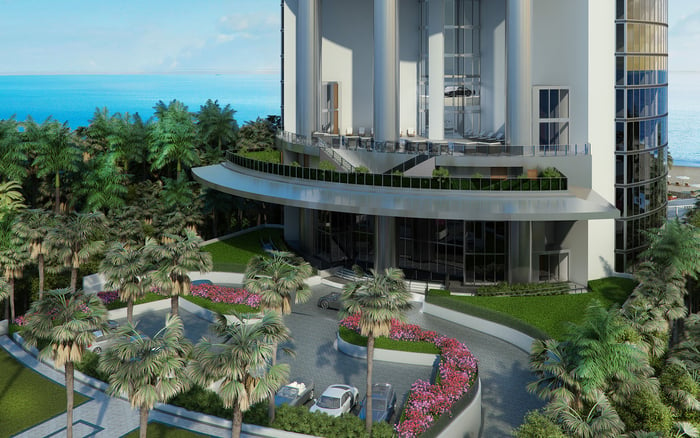
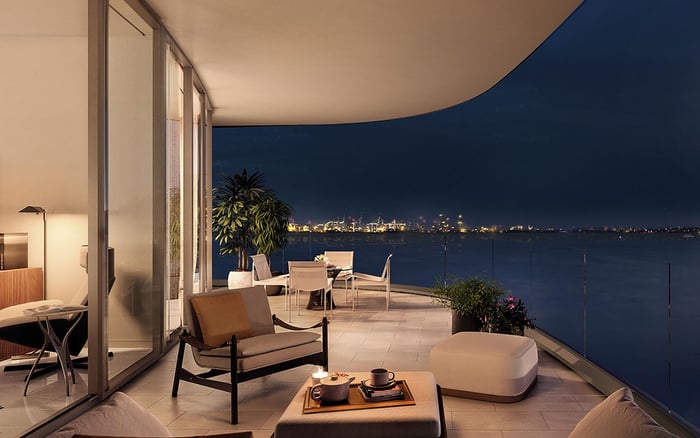
A discreet, buyer-oriented guide to moving museum-grade art into South Florida oceanfront penthouses, from pre-close due diligence to rigging day, building rules, climate control, and installation.
In an oceanfront penthouse, moving museum-grade art is dictated as much by the building as by the collection. The stretch between a climate-stable warehouse and a top-floor residence is packed with choke points: a loading dock that doubles as a service entrance, a freight elevator with strict dimensional limits, corridors with tight turns, and a condominium association that treats any move-in as a construction event.
For collectors, the key shift is mindset. Museum-grade transport is not “white glove delivery.” It is a documented chain of custody, a risk-managed schedule, and an engineered pathway from truck to wall. In South Florida, oceanfront conditions add another layer of exposure: salt-laden air, intense sun, and the reality that some of the most striking residences are also the most exposed.
The payoff is exceptional. With the right plan, major works can arrive and install as if it were effortless-minimal disruption, no improvisation, and no surprises on rigging day.
Before the first crate is built, treat the building like a set of specifications. For a collector purchasing in an Oceanfront tower, the practical questions belong up front-ideally before closing and certainly before shipping is scheduled.
Start with access and geometry. Can a truck with air-ride suspension reach the loading area without steep ramps or restrictive gates? Is there a dedicated receiving room where crates can rest before staging upstairs? Many towers enforce “no staging” in common areas, which makes an interior plan essential-one that keeps works protected without compromising egress.
Next, confirm the freight path. Freight elevator cab size, door dimensions, weight limits, and protection requirements matter more than the beauty of the lobby. Many “penthouse-ready” buildings still have service routes that demand an experienced team to navigate. This is where newer ultra-luxury projects can be advantageous when they anticipate oversized furnishings and curated collections, such as The Perigon Miami Beach in Miami-beach or Bentley Residences Sunny Isles in Sunny-isles.
Finally, align with rules and approvals. Building management typically requires a certificate of insurance, elevator padding, designated move windows, and supervision. If a crane, exterior hoist, or swing-stage is under consideration, approvals become more complex and should be addressed with the association well before anything is in transit.
Museum-grade transport is defined by discipline at transitions. Each transfer point should be executed as a controlled event: condition checks, sealed crates, documented custody, and tightly limited access.
At this level, insurance is not a checkbox. Confirm how coverage applies from origin through final installation, including time in temporary storage, time staged in a receiving area, and time handled by installers. For some collectors, a private viewing period in the residence is part of placement decisions. If a work is uncrated and “resting” while lighting is adjusted or hardware is fabricated, it is still in motion from a risk perspective.
Discretion is part of risk management. In a high-profile Penthouse, the safest move is often the least visible: off-peak scheduling, minimal labeling, and a team that can operate quietly through service routes without telegraphing value.
Coastal South Florida introduces stressors that inland moves may not fully account for. Even when interiors are conditioned, the short transition from truck to elevator can expose materials to heat, humidity, and condensation risk. The right approach is to engineer for microclimates, not just zip codes.
Crating should be purpose-built for the object and the path. The objective isn’t only impact protection-it’s vibration control and environmental buffering during the most unpredictable moments: loading docks, elevator transitions, and tight hallway turns.
Once inside, acclimation is a real step. In an oceanfront environment, it can be prudent to let works normalize in a stable interior room before uncrating, particularly when exterior air conditions sharply differ from the residence’s conditioned air. For collectors drawn to expansive glass and high floors, it’s also worth verifying that HVAC performance and shading strategy can support long-term preservation without compromising the view.
In coastal neighborhoods like Bal-harbour and Surfside, where architecture and lifestyle often emphasize glass walls and terraces, buyers frequently choose residences that combine concierge-level operations with a high-finish interior envelope, such as Oceana Bal Harbour. The building may be beautiful, but the collection still needs a preservation plan calibrated to light, temperature stability, and salt exposure.
The safest art move is the one that feels uneventful-because every high-risk variable was resolved in advance.
A pathway plan typically includes:
A dimensional survey of every turn from curb to final wall
Door swing clearances, elevator thresholds, and floor protection details
A staging diagram for crates and tools that keeps the residence operational
A rigging strategy for any oversized pieces, including ceiling height and anchoring
When works are large, heavy, or fragile, a mock-up can be invaluable. That can be as simple as a cardboard template cut to the exact dimensions of a frame, or as rigorous as a full-scale rehearsal with a dummy crate. For certain contemporary works, installation is effectively a build-and it belongs on the same schedule as other readiness items such as motorized shades, custom lighting, and smart-home commissioning.
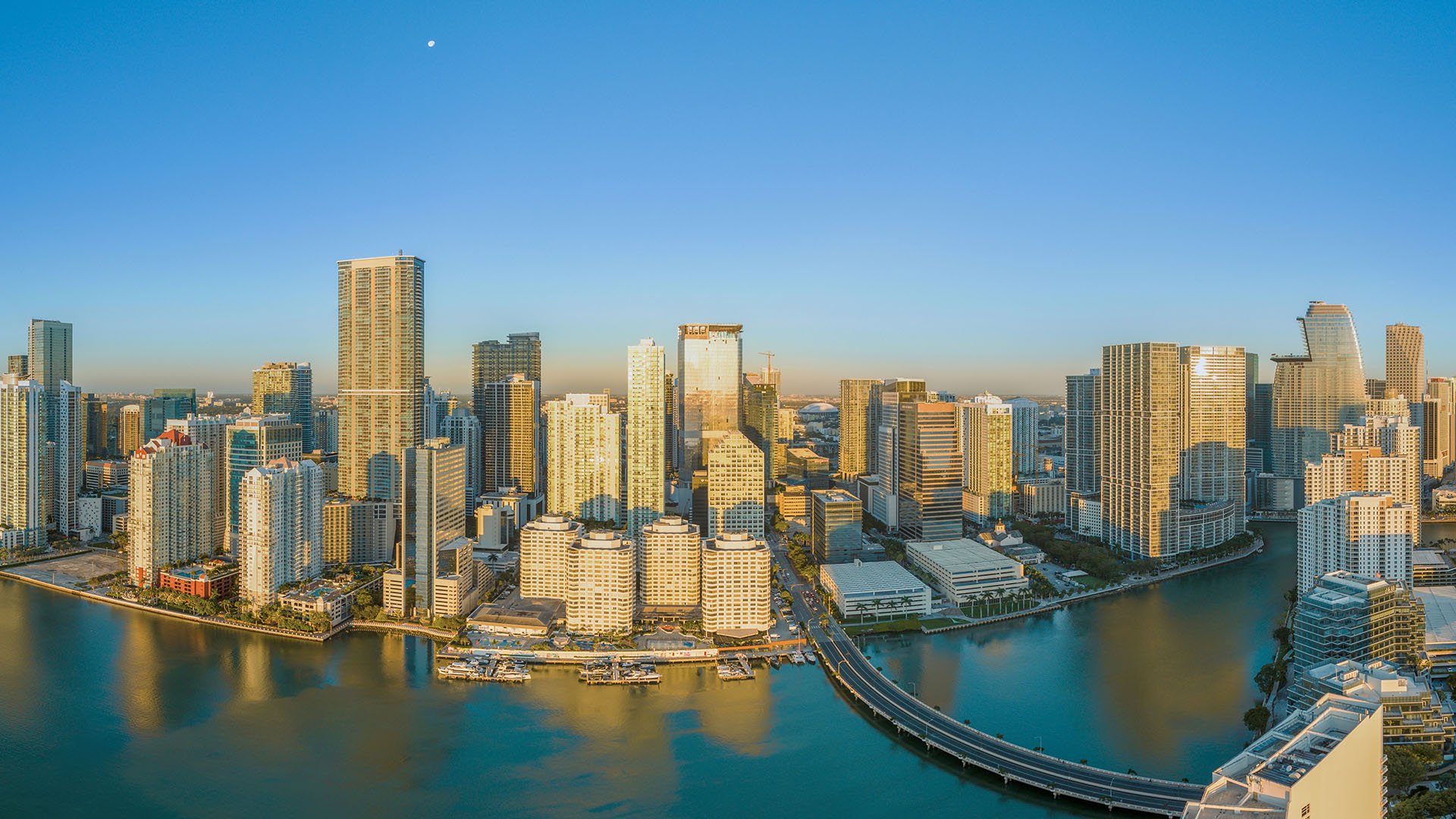
For owners moving between markets, a Brickell residence can offer a compelling “city-to-ocean” balance with strong service infrastructure. In that context, projects like 2200 Brickell can support a lifestyle where a collection rotates between homes, making repeatable logistics and predictable building operations especially valuable.
For museum-grade works, installation is often the most complex moment. Even a flawless shipment can be compromised by a rushed hang.
Define leadership and sequence. One party should own the schedule and hold clear “stop work” authority if conditions are not right. Coordinate building staff, security, art handlers, installers, and any specialty vendors, such as lighting technicians.
For large-format works, confirm wall composition and anchoring requirements. Not every luxury interior wall is built to accept heavy loads without reinforcement. Stone, decorative panels, and concealed mechanical chases can complicate mounting. If reinforcement is required, it should be completed before the artwork arrives-especially in residences where the aesthetic depends on clean planes and minimal reveals.
In oceanfront penthouses with terraces, another subtle issue arises: pressure differentials and wind. A door opening to a terrace during a move can create airflow that stirs dust or destabilizes lightweight packing materials. A disciplined plan keeps exterior openings controlled, maintains a stable interior environment, and avoids exposing art to direct sun during uncrating.
Collectors at the top end don’t “decorate” with art-they design the residence around it.
Lighting is the first technical conversation. Aim for flattering illumination that avoids heat and excessive exposure. Just as important is consistency: the collection should read the same at sunset as it does under evening lighting. For works on paper, textiles, and sensitive media, the lighting plan is part of preservation.
Sightlines are the second conversation. Oceanfront penthouses often feature dramatic axial views and reflective surfaces. A work that looks perfect in an interior rendering can feel visually busy once the horizon and moving water become competing focal points. Many collectors address this by creating moments of compression and release: intimate viewing walls in corridors, libraries, or vestibules, balanced by larger statement pieces placed where the architecture can hold them.
Materials are the third conversation. Near the ocean, corrosion-resistant hardware, sealed substrates, and thoughtful isolation from exterior-facing walls can reduce long-term risk. For a collector choosing a place like 57 Ocean Miami Beach, where the appeal is an oceanfront lifestyle in Miami-beach, the right installation details keep the home airy and coastal-without turning the collection into an environmental experiment.
After installation, the residence becomes a living gallery. The collection is exposed to daily patterns that museums tightly control: cooking, cleaning products, humidity swings when doors open, and the steady presence of sunlight.
A realistic care plan includes routine condition checks, periodic hardware inspection, and a strategy for storms and extended travel. Many collectors keep packing materials or custom crates stored offsite so rapid deinstallation remains possible if needed.
This is also where discretion returns as a guiding principle. Service vendors should be vetted, schedules should remain private, and storage solutions should be secure. A great penthouse offers privacy by design; logistics and maintenance should protect that privacy in practice.
How far in advance should I schedule a museum-grade art move to a penthouse? Plan weeks to months ahead, especially if building approvals, rigging, or custom crating are involved.
What is the first building detail I should confirm before shipping? The complete service route: loading access, freight elevator dimensions, and any restricted move windows.
Do oceanfront residences require different packing than inland homes? Often yes, because heat, humidity, and brief exterior exposure can increase condensation and material risks.
Can I use the passenger elevator if the freight elevator is too small? Sometimes, but only with building approval and strict protection protocols for finishes and common areas.
When is exterior hoisting or craning considered? Typically when a piece cannot safely navigate interior turns or elevator limits and approvals are feasible.
Should art acclimate before uncrating inside the residence? It can be prudent to stabilize the work in a controlled interior room before opening the crate.
What should I coordinate with my interior designer ahead of installation? Wall backing, lighting layout, and sightlines so the work is installed once-not repeatedly moved.
Is hanging heavy art on luxury finished walls straightforward? Not always; decorative wall systems may require reinforcement and specialized mounting hardware.
How do I manage sunlight in a glass-forward oceanfront penthouse? Use a lighting and shading plan that balances view with preservation and avoids direct sun on art.
What is the most common mistake collectors make on moving day? Treating installation like delivery instead of a controlled construction sequence with clear authority.
For a confidential assessment and a building-by-building shortlist, connect with MILLION Luxury.
If branded residences are on your mind — as a home or as an allocation — we would be glad to share what we are seeing, privately.
Begin a quiet conversation