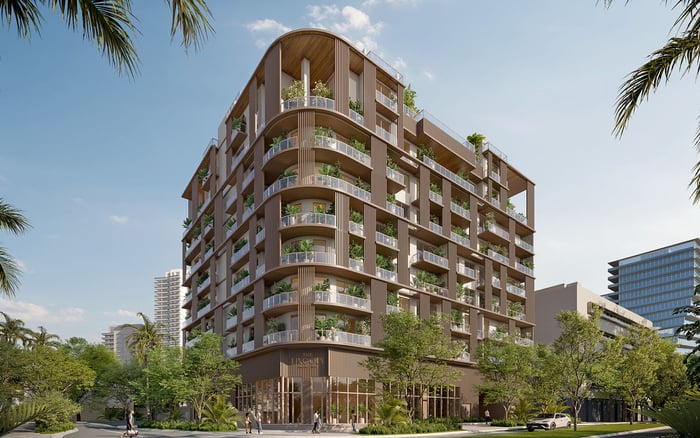
A practical, discreet guide for seasonal buyers evaluating whether The Lincoln Coconut Grove can support true lock-and-leave ownership through security, oversight, building protocols, and Coconut Grove lifestyle fit.

For seasonal buyers, the appeal of The Lincoln Coconut Grove is not simply how refined the residence feels upon arrival. The more consequential question is what happens when the owner is away. A true lock-and-leave home must perform during absence, not only during occupancy. That means the purchase decision should examine security, maintenance oversight, emergency response, and the management protocols that govern unoccupied residences.
The Lincoln Coconut Grove is best understood as a boutique luxury development rather than a large high-rise condominium tower. That distinction matters. Boutique scale can offer discretion, resident familiarity, and lower foot traffic, qualities prized by owners who divide time between South Florida, the Northeast, Europe, or another home base. Yet smaller scale can also mean fewer shared resources than a full-service tower. The right due diligence is not whether boutique is better, but whether this particular boutique environment supports the buyer’s seasonal rhythm.
For many buyers, the decision sits at the intersection of boutique scale, second-home practicality, investment discipline, marina access, and Coconut Grove calm. The architecture and neighborhood may create the desire, but the operating model creates the confidence.
Lock-and-leave is often used casually in luxury real estate, but for an owner who may be away for weeks or months, it should be treated as an operational standard. Buyers should ask whether there is 24/7 staffing, what after-hours emergency procedures exist, and whether documented unoccupied-unit protocols are available for review. If a water intrusion, access issue, mechanical concern, or storm-related event occurs while the owner is absent, the response path should be clear before closing.
Mail and package handling also deserve more attention than they usually receive. Seasonal owners should understand where deliveries are held, how long they can remain, who may retrieve them, and how oversized items are managed. The same applies to access control. A lock-and-leave residence depends on a secure process for owners, guests, contractors, housekeepers, designers, and third-party property managers. Convenience is valuable only when it does not dilute control.
Periodic in-unit checks are another key topic. Buyers should determine whether the building has a formal approach to unoccupied residences or whether owners must arrange all oversight independently. A buyer who expects condominium-style management should confirm exactly where building responsibility ends and private property management begins.
The boutique nature of The Lincoln Coconut Grove may appeal to buyers who want something quieter than a dense tower environment. Lower foot traffic can make a building feel more residential, more personal, and closer to the discretion of single-family living while still offering shared maintenance and condominium-style governance. For owners who value privacy, that can be a compelling proposition.
Still, privacy should not be confused with service coverage. A larger tower may have more staff members, more formalized departments, and deeper redundancy. A smaller building may feel calmer but requires closer review of procedures. The seasonal buyer should ask how staffing is structured, how emergencies are escalated, how vendors are admitted, and how communication is handled when the owner is out of state or abroad.
Security design should also be studied in person. Perimeter control, lighting, access points, surveillance coverage, and sightlines all shape the lived experience of a lock-and-leave residence. A quiet building on a charming block can still have weak points if entries, garages, pedestrian approaches, or service areas are not carefully controlled. The strongest buyers walk the property at different times of day and evaluate the building as an owner would experience it, not only as a visitor on a scheduled showing.
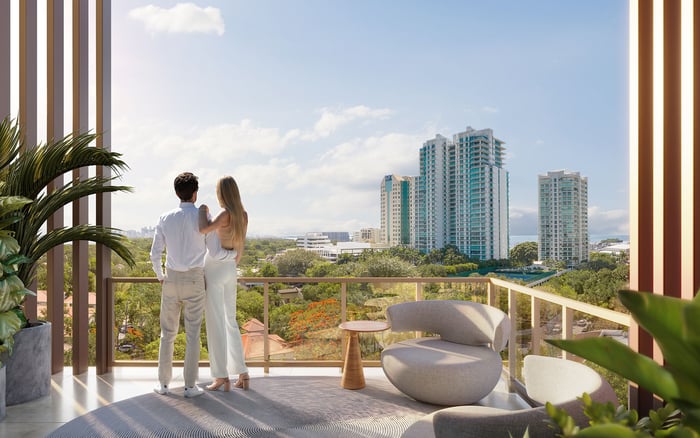
Coconut Grove offers a different luxury proposition from denser Miami districts such as Brickell or Miami Beach. Its rhythm is more residential, its streets are more shaded and intimate, and its appeal is often rooted in daily ease rather than spectacle. For seasonal owners, that matters. A second residence should feel restorative immediately upon arrival, not like another urban obligation.
Walkability is central to the Grove’s value. Restaurants, cafés, retail, and marinas help create a lifestyle where an owner can arrive with minimal friction and quickly re-enter a familiar pattern. The ability to step out for dinner, meet friends near the water, or access boating culture without depending entirely on a car is part of the neighborhood’s draw.
Even so, buyers should evaluate The Lincoln’s exact block, streetscape, and distance from the amenities they expect to use most. Coconut Grove is not a single uniform experience. A residence can sit within the broader neighborhood while still varying meaningfully in walkability, quietness, traffic exposure, tree canopy, and proximity to everyday conveniences. For seasonal buyers, those small differences compound because every visit is compressed and valuable.
In boutique buildings, carrying costs should be measured against the level of service actually delivered. A buyer should not assume that monthly costs automatically translate into the same staffing depth, amenity breadth, or operational redundancy found in a larger full-service tower. The correct question is value alignment: does the building’s operating structure support the way the owner will actually use the residence?
This is especially important for buyers who are absent for extended periods. If an owner needs periodic unit checks, vendor coordination, mail management, pre-arrival preparation, and post-departure oversight, some of those services may require a third-party property manager. That is not a drawback if anticipated. It becomes a problem only when a buyer assumes those functions are included and later discovers they are not.
The most sophisticated purchasers separate emotional appeal from operating clarity. They review current building policies, ask direct questions, and verify procedures because staffing, specifications, governance rules, and protocols can change over time. A residence that feels effortless should be supported by documentation, not assumption.
Before purchasing at The Lincoln Coconut Grove, seasonal buyers should request clarity on the building’s staffing model, after-hours response process, package procedures, vendor access rules, and any written protocols for unoccupied units. They should ask how management communicates with absent owners, how emergencies are documented, and whether the building coordinates with outside property managers.
They should also inspect the physical security environment. That includes entries, lighting, garage or parking access if applicable, service areas, lobby visibility, pedestrian approaches, and the transition between public and private space. In a boutique setting, each access point carries more importance because there are fewer layers between the street and the residence.
Finally, buyers should compare lifestyle expectations with actual use. If the purpose of the home is quiet winter living, easy dining, proximity to the water, and a more residential Miami base, Coconut Grove may be well aligned. If the priority is continuous hotel-style staffing and deep amenity infrastructure, the buyer should confirm that The Lincoln’s specific service model matches that expectation before relying on the lock-and-leave label.
Is The Lincoln Coconut Grove a large high-rise condominium tower? It is framed as a boutique luxury development, so buyers should evaluate it differently from a large full-service tower.
What does lock-and-leave mean for a seasonal buyer? It means the residence can be left unoccupied with confidence because security, maintenance oversight, access control, and emergency procedures are clearly addressed.
Should buyers assume 24/7 staffing is available? No. Buyers should verify current staffing, after-hours procedures, and owner communication protocols directly before purchasing.
Why does boutique scale matter? Boutique scale may offer privacy and lower foot traffic, but it can also mean fewer shared resources than a larger building.
What should buyers ask about packages and mail? They should confirm how deliveries are received, stored, released, and handled during extended owner absences.
Are in-unit checks automatically included? Buyers should not assume they are included. They should ask whether periodic checks are offered or whether a third-party property manager is needed.
How important is the exact location within Coconut Grove? Very important. Buyers should evaluate the specific block, streetscape, and walking distance to restaurants, cafés, retail, and marinas.
What security details should be reviewed? Buyers should scrutinize perimeter control, lighting, access points, surveillance coverage, and sightlines.
Can The Lincoln feel more like single-family living? A boutique property may feel closer to single-family living while still offering shared maintenance and condominium-style management.
How should carrying costs be evaluated? Carrying costs should be compared with the actual service level, especially when the residence will be used seasonally.
If you'd like a private walkthrough and a curated shortlist, connect with MILLION.
If branded residences are on your mind — as a home or as an allocation — we would be glad to share what we are seeing, privately.
Begin a quiet conversation