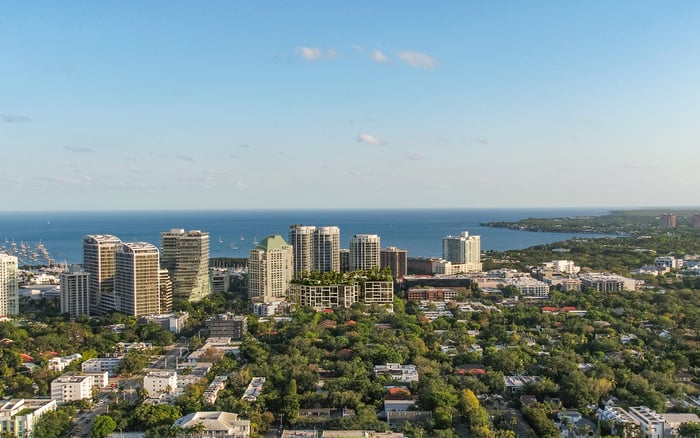
An ownership-focused look at The Lincoln Coconut Grove and why durable control of grocery and pharmacy access may matter as much as finishes for long-term buyers.

For buyers studying The Lincoln Coconut Grove, the most consequential question may not be the one that typically dominates a sales conversation. It is not simply about finishes, branding, amenity rooms, or the polish of a rendering. It is whether the ownership structure makes grocery and pharmacy access dependable, or merely possible.
That distinction matters in Coconut Grove because convenience is part of the luxury proposition. The Grove is valued not only for its canopy, village scale, and proximity to the bay, but also for the rare ability to live beautifully without treating every errand as a scheduled drive. When a residence is positioned around that lifestyle, walkable daily-needs retail becomes more than a neighborhood bonus. It becomes part of the livability thesis.
The Lincoln Coconut Grove sits within that broader expectation. A buyer intending to hold for ten or twenty years should ask a different set of questions than a buyer simply comparing presentation centers. Who owns the dirt? Who owns or controls the retail boxes? Who has the leasing rights? Are those interests aligned with residential owners over time? These are not abstract legal questions. They can shape everyday convenience, future resale narratives, and the credibility of the lifestyle being sold.
A fitness room, lounge, or pool deck is typically contained within the residential ownership and governance structure. Daily-needs retail is different. A grocery or pharmacy use depends on parties, leases, operating economics, physical configuration, access rights, loading, signage, parking, and long-term control.
A tenant shown in concept materials is not the same as a binding lease. A hoped-for use is not the same as a recorded covenant, easement, ownership commitment, or operating restriction that protects the character of the retail over time. In a luxury setting, that difference can be subtle during presales and highly visible after delivery.
This is why buyers should avoid treating grocery and pharmacy access as a decorative promise. If a project suggests the possibility of daily-needs retail, the appropriate response is not cynicism, but diligence. The question is whether the documents support the lifestyle narrative.
The point is especially relevant in Coconut Grove, where projects such as The Well Coconut Grove and Four Seasons Residences Coconut Grove are part of a market in which wellness, walkability, and service are increasingly evaluated together. The most sophisticated buyers are no longer separating the private residence from the daily rhythm around it.
The first layer is land ownership. The owner of the underlying land, sometimes called the dirt, may or may not be the same party controlling the residential program or the retail component. A buyer does not need to become a title examiner, but counsel should identify the relevant interests and explain how they interact.
The second layer is control of the retail boxes. If the retail space is owned separately, reserved by a developer entity, controlled by an affiliate, or governed by specific commercial condominium provisions, residential owners may have limited influence over the ultimate tenant mix. That is not inherently negative. It simply means the buyer should understand who makes the decision if the neighborhood needs a grocer, a pharmacy, or another service-oriented use.
The third layer is leasing authority. A retail space can be physically suitable for daily-needs use while still lacking a durable obligation to remain in that category. If leasing decisions are driven entirely by market rent, then a conceptually attractive grocery or pharmacy promise may compete with restaurants, fitness operators, medical uses, boutiques, or other commercial tenants.
The fourth layer is long-term restriction. The strongest comfort may come from recorded obligations, declarations, easements, covenants, or lease terms that make the intended use more resilient. Without that documentary support, buyers should treat access as a possibility rather than a guaranteed feature.
Resale value in a luxury condominium often depends on intangibles that become very tangible in daily life. Light, privacy, elevator experience, service quality, parking, and neighborhood convenience all compound over time. Grocery and pharmacy access belongs in that same category.
For an owner who travels, ages in place, hosts family, or uses the residence seasonally, dependable access to daily essentials can reduce friction. For a future buyer, it can help translate the building's promise into a practical advantage. The reverse is also true. If the marketed convenience does not materialize, the resale conversation may become more cautious.
This is where the Investment lens is useful. A buyer evaluating The Lincoln Coconut Grove should not value potential retail access as though it were already permanently secured unless the supporting documents justify that treatment. In a Pre-construction or New-construction context, the premium should follow the evidence.
The same discipline applies across South Florida. A buyer comparing Coconut Grove with urban walkability in 2200 Brickell or the more intimate Grove context of Arbor Coconut Grove should separate neighborhood convenience from project-controlled convenience. Both can be valuable, but they are not the same.
The cleanest question is simple: what exactly is being promised, and by whom? If the answer is a confirmed lease, the buyer should ask for the lease parameters that can be disclosed. If the answer is a planned retail category, the buyer should ask whether the plan is backed by recorded documents or merely by current intent.
A buyer's counsel should review the condominium documents, commercial ownership structure, declarations, easements, use restrictions, and any retail leasing materials made available in the ordinary course of purchase diligence. The goal is not to pressure the project into revealing confidential commercial negotiations. The goal is to understand what survives changes in ownership, market conditions, or leasing strategy.
The best projects are usually comfortable with precise questions. They understand that an informed buyer is not undermining the vision. The buyer is testing whether the vision has durable architecture behind it.
Luxury in Coconut Grove is no longer only about private square footage. It is about choreography: the morning coffee, the walk under the canopy, the quick errand, the ability to host without logistical strain, and the comfort of knowing essential services are nearby and likely to remain so.
For The Lincoln Coconut Grove, that means the grocery and pharmacy question should be treated as central rather than secondary. Attractive retail in a presentation may invite interest, but the ownership and control structure determines confidence. In a market where buyers are increasingly sophisticated, that difference is meaningful.
The right conclusion is not that buyers should be skeptical of the project. It is that they should be precise. A walkable lifestyle is most valuable when anchored by rights, obligations, and aligned control. Anything less may still be attractive, but it should be priced and understood as potential rather than permanence.
Does The Lincoln Coconut Grove have a confirmed grocery tenant? A confirmed tenant should not be assumed unless it is supported by a lease, site plan, or official project document available for buyer review.
Does The Lincoln Coconut Grove have a confirmed pharmacy tenant? Buyers should treat pharmacy access as unconfirmed unless the relevant documents identify a durable pharmacy commitment.
Why does ownership matter for retail access? Ownership determines who controls the land, retail spaces, leasing rights, and long-term restrictions that may affect daily-needs uses.
What is the difference between a concept tenant and a durable commitment? A concept tenant may illustrate intent, while a lease, covenant, easement, or recorded restriction can create stronger legal durability.
Should retail access affect a luxury purchase decision? Yes, especially for buyers planning a 10- to 20-year hold, where daily convenience can influence livability and resale appeal.
What should counsel review before purchase? Counsel should examine condominium documents, commercial ownership provisions, declarations, easements, and available retail leasing materials.
Is grocery access more important in Coconut Grove than in some other markets? It can be, because Coconut Grove's appeal is closely tied to walkability, village scale, and everyday convenience.
Can residential owners control the retail tenant mix? Not necessarily. Control depends on the ownership structure, governing documents, and leasing rights associated with the retail space.
Should buyers pay a premium for possible grocery or pharmacy access? They should distinguish between documented durability and future possibility before assigning a premium to that feature.
What is the most important diligence question? Ask whether the ownership structure makes grocery and pharmacy access dependable, or merely possible.
When you're ready to tour or underwrite the options, connect with MILLION.
If branded residences are on your mind — as a home or as an allocation — we would be glad to share what we are seeing, privately.
Begin a quiet conversation