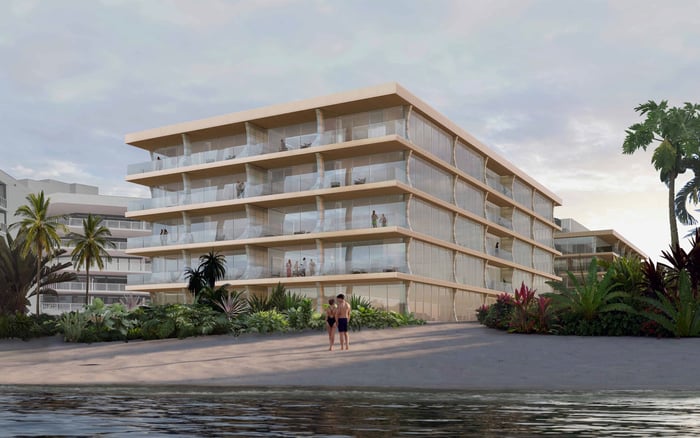
A discreet buyer’s checklist for evaluating storm staffing, operational resilience, insurance readiness, and waterfront continuity at Shorecrest Flagler Drive in West Palm Beach.

For a waterfront asset such as Shorecrest Flagler Drive West Palm Beach, storm preparedness should not read like a seasonal memo or a reassuring paragraph in a building manual. It belongs in the same diligence file as insurance, reserves, engineering, governance, and legal review. In the 2026 luxury market, the question is not simply whether a building has a hurricane plan. The sharper question is whether it has a storm-staffing system with named responsibilities, redundancy, proof of training, and a disciplined record trail.
That standard matters on Flagler Drive, where the waterfront setting is both an attraction and an operating condition. Wind, surge, flooding, access limitations, power interruptions, elevator shutdowns, and resident support needs are not abstract considerations for sophisticated buyers. They are practical issues that affect safety, continuity, claims readiness, and long-term capital preservation.
For family offices, high-net-worth buyers, and boards evaluating Shorecrest or comparable luxury towers, storm staffing is a marker of institutional seriousness. A refined lobby and polished service culture matter, but the deeper test is what happens before, during, and after a severe weather event, when routine hospitality gives way to command structure.
A generic hurricane plan can be tidy and still be inadequate. The diligence task is to determine whether storm roles are documented, assigned, and actionable before watches or warnings are issued. Buyers should ask who activates the plan, who holds decision authority, and how responsibilities transfer if the primary manager, engineer, or vendor is unavailable.
A serious system should identify responsibility for building systems, resident communications, access control, vendor coordination, and post-storm inspections. It should also define escalation points. If water intrusion is detected, who investigates? If an elevator must be shut down, who communicates the timeline? If access to the property is restricted, who coordinates resident entry, deliveries, and emergency vendors?
The most persuasive answer is not a verbal assurance. It is a current set of written protocols, staffing assignments, communications templates, vendor agreements, training records, and post-event documentation procedures. For a buyer comparing Shorecrest Flagler Drive West Palm Beach with other prime residences in the broader West Palm Beach and Palm Beach market, this level of documentation can separate operational resilience from presentation.
Storm staffing begins with governance. Buyers should understand whether storm decisions sit with management, the board, a developer-controlled structure, an association, a third-party operator, or a defined emergency committee. Each structure can work; ambiguity is the risk.
The checklist should ask for the chain of command before a storm, during impact, and through recovery. It should clarify who authorizes overtime, who approves emergency spending, who calls vendors, who communicates with residents, and who keeps the official log. In luxury buildings, a polished service model can mask informal decision-making. During a storm cycle, informality is not resilience.
A well-governed plan also treats regulatory compliance and operating obligations as connected issues rather than separate departments. Engineering, security, resident services, insurance documentation, and vendor coordination should move as one system. The buyer’s goal is to see whether the property can make decisions quickly without losing accountability.
The engineering review should be direct. Who covers generators, pumps, life-safety systems, fire protection, elevators, and building-envelope monitoring? Are those roles staffed internally, externally, or through a blended model? What happens if one engineer is unavailable, roads are restricted, or a vendor cannot reach the property immediately?
Redundancy is central. A building should not rely on one manager, one engineer, or one vendor for critical storm functions. Buyers should ask whether backup personnel are named, whether vendors are under current agreement, and whether the property has documented procedures for prolonged power outages, water intrusion, elevator downtime, and resident support.
The conversation should not become overly theatrical. The point is not to imagine every crisis in cinematic detail. The point is to determine whether the property has practical coverage for predictable stress points. In a waterfront residence, the most valuable amenity during a severe event may not be the view itself, but the disciplined team protecting the building around it.
Luxury buyers often underestimate communications until they need them. A storm-staffing system should include pre-drafted messages, defined distribution channels, timing expectations, and a clear protocol for updates. Residents should know when shutters, furniture, deliveries, vehicles, guests, pets, elevators, and access procedures become part of the storm protocol.
The staffing review should also test resident support. Who tracks residents who remain in the building? Who assists with access limitations? Who handles calls from absent owners, family offices, household staff, or property managers? In ultra-prime buildings, many residences are not occupied full time, which makes communication discipline even more important.
Buyers should ask to see templates rather than accept promises. A message prepared before pressure arrives is often stronger than one improvised during a fast-moving event.
Insurance diligence should ask how staffing, emergency planning, maintenance records, and vendor contracts support insurability and claims readiness. The issue is not merely whether coverage exists. It is whether the building can document what was done, when it was done, who did it, and what condition existed before and after the event.
Post-storm documentation should be built into staffing duties. That means photographs where appropriate, logs of inspections, vendor reports, resident communications, incident notes, and repair coordination records. These materials can matter for claims, board oversight, capital planning, and future buyer confidence.
For an investment buyer, the operational record is part of the asset story. A residence may trade on location, design, and scarcity, but sophisticated capital also reads the building’s ability to protect value under stress.
Before committing capital, ask for evidence in seven categories. First, governance: a current chain of command and decision-rights matrix. Second, staffing: named pre-storm, storm-period, and post-storm roles with backups. Third, engineering: coverage for generators, pumps, life-safety systems, fire protection, elevators, and envelope monitoring. Fourth, vendors: current agreements and emergency contact protocols. Fifth, communications: templates, timing rules, and resident support procedures. Sixth, training: proof of drills, refreshers, and role-specific preparation. Seventh, documentation: post-event inspection logs, incident records, and claims-support procedures.
This checklist does not require a buyer to become a building operator. It helps the buyer ask questions that reveal whether the operator is prepared. In the new-construction segment and in established luxury towers alike, the language of resilience is becoming more precise. Storm staffing is no longer a back-of-house topic. It is a front-line diligence issue.
A strong answer is specific without being performative. It names roles, identifies backups, references written protocols, explains vendor coordination, and shows how residents are informed. It also acknowledges that severe weather can disrupt normal assumptions, which is why redundancy and documentation matter.
A weak answer leans on generalities: experienced team, comprehensive plan, regular maintenance, excellent vendors. Those phrases may be true, but they are not enough. Buyers should keep asking until the staffing model becomes visible.
For Shorecrest Flagler Drive West Palm Beach, the due-diligence standard is clear: storm staffing should be evaluated as part of life safety, insurance, operating stability, and capital preservation. The more valuable the waterfront asset, the less room there is for vague preparation.
Why does storm staffing matter for Shorecrest Flagler Drive West Palm Beach? It helps buyers evaluate whether the property has an operational system for severe weather, not merely a generic hurricane plan.
Should a buyer ask for written protocols? Yes. Written protocols, role assignments, communications templates, and post-event procedures are central diligence items.
What engineering roles should be reviewed? Buyers should examine coverage for generators, pumps, life-safety systems, fire protection, elevators, and building-envelope monitoring.
Is staffing redundancy important? Yes. Critical storm functions should not depend on one manager, one engineer, or one vendor.
How does storm staffing connect to insurance? Staffing records, maintenance history, vendor contracts, and event documentation can support claims readiness and insurability review.
What should resident communications include? They should define timing, channels, access rules, elevator updates, support procedures, and post-storm inspection notices.
Should absent owners care about storm staffing? Yes. Many luxury owners rely on management, household staff, or advisors, making clear communication and documentation essential.
Does this checklist prove Shorecrest has specific procedures? No. It is a buyer diligence framework for requesting and evaluating the relevant materials before committing capital.
When should storm staffing be reviewed? It should be reviewed before purchase, board approval, financing, or any major capital commitment tied to the residence.
What is the main takeaway for 2026 buyers? Treat storm staffing as part of resilience, governance, insurance readiness, and long-term value protection.
For a confidential assessment and a building-by-building shortlist, connect with MILLION.
If branded residences are on your mind — as a home or as an allocation — we would be glad to share what we are seeing, privately.
Begin a quiet conversation