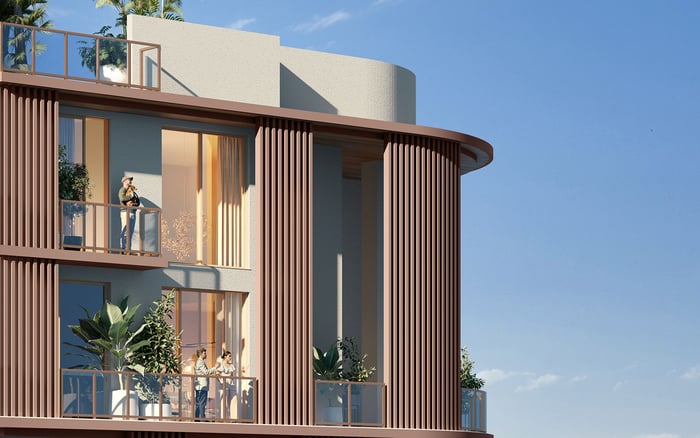
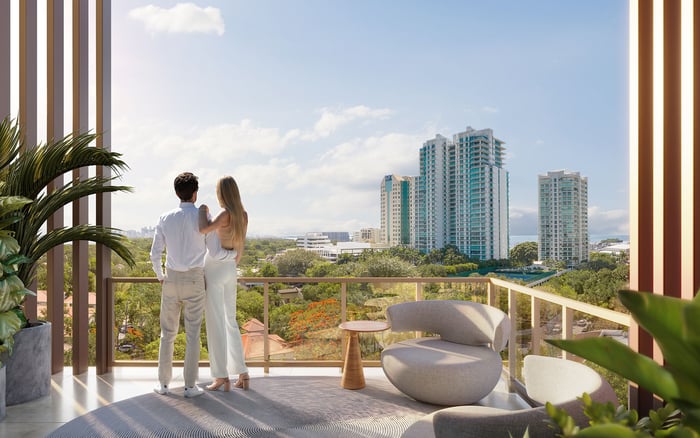
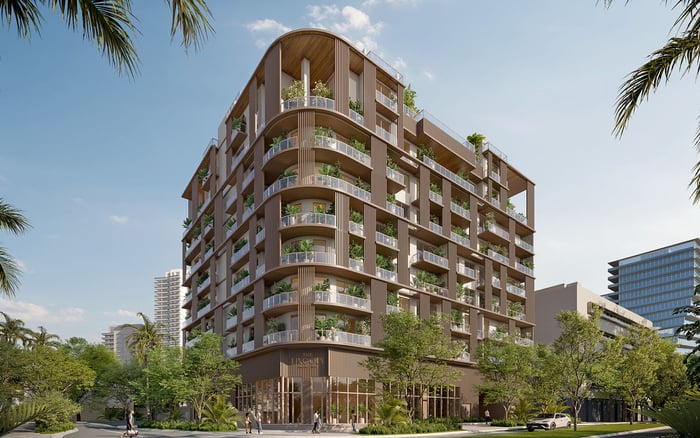
A discreet buyer framework comparing Glass House Boca Raton and The Lincoln Coconut Grove through privacy, security technology, visitor flow, and resale relevance for 2026 luxury purchasers.
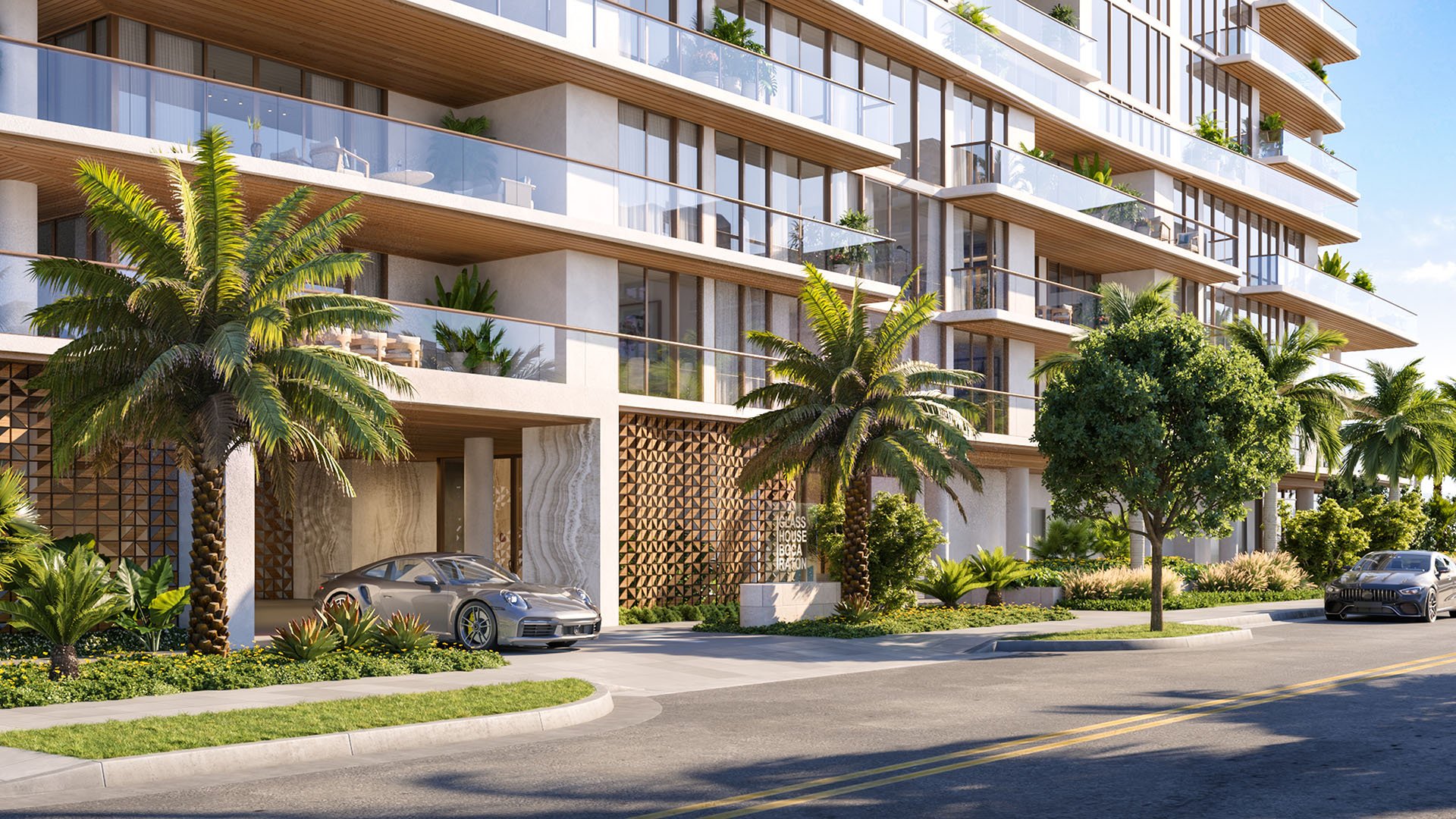
For the South Florida buyer, the question is no longer simply which residence feels more prestigious. The sharper 2026 question is which building can translate beauty into privacy, calm into control, and technology into a daily sense of discretion. In that frame, Glass House Boca Raton and The Lincoln Coconut Grove make a useful comparison because they represent two distinct residential instincts.
Glass House Boca Raton is the Boca Raton case study: a quieter setting, a more contained daily rhythm, and the possibility of fewer resident, guest, vendor, and delivery touchpoints. The Lincoln Coconut Grove is the urban-neighborhood counterpoint: walkability, village energy, and the lifestyle advantages of Coconut Grove, paired with the practical need to manage more ambient activity around the address.
This is not a ranking. Building-specific security operations are rarely fully public, and the most sensitive details should be verified privately. A serious buyer should resist asking which property is “safer” and instead ask which one better matches the household’s tolerance for exposure, visitor flow, and operational complexity.
Luxury buyers often use the word privacy as if it were a mood. In 2026, it should be tested like an amenity. That means asking about elevator sharing, lobby sightlines, acoustic separation, camera policies, package handling, parking access, smart-building data practices, and how staff identify legitimate visitors without creating friction for residents.
At Glass House Boca Raton, the useful question is whether a quieter Boca Raton environment actually reduces daily building traffic. A calmer address can feel more private, but the buyer still needs to understand access points, vendor patterns, delivery procedures, and how guest arrivals are screened. Boutique scale can support discretion by limiting the number of residents and visitors, but it must also be backed by an association budget capable of supporting staffing, maintenance, and future technology upgrades.
At The Lincoln Coconut Grove, the useful question is different. A Coconut Grove search often begins with lifestyle, dining, walking, and neighborhood texture. Those benefits can be meaningful, especially for buyers who want a more connected daily life. The tradeoff is that a more walkable urban setting may bring more street activity, more nonresident movement nearby, and more frequent access-management decisions for staff and residents.
For Glass House Boca Raton, begin with the building’s daily rhythm. How many entrances are active during normal hours? How are service providers separated from residents and personal guests? Are deliveries routed through a defined protocol, and does that protocol change after hours? The purpose is not to collect buzzwords. It is to understand how the building behaves on an ordinary Tuesday, during peak delivery periods, and when owners are away.
A buyer should also ask how privacy holds up over time. Boutique living may mean fewer neighbors and less elevator congestion, but a smaller community still needs credible operating resources. Ask whether the association budget contemplates system maintenance, staffing expectations, software updates, camera upkeep, package-room management, and future access-control improvements. Boutique is attractive only when the operations are as refined as the architecture.
The most important documents are often not the marketing materials. Request governing documents and house rules that address short-term rentals, parties, move-ins, service providers, pets, guest parking, and delivery access. These rules are where privacy becomes enforceable rather than aspirational.
For The Lincoln Coconut Grove, the question is how the property manages the advantages of urban neighborhood living without allowing the address to feel porous. Walkability is a privilege in Coconut Grove, but it also increases the importance of clear visitor management. Ask how guests are pre-registered, whether identification checks are required, how vendors are scheduled, and what procedures apply after hours.
More urban or amenity-rich buildings may have the potential to support stronger staffing models and technology budgets, but buyers should weigh that against increased daily circulation. A residence can be well run and still feel busy if too many nonresidents pass through the building for deliveries, services, parties, showings, maintenance, or move-ins.
The Lincoln Coconut Grove is best evaluated through operational clarity. Are guest arrivals documented consistently? Are delivery personnel limited to certain routes or windows? Are parking access and elevator movement controlled in a way that protects residents without making daily life cumbersome? The buyer who loves neighborhood energy should still insist on quiet execution inside the property line.
The strongest security programs are integrated, not decorative. Access control, cameras, package rooms, parking entries, elevator controls, vendor logs, and cybersecurity should work together. A building can have visible technology and still have weak procedures if staff are not trained, software is not maintained, or exceptions are handled casually.
Buyers should ask for written explanations rather than showroom descriptions. How are credentials issued and revoked? What happens when a resident changes household staff? How are temporary vendor credentials handled? Who can review camera footage, and under what circumstances? How long are access records retained? What safeguards exist around resident data? These questions are not aggressive. They are standard due diligence for ultra-premium ownership.
The more connected a building becomes, the more cybersecurity matters. Smart access systems, package notifications, camera networks, and resident apps can improve convenience, but they also create data trails. Privacy-minded buyers should ask how data is stored, who administers systems, and how vendor platforms are reviewed.
The defining privacy issue for many high-net-worth households is not the neighbor. It is the uncontrolled guest, the recurring vendor, the casual delivery, the party overflow, or the after-hours exception. Guest screening should be simple, consistent, and documented.
At both properties, request written details on guest pre-registration, ID checks, vendor access windows, delivery protocols, and after-hours procedures. Ask what happens when a resident has repeated service providers, rotating household staff, private chefs, drivers, nurses, tutors, pet care, or event support. A building that handles these realities discreetly may protect the resident experience better than a building with louder branding.
Short-term-rental restrictions, party rules, move-in procedures, pet policies, and guest parking controls matter because they shape daily exposure. Resale buyers will increasingly understand that privacy, controlled access, and credible security operations are not nice-to-have extras. They are value factors that influence confidence, liquidity, and long-term satisfaction.
Is this a ranking between Glass House Boca Raton and The Lincoln Coconut Grove? No. The better choice depends on the buyer’s privacy expectations, lifestyle preferences, and verified building operations.
Why is Glass House Boca Raton relevant to privacy-minded buyers? Its quieter Boca Raton context raises the question of whether lower daily traffic can support a more controlled residential experience.
Why is The Lincoln Coconut Grove a different test? It pairs walkable neighborhood appeal with the need to manage more ambient activity, visitor flow, and access complexity.
Should buyers rely on public-facing project pages for security details? No. Sensitive security specifications should be verified through sales, association, property-management, or legal-document channels.
What should a buyer ask about guest screening? Ask about pre-registration, ID checks, vendor windows, delivery handling, and after-hours procedures in writing.
Does boutique scale automatically mean more privacy? Not automatically. Boutique scale may reduce volume, but the budget must support staffing, maintenance, and upgrades.
Can a more urban building still feel private? Yes, if visitor management, access control, staffing, elevator movement, and delivery protocols are disciplined and consistent.
Why do house rules matter so much? House rules determine restrictions on parties, rentals, pets, move-ins, service providers, and guest parking.
How does new construction change the security conversation? New construction can introduce modern systems, but buyers still need to verify operations, staffing, maintenance, and data practices.
Why does this matter for resale value? Privacy, controlled access, and credible operations increasingly support buyer confidence in the ultra-premium market.
For a confidential assessment and a building-by-building shortlist, connect with MILLION.
If branded residences are on your mind — as a home or as an allocation — we would be glad to share what we are seeing, privately.
Begin a quiet conversation