A discreet guide for New York and California households weighing a 2026 move to South Florida, with attention to lifestyle, liquidity, tax residency conversations, carrying costs, and the role of new condominium living.

For many New York and California families, a 2026 move to South Florida is no longer a simple escape narrative. It is a more sophisticated question: where does life feel better, capital work harder, and ownership carry less friction? The answer is rarely one-dimensional. A principal residence shapes daily rhythm, family logistics, professional access, tax posture, philanthropic networks, aviation patterns, health routines, and the way wealth is preserved across generations.
The strongest South Florida relocations begin with this broader lens. A buyer may want morning ocean air, a private club ecosystem, a shorter winter calendar, or a home that functions gracefully for children, guests, staff, and remote work. The lifestyle case becomes more compelling when it is matched with balance-sheet discipline. Purchase price is only the entry point. Carrying costs, insurance, association governance, tax residency planning, estate considerations, and future liquidity all belong in the same conversation.
South Florida has matured into a full-time luxury market rather than a seasonal refuge. The distinction matters. Buyers arriving from Manhattan, Los Angeles, San Francisco, or the Hamptons are not simply shopping for square footage. They are deciding whether a property can support the daily life they intend to live.
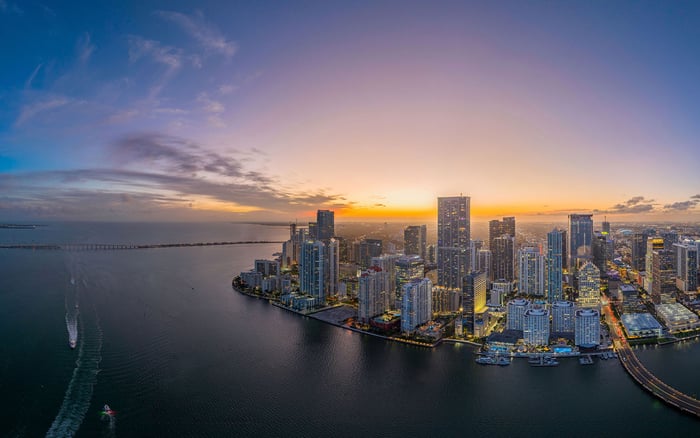
That often means secure parking, wellness amenities, private dining, elevated service, beach or marina access, proximity to schools and airports, and architecture that enables indoor-outdoor living without sacrificing privacy. In Brickell, the appeal is vertical convenience: finance, dining, wellness, and water views in a dense urban setting. In Surfside, the tone shifts toward beachfront discretion and a quieter residential cadence. In Aventura, the conversation often centers on practical access, family infrastructure, and proximity to boating or golf.
The lifestyle premium is not always about spectacle. At the upper tier, it is about removing resistance. A household that previously divided life among a city apartment, weekend house, and winter rental may now consolidate around one more intentional base. That decision can simplify calendars, staffing, storage, travel, and the emotional fatigue of maintaining too many versions of home.
The affluent migration discussion is often reduced to taxes, but sophisticated buyers know the better question is total financial architecture. A move can affect income sourcing, entity planning, estate strategy, charitable structures, investment oversight, and the evidentiary requirements of residency. None of those should be improvised after closing.
Before committing, buyers should model the full ownership stack. That includes property taxes, insurance, association dues, reserves, special assessment exposure, maintenance, staffing, financing terms, renovation timelines, and exit liquidity. In new-construction buildings, the underwriting also includes delivery timing, developer track record, contract structure, deposit schedule, association formation, and the durability of amenity programming after opening.
An investment lens is useful even for buyers who never intend to rent. The question is not merely whether the residence will appreciate. It is whether the asset will remain desirable to the next buyer with similar resources and expectations. Views, ceiling heights, parking, service culture, privacy, building condition, neighborhood depth, and architectural relevance all influence future marketability.
South Florida is not one market. It is a collection of micro-markets with distinct rhythms. A New York buyer who loves walkability may gravitate toward Brickell, Coconut Grove, Miami Beach, or West Palm Beach. A California buyer accustomed to space, light, and indoor-outdoor continuity may be drawn to waterfront homes, low-density condominiums, or boutique coastal enclaves.
Edgewater offers a more residential alternative near Miami’s cultural core, with bayfront energy and fast access to dining and design districts. Surfside and Bal Harbour appeal to buyers who want a quieter beachfront identity with polished retail and hospitality nearby. Aventura offers practical connectivity, established residential services, and a more family-oriented tempo. Palm Beach County brings another register entirely: private clubs, estate settings, quieter streets, and a polished civic atmosphere.
The right answer depends less on prestige than fit. A family with school-age children will weigh commute patterns differently than a couple building a winter wellness routine. A founder who travels weekly may prioritize airport access and lock-and-leave simplicity. A collector may need climate-controlled storage, walls with scale, and service elevators that genuinely support installation.
A successful relocation is lived, not merely declared. Buyers should coordinate legal, tax, and advisory teams before the move becomes visible. The practical details matter: where one spends time, receives care, manages business affairs, votes, registers vehicles, keeps personal records, and maintains professional relationships. The more complex the balance sheet, the more important the paper trail becomes.
This is where lifestyle and compliance intersect. If South Florida is genuinely becoming the center of life, the residence should support that reality. It should be comfortable enough for extended family stays, efficient enough for full-time work, and resilient enough to remain the preferred base through peak season, summer travel, and major life events.
A luxury purchase in coastal Florida demands respect for risk. Insurance availability, deductible structure, building reserves, maintenance history, flood considerations, storm protection, and board governance should be reviewed with care. These are not reasons to avoid the market; they are reasons to buy intelligently.
For condominium buyers, association quality can be as important as finishes. A beautiful lobby cannot compensate for weak financial controls, deferred maintenance, or poor communication. For single-family buyers, the diligence shifts toward elevation, roof systems, drainage, seawalls, generators, landscaping resilience, and the reliability of local service providers.
The most successful relocations treat risk as a design parameter. Buyers choose buildings and neighborhoods where the ownership experience remains graceful under pressure. That is a form of luxury rarely visible in marketing photography, but deeply felt over time.
The best 2026 strategy is not to chase headlines. It is to define the use case, assemble advisory support, and move decisively when the right property appears. High-quality residences with privacy, views, strong service, and enduring locations rarely behave like interchangeable inventory.
Some buyers will purchase before completing a full relocation, using the home as a second home while planning a more permanent transition. Others will rent first, not because they lack conviction, but because they want to test schools, commute patterns, clubs, and neighborhood personality before committing major capital. Both approaches can be prudent if tied to a clear plan.
For New York and California households, the central question is not whether South Florida is fashionable. It is whether the move improves life while preserving optionality. The strongest answer comes when a home is not just beautiful, but strategically coherent.
Why are New York and California buyers considering South Florida in 2026? Many are weighing lifestyle quality, residency planning, climate preferences, family logistics, and long-term ownership strategy in a single decision.
Is the move primarily about taxes? Taxes may be part of the analysis, but the stronger case usually combines tax planning with lifestyle, liquidity, and family priorities.
Should buyers purchase before establishing residency? Some do, but residency planning should be coordinated with legal and tax advisors before major decisions are made.
Which South Florida areas fit former New York buyers? Brickell, Miami Beach, Surfside, Coconut Grove, and West Palm Beach can appeal to buyers who value walkability, dining, service, and cultural access.
Which areas may appeal to former California buyers? Waterfront enclaves, low-density coastal buildings, and neighborhoods with indoor-outdoor living often resonate with California households.
Is new-construction preferable for relocating buyers? New-construction can offer modern systems and amenities, but buyers should review delivery timing, governance, reserves, and contract terms.
How should buyers evaluate insurance risk? They should review coverage availability, deductibles, building condition, flood considerations, and storm protection before closing.
Can a second home become a primary residence later? Yes, if the property supports full-time living and the owner’s broader residency steps are handled with proper advice.
What matters most for future resale? Location, views, privacy, building quality, service standards, floor plan, parking, and neighborhood depth all influence long-term liquidity.
When should a buyer start planning a 2026 move? The strongest buyers begin early, define their lifestyle requirements, align advisors, and remain ready when the right property appears.
For a confidential assessment and a building-by-building shortlist, connect with MILLION.
If branded residences are on your mind — as a home or as an allocation — we would be glad to share what we are seeing, privately.
Begin a quiet conversation