A discreet, buyer-oriented look at how a property tax ballot measure can ripple through underwriting, negotiations, and long-term ownership costs for ultra-wealthy buyers across South Florida’s prime neighborhoods.

In South Florida luxury real estate, the purchase price is only the opening number. Ultra-wealthy buyers typically underwrite a home the way they underwrite a private investment: upfront cash outlay, ongoing carrying costs, optionality, and the ease of repositioning later. A property tax ballot measure can change that calculus quickly because it touches a cost line that never pauses. Taxes accrue regardless of occupancy, regardless of whether the home is furnished, and regardless of whether a buyer’s life changes mid-hold.
For buyers considering Brickell, Miami Beach, and Broward waterfront towers, the difference is not simply annual-it is cumulative. Even a modest shift in policy assumptions can influence the offer you write today, the leverage you choose tomorrow, and the resilience of your exit price years from now.
Ballot measures are often framed as civic questions. For a buyer, they are risk questions. The right stance is neither alarm nor indifference, but structured planning.
Start by separating what you can control from what you cannot.
What you cannot control: the outcome of a vote, future assessed values, and the broader trajectory of local budgets. What you can control: which property type you buy, how you title it, whether it is treated as a primary residence or second-home, how you finance it, and how much annual variability you are willing to accept.
A practical approach is scenario underwriting. Build two or three “tax paths” into your model: a base case, a conservative case, and an aggressive case. If the deal only works in the base case, it is not a deal; it is a bet.
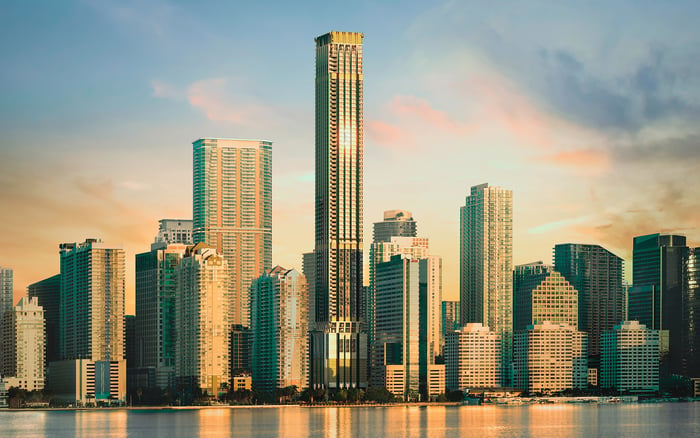
This mindset is especially relevant in high-density submarkets like Brickell, where a new-development purchase can already carry layered monthly obligations. As you compare buildings such as 888 Brickell by Dolce & Gabbana and 2200 Brickell, taxes should sit alongside maintenance, reserves, insurance, and any lifestyle services as part of one integrated carrying-cost picture.
For many ultra-wealthy households, the most consequential tax question is not “How much is it?” but “How will we use it?”
A property used as a primary residence often operates under a different set of assumptions than a second-home held for seasonal occupancy. The specifics hinge on current law and any ballot change, but the buyer-oriented principle remains: classification and documentation matter.
If you are relocating and truly intend to base your life in South Florida, build a clean paper trail early. If you are buying a pied-à-terre, underwrite more conservatively. Trying to optimize after closing is rarely as efficient as structuring correctly before you sign.
This is where a Miami Beach purchase can read differently than a purely investment-minded acquisition. A residence at 57 Ocean Miami Beach may be emotionally compelling, but the disciplined buyer still treats primary vs second-home status as a formal decision with long-term financial consequences.
Ballot uncertainty changes negotiating posture in subtle but meaningful ways.
First, it can widen the gap between “asking” and underwritten value. Sellers often anchor on last year’s environment, while buyers price in next year’s risk. The best outcomes come from making that gap legible. Instead of a vague “taxes might go up,” present calm, quantified logic: higher carrying costs support a lower price, a seller concession, or targeted contract protections.
Second, it increases the value of timing. If the market is waiting on clarity, liquidity can thin. Some buyers prefer to wait; others use the pause to negotiate. Ultra-wealthy buyers can convert decisiveness into pricing power, but only if the underwriting is conservative enough to tolerate adverse outcomes.
Third, it reshapes what you request during due diligence. Beyond standard condo disclosures and financials, it is reasonable to ask for clarity on historical tax bills, assessment patterns, and any known changes that could affect future obligations. The goal is not perfect prediction; it is removing avoidable surprises.
Even cash buyers should think like lenders, because lenders influence market pricing. If a ballot measure implies higher property tax obligations, it can affect debt-service ratios, escrow requirements, and approval comfort.
A buyer using financing should stress-test payment scenarios. It is not enough to know today’s tax estimate-you need to know whether a future change would push the all-in payment beyond your personal “sleep-at-night” threshold.
For wealth managers and family offices, this is also an asset-allocation question. Higher property-tax drag can force an otherwise perfect residence to compete with other uses of capital, particularly if the home is not intended to generate rental income.
In South Florida, the property tax conversation intersects directly with form factor.
High-rise condominium ownership concentrates shared costs and services, which can be a feature for a globally mobile household. Taxes become one major component among several predictable line-items. In neighborhoods like Brickell and Miami Beach, the most disciplined buyers treat the entire monthly burden as a single number, then decide whether the lifestyle premium is worth it.
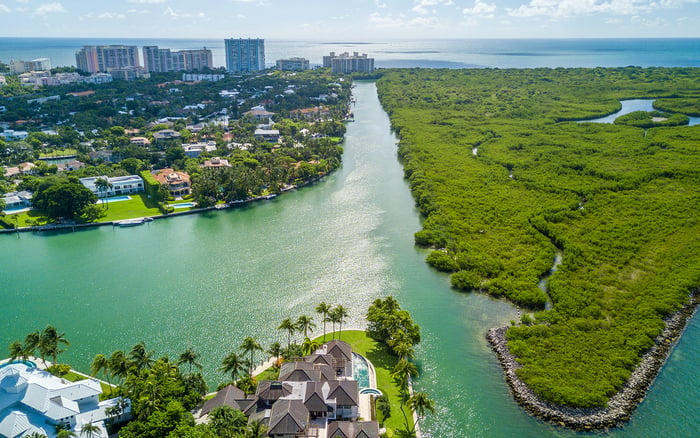
Single-family ownership can offer a different type of control and privacy, but it may also introduce more variability in maintenance and insurance dynamics. Taxes can still be a dominant long-term cost, yet they behave differently in a model where you are not sharing common-area economics with hundreds of neighbors.
In Broward, a buyer weighing oceanfront condominium living may compare it to a broader coastal lifestyle decision: convenience and services versus autonomy and land. A landmark building such as 2000 Ocean Hallandale Beach illustrates why many ultra-wealthy households accept the condo model when they want turnkey beachfront with a managed experience.
Luxury owners often say they are not sensitive to annual costs. Markets are.
Carrying costs shape the buyer pool at resale. A home that becomes “expensive to own” can narrow the next wave of qualified buyers, and that may show up as longer days on market, deeper negotiation, or a softer price-discovery process.
The impact is not uniform. Trophy residences with rare attributes can remain insulated. Yet even in trophy categories, the next buyer’s advisors will model the same variables you model today.
If you are buying in a submarket that is both globally visible and locally regulated, your exit underwriting should assume future buyers will be sophisticated. They will compare your property’s ongoing obligations to the alternatives down the street.
Ultra-wealthy buyers rarely own only one property. A property tax ballot question can become a portfolio concentration issue if you hold multiple Florida residences, or if you are considering a strategic shift into South Florida.
A disciplined framework:
Treat each home as a line-item with a “tax sensitivity score.”
Avoid stacking multiple high-tax-exposure assets in the same policy jurisdiction unless the lifestyle benefits justify the concentration.
Keep liquidity for variability. The goal is not to avoid taxes; it is to avoid forced decisions.
This is particularly relevant when a buyer is assembling a multi-city pattern with one primary base and multiple seasonal residences. Taxes should be modeled alongside travel cadence, staffing, and the opportunity cost of capital.
While you cannot control the ballot, you can control the architecture of the purchase.
Structure and titling: Align ownership structure with the household’s real intent and governance. Clean structure reduces friction if you later refinance, transfer, or sell.
Documentation discipline: If the home is intended to be a primary residence, prepare early. Administrative sloppiness can be expensive.
Conservative reserves: Build a “tax variance reserve” into annual planning. This is less about fear and more about protecting optionality.
Contract posture: In an uncertain year, it can be reasonable to negotiate more assertively on price or concessions to offset risk.
Choose the right product: In some cases, the best mitigation is selecting a property whose lifestyle value is so high that the household can hold it regardless of shifts in annual expenses.
Buyers exploring newer inventory with service-forward living sometimes prioritize convenience and long-term brand positioning. In Brickell, residences like Baccarat Residences Brickell often appeal to households that want a polished arrival experience and predictable operations, which can make the overall ownership equation feel more controllable, even when taxes remain a moving variable.
A property tax ballot measure is not merely a headline. For ultra-wealthy buyers, it is a reminder that the most elegant purchase is the one that still feels elegant after the first year of ownership.
Underwrite for variability, decide intentionally on primary versus second-home status, and negotiate with clarity. In South Florida-where lifestyle and capital intersect daily-the best acquisitions are the ones that remain effortless even as policy evolves.
Will a property tax ballot measure change my closing costs immediately? Not usually, but it can change your forward-looking carrying-cost assumptions and how you price the deal today.
Does this matter if I am an all-cash buyer? Yes. Cash removes financing risk, not the long-term drag of annual taxes on total ownership cost.
Is a primary residence typically treated differently from a second-home? Often, yes. Your intended use and documentation can materially affect how you should underwrite taxes.
Can a ballot outcome affect resale value in luxury markets? Indirectly, yes. Higher ongoing costs can narrow the future buyer pool and shift negotiating leverage.
Should I delay a purchase until after the vote? It depends on your risk tolerance. Some buyers pay for certainty; others negotiate better during uncertainty.
Do condos and single-family homes respond differently to tax changes? They can. Condos bundle shared costs with taxes, while single-family ownership concentrates costs on one owner.
How do lenders react when property taxes are expected to rise? Lenders may underwrite more conservatively, which can affect approvals and the effective buyer pool.
What is the most practical way to model tax uncertainty? Use scenario underwriting with at least a base case and a conservative case, then decide if the deal holds.
Can I negotiate protections related to tax uncertainty? You can often negotiate price, concessions, or timing, but specific protections depend on the contract structure.
What should I prioritize if I want to minimize surprises after closing? Clean structure, clear use intent, disciplined documentation, and a reserve for variability are the essentials.
For a tailored shortlist and next-step guidance, connect with MILLION Luxury.
If branded residences are on your mind — as a home or as an allocation — we would be glad to share what we are seeing, privately.
Begin a quiet conversation