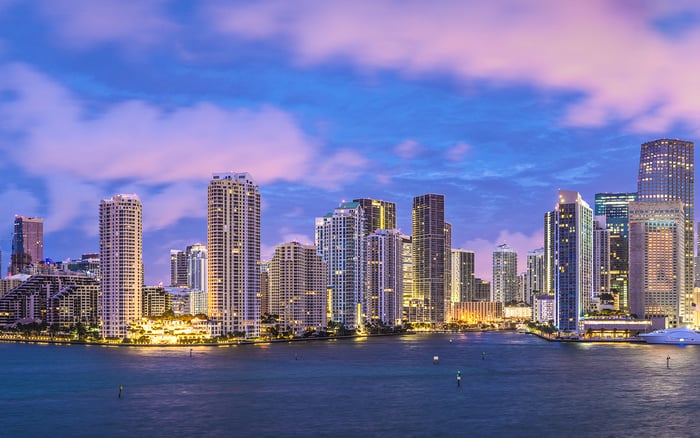
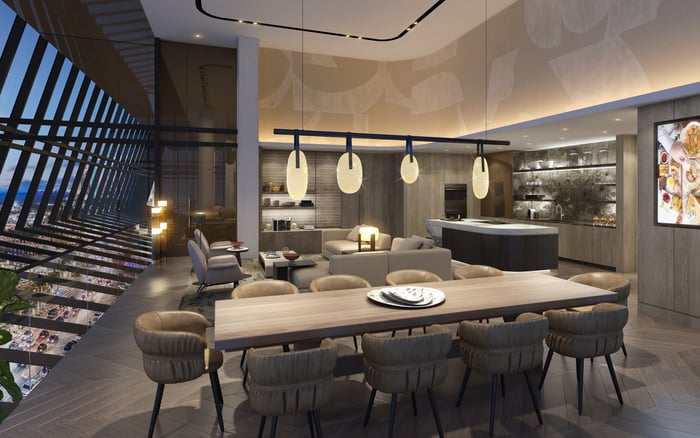
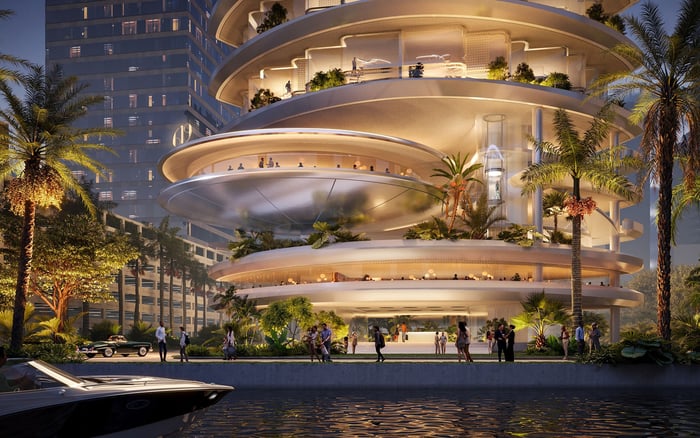
A buyer-focused comparison of The Cove Residences Edgewater, ORA by Casa Tua Brickell, and Waldorf Astoria Residences Downtown Miami through the lenses that matter most at the top of the market: penthouse scale, legal roof rights, and the real usability of elevated outdoor space.
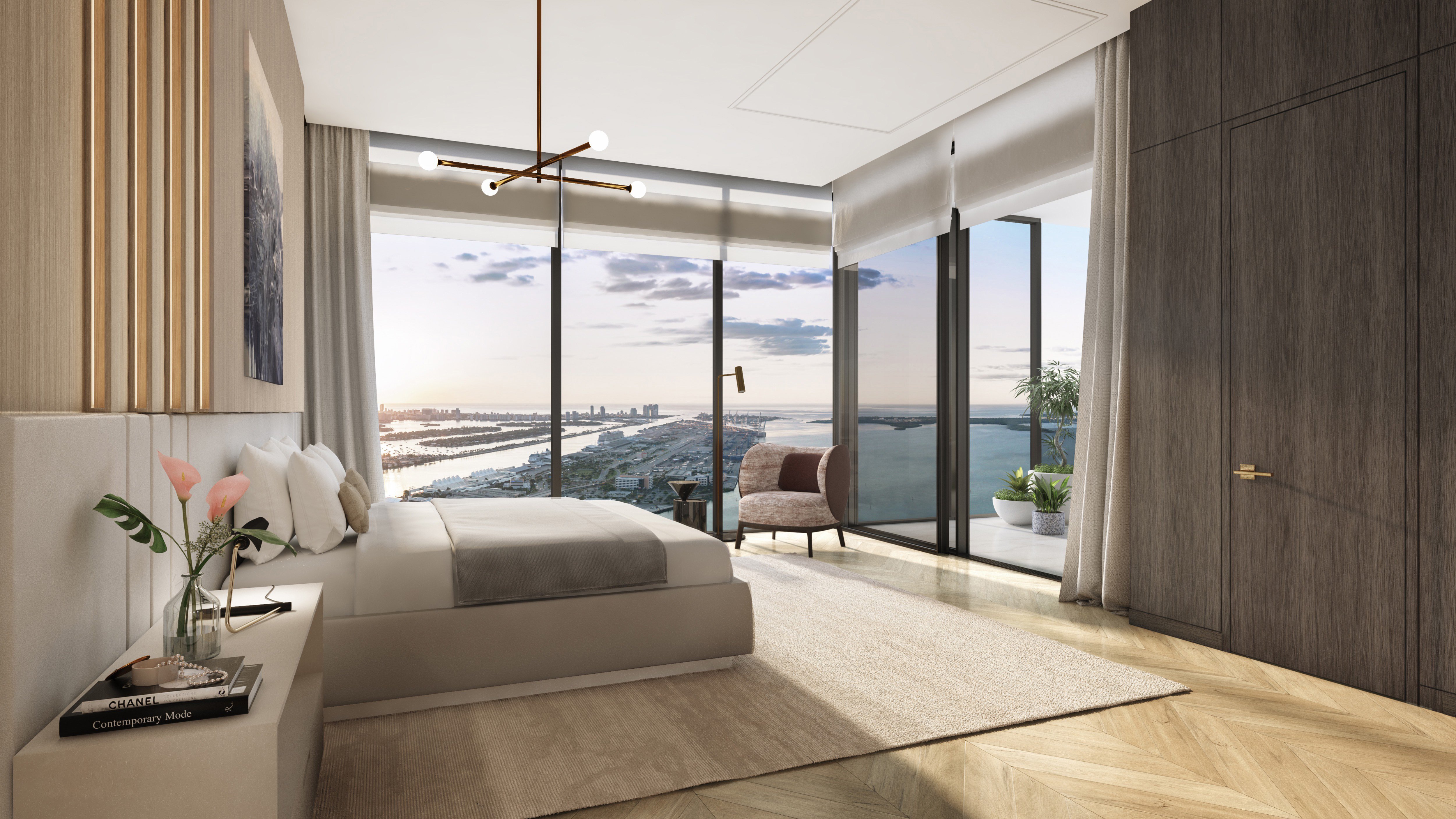
At the top of Miami’s condominium market, the conversation often starts with view, height, and square footage. The sharper question is more exacting: how will the residence live at 8 p.m. on a windy evening, during a family lunch, or when guests move between indoor rooms and outdoor terraces?
That is the meaningful distinction among The Cove Residences Edgewater, ORA by Casa Tua Brickell, and Waldorf Astoria Residences Downtown Miami. Each speaks to a different expression of luxury. One buyer may want a quieter private environment in Edgewater. Another may prefer Brickell’s social charge. A third may want the stature of a Downtown branded tower with dramatic skyline presence.
For a serious penthouse buyer, the decision is not simply which tower feels most impressive. It is whether the plan converts scale into livability, whether outdoor areas are protected enough for frequent use, and whether any rooftop or exclusive terrace rights are clearly conveyed in the legal documents.
Penthouse scale is seductive because it is easy to quantify. Interior area, ceiling presence, upper-floor placement, and the number of outdoor zones all create a sense of arrival. Yet the most successful penthouses are not merely larger residences. They are more intelligently organized residences.
In this comparison, ORA by Casa Tua Brickell is best understood as the social vertical-living choice. Its value proposition is tied not only to private residence scale, but also to hospitality-forward building programming and amenity culture. For the right buyer, that is a genuine advantage. The building becomes part of the lifestyle, with energy, service, and social access woven into daily life.
The tradeoff is ORA’s dense, urban, highly active Brickell setting. A buyer comparing penthouse scale here should separate private usable space from the broader lifestyle program. A large residence in a hospitality-rich building may still feel less private if shared terraces, sky-level amenities, and social spaces are not clearly buffered from private balconies or loggias.
Waldorf Astoria Residences Downtown Miami occupies a different category. It is the trophy-address option, where brand, architecture, and skyline identity are central to the appeal. Its Downtown location offers an urban-core exposure distinct from Brickell’s financial-district rhythm. For some buyers, that landmark quality is the point.
The diligence question at Waldorf is whether top-level value comes from protected interior volume or from exterior space that may depend more heavily on weather and wind. At great height, an outdoor room can feel very different from a terrace in a lower-rise luxury building.
Roof rights are not a mood, a rendering, or a sales phrase. They are a legal condition. Any private rooftop, plunge pool, exclusive-use terrace, or upper-level exterior area should be reviewed through the condominium documents, not merely through marketing language.
A buyer should ask whether the area is conveyed as part of the unit, designated as a limited common element, or treated as a shared common area with exclusive or practical access. Those categories can affect control, maintenance responsibility, renovation flexibility, insurance obligations, and resale clarity.
This is especially important when comparing The Cove Residences Edgewater with ORA by Casa Tua Brickell and Waldorf Astoria Residences Downtown Miami. If an offering appears to include a rooftop, terrace, or outdoor amenity connected to a specific residence, the buyer should confirm the legal structure before assigning premium value to it.
Language matters. “Private” may describe how an area feels. “Exclusive use” may describe who can access it. “Deeded” or legally assigned rights may describe something more durable. Luxury buyers should not treat those phrases as interchangeable.
In South Florida, the best outdoor space is not always the largest outdoor space. It is the space that can be used with comfort, discretion, and frequency.
For any terrace, the essentials are depth, wind protection, privacy, and adjacency to the main living areas. A narrow balcony with spectacular exposure may be beautiful at sunrise yet limited for dining. A deeper, more sheltered outdoor room off a living room or primary suite may create far more daily value, even if the stated square footage is smaller.
At Waldorf, wind comfort is central because extreme verticality changes the experience of exterior space. Buyers should stand in the actual or comparable outdoor condition whenever possible and think beyond the view. Can glassware stay on the table? Can conversation remain comfortable? Is there a protected corner for evening use?
At ORA, the outdoor-space question has a different emphasis. The buyer should study how private balconies or loggias relate to shared amenity terraces and sky-level gathering areas. The goal is to understand privacy, noise transfer, and exclusivity within a building designed around social hospitality.
For The Cove Residences Edgewater, the same standard should apply without assumption. Treat any promised exterior area as a diligence item: how deep it is, how exposed it is, how directly it connects to the interior plan, and what exactly the buyer controls.
The location choice may matter as much as the floor plan. Brickell offers the most urban experience in this set, with convenience, dining energy, business-district proximity, and a more public amenity culture. The buyer who thrives here often wants the building to amplify the city rather than retreat from it.
Downtown is a separate expression of urban Miami. With Waldorf Astoria Residences Downtown Miami, value is weighted toward branded-residence prestige, skyline drama, and landmark architecture. This is not the quiet, lower-profile choice. It is for the buyer who wants a residence with a vertical identity.
Edgewater suggests a different instinct. The area tag Edgewater often evokes a residential waterfront sensibility within the broader city, but project-specific assumptions should still be avoided until the buyer confirms the actual plan, documents, and exterior-space rights. In a comparison that includes The Cove Residences Edgewater, the buyer should ask whether the appeal is privacy, water orientation, or simply a less hyper-social daily rhythm than Brickell.
The most refined decision is rarely about which project is “best.” It is about which version of luxury will still feel correct after the initial view premium has faded.
First, rank the private residence before the building story. Does the interior plan work without relying on amenities? Are the main living areas gracious, quiet, and well connected to outdoor rooms?
Second, separate usable outdoor area from total outdoor area. A well-protected dining terrace may be worth more than a larger exposed platform. Wind, depth, shade, privacy, and furniture placement should be evaluated together.
Third, treat roof rights as a legal review. Ask exactly what is owned, what is assigned, what is shared, and what can be altered. A luxury premium should attach to rights that are durable and clear.
Finally, choose the social setting honestly. Brickell energy, Downtown trophy height, and Edgewater discretion are not minor differences. They determine how the home feels when the elevator doors open and the city recedes behind the glass.
Which project is the most urban choice in this comparison? ORA by Casa Tua Brickell is the most urban choice, with a Brickell setting and hospitality-forward vertical lifestyle.
What makes Waldorf Astoria Residences Downtown Miami different? It is the branded trophy-address option, with skyline presence and landmark architecture central to its appeal.
How should buyers evaluate The Cove Residences Edgewater? Buyers should focus on the actual residence plan, exterior usability, and documented rights rather than assuming any specific feature.
Are roof rights the same as private terrace access? No. Roof rights should be verified in legal documents to determine whether the area is part of the unit, a limited common element, or shared common area.
Why does wind matter so much in a penthouse? At height, exposed outdoor space can feel dramatically different from lower-floor terraces, affecting dining, lounging, and everyday use.
Is more outdoor square footage always better? No. Depth, protection, privacy, and adjacency to living areas often matter more than the raw square-foot number.
Who is the best fit for ORA by Casa Tua Brickell? ORA suits buyers who value social programming, amenity energy, and a dense Brickell lifestyle as part of the residential experience.
Who is the best fit for Waldorf Astoria Residences Downtown Miami? Waldorf suits buyers prioritizing branded prestige, dramatic views, and an unmistakable skyline identity.
What should penthouse buyers ask before paying for rooftop value? They should ask what is legally conveyed, who maintains it, who can access it, and whether alterations are permitted.
What is the simplest way to compare these three options? Compare private scale, legal control of exterior space, and the lifestyle setting: Brickell energy, Downtown stature, or Edgewater calm.
When you're ready to tour or underwrite the options, connect with MILLION.
If branded residences are on your mind — as a home or as an allocation — we would be glad to share what we are seeing, privately.
Begin a quiet conversation