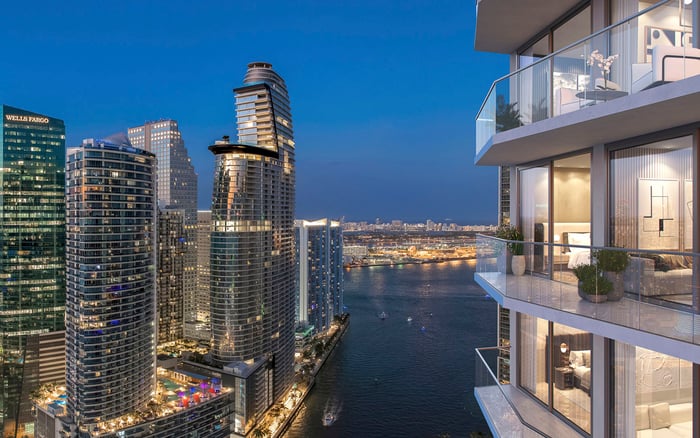
A practical checklist for evaluating developer incentives in South Florida luxury condominiums, from deposit structures and credits to upgrade packages, timelines, resale exposure, and the long-term value behind each concession.

In South Florida luxury new development, incentives can be elegant, subtle, and highly negotiable. They may appear as closing credits, decorator allowances, preferred financing terms, parking accommodations, club access, storage, limited-time pricing, or bespoke upgrade packages. The essential discipline is to translate each offer into one comparable figure: the true net cost of ownership.
A buyer should begin with the contract price, deposit schedule, estimated closing costs, projected association dues, anticipated insurance exposure, taxes, build-out budget, and any carrying costs before occupancy. Only then should the incentive be applied. A six-figure credit can sound compelling, but its value depends on when it is realized, whether it reduces cash due at closing, whether it is assignable, and whether it affects future valuation. In the ultra-premium market, the best incentive is rarely the loudest one. It is the one that improves flexibility without compromising the quality of the asset.
Not all incentives serve the same purpose. Some are designed to reward early commitment in pre-construction, when the buyer assumes greater timeline and delivery uncertainty. Others appear later, when a building is closer to completion and the developer is managing remaining inventory. A finished residence may carry a different menu of concessions than a unit still in planning or vertical construction.
Closing credits are straightforward, but they should be reviewed carefully in the purchase agreement. Upgrade allowances can be valuable, particularly when they apply to finishes a buyer would have chosen anyway. Furniture packages may help a second-home owner move quickly, but they should not be confused with enduring real estate value. Parking, storage, and private access rights can be more meaningful in dense luxury locations, especially where convenience and scarcity shape daily life.
Search shorthand often reduces opportunities to tags such as Brickell, Miami Beach, Sunny Isles, new construction, pre-construction, and investment; the actual decision should be more nuanced. The question is not simply what is being offered, but why it is being offered.
The deposit structure is often more important than the advertised concession. In a new-development purchase, capital may be committed in stages long before closing. The buyer should understand the timing of each deposit, whether funds are refundable under limited circumstances, what milestones trigger additional payments, and how delays are handled.
Liquidity matters. A buyer considering multiple residences, a future sale, or a portfolio reallocation should avoid evaluating an incentive in isolation. A generous allowance loses appeal if it requires a deposit cadence that creates unnecessary pressure elsewhere. For international buyers, family offices, and buyers coordinating trust or entity structures, timing can be as strategic as price.
The most refined buyers ask a simple question: if no incentive existed, would the residence still be worth owning? If the answer is uncertain, the concession is not a reason to proceed. It is a reason to pause.
Every incentive should be documented in writing. Verbal assurances, presentation language, and showroom conversations are not substitutes for contract terms. The agreement should state the amount, form, timing, conditions, exclusions, and expiration of any concession. If a credit applies only at closing, the buyer should know whether it survives a delay. If an upgrade package is included, the buyer should understand the selection process, deadlines, specifications, and substitution rights.
Legal review is especially important when incentives involve financing, rental use, club privileges, assignment rights, or closing adjustments. A buyer should also examine whether the incentive changes the stated purchase price or simply offsets costs. That distinction can matter for future resale optics and financing review.
Luxury buyers often move quickly when a preferred line, view, or floor becomes available. Speed is acceptable. Ambiguity is not.
A private terrace finish, custom closet allowance, or curated furniture package may enhance immediate enjoyment. That does not mean the market will assign equal resale value later. Buyers should separate personal utility from transferable value.
In Brickell, incentives may compete with the convenience of financial-district living, restaurant access, and skyline views. In Miami Beach, the calculus often turns on privacy, beach proximity, design pedigree, and the quality of arrival. In Sunny Isles, buyers may weigh oceanfront orientation, vertical amenities, and the scarcity of unobstructed water views. Each submarket has its own hierarchy of value, and incentives should be interpreted within that hierarchy.
A tasteful upgrade can help a residence feel finished. A rare floor plan, enduring view corridor, elegant amenity program, and disciplined building management usually matter more.
Incentives can be a window into a developer’s priorities. They may indicate a desire to accelerate a specific stack, close out remaining inventory, reward larger residences, or encourage buyers to act before a pricing adjustment. None of these signals is inherently negative. They may create opportunity for a decisive buyer.
The key is to identify whether the incentive is broad or selective. If every buyer is being offered the same concession, it may reflect a market-wide strategy. If the offer applies only to a particular residence, the buyer should ask why. Is the view less preferred? Is the layout more specialized? Is the closing timeline unusually near? Is another line more liquid for future resale?
A sophisticated purchase balances discretion with curiosity. The buyer does not need drama. The buyer needs clarity.
The best checklist extends beyond contract execution. Buyers should evaluate the association budget, maintenance philosophy, service model, reserve posture, insurance assumptions, parking logistics, pet policies, rental restrictions, guest protocols, and amenity access. A temporary concession cannot compensate for a building that does not match the buyer’s way of living.
For an investment purchase, rental flexibility and exit liquidity may carry more weight than a design allowance. For a second residence, lock-and-leave service, security, and ease of ownership may be paramount. For a primary home, school routes, medical access, club life, and neighborhood rhythm may influence value more than any closing credit.
The checklist should end where the ownership experience begins: Will this building feel effortless five years from now?
Luxury negotiation is most effective when it is specific. Rather than asking for every possible concession, the buyer should identify the two or three terms that genuinely matter. That might mean a better deposit schedule, a defined credit at closing, upgraded appliance specifications, additional storage, or flexibility around closing timing.
A precise request signals seriousness. It also allows the developer to respond constructively. In many cases, the strongest outcome is not the maximum visible discount, but the cleanest combination of price, terms, timing, and certainty.
The buyer’s leverage depends on the residence, the stage of sales, the depth of demand, and the developer’s priorities. A rare penthouse-like line may have little room for concession. A remaining residence in a mature sales cycle may offer more flexibility. The art is knowing which conversation you are in.
What is a new-development incentive? It is a concession or benefit offered by a developer, such as a credit, allowance, upgrade, or adjusted term connected to a purchase.
Are incentives the same as discounts? Not always. Some reduce the effective cost, while others add lifestyle value without changing the stated purchase price.
Should I prioritize price or terms? Prioritize the full economic picture. Deposit timing, closing credits, and liquidity can be as important as the headline price.
Can incentives affect resale value? They can influence your basis, but future buyers usually focus on location, views, floor plan, condition, and building quality.
Are upgrade allowances worth negotiating? Yes, if they apply to finishes or improvements you would have selected regardless of the concession.
What should be written into the contract? The amount, timing, conditions, exclusions, and survival of every incentive should be clearly documented.
Do incentives mean a project is weak? Not necessarily. They may reflect inventory strategy, timing, or a desire to reward decisive buyers.
How should cash buyers evaluate incentives? Cash buyers should focus on net cost, closing flexibility, carrying costs, and whether the concession improves liquidity.
Are incentives different in completed buildings? Often, yes. Completed inventory may involve more immediate closing considerations and fewer construction-stage uncertainties.
What is the most important question to ask? Ask whether you would still want the residence without the incentive. If yes, the concession may be a true advantage.
To compare the best-fit options with clarity, connect with MILLION.
If branded residences are on your mind — as a home or as an allocation — we would be glad to share what we are seeing, privately.
Begin a quiet conversation