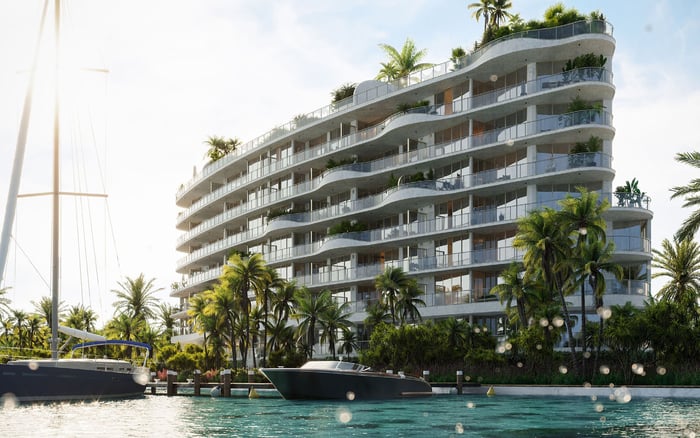
A discreet ownership strategy begins with precise paperwork. For buyers considering Bay Harbor Towers and La Maré Bay Harbor Islands, municipal registration must be distinguished from project-specific trust acceptance, occupant procedures, and succession requirements.

For a family acquiring a South Florida residence, the buyer file deserves the same attention as the floor plan. The essential questions are personal: who will hold title, who will occupy the home, who may act for the owner, and what happens when that authority changes. A considered purchase keeps those questions distinct rather than assuming one approval answers them all.
At Bay Harbor Towers and La Maré Bay Harbor Islands, buyers should seek written, project-specific confirmation of trust-title acceptance, occupant registration, and successor-trustee procedures. These remain open diligence questions until the applicable documents and written responses establish the answers. Municipal registration is no substitute for that review.
Bay Harbor Islands requires condominium associations, multifamily homeowner associations, cooperative apartment associations, and commercial and rental buildings to register with its Code Compliance unit. This obligation applies to buildings and associations; it is not a buyer approval process.
The annual filing deadline is January 30, with a stated municipal registration fee of $100. That amount should not be confused with either development’s application, screening, transfer, or occupant-registration charge. Late municipal registration can lead to escalating penalties and ultimately a lien. Buyers should ask about compliance while keeping it separate from their anticipated closing expenses.
The initial registration deadline of February 1, 2023 belongs to the program’s historical implementation, not its annual filing calendar. Equally important, the municipal framework does not establish a publicly available registry of every occupant or beneficial owner. Nor should it be read as a promise of anonymity.
The Town’s condominium-document initiative creates a searchable online database of association governing documents, financial statements, and structural documentation. Its framework includes declarations, bylaws, articles of incorporation, amendments, budgets, financial records, and insurance materials. These categories offer a useful starting point for organizing a buyer’s review.
Request the documents applicable to the specific residence and association under consideration. Ask counsel to identify provisions governing ownership eligibility, transfers, occupancy, and authority to act for an owner. Keep financial, insurance, and structural materials alongside that legal review without assuming they resolve trust or succession questions.
For Bay Harbor Towers, obtain its own governing documents and written management or developer responses. La Maré’s disclosures cannot establish Bay Harbor Towers’ rules. The same discipline applies if a search expands to Bal Harbour and Rivage Bal Harbour: use a consistent diligence framework, but never carry an approval or restriction from one property to another.
The practical question is not simply whether a buyer prefers a trust. It is whether the proposed title structure is acceptable for the specific transaction-and what evidence the relevant parties require. Ask for a written answer identifying the proposed vesting, the acting trustee, and any review or approval process.
A certification of trust and trustee authorization are sensible documents to discuss with counsel. Neither is established as a mandatory submission for either development. Ask whether a certification would suffice, whether additional material would be requested, and who would receive it. This matters particularly when the family wishes to limit unnecessary disclosure of private arrangements.
Request a written fee schedule and anticipated review timeline as well. Distinguish association requests from closing and title requests, and ask the responsible reviewer to identify the basis for each requirement. The goal is a usable approval record, not a general assurance that trust ownership should be straightforward.
Title and occupancy require separate diligence. A proposed trust arrangement does not, by itself, establish who may stay in the residence or what information must be furnished about those individuals.
Ask how the project distinguishes owners, beneficiaries, family members, guests, and other intended occupants. Seek confirmation of any screening, registration, access credentials, update procedures, and applicable charges. Do not assume any of these project-specific requirements apply to Bay Harbor Towers or La Maré without written support.
For a household expecting different family members to use the residence throughout the year, prepare a clear description of the intended arrangement. Ask whether the response changes when the trustee is not an occupant or when an occupant changes without a title transfer. Keep the answer with the relevant rules and application materials so the family has one coherent operational file.
Succession planning should establish who can communicate with management and act for the owner after a change in circumstances. Before closing, ask how the association would recognize a successor trustee and whether that change would trigger a notice, document review, fee, or other procedure.
Discuss possible supporting materials with estate and real-estate counsel. Depending on the circumstances, the preparation file might include a certification of trust, trustee authorizations, a death certificate, or probate records. These are planning recommendations, not verified submission requirements for either property. Not every document will be appropriate to every ownership structure.
Ask separately about a change of trustee and a transfer of title to another owner. Do not presume they receive identical treatment. A useful written response identifies the receiving party, necessary evidence, and any interim arrangements for communications or access while authority is being confirmed.
La Maré’s Bay Collection address is 10301 East Bay Harbor Drive, Bay Harbor Islands, Florida 33154. The developer comprises 10301 Bay Harbor Development LLC, 9955 Bay Harbor Development LLC, and 9781 Bay Harbor Development LLC collectively. Buyers should ask counsel to match the residence, contracting entity, and applicable condominium documents rather than treating the broader name as sufficient identification.
Boat-slip diligence deserves separate attention. La Maré’s advertised private boat slips do not establish a particular residence’s entitlement, guest access, or transfer rights. Ask for the instrument governing any proposed slip arrangement and written confirmation of how ownership changes or trustee succession would affect it.
The strongest buyer file separates established municipal obligations from written project approvals and unresolved questions. It should identify the intended titleholder, authorized representative, occupants, relevant governing provisions, and the procedure to follow when circumstances change. Retain dated responses and their supporting documents.
For a legacy-minded buyer, this is not paperwork for its own sake. It aligns the home’s intended use with the ownership structure before expectations become commitments. Have counsel resolve legal questions and confirm transaction-specific requirements before relying on them.
For a considered approach to your South Florida residential search, connect with MILLION.
If branded residences are on your mind — as a home or as an allocation — we would be glad to share what we are seeing, privately.
Begin a quiet conversationTrust-title acceptance should remain an open diligence question until confirmed for the specific transaction. Request written confirmation and the applicable governing provisions.
The Town requires registration of condominium associations, multifamily homeowner associations, cooperative apartment associations, and commercial and rental buildings. This is separate from individual buyer approval.
The annual filing deadline is January 30. The February 1, 2023 deadline relates to the program’s initial implementation.
No. It is the stated municipal registration fee, not an established application or occupant-screening charge for either development.
Late registration can result in escalating penalties and ultimately a lien.
No. It addresses building- and association-level registration, not a publicly available registry of every occupant or beneficial owner.
Request the applicable declaration, bylaws, articles of incorporation, and amendments, along with financial, insurance, and structural materials. Ask counsel to identify provisions relevant to title, occupancy, and transfers.
They are not established mandatory submissions for either project. Discuss appropriate documents with counsel and obtain the property’s actual requirements in writing.
No. Bay Harbor Towers requires a separate review of its own applicable documents and written responses.
No. Advertising private slips does not establish a particular residence’s entitlement, guest access, or transfer rights; confirm the proposed arrangement in writing.