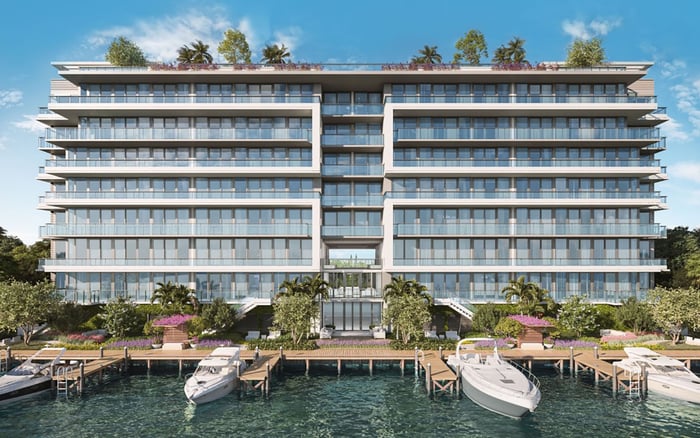
At La Maré Bay Harbor Islands, rental flexibility belongs in the document review, not the lifestyle assumptions. A buyer-focused checklist separates lease minimums, rental caps, guest permissions, and municipal requirements from the distinct question of resale liquidity.

For a serious buyer considering La Maré Bay Harbor Islands, the decisive question lies beyond the presentation: what uses are permitted when the owner’s plans change?
A longer absence, a delayed resale, or a family member’s extended visit can each raise distinct occupancy questions. Rental permission offers a potential holding-period option, not an exit from ownership. A residence that can generate income is not necessarily one that can be sold on the owner’s preferred timetable.
Begin by matching the purchase documents to the exact collection, residence, and association. Do not assume that documents bearing a similar project name govern the residence under consideration.
Treat La Maré’s minimum lease term, annual leasing allowance, and building-wide rental cap as unconfirmed until the governing documents establish them. These are distinct controls, not interchangeable ways of saying that rentals are allowed.
Minimum lease duration
determines the shortest permitted tenancy. It can make an annual or medium-term rental strategy more relevant than a short stay, even where municipal licensing might otherwise be available. Ask whether the minimum applies equally to initial leases, renewals, and extensions.
Annual lease frequency
governs how often a unit may be leased within the applicable period. Request the counting rules: whether the period is a calendar year or another interval, and whether a renewal or replacement tenant counts toward the allowance. A compliant lease duration alone does not establish permission for repeated tenancies.
A building-wide rental cap
would limit the number or proportion of residences that may be rented simultaneously. Ask whether a cap exists, whether availability must be confirmed before signing a lease, and whether a queue or allocation process applies. Do not assume that unit-level permission guarantees immediate access to a rental allocation.
For buyers also considering Alana Bay Harbor Islands, apply the same three-part review rather than carrying La Maré assumptions into another building. Each association requires its own documentary answer.
A private residential atmosphere may suit an owner’s lifestyle without resolving any rental question. Boutique scale does not establish a short-term-rental prohibition, a favorable approval process, or predictable resale liquidity.
Request the declaration, bylaws, current rules and regulations, rental addenda, and applicable amendments. Have counsel reconcile the provisions rather than relying on a general assurance that the building is rental-friendly.
The written response should also address possible first-year leasing restrictions, owner-occupancy requirements, tenant applications, approval timing, fees, and deposits. These are diligence questions, not established La Maré restrictions. Ask who has authority to approve a tenancy and which document governs that decision.
If the purchase depends on rental availability, resolve these questions before relying on the income assumption. A projected lease start is useful only if the required permission can be obtained on that schedule.
Guest occupancy deserves its own review, particularly for a second home intended to serve several generations. Permission to entertain visitors while the owner is present does not necessarily permit unaccompanied stays.
Ask how the association defines a guest, whether owner presence matters, and whether relatives receive different treatment from other visitors. Confirm registration requirements, stay limits, frequency limits, and any restrictions on consecutive visits. If ownership will be through an entity, ask how authorized occupants are identified.
Keep amenity access separate from permission to occupy the residence. Confirm whether guests may use shared facilities without the owner and whether additional authorization is needed. If boat-slip use is part of the purchase, review those rights separately; amenity access establishes neither rental rights nor unaccompanied guest privileges.
Describe the family’s intended use precisely in writing. “Occasional guests” is less useful than a clear account of who will stay, whether the owner will be present, and for how long.
Association permission and governmental authorization are separate questions. Neither substitutes for the other, and neither should be assumed from the building’s waterfront setting.
Treat Bay Harbor Islands vacation-rental licensing as a unit-specific inquiry, not blanket permission covering every residence. Confirm current requirements directly with the town and appropriate state and county authorities before treating any short-stay strategy as available.
Ask which vacation-rental licenses, business tax receipts, state lodging licenses, and state or county tax registrations apply to the intended use. Also ask whether written condominium or management consent, ownership and identification documents, a floor plan, parking information, or inspections are required. Confirm applicability and completeness; this checklist is not a definitive statement of current law.
Do not carry assumptions between Bay Harbor Islands and Bal Harbour simply because both appear in a luxury-home search. If Onda Bay Harbor joins the shortlist, its association permissions still require independent review.
Build the holding analysis in two stages. First, calculate the ownership budget without rental income. Then add only the leasing scenario permitted by the documents and applicable governmental requirements.
Use the residence’s current assessment and budget information rather than a generalized project-level fee. Include relevant ownership costs and any confirmed leasing expenses. Model vacancy and approval delays as sensitivities, not predictions.
Compare personal use, permitted rental use, and a longer-than-planned hold side by side. This reveals whether rental income is merely helpful or essential to the purchase decision.
Nightly revenue should not support the base case unless both condominium rules and applicable governmental requirements permit that use. Nor should guest permission become the basis of an income strategy without confirmation of how compensated occupancy is classified.
Before treating leasing as a bridge to resale, ask counsel to review how a proposed tenancy could affect showings, buyer occupancy, and the contemplated sale. The goal is to understand the actual agreement, not to assume that a lease preserves every selling option.
Keep three conclusions separate: the ability to occupy, the ability to earn permitted rental income, and the ability to sell. Confirm that the residence permits the intended personal use; rental income requires its own written permissions, and resale remains a separate transaction.
The disciplined buyer completes diligence with a residence-specific document file, written occupancy answers, and a holding budget that does not depend on unconfirmed rental rights. That is a more durable form of flexibility than an appealing but undefined promise.
For a discreet, document-led approach to your South Florida property search, connect with MILLION.
If branded residences are on your mind — as a home or as an allocation — we would be glad to share what we are seeing, privately.
Begin a quiet conversationTreat the minimum term as unconfirmed until the governing documents establish it. Obtain the rule applicable to the exact collection and residence before planning rental use.
No: an annual leasing limit controls lease transactions for a unit, while a building-wide rental cap controls how many residences may be rented simultaneously.
No. Nightly rental income should not enter the base case unless both condominium rules and applicable governmental requirements permit that use.
Request the declaration, bylaws, current rules and regulations, rental addenda, and applicable amendments. Have counsel reconcile those documents with written answers about the intended occupancy.
The purchase documents must correspond to the exact collection, residence, and association. Do not assume that documents bearing a similar project name govern the residence under consideration.
Confirm that permission in writing rather than assuming family visits are exempt from occupancy rules. Ask about owner presence, registration, stay duration, and amenity access.
No. If boat-slip use is part of the purchase, those rights should be reviewed separately from permission to rent the residence or allow unaccompanied guests.
No. Governmental authorization and association permission are separate questions, and both must be evaluated for the intended rental use.
Start with a no-rent ownership budget using residence-specific assessment information. Add rental income only for a permitted scenario and test vacancy, approval delays, and confirmed leasing expenses.
No. Renting may support a longer holding period, but it does not complete a sale or guarantee a resale timeline.