Private gyms have become a serious due-diligence item for Miami penthouse buyers, where wellness, engineering, approvals, privacy, and long-term resale value now intersect.
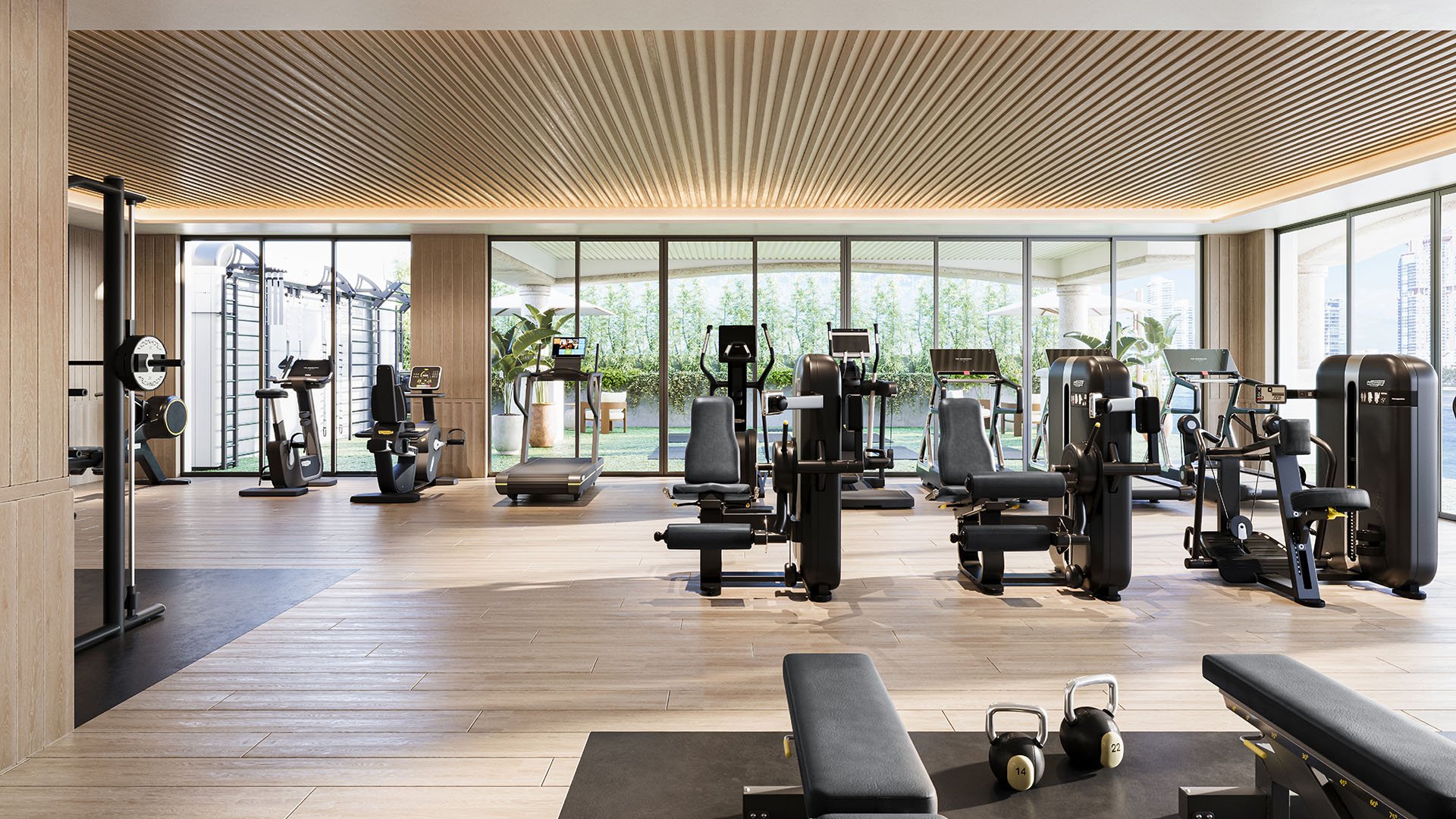
For years, the private gym inside a Miami penthouse was treated as a lifestyle flourish: a mirror-lined room, a treadmill facing the water, and a few pieces of strength equipment selected after closing. In 2026, that view feels incomplete. The private gym has become a technical, operational, and resale question, especially in upper-floor residences where weight, vibration, sound, humidity, privacy, and building approvals all converge.
The shift is not about excess. It is about control. A buyer who already has access to a building fitness center may still want a private training room for early sessions, family use, visiting trainers, recovery work, or discreet daily routines. The challenge is that a penthouse is not a blank canvas. It is part of a vertical structure, with neighbors below, mechanical systems around it, and building rules that may shape what can be installed, how it can be delivered, and whether it can be modified later.
That is why the smartest penthouse buyers now ask a more pointed question before they fall in love with the view: can this residence support the wellness program I actually intend to live with?
New-construction buyers often review floor plans, terraces, ceiling heights, exposure, parking, storage, and finishes with great care. The private gym deserves the same discipline. In Brickell, where vertical living and branded residential design continue to define the skyline, residences such as The Residences at 1428 Brickell and St. Regis® Residences Brickell illustrate how buyer expectations have moved toward homes that can support a fully considered lifestyle, not only a beautiful arrival sequence.
A private gym evaluation should begin before interiors are finalized. The question is not simply whether a secondary bedroom, den, staff room, or media space can be styled as a gym. The question is whether the intended use fits the bones of the residence. A yoga and mobility studio has different requirements than a strength room. Pilates equipment, free weights, boxing, cardio machines, recovery zones, and cold-plunge concepts each introduce distinct demands.
A cautious buyer will ask the design team to think in layers: structure, acoustics, mechanical performance, electrical capacity, floor protection, waterproofing where relevant, delivery logistics, and future reversibility. In luxury real estate, the most elegant gym is often the one that disappears into the architecture, performs quietly, and avoids hidden friction with the building.
The private gym conversation often starts with aesthetics, but due diligence starts with load. Heavy equipment, concentrated weight, dynamic movement, and repeated impact all require careful review. Buyers should understand whether the proposed location can accommodate the intended equipment and whether any placement limitations apply.
Vibration is equally important. A treadmill, rowing machine, reformer, or strength station may seem harmless in isolation, yet repeated use can travel through floors, walls, and structural elements. A premium installation should address underlayment, isolation, equipment selection, and layout. The goal is not only comfort inside the penthouse. It is also courtesy to the building.
Acoustics deserve the same scrutiny. A private gym near a primary suite, media room, family room, or shared wall can become a daily annoyance if sound is treated as an afterthought. The question is not whether the room looks quiet in renderings. It is whether the assembly, door specification, flooring system, and equipment choices support quiet use.
Ventilation and cooling can also become defining issues. A room used for training produces heat, humidity, and odors differently from a guest bedroom or office. Buyers should consider airflow, temperature control, and material durability, especially in a coastal climate where moisture management matters. A gym with exceptional finishes but poor air quality will not age gracefully.
Waterfront penthouses add another layer of nuance. The promise is obvious: sunrise cardio, open views, and a training experience that feels closer to a private wellness club than a domestic room. Yet glass, exposure, sunlight, and terrace adjacency require thoughtful planning. A gym that becomes too hot, too bright, or too visible from neighboring sightlines may be used less than expected.
In Miami Beach, projects such as The Perigon Miami Beach underscore the appeal of refined coastal living, where wellness is expected to feel calm rather than clinical. In Sunny Isles, Bentley Residences Sunny Isles speaks to a buyer profile that often values privacy, design identity, and convenience inside the residence.
For these buyers, the private gym should be placed with equal attention to views and discretion. Glass can motivate, but it can also expose. A trainer arriving through private or semi-private circulation may be convenient, but the building’s rules and access protocols still matter. Storage for mats, weights, towels, and recovery tools should be integrated rather than improvised.
At the highest end, privacy is not merely a feature. It is a form of daily ease. On Fisher Island, where residences are often considered through the lens of seclusion and lifestyle continuity, The Residences at Six Fisher Island offers a useful context for how ultra-private buyers think. A private gym in this setting is less about avoiding shared amenities and more about preserving rhythm: wake, train, recover, host, work, travel, repeat.
That rhythm should inform the room. Is the gym near the primary suite for morning use, or near a service corridor for trainer access? Can equipment be delivered without compromising finishes? Is there a place for recovery, stretching, hydration, and storage? Can the space later become a studio, office, bedroom, or wellness lounge if a future buyer has different priorities?
Reversibility is one of the least glamorous but most valuable due-diligence concepts. A highly customized gym can be extraordinary for one owner and limiting for the next. The best installations feel bespoke without becoming permanent in ways that narrow resale appeal.
Before a buyer commits to a private gym plan, the approval path should be clarified. Building associations, management teams, architects, engineers, designers, and contractors may all have roles to play. The timeline can affect closing expectations, renovation schedules, and move-in planning.
Buyers should ask what submissions are required, what work is permitted, whether specific hours apply, how equipment deliveries are handled, and whether any protections are required for elevators, corridors, and common areas. Insurance, contractor credentials, and alteration agreements should be reviewed with the same seriousness as finish selections.
The most expensive mistake is assuming that a room can be converted simply because it appears large enough. In a luxury tower, the right to alter is rarely casual. The more ambitious the gym, the earlier the conversation should begin.
A private gym due-diligence review can be distilled into a disciplined checklist. What is the intended training use? Which equipment is essential, and which pieces are optional? Where will the heaviest items sit? How will the floor assembly manage impact and vibration? Does the room have adequate cooling, airflow, lighting control, and privacy? What approvals are required? What would it take to remove the installation later?
A buyer should also consider how the gym relates to the rest of the home. A wellness room that interrupts the elegance of the plan may underperform, no matter how expensive the equipment. A gym that is quiet, proportioned, technically sound, and easy to maintain can become one of the most used spaces in the residence.
In 2026, the private gym is no longer a bonus room with better branding. It is a measure of whether a penthouse has been evaluated as a complete living system. For Miami’s most discerning buyers, that is the real luxury.
Why are private gyms in Miami penthouses a due-diligence issue? They can involve structural load, vibration, acoustics, ventilation, approvals, and delivery logistics. These questions should be reviewed before a buyer commits to a design.
Can any penthouse room become a private gym? Not always. Suitability depends on the room’s location, building rules, mechanical conditions, flooring strategy, and the type of exercise planned.
What is the first question a buyer should ask? Start with intended use. A quiet stretching studio and a strength-focused training room create very different technical requirements.
Do private gyms affect resale value? They can support appeal when designed with restraint and reversibility. Overly permanent or highly specific installations may narrow the future buyer pool.
Is vibration more important than soundproofing? Both matter. Vibration can travel through the structure, while airborne sound can disturb adjacent rooms or neighboring residences.
Should equipment be selected before closing? Preliminary equipment planning is helpful because it informs load, layout, electrical needs, flooring, and delivery strategy.
Do waterfront penthouses need special gym planning? Yes. Sun exposure, heat, glare, privacy, and humidity management can all affect comfort and long-term material performance.
Who should review a private gym plan? Buyers commonly involve a designer, contractor, and appropriate technical professionals, with building management guiding required approvals.
Is a private gym better than a building fitness center? It is not necessarily better, but it offers privacy, timing control, and personalization. Many luxury buyers value having both options.
What makes a penthouse gym feel truly luxurious? Quiet performance, elegant integration, proper air quality, thoughtful storage, and a layout that supports daily use without visual clutter.
When you're ready to tour or underwrite the options, connect with MILLION.
If branded residences are on your mind — as a home or as an allocation — we would be glad to share what we are seeing, privately.
Begin a quiet conversation