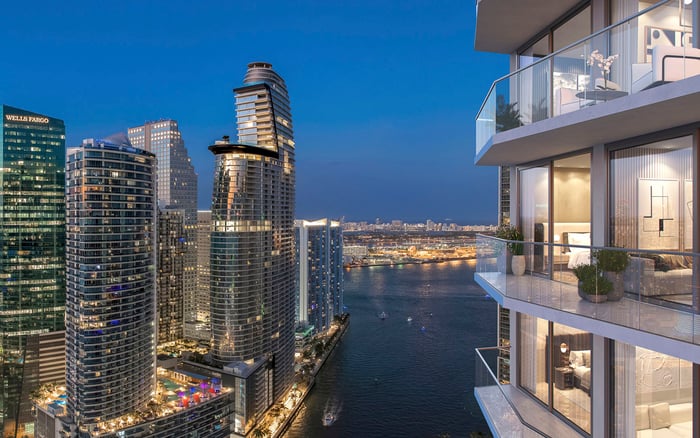
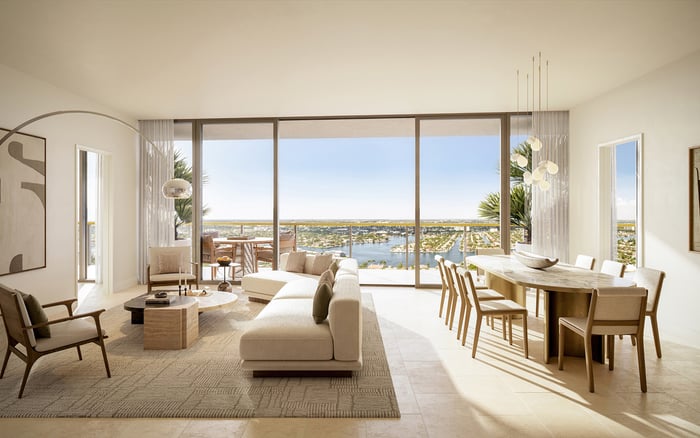
Miami penthouse buyers are looking beyond bedroom size and asking whether primary-suite wings function as private, resilient, serviceable living environments within the home.
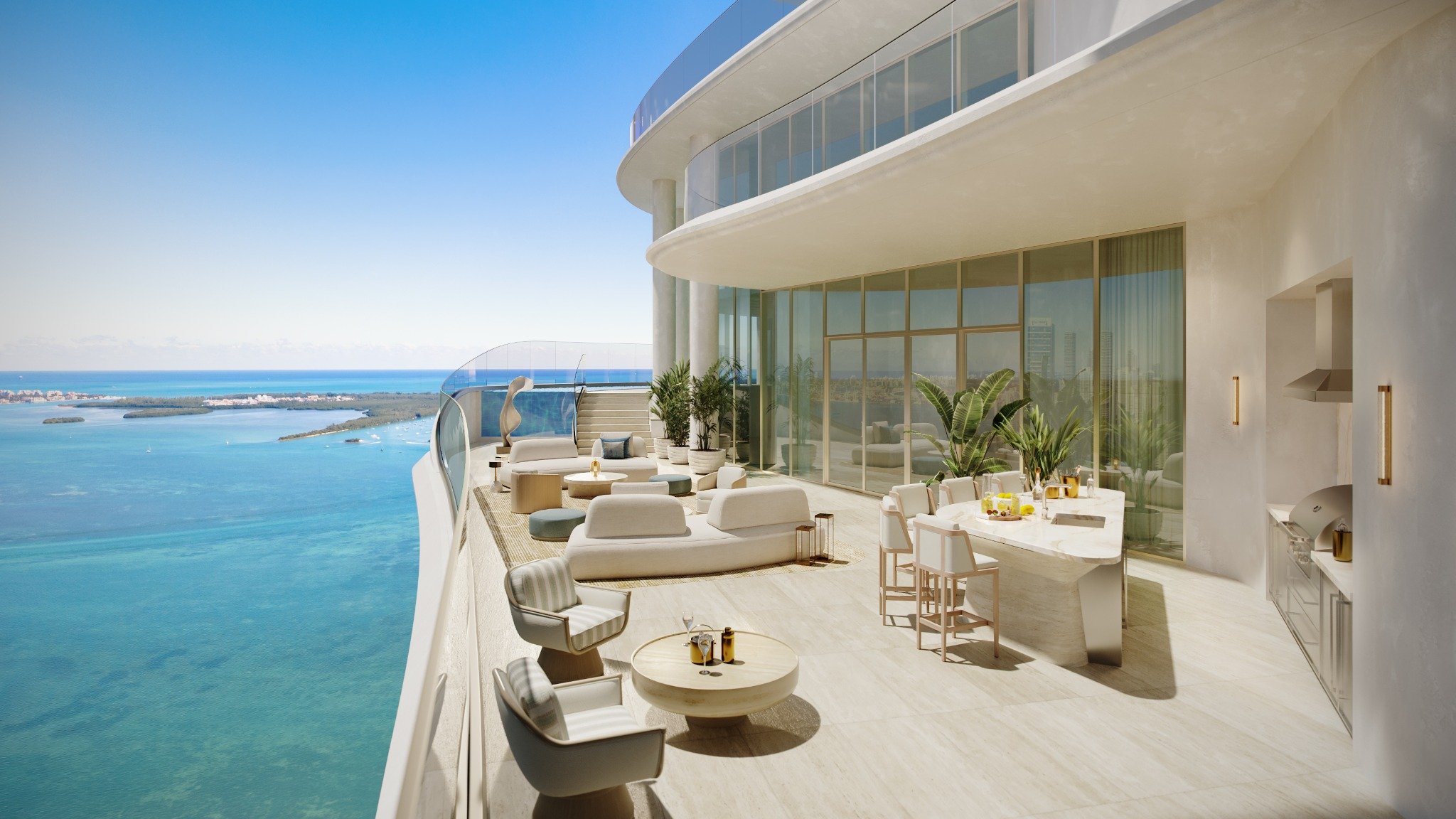
In Miami’s uppermost residences, the primary suite has become one of the most revealing rooms in the deal. Not because it is the most photogenic, though it often is, but because it reveals how carefully a penthouse has been planned for real life. In 2026, the sharper question is not whether the primary bedroom is large. It is whether the primary-suite wing functions as a private residence within the residence.
That shift matters in a market where buyers may use a penthouse as a full-time home, a seasonal base, or a highly controlled family retreat. The suite must accommodate early calls, late arrivals, wardrobe management, spa rituals, wellness routines, terrace use, and privacy from guests without collapsing into a single oversized room. The strongest layouts create a sequence: arrival, sleeping area, sitting area, wardrobe, bath, outdoor connection, and a service logic that keeps daily life quiet.
For a penthouse buyer, this is due diligence at the level of choreography. A beautiful plan can still fail if the elevator opens too close to the sleeping zone, if staff circulation crosses the private corridor, or if terrace doors make the suite feel exposed rather than serene. In a market as visually seductive as Miami, restraint becomes a form of intelligence.
A credible primary-suite wing begins with separation. The bedroom should not feel like an afterthought attached to the entertainment floor. It should sit behind a threshold, often a vestibule, gallery, or softened corridor that signals a change in mood. That threshold does not need to be theatrical. It needs to be legible.
The second test is adjacency. Wardrobes should support how the owner actually dresses, packs, and stores seasonal pieces. Bathrooms should feel serene but remain practical, with enough distance from the bed to preserve quiet. A morning bar can be useful, but only if it does not bring kitchen noise into the suite. A private study can add real value, but only if it is acoustically and visually separate from the sleep area.
The third test is reversibility. Ultra-luxury owners often change how they live over time. A sitting room may become a wellness studio, a secondary bedroom may become a dressing salon, and a private office may need to operate across time zones. In pre-construction evaluation, buyers should ask which walls, mechanical runs, and door placements will allow future adaptation without compromising the entire wing.
Miami adds its own discipline to the conversation. Views are central, but a suite designed only for a postcard moment may underperform. Oceanfront and bay-facing exposures can be magnificent, yet the wing still needs glare control, privacy from neighboring towers, quiet mechanical performance, and materials suited to a coastal environment. The question is not whether the view impresses on the first showing. It is whether it remains comfortable at 7 a.m., at dusk, and during long seasonal stays.
Terrace access is equally nuanced. A terrace connected to the primary suite can be a powerful amenity when it feels private, shaded, and easy to use. If the outdoor route crosses a sleeping area awkwardly, or if neighboring sightlines have not been considered, the feature can become more decorative than functional. Buyers should stand where the bed will sit, not only at the railing, and study what is visible in both directions.
In Brickell, the issue often revolves around vertical urban privacy, elevator sequencing, and the relationship between entertaining space and the owner’s retreat. In beach and waterfront settings, the analysis may turn more toward light, wind, sound, and outdoor transitions. Across both contexts, the central question remains the same: does the primary wing protect the owner’s routine?
A serious showing should move beyond finishes. Begin at the private elevator or main entry and walk the exact path an owner would take after dinner, after travel, or after hosting guests. If the suite is meant to feel removed, it should not require passing through the heart of the party. If the plan includes service access, that route should support housekeeping without bringing operational movement into the sleep zone.
Then test acoustics. Close the doors. Stand in the bedroom while others speak in the living area, media room, kitchen, and secondary bedrooms. Listen for elevator noise, mechanical hum, plumbing stacks, and terrace door movement. Silence is one of the rarest amenities in a high-rise residence, and it is difficult to retrofit elegantly once ownership begins.
Next, examine storage as architecture rather than cabinetry. Wardrobe depth, luggage accommodation, linen placement, jewelry and watch storage, laundry adjacency, and climate considerations all shape whether the suite performs. A dramatic closet that cannot handle real inventory is a stage set. A disciplined dressing area can be more valuable than unnecessary square footage.
Finally, study the bath as an operating environment. Steam, ventilation, stone selection, privacy glass, lighting, and water placement shape daily use. The most persuasive baths are not the loudest. They are the ones that make morning and evening routines feel effortless.
The investment logic behind a primary-suite wing is subtle. Buyers at the top of the market are not simply paying for total area. They are paying for hierarchy, control, and the feeling that a residence understands how they live. A penthouse with an intelligent owner’s wing can feel larger than its measured size because private and social zones do not compete.
Conversely, a large bedroom without a proper privacy sequence can weaken the emotional case for a premium. Sophisticated buyers notice when the suite borrows space from circulation, when a closet interrupts the view logic, or when the bath is positioned for drama rather than comfort. These details may not appear in a headline description, but they often surface in negotiation.
For sellers, the lesson is presentation. Stage the wing as a complete private environment, not merely as a bedroom with an oversized bed. Show the morning path, the evening retreat, the wardrobe function, the terrace moment, and the quiet. For buyers, the lesson is discipline. Do not let rare views or branded finishes distract from the operational plan.
The strongest question for 2026 is direct: if the rest of the residence were active, would this wing still feel private, calm, and fully serviced? That single question captures most of the relevant risks. It addresses circulation, acoustics, terrace exposure, storage, service routes, and long-term adaptability.
It also reframes luxury as performance. The primary suite is not only a place to sleep. It is where privacy is tested most personally. In Miami, where penthouses often merge spectacle with lifestyle, the best primary-suite wings will be the ones that make spectacle optional. The owner should be able to step forward into the view or withdraw completely from it.
For the most discerning buyers, that is the distinction worth underwriting.
What is a primary-suite wing in a Miami penthouse? It is a private owner’s zone that may include the bedroom, bath, wardrobes, sitting area, office, terrace access, and supporting circulation.
Why is it a 2026 due-diligence issue? Buyers are scrutinizing whether luxury layouts support daily privacy, service, quiet, and adaptability, not just impressive square footage.
Is a larger primary bedroom always better? No. A smaller suite with stronger separation, storage, acoustics, and circulation can feel more luxurious than a larger but exposed room.
What should buyers test during a showing? Walk the arrival path, close doors, listen for noise, review staff routes, inspect storage, and study sightlines from the bed and terrace.
How important is terrace access from the suite? It can be highly desirable when private and usable, but it should not compromise sleep, security, shading, or interior calm.
Does Brickell require different scrutiny than waterfront areas? Brickell often raises questions of urban privacy and elevator movement, while waterfront homes require closer attention to light, wind, and exposure.
Can a primary-suite wing affect resale appeal? Yes. A well-planned wing can strengthen emotional appeal because it makes the residence feel more private, livable, and complete.
What is the biggest planning mistake? Treating the suite as a showpiece instead of an operating environment for dressing, resting, working, bathing, and retreating.
Should buyers evaluate mechanical systems near the suite? Yes. Ventilation, plumbing, elevator sound, and door performance can materially affect comfort in the most private part of the home.
What is the best way to shortlist comparable options for touring? Start with location fit, delivery status, and daily lifestyle priorities, then compare stacks and elevations to validate views and privacy.
When you're ready to tour or underwrite the options, connect with MILLION.
If branded residences are on your mind — as a home or as an allocation — we would be glad to share what we are seeing, privately.
Begin a quiet conversation