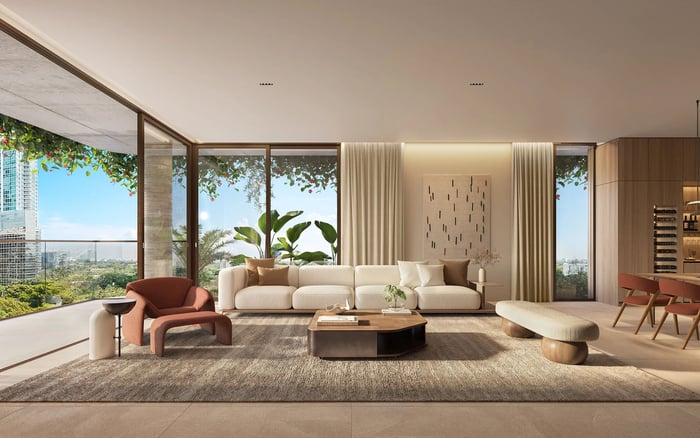
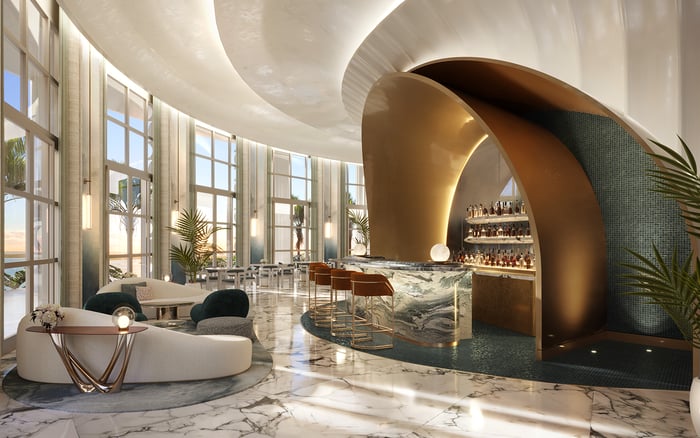
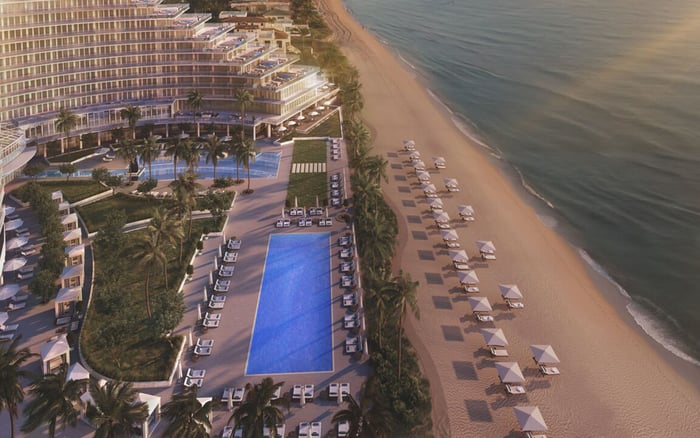
For Miami penthouse buyers, the media lounge is becoming a serious due-diligence item: a test of acoustics, privacy, flexibility, mechanical planning, and long-term livability rather than a decorative extra.
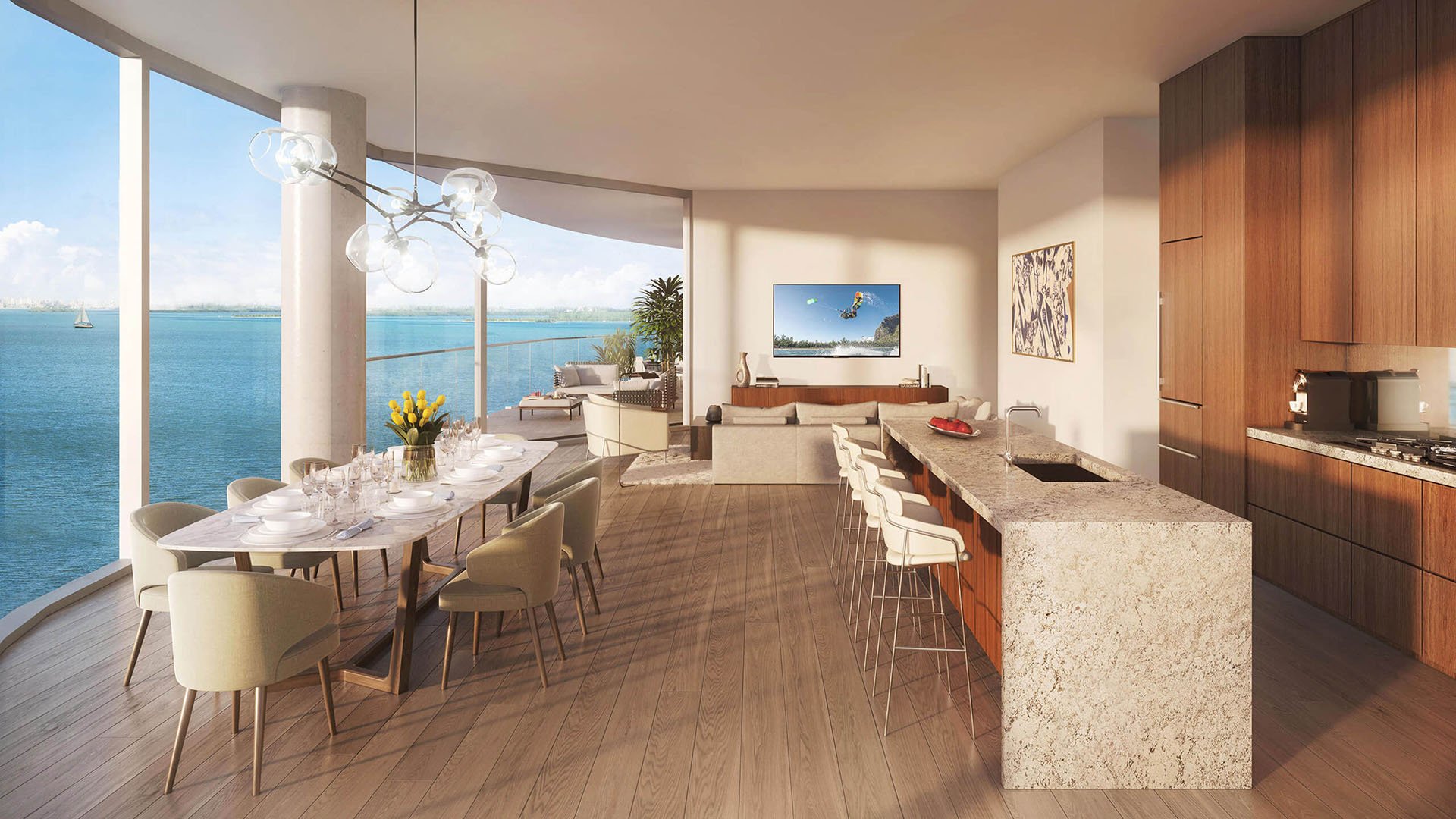
In a Miami penthouse, the most revealing room is not always the primary suite, the chef’s kitchen, or the terrace. Increasingly, it is the media lounge. For a certain buyer, this is where the residence shows whether it was conceived as a showpiece or as a complete private environment.
The 2026 due-diligence question is simple: does the media lounge function as a true luxury room, or is it merely a darkened den with expensive furniture?
That distinction matters because the media lounge now carries more responsibility than its name suggests. It may host film nights, sports, gaming, remote meetings, private dinners before a screening, children’s use, guest overflow, and quiet retreat after formal entertaining. In high-floor residences, it also has to balance light, sound, views, climate, and privacy in a way that feels effortless.
A serious buyer should treat the space as both a technical and lifestyle test. The right lounge does not compete with the rest of the penthouse. It deepens the residence, giving the owner a room that works after sunset, during storms, during holidays, and on ordinary weeknights when the glamour of a view gives way to the need for comfort.
The Miami penthouse has evolved from a trophy with impressive proportions into a highly programmed private residence. Buyers are thinking about how each room will be used, how often it will adapt, and whether the design can remain relevant as entertainment technology changes.
A media lounge is one of the clearest indicators of that shift. It asks whether the developer, designer, architect, or prior owner understood how people actually live. Is the room isolated enough for late-night sound? Is it close enough to the main living area to feel connected? Can service arrive without disrupting guests? Can the space become a quieter retreat when the larger entertaining areas are in use?
In Brickell, the question often centers on skyline drama and urban energy. In Miami Beach, it may involve a stronger relationship to outdoor living and relaxed hospitality. In Sunny Isles, where waterview orientation can dominate the emotional pull of a residence, the media lounge has to justify its existence even when the view is spectacular elsewhere. For the buyer comparing a penthouse across these settings, the room should not be a leftover zone. It should be a deliberate layer of the home.
Acoustics are the first serious test. A media lounge should allow volume without turning the rest of the residence into an echo chamber. Buyers should listen from the corridor, nearby bedrooms, adjacent entertaining areas, and any room above or below if access and building protocols allow. The goal is not silence everywhere. The goal is control.
Materials matter. Stone floors, glass walls, and large openings can create beauty, but they can also sharpen sound. Soft wall treatments, concealed acoustic planning, rugs, upholstered surfaces, and thoughtful ceiling details can make the difference between a cinematic environment and a room that becomes tiring after twenty minutes.
The buyer should also consider impact sound. Subwoofers, gaming systems, and sports viewing can introduce vibration. In a luxury building, good manners are part of the ownership experience. A lounge that performs well acoustically protects privacy, neighbor relations, and the owner’s freedom to use the room without constant restraint.
Miami light is beautiful, but it is not always friendly to screens. A media lounge with glass exposure needs careful shading, room-darkening capacity, and lighting scenes that do more than dim overhead fixtures. The best rooms have layered lighting: low ambient light, concealed accents, task lighting for service, and a path of illumination that lets guests move safely without disrupting the screen.
The view is another subtle issue. Many penthouse buyers are understandably drawn to panoramic outlooks, but the media lounge should not depend entirely on them. A room designed only around glass may struggle to deliver a proper screening experience. Conversely, a fully enclosed room can feel disconnected from the character of Miami living. The balance is highly personal, but it should be assessed in person and, when possible, at different times of day.
This is where terrace access becomes part of the conversation. A lounge positioned near outdoor space can support graceful entertaining, but only if transitions are considered. Doors, shades, humidity, light spill, and furniture flow all affect how refined the room feels in actual use.
The most expensive features in a media lounge are often the ones a buyer cannot see. Wiring pathways, equipment ventilation, control systems, speaker placement, network strength, and service access matter more than the brand of a visible screen. If the room cannot be upgraded without opening walls or disturbing finishes, it may become dated faster than the rest of the residence.
A prudent buyer should ask how equipment is housed. Is there dedicated storage or a rack location? Can components be cooled properly? Are cables accessible? Are controls intuitive for guests and family members, not just for an installer? Can the system support future changes in display, audio, streaming, security, or conferencing technology?
This is not a request for gadgetry. In the ultra-premium segment, the ideal is invisibility. The lounge should feel serene, not complicated. Technology should recede until needed, then respond immediately and predictably.
The most successful media lounges are not single-purpose caves. They can become screening rooms, sports rooms, music rooms, children’s lounges, gaming spaces, quiet libraries, or informal salons. Flexibility is valuable, but only when it is disciplined. A room that tries to be everything can quickly feel unresolved.
The furniture plan reveals much. Deep seating is inviting, but it should not block circulation. Sectionals can be excellent, but only if they allow people to enter and exit without awkwardness. Bar elements, concealed refreshment drawers, or nearby service areas can improve the experience, but they should not turn the room into a secondary kitchen unless that is truly the intention.
Buyers should imagine three scenarios: a family night, a small adult gathering, and a guest staying in the residence. If the media lounge supports all three without compromise, it has genuine long-term value. If it only photographs well from one angle, caution is warranted.
Privacy is one of the quiet luxuries of a penthouse. A media lounge can either reinforce it or undermine it. If the room sits directly on the main circulation path, staff, guests, and family members may constantly cross through. If it is too isolated, it may feel inconvenient and rarely used.
The strongest layouts create optionality. Guests can be guided toward the lounge without passing private bedroom areas. Children or visiting family can use it without interrupting formal entertaining. Owners can retreat there without feeling removed from the home. These are small planning decisions, but they shape daily life.
Security and control also belong in the due-diligence review. Privacy glass, shades, door placement, smart controls, and the ability to close off the room discreetly may all matter, especially for owners who entertain selectively or spend part of the year in residence.
The right questions are practical. What equipment is included? What is excluded? What was custom built into the room? What can be removed without damage? Who services the system? Are warranties or maintenance records available? Is the room controlled by a broader home automation system, and if so, how transferable and user-friendly is it?
A buyer should also ask whether the lounge has been tested under real use. Not just a short demonstration, but an actual viewing experience with sound, lowered shades, climate control, and guests seated in different positions. The room may look perfect during a showing and still perform poorly once occupied.
For resale-minded owners, the goal is not to over-customize the room into a personal shrine. It is to create a space with broad appeal: elegant, quiet, flexible, and technically current. The next buyer should understand its value without needing a tutorial.
The media lounge is becoming a more sophisticated signal in Miami penthouse due diligence because it reveals the unseen quality of a residence. It exposes planning discipline, technical foresight, acoustic maturity, and the owner’s future ease of use.
In 2026, the better question is not whether a penthouse has a media lounge. It is whether the lounge earns its place in the floor plan. When it does, it becomes one of the residence’s most intimate luxuries: a room designed not for arrival, but for staying.
Why is the media lounge important in a Miami penthouse? It shows whether the residence was planned for real daily living, not only visual impact. A strong lounge adds comfort, privacy, and flexibility.
What should buyers test first in a media lounge? Start with sound. Listen from nearby rooms and corridors to understand how well the space contains audio and vibration.
Does a media lounge need windows? Not necessarily. Some buyers prefer enclosed rooms for screening, while others want controlled natural light and a connection to views.
How does a terrace affect a media lounge? Nearby outdoor access can improve entertaining flow, but only if glare, humidity, doors, and circulation are carefully managed.
Should technology be visible in the room? In most luxury settings, the best technology feels discreet. Controls should be intuitive, responsive, and easy to service.
Can a media lounge support resale value? It can support buyer appeal when it is flexible, elegant, and not over-personalized. The room should feel useful to more than one lifestyle.
What is a common mistake in media lounge design? Treating the room as an afterthought. Poor acoustics, awkward seating, glare, or inaccessible wiring can weaken the experience.
Is a media lounge different from a screening room? Yes. A screening room is usually more specialized, while a media lounge can support film, sports, gaming, conversation, and retreat.
Why do high-floor residences need extra attention? Light, views, wind exposure near outdoor areas, and privacy can all shape how the lounge performs in daily use.
What should a buyer ask before closing? Ask what systems are included, how they are serviced, whether wiring is accessible, and how easily the room can be upgraded.
When you're ready to tour or underwrite the options, connect with MILLION.
If branded residences are on your mind — as a home or as an allocation — we would be glad to share what we are seeing, privately.
Begin a quiet conversation