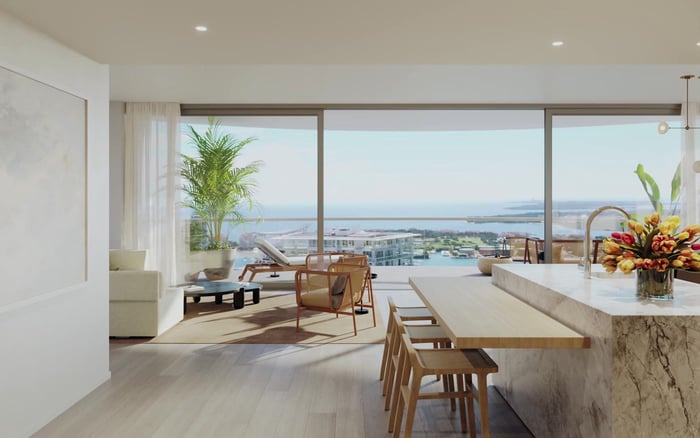
A discreet buyer’s guide to why roof rights matter in South Florida penthouses, from exclusive use and approvals to privacy, resilience, service access, and resale value.

In South Florida, the penthouse has long been defined by altitude, views, and privacy. Yet the most sophisticated buyers are increasingly looking beyond the floor plan. They are asking a quieter, more consequential question: what, exactly, comes with the roof?
Better roof rights can turn a beautiful residence into a more complete private domain. They may shape how a buyer entertains, how a family lives outdoors, how service is handled, how improvements are approved, and how the asset is understood at resale. The issue is not simply whether a rooftop exists. It is whether the owner has meaningful, documented, and practical control over it.
This is where quiet luxury becomes especially relevant. The value is not always visible in a glossy rendering or a cocktail-hour tour. It lives in the condominium documents, the path from the private residence to the rooftop, the quality of the waterproofing obligations, the treatment of mechanical equipment, and the clarity around who may use, alter, maintain, and access the space.
A large upper-level outdoor area can be marketed beautifully, but buyers should distinguish between a private terrace, an exclusive-use rooftop, and a more robust bundle of rights tied to the penthouse. Those categories can feel similar during a showing and perform very differently after closing.
A terrace is typically easier to understand because it is often physically connected to the residence. A rooftop area may require separate access, may sit above or beside common elements, and may involve building systems that serve more than one owner. The distinction matters because a glamorous roof deck without clear rights can become a negotiation with the association, the building manager, or neighboring owners whenever the buyer wants to modify, furnish, landscape, or repair it.
The refined buyer does not simply ask, “Is the roof private?” The better question is, “What rights are granted, what limitations apply, and what approvals are required before the space can be used as intended?”
The first layer is legal clarity. A penthouse buyer should understand whether the roof area is part of the unit, a limited common element, an exclusive-use area, or a common area with special privileges. Each structure can carry different consequences for maintenance, insurance, alteration rights, and transferability.
The second layer is physical practicality. A rooftop that can only be reached through a shared stair may not provide the same lifestyle value as one connected by private internal access. Service access is equally important. Outdoor kitchens, planters, shade structures, audio systems, and plunge features can all become complicated if every repair requires coordination through common corridors or restricted equipment rooms.
The third layer is approval friction. Even when a buyer has exclusive use, the ability to improve the space may remain subject to association approval, architectural review, permitting, engineering, or building code compliance. That does not diminish the value of the roof. It simply means the buyer should price certainty differently from aspiration.
A roof in South Florida is not a generic outdoor room. It is exposed to sun, salt air, wind, rain, and seasonal humidity. That makes maintenance responsibility and construction standards central to value. The most elegant rooftop experience is one planned around drainage, waterproofing, materials, storage, and protected mechanical zones.
For ultra-premium buyers, the issue is less about adding visible features than avoiding future compromises. Will furniture need to be removed frequently? Can planters be secured and irrigated properly? Are shade structures permitted? Is lighting allowed? Are there restrictions on cooking, sound, or events? Are railings, glass, and flooring materials suitable for the exposure?
A roof can feel like a private resort in the right conditions. It can also become a high-maintenance appendage if the owner’s rights are broad in marketing language but narrow in operation.
The best roof rights create privacy without announcing themselves. A buyer may want morning exercise, family dinners, discreet entertaining, or a quiet place to watch the water and skyline. None of those uses requires theatrical design. They require control.
Privacy also depends on sightlines. A roof that is technically private may still be visible from neighboring towers, shared amenity decks, or service areas. The buyer should consider not only who can enter the space, but who can see it, hear it, and affect it. In luxury real estate, seclusion is rarely absolute, but it can be intelligently designed.
In acquisition shorthand, Miami Beach, Brickell, oceanfront settings, penthouses, terraces, and high floors are not just search labels; they are clues to the roof-rights questions that should be asked early. A dense urban skyline, a beachfront exposure, and a boutique residential setting each create different privacy and usability considerations.
Roof rights may matter most when a future buyer starts comparing penthouses that appear similar on paper. Two residences may have comparable interiors, views, and interior square footage, yet one may offer a more defensible lifestyle proposition because its rooftop use is clearer, more private, and more flexible.
The strongest roof-rights package is not necessarily the largest. It is the one that can be explained cleanly. A future buyer should be able to understand what is included, what is exclusive, what is shared, what can be changed, and what obligations come with ownership. Ambiguity can slow a sale because sophisticated purchasers will discount uncertainty.
For sellers, documentation is part of presentation. Plans, approvals, maintenance records, association correspondence, warranties, and governing provisions can help transform a perceived amenity into a more tangible component of value. In a market where discretion and confidence matter, paperwork can be as important as staging.
Roof-rights diligence should begin before a buyer becomes emotionally committed to the penthouse. The purchase contract period is the time to request governing documents, clarify ownership or exclusive-use status, review alteration rules, and understand ongoing cost responsibilities.
If the roof is unfinished or lightly improved, the buyer should avoid assuming that a future outdoor kitchen, pool element, pergola, elevator extension, or substantial landscaping will be allowed. If the roof is already improved, the buyer should understand whether the improvements were approved, permitted when required, and properly assigned or transferable.
The most composed negotiation is specific. Rather than treating the roof as a vague luxury bonus, the buyer can ask for representations, document production, repair obligations, and closing deliverables that match the importance of the space. That approach is not aggressive. It is disciplined.
Quiet luxury in a South Florida penthouse is not about having the most dramatic rooftop party platform. It is about having a private, resilient, well-governed outdoor extension of the home that behaves as beautifully as it photographs.
Better roof rights support that standard because they give the owner confidence. They reduce operational surprises, protect lifestyle expectations, and create a clearer story for future resale. For the buyer choosing among rare upper-level residences, the roof may be the least understood part of the asset and one of the most meaningful.
The right question is not simply whether the penthouse has a roof. The better question is whether the roof has the rights, access, approvals, and practical intelligence to become part of the home’s long-term value.
What are roof rights in a penthouse? Roof rights describe the owner’s legal and practical ability to use, access, maintain, and potentially improve rooftop space associated with the residence.
Is exclusive use the same as ownership? Not always. Exclusive use may grant private enjoyment while the underlying area remains part of the building’s common elements.
Why do roof rights matter in South Florida? Rooftops face intense exposure, so maintenance, waterproofing, drainage, wind considerations, and approval rights can materially affect usability.
Can a penthouse owner build anything on a private roof? Usually not without review. Association rules, building codes, engineering requirements, and permits may limit or condition improvements.
Should buyers value unfinished rooftop space? Yes, but cautiously. Unfinished space is more valuable when the buyer can confirm what improvements are actually allowed.
What documents should a buyer review? Buyers should review the declaration, bylaws, rules, plans, maintenance provisions, insurance obligations, and any approvals tied to existing improvements.
Can roof rights affect financing or insurance? They can influence underwriting questions, maintenance obligations, and risk review, especially when improvements or exclusive-use areas are involved.
Are rooftop kitchens and plunge features always permitted? No. They may require structural review, utility access, drainage solutions, association approval, and applicable permits.
How can roof rights help resale? Clear rights make the lifestyle easier to explain and reduce uncertainty for future buyers, which can support stronger positioning.
When should roof-rights diligence begin? It should begin before contract deadlines expire, while the buyer still has leverage to request documents, clarifications, and protections.
To compare the best-fit options with clarity, connect with MILLION.
If branded residences are on your mind — as a home or as an allocation — we would be glad to share what we are seeing, privately.
Begin a quiet conversation