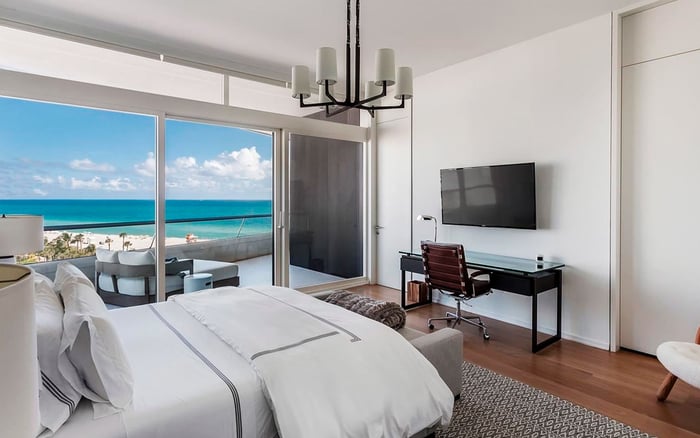
A disciplined acquisition framework for evaluating service delivery, financial strength, insurance exposure, unit economics, and resale prospects at Fendi Château Residences.

Fendi Château Residences Surfside occupies an oceanfront address at 9349 Collins Avenue in Surfside, within the luxury beachfront corridor near Bal Harbour and Miami Beach. Developed by Château Group in collaboration with Fendi, the property translates the Italian fashion house’s design identity into an intimate, low-rise residential setting.
Expansive interiors, ocean views, wave-inspired balconies, and a glass façade create a compelling first impression. Yet a 2026 acquisition demands an equally rigorous review of less visible qualities: the consistency of service delivery, the alignment of reserves with anticipated capital needs, the allocation of insurance risk, and the resale prospects of a particular residence.
The strongest offer is not simply attached to the most attractive view. It reflects a disciplined assessment of both the building and the individual unit.
In branded residences, buyers often pay for an expectation of polish as much as for architecture. That expectation should be tested through actual operations, not inferred from a name. Request current staffing schedules, positions, operating hours, service contracts, complaint procedures, and details of any recent vendor changes.
Visit at different times if access permits. Observe arrival management, valet flow, common-area presentation, response times, and the privacy of resident circulation. Conversations with current owners can provide context on consistency, particularly during weekends, holidays, storms, and periods of heavy occupancy.
Service also has a financial dimension. Determine which functions are handled directly, which are outsourced, and where contract renewals could affect future costs. A refined experience is most durable when staffing, contractual obligations, and the operating budget are aligned.
A reserve balance has limited meaning in isolation. Review the current budget, reserve study, recent financial statements, meeting minutes, pending-assessment disclosures, structural or engineering materials, and records of planned capital work. Ask whether reserve assumptions reflect the building’s present condition and the timing of major components.
For an oceanfront condominium, the inquiry should be component-specific. Identify anticipated work involving the façade, balconies, glazing, waterproofing, mechanical systems, elevators, pool areas, and other shared elements. Then compare the estimated timing and funding with the association’s reserve plan.
Meeting minutes can reveal priorities that a summary balance sheet cannot. Repeated discussions of repairs, bids, delayed work, owner disputes, or funding alternatives warrant follow-up. Buyers should also clarify whether any approved, proposed, or discussed assessment would remain with the seller or transfer economically to the purchaser under the contract.
This diligence is equally relevant when comparing nearby boutique properties such as Arte Surfside or Ocean House Surfside. Similar coastal positioning does not imply comparable reserve strength, maintenance history, or future obligations.
Obtain the association’s current insurance declarations and coverage summaries. Review policy limits, deductibles, exclusions, covered perils, renewal timing, and the division of responsibility between the association policy and an owner’s individual policy. The premium matters, but the potential allocation of an uncovered or deductible amount may matter more.
Ask how deductibles could be funded after a loss and whether the governing documents permit costs to be allocated in ways that create exposure for unit owners. Your insurance adviser should compare the building policy with proposed personal coverage, including improvements, contents, liability, loss assessment, and any requirements specific to vacancy or seasonal use.
Do not assume that a sophisticated building eliminates coverage gaps. Insurance should be reviewed alongside reserves because the two can converge after a major event.
The building’s low unit density reinforces its privacy positioning, but a buyer’s economics remain unit-specific. Evaluate floor level, exposure, view protection, interior condition, layout, terrace utility, parking arrangements, storage, and any alterations requiring documentation. Confirm what the sale includes and whether completed improvements received the necessary approvals.
Build a complete annual carrying-cost schedule covering association charges, property taxes, insurance, maintenance, staffing needs within the residence, and a prudent allowance for assessments or repairs. For a second home, include the practical cost of oversight during extended absences.
Review the governing documents for leasing, guest, pet, renovation, transfer, and approval provisions. Restrictions can protect privacy while narrowing the future buyer or tenant pool. The correct interpretation should come from the operative documents and qualified counsel, not a marketing summary.
A credible resale plan begins with recent unit-level comparable sales, active competing inventory, transaction volume, days on market, price reductions, and differences in condition or exposure. Establish several holding periods and model the net result after carrying costs, transaction expenses, improvements, and any assessment exposure.
Consider who is most likely to purchase the residence later. A highly customized interior may appeal powerfully to a narrow audience, while a more adaptable design can broaden demand. Likewise, an exceptional ocean view may provide differentiation, but price discipline still matters when several luxury options reach the market together.
Buyers evaluating Fendi Château may also compare its privacy proposition with The Surf Club Four Seasons Surfside, the emerging local context around The Delmore Surfside, or Bal Harbour inventory such as Oceana Bal Harbour. These are not interchangeable substitutes. They are useful reference points for understanding how service models, architecture, scale, and location shape buyer demand.
The final checklist should assign responsibilities and deadlines. Coordinate document review, physical inspection, insurance analysis, financing if applicable, title work, and legal review before contractual protections expire. Translate every unresolved issue into a request for documentation, a negotiated term, a pricing decision, or a reason to pause.
The essential principle is consistent: aesthetic conviction and financial discipline should reinforce one another. At Fendi Château, the branded setting may initiate interest, but verified operations and unit-level underwriting should determine conviction.
Where is Fendi Château Residences located? It is an oceanfront condominium at 9349 Collins Avenue in Surfside, Florida.
Who developed Fendi Château Residences? Château Group developed the condominium in collaboration with Fendi.
What distinguishes the building’s residential concept? It favors a low-rise, low-density format centered on privacy, expansive interiors, and ocean views.
Which service records should a buyer request? Request staffing information, operating hours, service contracts, complaint procedures, and records of recent vendor changes.
What reserve documents deserve review? Examine the current budget, reserve study, financial statements, meeting minutes, engineering materials, and assessment disclosures.
Why review meeting minutes? Minutes may provide context on repairs, bids, funding discussions, owner concerns, and planned capital work.
What matters in the association’s insurance program? Focus on limits, deductibles, exclusions, covered perils, renewal timing, and the allocation of owner responsibility.
Which restrictions can influence exit value? Leasing, guest, pet, renovation, transfer, and approval provisions may affect the future pool of buyers or occupants.
How should a buyer assess resale liquidity? Study recent comparable sales, active competition, transaction volume, days on market, price reductions, and unit-specific differences.
What should happen before contractual deadlines expire? Complete document, inspection, insurance, title, financing, and legal reviews, then resolve open issues through terms, price, or withdrawal.
For a confidential assessment and a building-by-building shortlist, connect with MILLION.
If branded residences are on your mind — as a home or as an allocation — we would be glad to share what we are seeing, privately.
Begin a quiet conversation