A capital-risk ranking for cash buyers focused on reserve funding, recertification, assessments and the documents that clarify a condominium’s true exposure.
An all-cash purchase can make a Miami Beach condominium acquisition faster and more competitive, but it does not shield the buyer from reserve shortfalls, special assessments, association debt or disruptive capital work. The more useful question is not whether a lender will approve the building, but whether the association’s financial and engineering records make future obligations reasonably legible.
Florida requires residential condominium buildings of three stories or more to complete a Structural Integrity Reserve Study, or SIRS, at least every 10 years. The study addresses major components that can include roofs, load-bearing structures, floors, foundations, waterproofing, fire-protection systems, plumbing and electrical systems. For affected associations, budgets adopted after December 31, 2024, generally cannot waive or underfund required reserves for SIRS components.
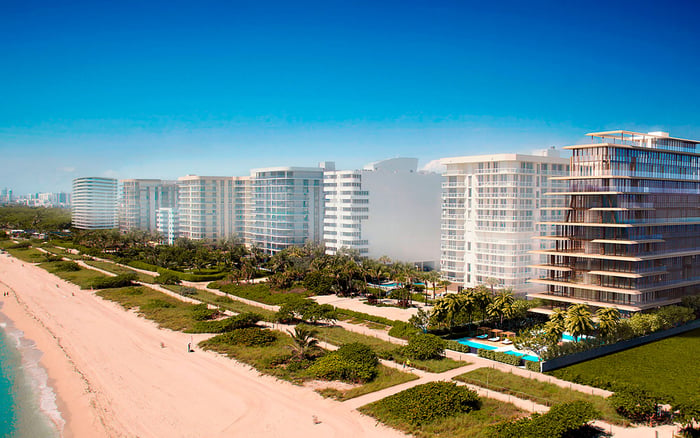
This ranking favors visibility over appearances. Buyers comparing established South of Fifth inventory with newer alternatives such as Five Park Miami Beach should scrutinize reserve documentation as closely as views, finish quality and floor plans.
1. Murano at Portofino - 1000 South Pointe Drive
Murano at Portofino presents the strongest documented case because owners approved nearly $60 million in phased special assessments. The second phase, approximately $27 million, included a $17.6 million pool-deck project, $2.9 million for elevator modernization, $2.9 million for entrance and lobby renovation, and $1.5 million for SIRS funding.
That scale makes the building’s capital exposure unusually visible. It does not, by itself, establish that every project is complete, fully funded or protected from further assessments. Buyers should confirm the unit’s remaining balance, payment schedule, contract status and current reserve position.
2. Harbour House - 10275 Collins Avenue, Bal Harbour
Harbour House ranks second because assessments since 2022 total approximately $184,000 per unit. That figure gives a cash buyer a meaningful starting point for understanding the building’s recent capital demands.
Harbour House is in Bal Harbour, not the City of Miami Beach, but it belongs within the same coastal luxury search. The assessment ledger, construction status and potential for additional work remain essential. Buyers weighing the area may also compare the documentary profile of Oceana Bal Harbour, without assuming that age or positioning resolves the reserve question.
3. Champlain Towers North - 8877 Collins Avenue, Surfside
Champlain Towers North carries exceptionally visible exposure, with assessments since 2022 totaling approximately $336,000 per unit. The amount warrants close attention, but a substantial assessment does not prove that future structural, financial or redevelopment risk has been eliminated.
Surfside is a separate municipality from Miami Beach. For buyers considering the wider oceanfront corridor, alternatives such as The Surf Club Four Seasons Surfside may frame the lifestyle comparison, while each association’s records must determine the capital-risk analysis.
4. Murano Grande at Portofino - 400 Alton Road
Murano Grande at Portofino offers a South of Fifth address, yet the available building-specific reserve evidence is less developed than at Murano at Portofino. No funded ratio, SIRS balance or comparably documented assessment is established here.
Its inclusion is therefore a prompt for deeper diligence, not a declaration of lower risk. A South of Fifth buyer should request the complete financial and engineering file before assigning value to any apparent pricing advantage. Nearby Apogee South Beach can serve as another search reference, subject to the same document-first discipline.
5. Recently recertified Miami Beach mid-rise - building to be verified
The fifth choice is a buyer profile rather than a named property: a qualifying Miami Beach mid-rise that has completed its 30-year recertification and funded its SIRS obligations. Miami Beach requires qualifying buildings to be recertified 30 years after the original Certificate of Occupancy and every 10 years thereafter.
The appeal lies in completed, verifiable steps-not the phrase “recently recertified” alone. Before proceeding, confirm the final status, repairs, funding, open permits, reserve schedule and board discussion of remaining projects.
Reserve adequacy is commonly expressed as a funded ratio, which compares the current reserve balance with the amount required under a fully funded schedule. A ratio of 70% or more is generally considered healthy; 30% to 70% is vulnerable but manageable; and below 30% carries elevated assessment risk.
The direction of travel matters as well. Among managed Miami-Dade high-rise associations, reserve allocations rose from nine cents of each budget dollar in 2024 to approximately 12 cents in 2025. Higher contributions may strengthen future funding, but they can also translate into rising monthly dues.
This is why the MILLION Buyer’s Guides approach separates the residence from the association. A beautiful unit can sit within a financially exposed building, while a major assessment may represent either disciplined remediation or merely one stage of a longer program.
Request the current SIRS, recertification status, adopted budget, latest financial statements, reserve balances, funded-ratio calculation, assessment ledger and any association loan terms. Add engineering reports, contracts, change orders, insurance information and recent board minutes. Determine whether the seller has paid an assessment, whether an unpaid balance follows the unit and whether the association has discussed additional phases.
Recertification can reveal structural or electrical repairs that operating budgets cannot absorb. When reserves are inadequate, associations may turn to assessments or loans. Cash buyers retain negotiating flexibility, but they also lose the indirect checkpoint that lender review can sometimes provide. Independent legal, engineering and financial review is therefore especially valuable.
Does paying cash remove reserve risk? No. Cash avoids lender requirements, but not assessments, higher dues, association loans or construction disruption.
What does a SIRS examine? It evaluates specified structural and building systems, including roofs, foundations, waterproofing, fire protection, plumbing and electrical components.
How often is a SIRS required? Florida requires covered residential condominium buildings of three stories or more to complete one at least every 10 years.
What funded ratio is generally considered healthy? A ratio of at least 70% is generally considered healthy, though the underlying schedule and assumptions still require review.
Does a large assessment mean the building is fully protected? No. It does not prove that work is complete, on budget, fully funded or insulated from additional assessments.
Why does recertification matter in Miami Beach? Qualifying buildings face recertification 30 years after the original Certificate of Occupancy and every 10 years thereafter.
Are Harbour House and Champlain Towers North in Miami Beach? No. Harbour House is in Bal Harbour, and Champlain Towers North is in Surfside.
What should a buyer verify about an assessment? Confirm the original amount, unit allocation, remaining balance, payment schedule, project status and prospect of further phases.
Can stronger reserve funding increase monthly costs? Yes. Larger reserve contributions can strengthen long-term funding while increasing current association dues.
Is this ranking a statement about structural safety? No. It measures the visibility of capital exposure and does not certify safety, performance or freedom from future assessments.
For a tailored shortlist and next-step guidance, connect with MILLION.
If branded residences are on your mind — as a home or as an allocation — we would be glad to share what we are seeing, privately.
Begin a quiet conversation