Formal dining is returning as a more nuanced buyer question in South Florida luxury real estate: not whether a home has a dining room, but whether the plan supports ceremony, flexibility, privacy, and long-term livability.
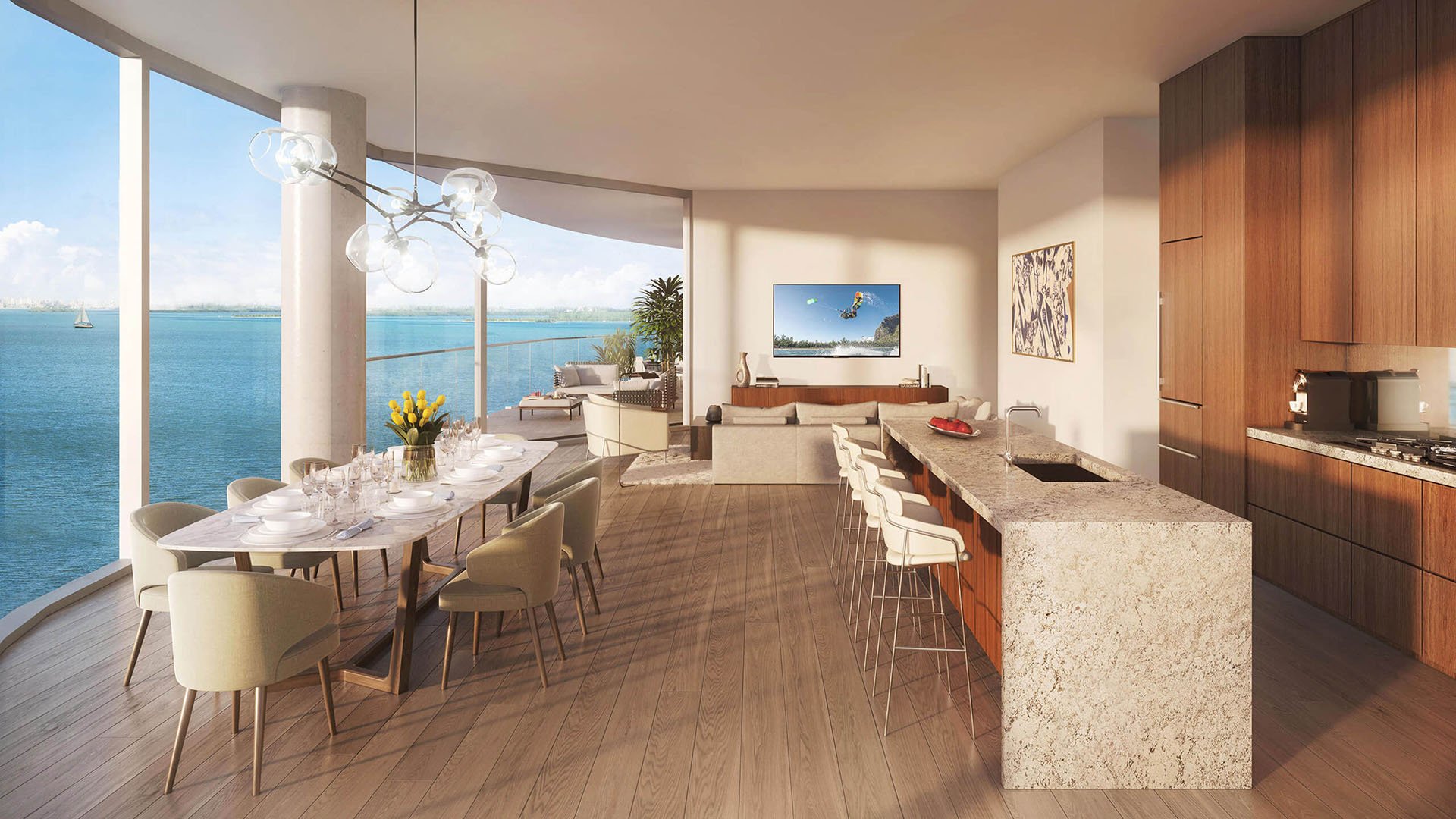
For the 2026 luxury buyer, formal dining is no longer a nostalgic checkbox. It is a revealing test of how a residence is expected to perform. In South Florida, where entertaining often moves between interior salons, open kitchens, water-facing living rooms, and a Terrace, the dining room has become a measure of discipline. Does the plan allow ceremony without stiffness? Can it host a holiday dinner without compromising daily ease? Does it create intimacy in a home otherwise designed around openness, views, and movement?
The answer is rarely a simple yes or no. A dedicated dining room can feel essential in a waterfront estate, a Penthouse, or a large-format condominium where guests arrive for seated evenings. Yet the wrong dining room can become dead space: too formal for breakfast, too visible for work, and too far from the kitchen to feel useful. The 2026 buyer is asking a sharper question: what kind of dining life does this home make possible?
South Florida homes are often judged by light, view, arrival, and indoor-outdoor continuity. Those elements remain central, but dining adds another layer: social choreography. A buyer may love an open great room and still want one moment in the home where the mood shifts. Formal dining offers that pause. It frames conversation, controls sound, and gives dinner a sense of occasion.
This is especially important in markets where residences must serve several lives at once. A home may be a primary residence, a seasonal retreat, a family gathering place, and a discreet setting for clients or friends. The dining room becomes a private stage, not merely a room with a table. In Brickell, the question may be how a dining zone interacts with skyline views and elevator arrival. In Oceanfront settings, it may be whether the dining experience competes with the view or quietly benefits from it. In low-density neighborhoods, it may be whether the room supports family rituals without feeling removed from the heart of the home.
Open kitchens did not erase formal dining. They changed its job. In a contemporary luxury plan, the kitchen is often beautiful enough to be seen, large enough to gather in, and central enough to dominate daily life. That leaves formal dining with a more specific purpose. It must offer what the kitchen island cannot: separation, proportion, and atmosphere.
The best dining rooms now have a clear relationship to the kitchen without feeling like an extension of meal preparation. They allow service to happen gracefully. They give hosts the option to close a door, lower the lights, or move guests from casual conversation to a seated experience. If the dining area is open to the living room, it still needs definition through ceiling treatment, lighting, millwork, art placement, or a change in scale.
For New-construction buyers, this is where floor plan review becomes critical. Renderings can make any table look elegant. The real test is circulation. Can guests move around seated diners comfortably? Is there a logical place for storage, serving pieces, or wine service? Does the dining position interrupt the path between kitchen, living area, Balcony, and terrace? If the plan cannot answer those questions, the space may be more decorative than functional.
The most compelling 2026 plans do not force a binary choice between formal and informal living. They allow a room to become formal when needed and relaxed when not. A dining room with strong proportions, good light control, and thoughtful adjacency can also function as a library, salon, tasting room, or quiet work setting. This flexibility is not a compromise. It is often the mark of a stronger plan.
Buyers should be cautious, however, about calling every spare room flexible. A true flex dining space has the right dimensions, acoustics, and privacy. It does not feel like a corridor. It does not depend on furniture to solve architectural ambiguity. It has enough presence to justify itself when the table is fully set, and enough calm to be useful on an ordinary weekday.
This is particularly relevant for buyers moving from large single-family homes into vertical residences. A condominium may not reproduce every room of a house, but it can deliver a more edited version of luxury. The dining decision becomes part of that edit. What is worth preserving? What can be absorbed into a great room? What deserves its own identity?
A serious dining evaluation begins before finishes. Walk the plan mentally from arrival to aperitif, from kitchen to table, from dinner to living room, and from interior space to exterior air. If the sequence feels natural, the home will likely entertain well. If every movement crosses a service path or disrupts a conversation zone, the plan may look better than it lives.
Light is another consideration. South Florida’s brightness is an asset, but dining often benefits from control. A room that glows at sunset may be magnificent, while a table exposed to harsh afternoon light may require thoughtful shading. Evening lighting matters just as much. A single decorative fixture is not always enough. Layered lighting, wall surfaces, and ceiling height can determine whether dinner feels intimate or exposed.
Scale is equally important. Oversized dining rooms can impress at first glance, but they may feel underused if the household rarely hosts large seated dinners. Undersized dining zones can limit resale appeal for buyers who entertain more formally. The right answer is the one that matches the residence’s overall promise. A grand home should have a dining experience worthy of its architecture. A highly edited urban residence should deliver dining that feels intentional, not squeezed in.
Formal dining also carries a resale implication. Future buyers may not share the same habits, but they will recognize a plan that gives them options. A defined dining room can broaden emotional appeal when it is beautiful, useful, and adaptable. It can narrow appeal when it is isolated, poorly proportioned, or redundant.
For a buyer comparing two residences, the dining question can expose deeper differences. One home may photograph beautifully but offer little privacy for seated entertaining. Another may appear more traditional, yet provide a more sophisticated sequence of arrival, service, dining, and after-dinner conversation. In the luxury segment, these subtleties matter because buyers are not only purchasing square footage. They are purchasing a way of living.
The best approach is not to chase a trend. It is to understand the household. If dinners are central to family life, a dedicated room may be non-negotiable. If entertaining is mostly casual, an elegant dining zone within a larger great room may be better. If the property is intended as a second home, the decision may turn on holiday gatherings, visiting family, and the ease of hosting without overcomplicating maintenance.
Before rejecting or insisting on formal dining, buyers should ask four questions. First, how often will we host seated dinners of six or more? Second, do we value separation from the kitchen, or do we prefer culinary activity to remain part of the evening? Third, does this room work beautifully when it is not being used for dinner? Fourth, will the plan still make sense to a future buyer with different habits?
The most elegant answer may be a true dining room. It may also be a beautifully defined dining zone with architectural weight. What matters is intentionality. In South Florida luxury real estate, where homes are expected to feel effortless, the dining room should never feel like leftover space. It should clarify how the residence welcomes people, how it creates memory, and how it balances public and private life.
Is formal dining still important for luxury buyers in 2026? Yes, but the emphasis has shifted from tradition to performance. Buyers want dining spaces that support hosting, privacy, and flexible daily use.
Should I prioritize a separate dining room or an open dining area? Prioritize the plan that fits how you live. A separate room offers ceremony, while an open area can feel more relaxed and connected.
Does a formal dining room help resale value? It can help when the room is well proportioned and adaptable. A poorly placed or rarely usable dining room can have the opposite effect.
What should Brickell buyers watch for in dining layouts? They should study arrival sequence, view orientation, and whether the dining area feels distinct from the main living room. Privacy can be as important as outlook.
How does a Terrace affect the dining decision? A Terrace can expand entertaining, but it should not replace a well-considered interior dining space. The best plans make both feel connected and purposeful.
Is a Balcony enough for casual dining? A Balcony can be valuable for morning coffee or informal meals. It rarely replaces the function of a composed indoor dining setting.
What matters most in a Penthouse dining room? Scale, lighting, and sequence matter most. The room should feel worthy of the residence without becoming disconnected from daily life.
Should Oceanfront buyers place dining directly on the view? Sometimes, but not always. The best solution balances view, glare control, and atmosphere so dinner feels intimate rather than exposed.
Are New-construction dining areas easier to customize? They may offer more opportunity for early planning, depending on timing and building parameters. Buyers should evaluate layout before focusing on finishes.
Can a dining room double as another space? Yes, if the architecture supports it. A successful flexible room needs privacy, proportion, lighting, and a clear relationship to the rest of the home.
For a tailored shortlist and next-step guidance, connect with MILLION.
If branded residences are on your mind — as a home or as an allocation — we would be glad to share what we are seeing, privately.
Begin a quiet conversation