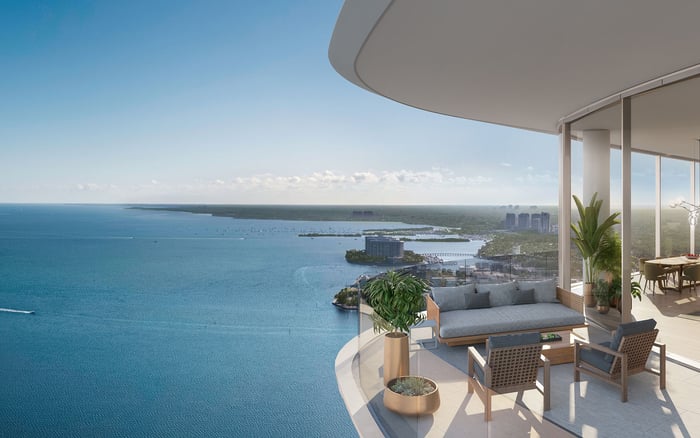
A refined terrace may read as effortless luxury, but in South Florida’s coastal condo market, outdoor kitchens and exterior additions are governed by wind exposure, smoke control, structural limits, corrosion risk, and board oversight. For buyers evaluating a high-rise residence in Miami Beach, Sunny Isles, Brickell, or Palm-beach, the real value lies in understanding what can be added, what must be engineered, and what will cost more to maintain over time.
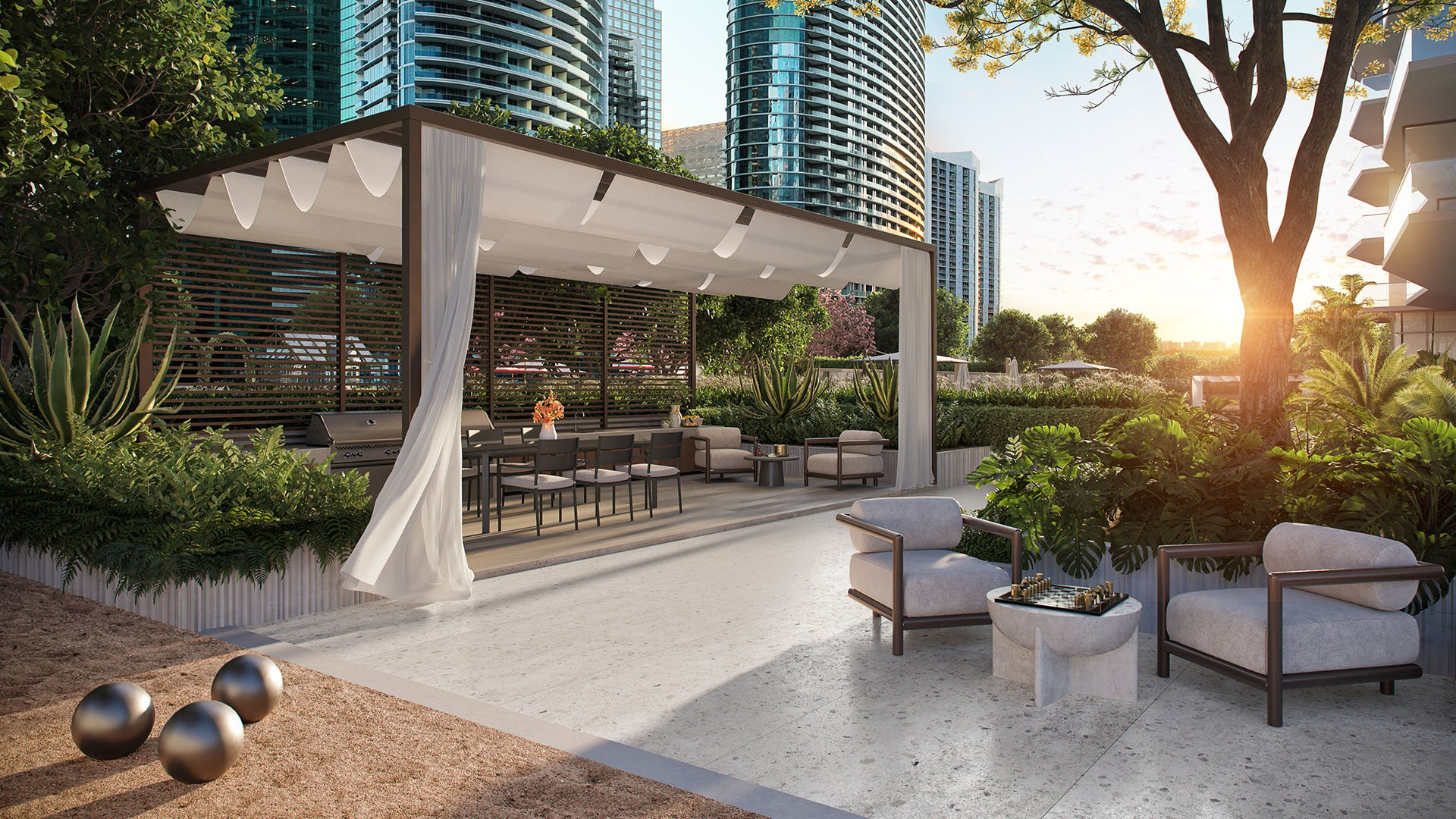
In South Florida, a large private terrace is often one of luxury’s defining signals. It promises open-air dining, sunrise coffee, and the indoor-outdoor rhythm that sets premier residences apart from ordinary vertical living. Yet in a coastal condo, especially in high-exposure settings from Miami Beach to Palm-beach, a terrace kitchen is never simply a design decision. It is a building-envelope decision, a life-safety decision, and often a board-governance decision.
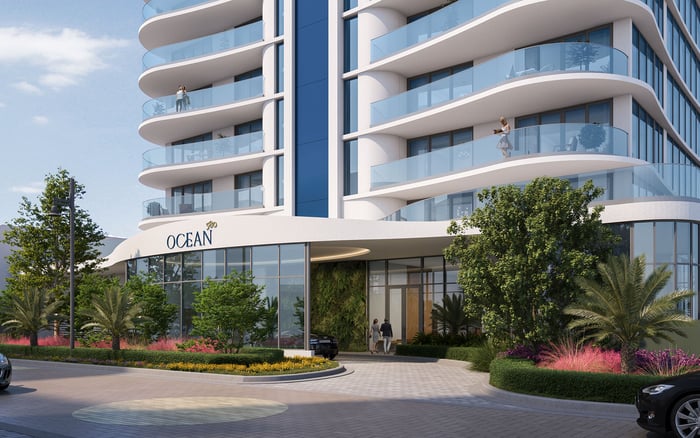
That distinction matters for buyers considering residences at 57 Ocean Miami Beach, Bentley Residences Sunny Isles, or The Residences at 1428 Brickell, where terraces are central to the lifestyle proposition. The key question is not whether an owner can envision a grill station, cabinetry, or a sleek stone island. It is whether the assembly can satisfy structural, wind, smoke, electrical, and maintenance requirements once it becomes part of an exposed coastal façade.
For discerning buyers, the terrace should be evaluated with the same rigor as the kitchen inside the apartment. In many buildings, outdoor improvements are jurisdiction-dependent and HOA-dependent, and board architectural standards may be more restrictive than the base code.
South Florida’s coastal requirements for exterior components are unusually strict for good reason. The region’s modern code culture was shaped by hurricane lessons, and that legacy still governs how terrace enclosures, shutters, screens, doors, and outdoor additions are reviewed today.
In practical terms, coastal condo terrace components are often expected to meet recognized wind and pressure testing protocols such as ASTM E330 or ASTM E1886 when hurricane exposure is part of the design scenario. In Miami-Dade high-rise contexts, terrace assemblies may be evaluated against design conditions around 146 mph 3-second gust exposure, with substantial positive and negative design pressures. These are not decorative thresholds. They affect fastening, anchorage, glazing, cabinetry connections, and any element that could become vulnerable under uplift or lateral force.
For a buyer, that means the elegant outdoor kitchen island that appears permanent may still require engineer review if it was added after turnover. Screens, glass enclosures, and retractable storm shutters can also trigger significant retrofit costs, often in the roughly $8,000 to $25,000 range per unit depending on scope and building standards. In a market that prizes seamless outdoor living, the unseen paperwork is often as important as the visible finish palette.
Many buyers assume the main decision is gas versus electric. In reality, the first issue is often smoke and proximity to openings. Outdoor cooking appliances that generate smoke are commonly expected to maintain at least 10 feet of horizontal separation from doors, windows, and intake ducts unless an approved hood system is provided. In a dense multifamily tower, that requirement alone can sharply narrow what is feasible on many terraces.
This is one reason charcoal and wood-burning grills are generally unwelcome and, in many Miami-Dade multifamily settings, effectively prohibited. Natural gas and electric equipment are typically the more realistic options, but neither should be treated casually. Natural-gas installations bring fuel-gas piping considerations, shutoff requirements, and installation standards that must be coordinated with the building. If a terrace is partially enclosed, ventilation and combustion-air questions become even more sensitive.
Owners in towers such as St. Regis® Residences Sunny Isles or Oceana Bal Harbour may find that board smoke and odor policies are more decisive than the appliance brochure. Many South Florida HOAs restrict nuisance smoke and odors on terraces and may impose penalties for violations. In luxury buildings, the issue is not merely compliance. It is preserving neighbor privacy, air quality, and the quiet enjoyment expected in premium multifamily environments.
Outdoor kitchens can look deceptively light. Stone countertops, prefabricated grill islands, refrigeration, storage modules, and pizza-oven style features add up quickly. If an island or countertop assembly approaches or exceeds typical terrace slab live-load assumptions of about 40 pounds per square foot, structural review may be required.
That is especially relevant in older stock and in any building where the proposed installation includes concentrated loads rather than evenly distributed furnishings. A built-in unit may also affect waterproofing membranes, drainage paths, and access for future façade or slab-edge work. What looks like a lifestyle upgrade can become a future maintenance conflict if it blocks inspection zones or penetrates waterproofing without proper detailing.
Electrical work deserves equal scrutiny. Receptacles serving an outdoor terrace kitchen generally need GFCI protection and equipment rated for wet or damp locations, depending on exposure. In corrosive marine conditions, buyers should also ask about enclosure specifications and whether components are suitable for salt-laden air. NEMA 4X is a useful benchmark for weather- and corrosion-resistant electrical enclosures on exposed terraces.
In areas such as Brickell and Edgewater, where towers including Baccarat Residences Brickell and Aria Reserve Miami market expansive outdoor living, the best outcomes usually begin with structural and electrical coordination, not after cabinetry has been selected.
Near the ocean, material performance is not a secondary concern. Salt exposure accelerates deterioration of metals, fasteners, finishes, gas lines, decking systems, pavers, and waterproofing components. This shortens useful life compared with inland installations and makes maintenance planning part of the ownership cost.
One of the most common mistakes is specifying standard stainless steel as though all stainless performs equally. In coastal outdoor kitchens, 304 stainless can corrode relatively quickly. Marine-grade choices such as 316L or duplex stainless are typically better suited to the environment. The same principle applies to hinges, screws, drawer hardware, lighting trims, and concealed brackets. A terrace may photograph beautifully at completion and still age poorly if the specification was driven by showroom appearance rather than marine exposure.
For oceanfront residences, this distinction is particularly important. At properties such as 2000 Ocean Hallandale Beach, where the lifestyle centers on direct coastal exposure, maintenance should be budgeted as an ongoing stewardship issue rather than an occasional repair line item. Regular inspection of sealants, membrane transitions, gas connections, drains, and metal finishes is not excessive. It is prudent ownership.
A luxury terrace addition is easiest to enjoy when approvals are complete and documentation is orderly. Municipal oversight can differ by jurisdiction across South Florida, and condo boards frequently go beyond baseline code on smoke, odors, screens, shutters, enclosures, and owner maintenance obligations. Before any improvement is contemplated, buyers should review both local requirements and the declaration, house rules, alteration agreement, and insurance provisions for the building.
Insurance is often misunderstood. The condo master policy may not fully cover owner-added terrace improvements, leaving the owner responsible for separate HO-6 or specialty coverage for grills, screens, and outdoor kitchen assemblies. That matters not only after a storm event, but also during leaks, façade work, or claims involving adjacent units.
Documentation also affects liquidity. Missing wind-test certifications, engineer approvals, or alteration records can complicate resale, appraisal review, and certain forms of buyer financing. In the upper tier of the market, buyers tend to assume terrace improvements were completed correctly. Sophisticated due diligence means asking to see the approvals, not merely admiring the stonework.
A well-executed terrace kitchen can absolutely enhance value, provided the installation respects the realities of coastal condo living. Before committing, buyers should ask whether the proposed or existing improvement has engineered wind review, whether smoke-producing equipment is permitted, whether gas piping is authorized, whether slab loading was evaluated, and whether the electrical package is appropriately rated for exposed marine conditions.
They should also ask who maintains what. In some buildings, membranes, slab edges, and façade-adjacent conditions remain the association’s domain, while owner improvements attached to those areas create a blurry line when repairs are needed. Precision on that point can prevent disputes later.
The most successful luxury terraces in South Florida are not the ones with the most equipment. They are the ones where architecture, engineering, operations, and board policy align. A beautiful outdoor kitchen is easy to desire. A compliant, durable, insurable, and resale-friendly one is the true luxury.
Can I add a grill to any coastal condo terrace? Not necessarily. Permission depends on local code, building design, and HOA or condo-board rules, which may be stricter than baseline requirements.
Are charcoal grills usually allowed in high-rise condos? In many Miami-Dade multifamily settings, charcoal and wood-burning grills are generally not permitted because of smoke and fire concerns.
Why does wind testing matter for an outdoor kitchen? Terrace additions are exposed exterior components, so anchorage and assemblies may need recognized wind and pressure testing or engineer review.
What is the main smoke-rule issue on a condo terrace? Smoke-producing appliances are commonly expected to remain at least 10 feet from openings unless an approved hood system is used.
Can a heavy outdoor island overload the terrace? It can. Built-in islands and stone counters may require structural review if they approach typical live-load limits of about 40 psf.
Is electric easier than natural gas for condo terraces? Often yes, but it still requires proper outdoor-rated electrical work, GFCI protection, and board approval.
What metal holds up best near the ocean? Marine-grade materials are preferred, and 316L or duplex stainless is generally more durable than standard 304 stainless in salt air.
Do condo master policies cover owner-built terrace kitchens? Often not fully. Owners may need HO-6 or specialty coverage for added grills, screens, and built-in terrace improvements.
Can missing permits hurt resale value? Yes. Absent approvals or wind certifications can complicate appraisal, financing, and buyer confidence during resale.
What is the smartest first step before designing the space? Review the building’s alteration rules and confirm structural, smoke, gas, and electrical feasibility before selecting finishes or appliances.
For a discreet conversation and a curated building-by-building shortlist, connect with MILLION Luxury.
If branded residences are on your mind — as a home or as an allocation — we would be glad to share what we are seeing, privately.
Begin a quiet conversation