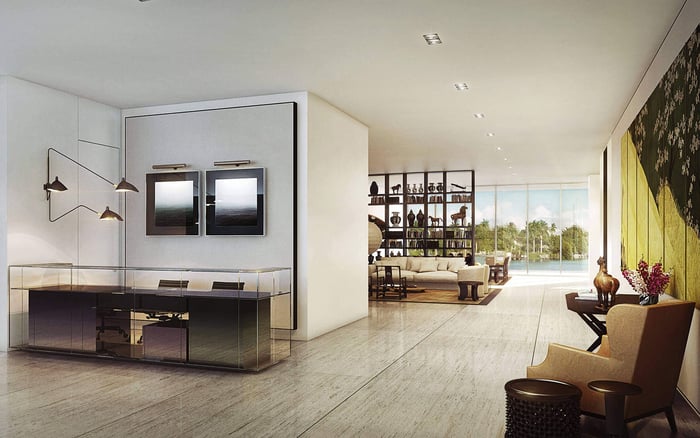
A practical buyer’s guide to evaluating terrace comfort, usable dimensions, wind exposure, furniture planning, entertaining flow, and condominium rules at Onda Bay Harbor.
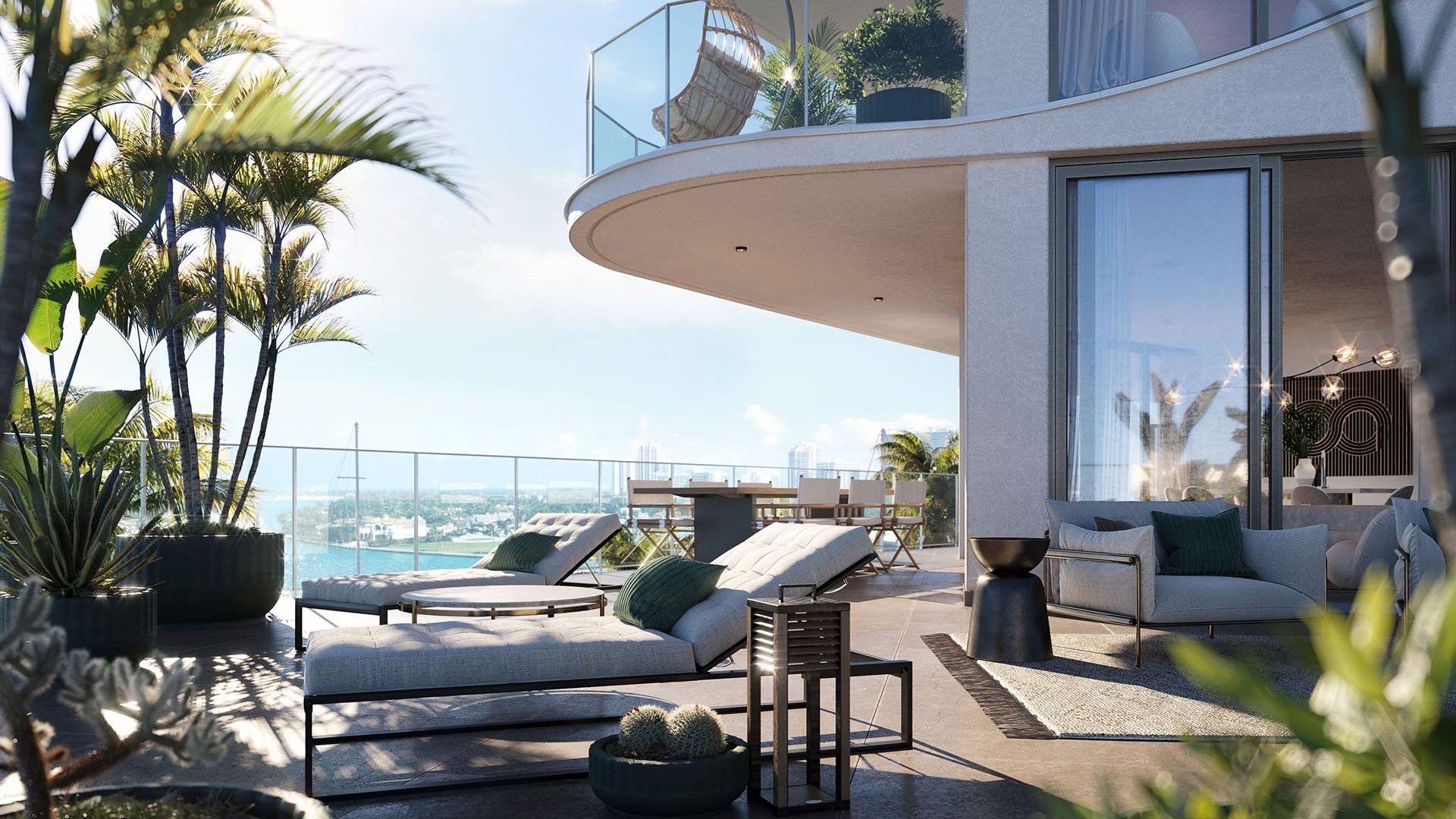
At Onda Bay Harbor, buyers should assess outdoor space as carefully as the kitchen, primary suite, and view corridor. A compelling first impression does not establish how comfortably a terrace will function throughout the day.
Shade changes by the hour, while wind can vary by floor and exposure. An exterior-area figure may also include narrow sections that are less practical for dining or lounging. The evaluation should therefore focus on the specific residence and the buyer’s intended use.
Request a dimensioned plan showing width, depth, corners, columns, sliding-door openings, railing lines, and narrow perimeter runs. Then map proposed furniture at true scale. The essential question is not simply how large the terrace is, but how much of it supports comfortable daily use.
The same plan-first discipline is useful when comparing Bay Harbor Islands alternatives such as Alana Bay Harbor Islands and La Maré Bay Harbor Islands. Each outdoor area should be judged by its proportions, access, and function rather than a single total-area figure.
Obtain a compass-marked plan and confirm the residence’s orientation. Ask for overhang dimensions and review the terrace in the morning, at midday, and in the late afternoon when possible. Consider direct sunlight and glare at both outdoor seating areas and adjacent interior spaces.
Visit when you expect to use the terrace most. Buyers planning evening dinners should inspect late-day conditions, while those imagining morning coffee should evaluate the space earlier. Shade analysis must remain specific to the residence.
Floor level and exposure can create distinct wind conditions. Stand outside long enough to observe sustained airflow and occasional gusts, then operate every terrace door. Consider whether napkins, cushions, tabletop objects, or lightweight chairs would require frequent management.
Ask how furniture, umbrellas, planters, and accessories may be secured and stored. Review the applicable condominium rules before commissioning custom pieces. Furniture must be manageable, maintainable, and compatible with any permitted fastening method.
A terrace may support separate dining and lounge zones only if circulation remains clear. Draw the dining table with chairs pulled out, then add lounge seating, side tables, planters, and the full operating path of each door. Preserve a direct route between interior living areas and outdoor dining, and avoid forcing guests through a seating group.
Select materials suitable for the terrace’s exposure, and create a practical plan for upholstery, covers, and accessories. A well-resolved layout should remain functional when every seat is occupied, not only when furniture is staged.
For buyers widening a Miami Beach search, The Ritz-Carlton Residences® Miami Beach provides another South Florida reference point for considering how private outdoor space relates to interior rooms. Any comparison should remain residence-specific rather than brand-led.
Before purchasing, simulate a real gathering. Check whether guests can move between the living room and terrace while someone carries dishes, whether occupied dining chairs leave adequate clearance, and whether lounge seating obstructs a principal door.
Assess privacy, noise, glare, railing sightlines, and views while seated as well as standing. If entertaining is a priority, verify whether the layout supports the expected number of guests without compromising safe, comfortable movement.
Request the current condominium provisions governing grills, heaters, umbrellas, planters, speakers, furniture storage, and attachment or fastening. Confirm maintenance responsibility for terrace finishes and drains, along with any restrictions affecting deliveries or installation. These details can shape the final furniture specification as decisively as the dimensions.
Rules and physical conditions should be reviewed together. A furniture concept is not complete until it fits the terrace, supports the intended use, and complies with the applicable requirements.
What terrace document should a buyer request first? Request a dimensioned, compass-marked plan showing usable depth, width, doors, columns, railings, and narrow perimeter sections.
Why is total exterior square footage insufficient? The total may include circulation paths or narrow areas that cannot comfortably accommodate furniture.
How should buyers evaluate afternoon sun? Visit late in the day and verify orientation, overhang depth, direct exposure, and glare.
Should buyers assume shade and wind are consistent throughout Onda Bay Harbor? No; both conditions should be investigated for the specific residence and expected time of use.
How can wind affect a furniture plan? Wind can influence furniture weight, cushion management, tabletop use, umbrella selection, and fastening needs.
What should an entertaining test include? Place dining and lounge furniture at scale, pull out the chairs, open the doors fully, and preserve clear circulation.
Why does floor level matter outdoors? Floor level may affect exposure, wind, privacy, noise, and the experience of the view.
What condominium rules deserve review? Confirm the rules for grills, heaters, umbrellas, planters, speakers, storage, and securing outdoor items.
How should buyers assess terrace privacy? Review sightlines from neighboring residences and shared areas while both seated and standing.
When should furniture be ordered? Order only after confirming dimensions, circulation, exposure, storage needs, delivery requirements, and condominium rules.
For a confidential assessment and a building-by-building shortlist, connect with MILLION.
If branded residences are on your mind — as a home or as an allocation — we would be glad to share what we are seeing, privately.
Begin a quiet conversation