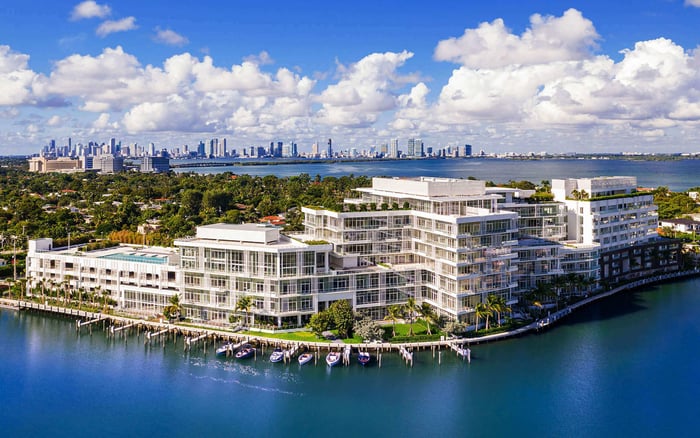
Round-the-clock valet is an amenity, not a complete vehicle-management agreement. Buyers at these two Ritz-Carlton residential projects should establish parking rights, storage protocols, liability coverage, and EV-charging allocation in writing.

An effortless arrival is part of the appeal of a serviced residence. For an owner returning to South Florida with several vehicles, however, the more consequential questions begin after the keys change hands: where the cars stay, who may move them, what happens if damage occurs, and whether an electric vehicle will be charged when needed.
At The Ritz-Carlton Residences® South Beach and The Ritz-Carlton Residences® Pompano Beach, round-the-clock valet is advertised. That service alone does not establish vehicle-storage rights, guaranteed retrieval times, insurance protection, or charging access. The distinction matters especially when a residence must accommodate both daily transportation and cars left between visits.
The standard is written clarity. Treat parking, custody, and charging as separate due-diligence subjects, each with defined allocations, operating rules, costs, and responsible parties.
The Ritz-Carlton Residences® South Beach is at 1671 Collins Avenue, Miami Beach, FL 33139, and advertises an attended porte-cochère with 24-hour valet service. Parking-space counts, a resident-to-space ratio, and guaranteed parking capacity remain unspecified in the advertised offering.
The separate Ritz-Carlton, South Beach hotel is at 1 Lincoln Road. Its parking policies and any hotel charging information should not be carried over to the residential purchase. The South Beach residences are not owned, developed, or sold by The Ritz-Carlton Hotel Company, L.L.C. or its affiliates. Buyers should identify the actual contracting parties rather than infer responsibility from the brand.
The Ritz-Carlton Residences® Pompano Beach has a project address of 1380 South Ocean Boulevard, Pompano Beach, FL 33062. Presented as a Beach Tower and Marina Tower development, it advertises 24/7 valet parking, concierge service, and an attended lobby. Marina Tower amenities separately include 24/7 valet service and a reception and concierge desk.
At Pompano Beach, parking-space counts, assigned versus unassigned parking, and parking rights attached to individual residences remain unspecified in the advertised offering. These advertised amenities and unspecified details do not confirm current operations or establish that undisclosed facilities do not exist.
Begin with the declaration, condominium prospectus, parking plan, rules, and any residence-specific parking addendum. Ask counsel to reconcile those documents with the proposed purchase agreement. A service description is no substitute for the terms governing the particular residence.
The written response should address four practical issues:
Capacity: How many vehicles may the residence keep, and is availability guaranteed?
Allocation: Are spaces assigned or unassigned, and what governs any reassignment?
Additional vehicles: What allowances, approvals, and charges apply to a second vehicle or guests?
Physical handling: Are mechanical stacking, specialty-vehicle restrictions, or off-site movements contemplated?
For a low-clearance sports car or a vehicle intended for extended storage, submit the specific requirements before committing. Ask management to confirm suitability in writing rather than relying on a general assurance that valet will accommodate the collection.
At Pompano Beach, request tower-specific answers: where each vehicle would be kept, which service point handles retrieval, and whether movement between locations is contemplated. The two-tower presentation does not establish those arrangements.
Daily valet and seasonal storage require different arrangements. An owner leaving a vehicle during an extended absence should request written terms for permitted duration, key custody, authorized movements, battery maintenance, and advance notice for retrieval.
Clarify whether maintenance is offered at all, who may authorize it, and how any service is documented and charged. A parked vehicle should not be assumed to receive periodic attention simply because valet operates around the clock.
Ask for flood and storm protocols, including who may relocate a vehicle, where it may be taken, and how the owner is notified. Those procedures remain unestablished in either project's advertised offering. Resolve them before handing over a car for a prolonged absence, particularly if the owner cannot return promptly.
Valet insurance limits, indemnification terms, and damage-claim procedures remain unestablished in either project's advertised offering. That leaves an important document-review task-not a basis for assuming either adequate protection or no protection.
Identify the valet operator, the entity contracting with it, and the party responsible for receiving a claim. Request the valet agreement and insurance certificates, then have counsel and an insurance adviser review the relevant coverage, deductibles, exclusions, and indemnities. Ask specifically how coverage addresses custody, vehicle movements, and any permitted off-site storage.
Operational procedures matter alongside insurance coverage. Establish how vehicle condition is recorded at handover, how damage is documented, what notice deadlines apply, and who communicates with the owner. Confirm the process for disputed claims and any terms that seek to limit responsibility.
The objective is a clear chain of custody and accountability, not a reassuring brand-level description of homeowner services.
At South Beach, charger counts, unit assignments, and resident billing arrangements remain unestablished in the advertised residential offering. At Pompano Beach, EV chargers and resident charging spaces are not expressly identified in the advertised offering. Neither omission proves that charging facilities are absent.
Request a charging plan covering charger counts, output, locations, installation timing, and available electrical capacity. Then establish whether access would be assigned to a residence, shared through reservations, or coordinated by valet. These are questions to resolve, not confirmed arrangements at either project.
For shared charging, ask how priority, session duration, vehicle movement, and completion notifications would work. For a private installation, request approval requirements and electrical-capacity documentation before assuming that a parking entitlement includes charging rights.
Finally, distinguish electricity charges from access fees, valet handling, idle penalties, and maintenance costs. Request outage procedures and identify who is responsible for equipment repairs. A charger count alone cannot establish whether the service fits an owner's departure schedule.
A buyer comparing South Beach with Shore Club Private Collections Miami Beach should apply the same questions to each residence, without assuming equivalent parking or charging arrangements. Compare documented entitlements, not amenity language.
Before committing, give counsel a short list of nonnegotiables: vehicle capacity, storage duration, permitted handling, liability protection, and charging access. Seek written commitments in the applicable transaction or condominium documents, with the responsible entity clearly identified. Treat any unresolved material point as an open purchase consideration, not a service detail to settle later.
For a discreet perspective on South Florida residential ownership, explore MILLION.
If branded residences are on your mind — as a home or as an allocation — we would be glad to share what we are seeing, privately.
Begin a quiet conversationYes, the residential offering advertises an attended porte-cochère with 24-hour valet service. That does not establish guaranteed parking capacity.
The project advertises 24/7 valet parking and concierge service. Marina Tower amenities also separately include 24/7 valet service.
The advertised service alone does not establish such a guarantee. Confirm second-vehicle allowances, availability, and charges in the applicable parking documents.
No, the hotel at 1 Lincoln Road is separate from the residential project listed at 1671 Collins Avenue. Its policies do not establish residential arrangements.
Request the declaration, condominium prospectus, rules, parking plan, and any residence-specific parking addendum. The valet agreement and insurance certificates are also important review items.
The advertised valet amenities do not establish long-term storage terms. Request written rules for duration, key custody, vehicle movements, battery maintenance, and retrieval.
They do not establish coverage limits, indemnification terms, or damage-claim procedures at either project. Identify the operator and have the relevant agreements and coverage reviewed.
South Beach's advertised offering does not establish an EV-charging allocation, while Pompano Beach's does not expressly identify chargers or resident charging spaces. This does not prove facilities are absent.
Ask about electricity charges, access fees, valet handling, idle penalties, and maintenance responsibility. Also request outage and repair procedures.
Ask counsel to seek written commitments in the applicable transaction or condominium documents. Identify the responsible entity and resolve material uncertainties before committing.