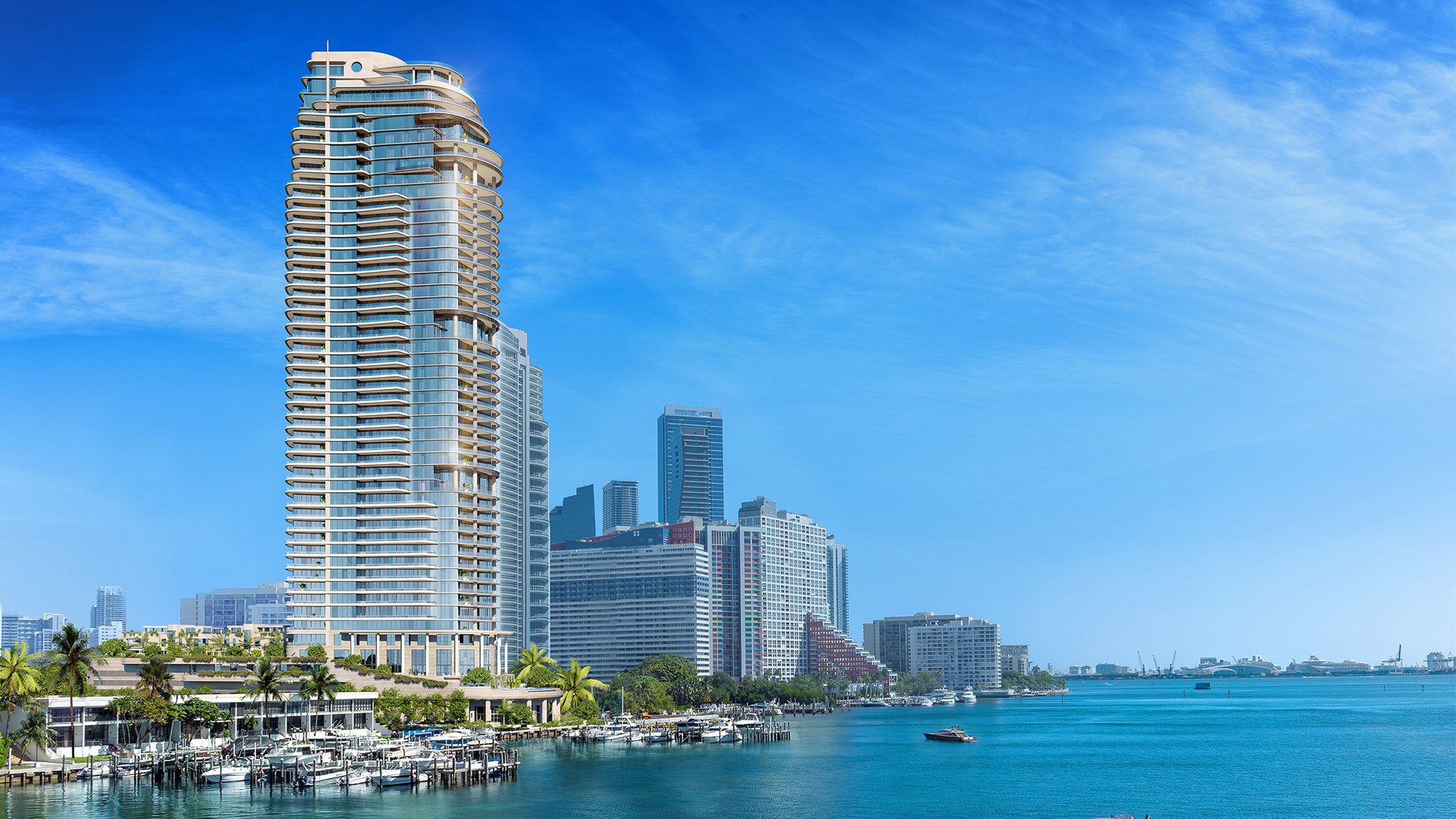
Is Viceroy Brickell better for owners who entertain clients than for families who live there full time?
Viceroy Brickell reads most convincingly as a hospitality-driven address for owners who entertain clients, value service, and want flexible urban use, while families seeking a quieter, more conventional full-time home may find its unit mix, transient rhythm, and amenity profile less accommodating.

Santa Maria Brickell: The Timeless Allure of a Miami Skyscraper Icon
A refined look at why Santa Maria remains one of Brickell’s enduring luxury condominium addresses, from its early-2000s pedigree to its waterfront positioning and lasting market relevance.

Assessing the Appeal of Zero-Minimum Rental Policies at Alma Bay Harbor Islands
A buyer-focused MILLION Luxury editorial on why the idea of a zero-minimum rental policy at Alma Bay Harbor Islands remains impossible to evaluate confidently until the project itself and any rental framework are publicly confirmed.

How the Certificate of Use Requirements Impact Miami Vacation Rental Investors
In Miami, vacation-rental performance is not only a function of design, view, and walkability. It is also a compliance question. A Certificate of Use can determine whether a property can legally operate at the cadence investors expect, shaping everything from underwriting and renovations to closing timelines and resale liquidity. This editorial explains what sophisticated buyers should understand before they treat a luxury condo or pied-à-terre as a short-term rental asset.

Navigating the Tax Implications of Fractional Condominium Ownership in Miami Beach
Fractional condominium ownership can unlock Miami Beach access with a smaller equity check, but its tax profile is not “lite.” How you hold title, how you use the residence, and how the agreement allocates income and expenses can change your federal, state, and local outcomes. This guide frames the core questions affluent buyers and their advisors typically pressure-test before committing to a fractional structure.

How Proposed Homestead Tax Eliminations Will Accelerate the Transition of Miami Secondary Homes into Primary Residences
Proposals to eliminate or substantially expand homestead-style property-tax relief in Florida have moved from technical policy chatter into dinner-table strategy for owners of Miami-area second homes. For the ultra-premium market, the immediate question is not ideological. It is practical: if the financial advantage of declaring a Florida primary residence becomes meaningfully larger, how quickly will lifestyle-driven “part-time” ownership convert into full-time residency and what will that do to pricing, inventory, and building-level dynamics? With limited verified detail on any specific proposal, the throughline is still clear. Homestead benefits are binary in real life: you either qualify as a primary resident or you do not. When the economic difference widens, behavior follows. In South Florida, where many luxury owners already split time between multiple homes, the friction is rarely emotional. It is administrative, legal, and logistical. Reduce the tax friction and the region’s second-home inventory increasingly behaves like primary-home inventory. This is the inflection point MILLION Luxury clients are already modeling: which properties become “sticky” primary residences, which remain flexible pied-à-terres, and which will be repositioned as long-term rentals or sold into a thinner pool of true second-home buyers.