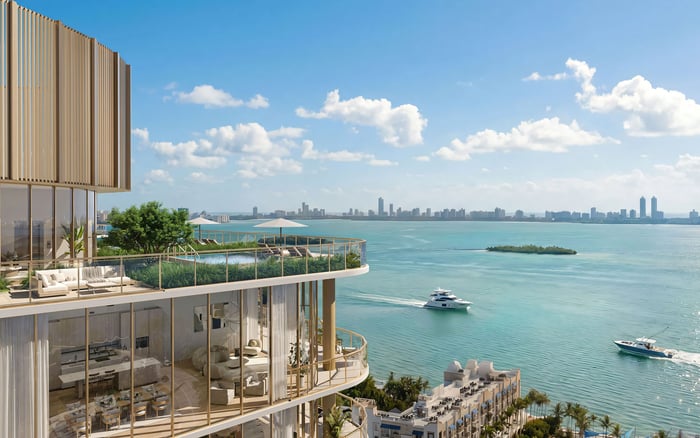
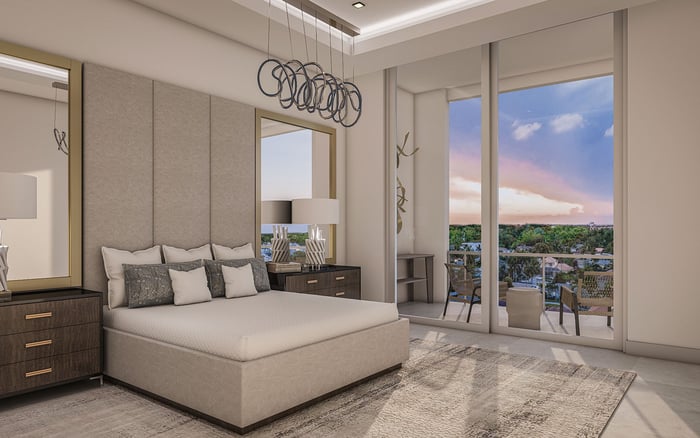
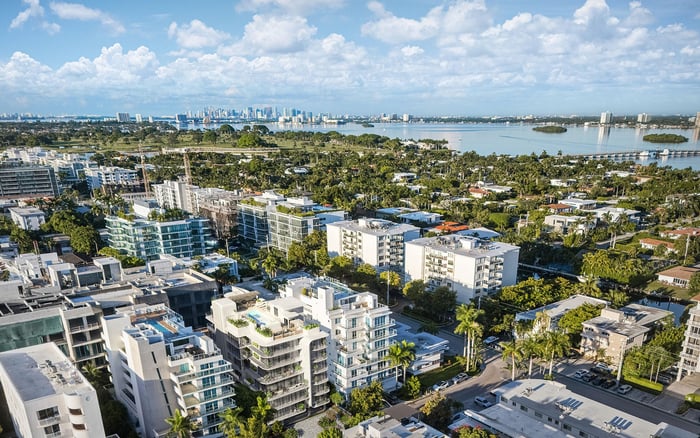
A buyer-focused MILLION Luxury editorial on why the idea of a zero-minimum rental policy at Alma Bay Harbor Islands remains impossible to evaluate confidently until the project itself and any rental framework are publicly confirmed.
In South Florida luxury real estate, rental flexibility can be genuinely compelling. For some buyers, it supports a pied-a-terre strategy. For others, it creates optionality around travel, portfolio management, or eventual resale positioning. In the right setting, a zero-minimum rental policy can signal a high degree of owner freedom.
Yet in the case of Alma Bay Harbor Islands, the conversation cannot responsibly begin with presumed upside. It has to begin with a simpler point: the project itself is not publicly verified in a way that allows a credible assessment of its rental posture. There is no confirmed public record establishing Alma Bay Harbor Islands as a documented operating luxury development, no verified listing trail under that exact name, and no publicly established rental framework confirming a zero-minimum policy.
For discerning buyers, that distinction matters. A flexible rental structure may be appealing in theory, but in the luxury market, appeal is never abstract. It rests on documented rules, governance, brand positioning, resident mix, and the extent to which the policy complements the building rather than diluting it. Without that foundation, the phrase zero-minimum rental policy is not yet an amenity. It is simply an unverified concept.
When properly documented, highly flexible rental terms can attract several types of luxury purchasers. The first is the global owner who wants the freedom to use a residence seasonally without committing to long holding periods between occupancies. The second is the buyer who sees the home as part residence, part income-producing asset. The third is the purchaser who values optionality above all else, especially in a market where personal and business calendars can shift quickly.
That said, flexibility is not automatically synonymous with prestige. In elite residential buildings, rental policy is evaluated alongside privacy, staffing, lifestyle coherence, and long-term owner profile. A residence that permits unusually short or highly frequent leasing may appeal to one audience while discouraging another. The best buildings calibrate that balance with care.
This is why policy language must be read precisely. In Bay Harbor and surrounding enclaves, the difference between short-term rentals and long-term rentals can materially affect a building's identity, its hospitality feel, and the expectations of future buyers. Sophisticated purchasers do not ask only whether a building allows rentals. They ask how that rental policy shapes the living experience.
At present, very little can be said with confidence beyond the fact that the name itself remains uncertain in public-facing market materials. The project may be operating under a different name. It may be in a pre-marketing phase. It may reflect an internal working title rather than a consumer-facing development identity. It may even be conceptual rather than active.
What cannot be said responsibly is that Alma Bay Harbor Islands offers a zero-minimum rental policy with proven buyer appeal. That conclusion would require an official framework, disclosed governing documents, or other direct confirmation tying the policy to the specific property. None of that is presently established in the available material.
For investors, this means the usual shorthand assumptions should be suspended. One cannot infer booking potential, occupancy convenience, or future resale premiums from a policy that has not been publicly confirmed. For end users, the same caution applies. Lifestyle planning based on an unverified rule set is rarely elegant and never ideal.
Bay Harbor remains one of the most nuanced addresses in Miami-Dade. Its appeal is tied to intimacy, waterfront character, and a refined residential rhythm that often attracts buyers seeking discretion rather than spectacle. In that context, rental flexibility should be viewed as one layer of value, not the entire value proposition.
A more useful framework is to compare any future Alma Bay Harbor Islands disclosure against verified nearby product. Projects such as Alana Bay Harbor Islands, La Maré Bay Harbor Islands, Onda Bay Harbor, The Well Bay Harbor Islands, and 2200 Brickell illustrate the kind of grounded market context a buyer can actually analyze. With confirmed developments, the conversation can move beyond naming ambiguity and toward actual building character, waterfront positioning, and ownership priorities.
Those comparisons do not validate Alma Bay Harbor Islands. They simply demonstrate the standard of clarity serious buyers should expect.
If Alma Bay Harbor Islands is later verified and if a zero-minimum rental policy is formally disclosed, the next question would not be whether the policy sounds attractive. The better question would be whether it fits the building.
In the luxury tier, fit is everything. A highly flexible rental structure can be advantageous when architecture, services, and management support transient or hybrid occupancy without compromising privacy. In other cases, the same structure can create friction with an owner base that values predictability, quiet enjoyment, and a more settled residential atmosphere.
This is especially relevant in Bay Harbor, where boutique scale is often part of the draw. A buyer looking for a second home may appreciate freedom, but not if that freedom introduces a revolving-door sensibility. An investment-minded purchaser may welcome flexibility, but still prefer a framework that preserves exclusivity. The strongest policy is usually the one that broadens options while protecting tone.
Before assigning any premium to a purported rental-friendly residence, a purchaser should confirm the exact development name, legal identity, and location. After that, the key questions become practical: Is the rental policy embedded in governing documents? Are there blackout periods or approval procedures? Is there a minimum lease term hidden behind marketing language? Are furnishing, management, or registration obligations required? And does the building's daily experience still read as genuinely residential?
These are not minor details. In luxury condominiums, the fine print often defines the actual owner experience. A residence marketed with flexibility may, in practice, operate within constraints that meaningfully shape revenue, convenience, or privacy.
Until Alma Bay Harbor Islands is confirmed with that level of clarity, its supposed zero-minimum rental appeal remains more premise than proposition.
For now, the most credible posture is restraint. Bay Harbor Islands remains a compelling submarket, and rental flexibility remains a meaningful lens through which to evaluate luxury product. But combining those two ideas into a definitive investment thesis for Alma Bay Harbor Islands goes beyond what can currently be supported.
That does not diminish the neighborhood's relevance. It simply reinforces the standard sophisticated buyers expect: beautiful concepts are interesting, but verified terms create value. In South Florida's upper tier, discretion is prized, yet transparency still governs the decision.
Is Alma Bay Harbor Islands confirmed as an active luxury development? Not publicly in a way that allows a confident market assessment under that exact name.
Has a zero-minimum rental policy been confirmed for Alma Bay Harbor Islands? No publicly confirmed policy has been established for that specific property name.
Why does verification matter so much here? Rental appeal depends on actual governing terms, not on an unverified marketing concept.
Could Alma Bay Harbor Islands exist under another name? Yes. A naming variation or internal working title is one plausible explanation.
Could the project still be in pre-marketing? That is possible, which is why caution is more appropriate than conclusion.
Does a zero-minimum policy always add luxury value? No. It can enhance optionality, but it can also alter privacy and resident character.
What type of buyer usually likes flexible rental rules? Often investors, global owners, and buyers seeking occasional-use convenience.
Is Bay Harbor a market where policy details really matter? Absolutely. In boutique settings, rental rules can shape the entire living experience.
What should buyers confirm first? The exact project identity, legal documentation, and the full rental framework.
What is the prudent stance until more is disclosed? Treat the concept as unconfirmed and compare it with verified local alternatives.
To compare the best-fit options with clarity, connect with MILLION Luxury.
If branded residences are on your mind — as a home or as an allocation — we would be glad to share what we are seeing, privately.
Begin a quiet conversation