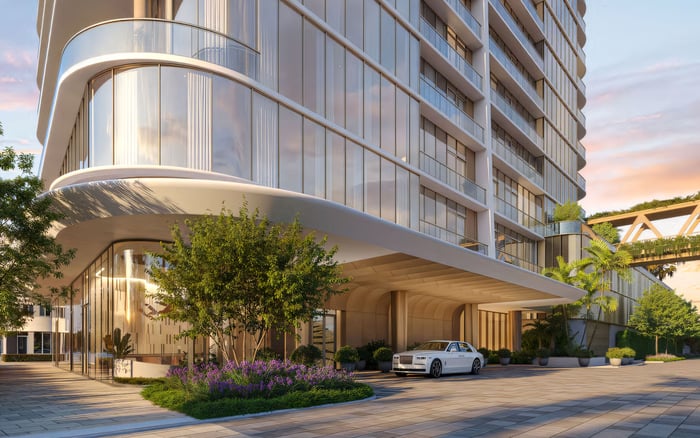
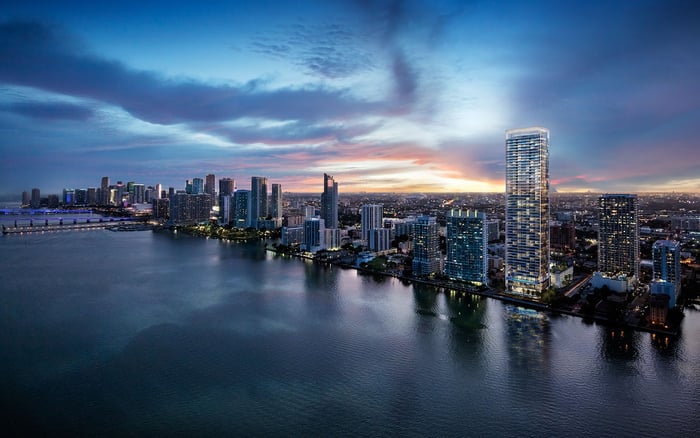
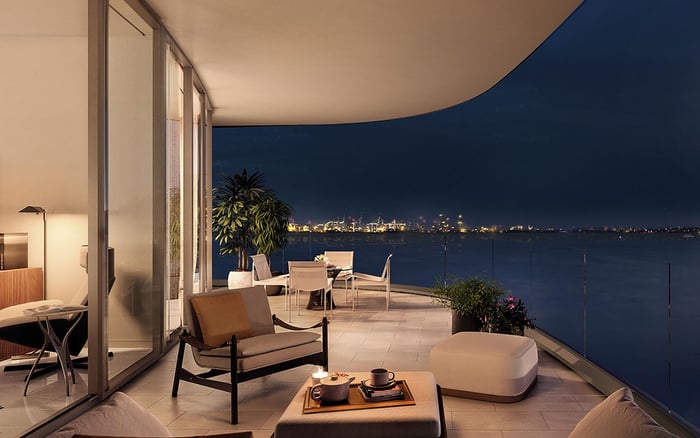
For part-time owners choosing between Midtown and Brickell, the decision is less about headline prestige and more about daily rhythm. Miami Design Residences Midtown Miami suits buyers who want a walkable, culture-adjacent base with easier flow to the Design District and Wynwood. Viceroy Brickell speaks to owners who value branded hospitality, downtown immediacy, and a more hands-off ownership experience.
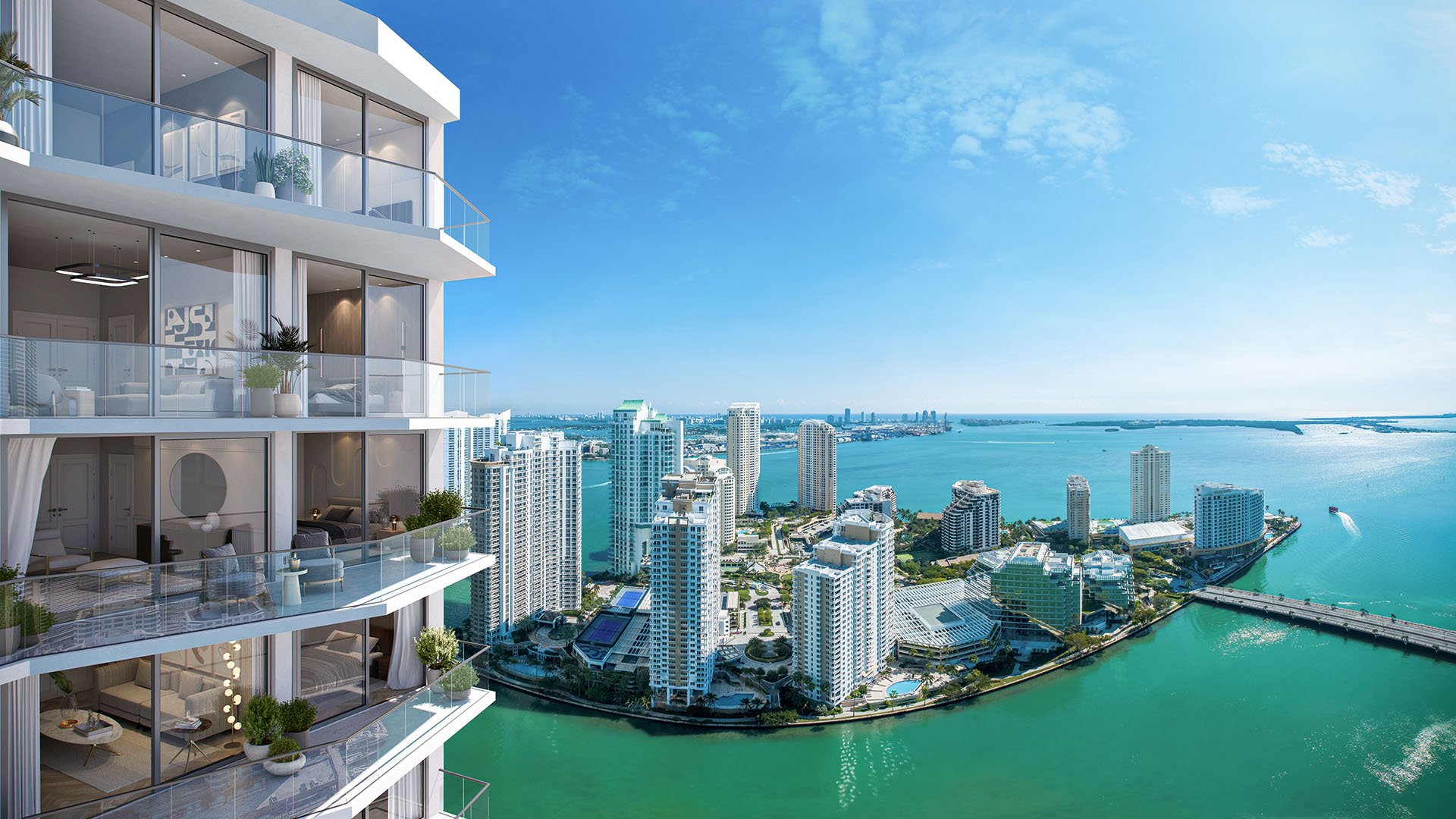
For the part-time owner, this is not simply a Midtown-versus-Brickell debate. It is a decision about how a Miami residence should function when you are in town and how little it should require when you are away. Within that framework, Miami Design Residences Midtown Miami and Viceroy Brickell occupy two distinctly different sides of the same luxury conversation.
Midtown Miami is shaped by a mixed-use, pedestrian-oriented urban village model. Residential buildings, retail, dining, and office uses are woven into a dense neighborhood fabric, giving the area a lived-in, walkable rhythm that can strongly appeal to a second-home buyer who wants to arrive, unpack, and move through the day mostly on foot. In this comparison, Miami Design Residences benefits from that immediate neighborhood texture and from a stronger sense of connection to Wynwood and the Design District.
Brickell, by contrast, offers a more vertical, service-intensive version of urban Miami. It is the city’s financial core, with the strongest claim to downtown immediacy, a larger concentration of offices, hotels, restaurants, and waterfront living, and a pace calibrated to buyers who want convenience built into the address itself. For many in Brickell, the essential question is not where to go next, but whether there is any need to leave the district at all.
Midtown’s advantage begins with friction, or rather the lack of it. For owners who spend meaningful time in residence, the neighborhood’s integrated retail base can reduce the need to get in a car for ordinary daily routines. That matters more than it first appears. A home that is easy to inhabit casually often becomes the one used more often.
The cultural pull is also different here. Midtown is closely tied to Wynwood and the Design District in a way that supports an ownership style built around galleries, dining, design retail, and creative-city energy. If a buyer envisions mornings on foot, afternoons browsing nearby luxury retail, and evenings that move naturally between neighborhood restaurants and arts-driven destinations, Midtown reads as the more lifestyle-integrated option.
That broader context helps explain why nearby projects such as Kempinski Residences Miami Design District and Frida Kahlo Wynwood Residences reinforce the area’s gravity. Even when a buyer is focused on one building, the surrounding ecosystem helps define the value of the address.
For buyers who associate luxury with daily usability rather than formal service layers, Midtown can feel more personal. The neighborhood is largely built out, yet it still benefits from the continued rise of the Design District orbit around it. That combination often appeals to those who want a residence embedded in an established urban setting with a strong cultural identity.
Viceroy Brickell’s differentiator is not simply location. It is the branded residence model itself. The appeal is rooted in hospitality, with hotel-style services such as concierge and housekeeping helping create a more hands-off ownership experience. For a part-time owner who may be in Miami only intermittently, that can be the decisive factor.
This is where Brickell becomes especially persuasive. The district combines business access, restaurant density, hotel infrastructure, and a waterfront urban setting in one concentrated environment. For an owner arriving for a few days of meetings or a week of city living, the neighborhood offers immediate operational ease.
The Brickell comparison set also clarifies the district’s identity. Developments such as The Residences at 1428 Brickell and St. Regis® Residences Brickell show how strongly the area leans into branded, service-rich, globally legible luxury. Viceroy Brickell fits naturally into that ecosystem, particularly for buyers who place a premium on minimal operational burden.
Publicly presented unit types for Viceroy Brickell span from studios to three-bedroom residences, broadening its audience. That range can matter to part-time owners seeking either a compact urban base or a more substantial residence with hospitality support built into ownership.
Both Midtown and Brickell can support relatively car-light living, but they do so in different ways. Midtown minimizes errands by placing everyday retail and dining within the neighborhood itself. Brickell benefits from the broader urban core’s transit infrastructure, including the Metromover, which supports movement around downtown and Brickell with relative ease.
For the owner who wants a neighborhood that feels self-contained, Midtown may hold the clearer advantage. For the owner who wants access to the wider downtown core with as little logistical friction as possible, Brickell is stronger. That distinction may sound subtle, but it shapes the lived experience of every short stay.
An Edgewater alternative like Aria Reserve Miami is useful as a reference point here. It underscores how buyers often triangulate between cultural adjacency, skyline living, and water-oriented positioning before settling on either Midtown or Brickell.
Brickell holds a clear edge for buyers who want riverfront or bay-adjacent urban living. Water views, marina proximity, and a stronger connection to boating culture all contribute to its appeal. For some owners, that waterfront context is not a detail but the point of the purchase.
Midtown cannot compete on that dimension in the same way. Its advantage instead is geographic and experiential: easier movement toward the Design District and Wynwood, stronger integration with design-driven surroundings, and a more neighborhood-based version of city life. In a market where many luxury buyers already know Miami Beach and the bayfront, that inland cultural positioning can be exactly what feels fresh.
Brickell offers the more direct downtown relationship. Midtown provides better access to Wynwood and the Design District. Buyers deciding between the two are often really deciding which form of proximity they value more.
For many part-time owners, purchase logic extends beyond personal enjoyment. A branded, service-led property in Brickell may benefit from broader demand among business-oriented and hospitality-minded buyers, potentially supporting stronger resale liquidity. That is a reasonable working thesis, though any buyer should verify current market depth, fees, and building-specific conditions before making the leap.
Midtown’s logic is different. Its appeal may be strongest among owners who intend to use the residence actively and repeatedly. That can still translate into healthy long-term desirability, especially as the surrounding cultural districts continue to mature, but it is a different value story from the more operationally flexible mindset often associated with hospitality-led inventory.
There is also a less glamorous but essential consideration: resilience. Flood exposure, insurance assumptions, and environmental conditions deserve close review in both neighborhoods, especially for absentee owners. Riverfront and bay-adjacent locations can present different risk profiles from inland districts, and those distinctions can influence carrying costs as much as lifestyle preference.
If your Miami life is defined by where you like to wander, dine, shop, and spend unstructured time, Miami Design Residences Midtown Miami has the cleaner thesis. It aligns with owners who want to live in Miami rather than simply touch down in it. The value lies in the fabric of the neighborhood and in the easy flow toward the city’s design and cultural districts.
If your priority is operational ease, branded service, and immediate access to the urban core, Viceroy Brickell is likely the better fit. It suits owners who want a polished, lower-friction residence with hospitality cues and stronger downtown convenience.
The most sophisticated buyers often know this instinctively: the better residence is the one that matches your usage pattern, not the one with the louder profile. In this case, Midtown favors immersion. Brickell favors immediacy.
Is Miami Design Residences Midtown Miami better for a second-home buyer who stays for longer stretches? Often yes. Midtown’s walkable fabric and easy access to nearby cultural districts suit owners who plan to use the residence as part of daily life.
Does Viceroy Brickell offer a more hands-off ownership experience? Yes. Its hospitality-led model is positioned around service, including concierge and housekeeping, which can simplify absentee ownership.
Which location is better for access to the Design District? Midtown has the stronger advantage. The flow to the Design District and Wynwood is generally easier and more natural from that side of the city.
Which option is stronger for downtown access? Brickell. It sits within Miami’s core business and high-rise district rather than adjacent to it.
Is Brickell more appealing for buyers who want waterfront context? Yes. Riverfront and bay-adjacent living are part of Brickell’s broader appeal, especially for buyers who value a water-oriented urban setting.
Can both neighborhoods support car-light living? Yes. Midtown does so through integrated neighborhood retail, while Brickell benefits from dense urban infrastructure and the Metromover.
How should part-time owners think about branded service versus neighborhood immersion? Buyers who want more support may prefer Brickell, while buyers who want a more walkable, culturally connected routine may prefer Midtown.
Does Midtown have a stronger connection to Wynwood? Yes. For owners who want regular access to Wynwood’s dining and cultural scene, Midtown is typically better positioned.
Should flood and insurance considerations affect this decision? Absolutely. Part-time owners should review flood exposure, resilience, and insurance implications before choosing any Miami neighborhood.
Is this choice mainly about lifestyle or investment? It is both, but lifestyle should lead. The best long-term fit for a part-time owner is often the residence that matches actual usage habits.
For a discreet conversation and a curated building-by-building shortlist, connect with MILLION Luxury.
If branded residences are on your mind — as a home or as an allocation — we would be glad to share what we are seeing, privately.
Begin a quiet conversation