Surfside is the cleaner choice for owners who want a calmer peak-season rhythm, while Sunny Isles Beach suits buyers who prefer a taller, more service-rich resort-condo environment and accept the added operational energy that comes with it.
Surfside is the stronger answer if the question is where oceanfront ownership feels less exhausting in peak season. Not less luxurious, not less relevant, and certainly not unknown, but less operationally dense in the daily rhythm of ownership.
Sunny Isles Beach remains compelling for a different buyer. It delivers the classic vertical luxury-condo experience: towers, resort-style services, restaurants, beach energy, and a more animated oceanfront corridor. For some owners, that is precisely the appeal. For others, particularly those arriving for the winter and dry-season months, those same strengths can create more friction at the curb, in the lobby, on the beach, and around reservations.
In practical terms, this is not a debate about which market is more prestigious. It is a debate about how much ambient activity an owner wants to absorb during the months when South Florida is most desirable.
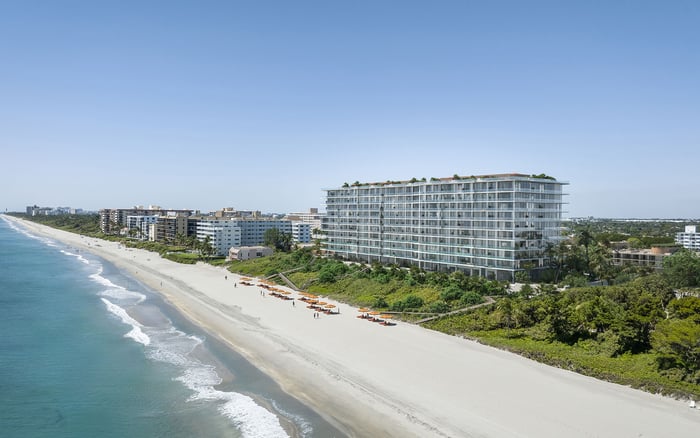
Surfside’s advantage is scale. The town’s public identity is anchored in a small, walkable beach-town feel, with a more residential cadence than a large resort corridor. That does not mean silent streets or empty beaches. It means fewer layers of daily intensity around the ownership experience.
For buyers considering residences such as Arte Surfside or The Delmore Surfside, the appeal extends beyond architecture and beach frontage. It is the sense that the surrounding district does not constantly demand attention. Morning routines, guest arrivals, beach access, and dinner plans tend to feel more contained.
Surfside also benefits from its position near Bal Harbour. Owners can move toward luxury shopping and dining when desired, then retreat to a quieter residential frame. That distinction matters in peak season because the owner can choose when to participate in the energy rather than living inside it all day.
The broader Surfside proposition is compact and comparatively restrained. For buyers who value privacy, routine, and lower daily friction, that restraint is often the point.
Sunny Isles Beach is built for buyers who want a fuller resort-condo atmosphere. The area’s identity includes luxury high-rises, beach service, restaurants, and a broad oceanfront visitor scene. That combination creates convenience and vibrancy, but during peak season it can also place more pressure on the systems owners use every day.
Valet queues, porte cochere movement, lobby traffic, beach setup, restaurant demand, delivery flow, and service circulation can all become more noticeable as seasonal demand rises. The experience is not necessarily negative; it is simply more active.
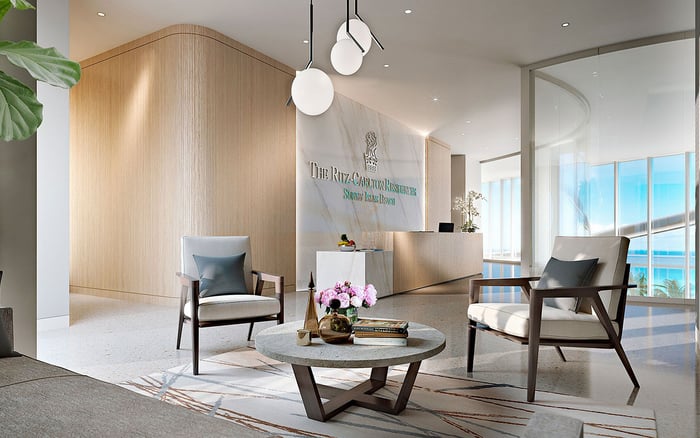
That does not make Sunny Isles the wrong answer. It makes it the more operationally intense answer. A buyer drawn to Bentley Residences Sunny Isles, Jade Signature Sunny Isles Beach, or The Ritz-Carlton Residences® Sunny Isles is often choosing height, service culture, beachfront visibility, and a more complete building lifestyle. The tradeoff is that high-season energy comes with the package.
Owners should also review building rules, local rules, and rental policies before purchasing. In any active oceanfront market, governance can shape how calm or busy the ownership experience feels.
The cleanest way to compare the two markets is to imagine a February week in residence. You arrive late, host family, take beach chairs in the morning, book dinner, receive deliveries, use valet several times a day, and expect building staff to perform seamlessly. In Surfside, the surrounding environment is more likely to support a low-friction version of that week. In Sunny Isles Beach, the same week may offer more services and more energy, but with more competing demand around each touchpoint.
A buyer checklist might read: Surfside for quiet, Sunny Isles for services, oceanfront for daily ritual, beach access for convenience, second home for seasonality, and rental rules for governance questions. The point is not the label. The point is whether the ownership experience feels restorative or stimulating.
For many ultra-premium buyers, the true luxury is not simply an ocean view. It is predictability. It is knowing that arrival is graceful, staff are not overwhelmed, the beach feels manageable, and the neighborhood does not turn every errand into a production.
Choose Surfside if you want the ocean without the constant sense of being inside a destination district. It is better suited to owners who prize quieter streets, easier privacy, walkability, and a more residential rhythm during the busiest months of the year.
Surfside is also the more natural fit for families or couples who use the residence as a true seasonal home rather than as a stage for entertainment. The luxury here is discreet: fewer moving parts, a smaller civic frame, and proximity to serious shopping and dining without absorbing the full intensity of a larger beachfront scene.
Choose Sunny Isles Beach if you want more vertical drama, more building infrastructure, and a stronger resort sensibility. The area is attractive for owners who enjoy restaurants, hotel-like services, high-rise views, and the social texture of an active oceanfront market.
It can be the better answer for buyers who do not interpret movement as inconvenience. Some owners want the liveliness of a broad beachfront corridor. They want the staff, the valet culture, the amenities, and the sense that the building itself operates as a world. Sunny Isles delivers that experience more directly than Surfside.
For the buyer asking where ownership feels less exhausting in peak season, Surfside is the cleaner editorial answer. Its compact, small-town positioning makes the everyday experience feel calmer, especially when winter demand is at its height.
For the buyer asking where ownership feels more amenity-rich, Sunny Isles Beach remains a serious contender. It simply requires a higher tolerance for activity. The best purchase is not the one with the most services on paper. It is the one whose daily rhythm matches the way the owner actually wants to live.
Which feels less exhausting in peak season, Surfside or Sunny Isles Beach? Surfside generally feels less exhausting because it has a smaller, more residential rhythm. Sunny Isles Beach offers more resort energy, which can add daily friction in season.
Is Sunny Isles Beach too busy for luxury ownership? Not necessarily. It is better suited to owners who enjoy height, amenities, restaurants, services, and a more active beachfront atmosphere.
Is Surfside free of tourism? No. Surfside still has high-end visitor demand, but the town generally reads as more compact and residential than a larger resort corridor.
Why does peak season matter so much? Winter and dry-season demand can bring more owners, guests, and visitors to oceanfront communities. That can affect valet, dining, beach service, and staff bandwidth.
Which market is better for privacy? Surfside is usually the better fit for buyers who want privacy and lower ambient visitor energy. Building selection still matters.
Which market is better for amenities? Sunny Isles Beach is generally stronger for a full-service resort-condo lifestyle. Buyers should balance that amenity depth against high-season congestion.
Should buyers consider rental rules? Yes. Owners should understand building rules, local rules, and rental policies before purchasing in either market.
Does proximity to Bal Harbour help Surfside? Yes. Surfside owners can access luxury shopping and dining nearby without living inside a larger resort-style district.
Which is better for a second home? Surfside is often better for a calm seasonal residence. Sunny Isles Beach may suit a second-home owner who wants more activity and services.
What is the best way to shortlist comparable options for touring? Start with location fit, delivery status, and daily lifestyle priorities, then compare stacks and elevations to validate views and privacy.
When you're ready to tour or underwrite the options, connect with MILLION.
If branded residences are on your mind — as a home or as an allocation — we would be glad to share what we are seeing, privately.
Begin a quiet conversation