A discreet look at Star Island’s scarcity, security, and pricing power, from its 1920s origins to today’s nine-figure benchmark deals, plus what buyers should weigh now.
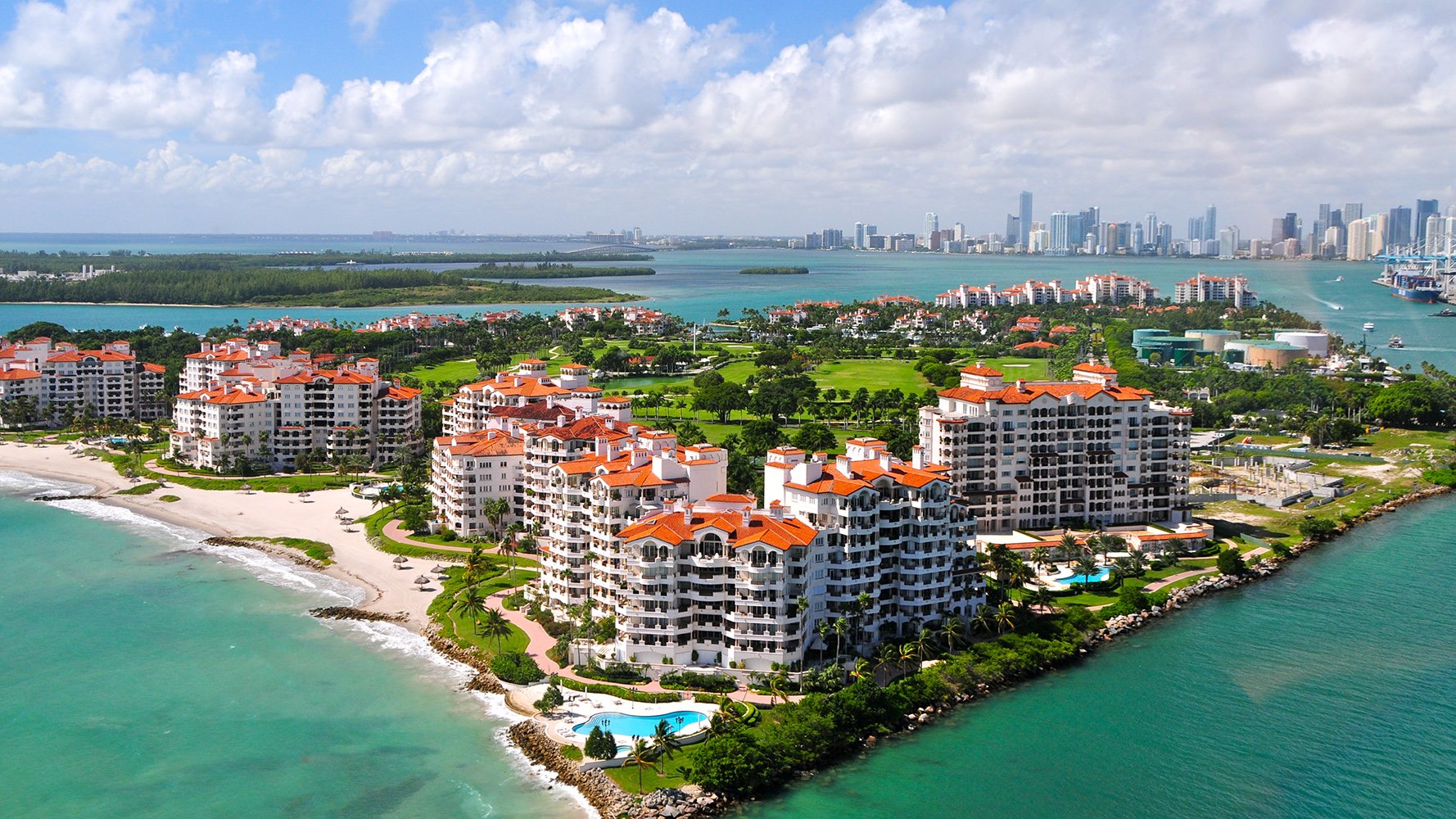
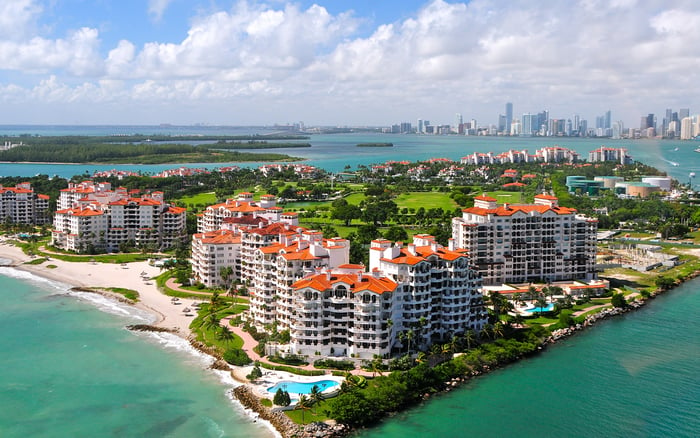
Star Island remains one of South Florida’s clearest status addresses: a man-made island neighborhood in Biscayne Bay within the city of Miami Beach. The appeal is straightforward, and it has held up across market cycles. You are minutes from South Beach and the mainland, yet separated by water, and that physical buffer changes the feel of daily life the moment you turn toward the gate.
Completed in 1922 through dredging tied to early Miami Beach development, the island was engineered as deliberately as it was marketed. Over time, the fundamentals have stayed consistent. Star Island is widely characterized as a highly exclusive, guard-gated enclave with a single controlled entry point. The “single way in, single way out” reality is not a slogan. It is the island’s defining operating system, shaping traffic, limiting casual circulation, and supporting a level of discretion that is built into the street plan.
Scarcity amplifies everything. Star Island is small, commonly cited as roughly 30 to 40 homes, often stated as about 34. In a luxury market where new inventory can arrive through towers, redevelopment, and shifting neighborhood boundaries, a fixed count of waterfront estates behaves differently. When demand rises, there is no meaningful way to create more Star Island.
For the ultra-premium buyer, the address reads as Miami Beach in its most distilled form: residential, waterfront, proximate to culture and hospitality, but separated enough to keep the city close without living inside its daily flow.
Many luxury neighborhoods promise privacy. Fewer are designed in a way that consistently enforces it. Star Island’s controlled entry and guard-gated profile place it firmly in the (Gated-community) category, with a rare differentiator: the gate is reinforced by surrounding water.
That pairing explains why Star Island is often described as a haven for high-profile residents. The appeal is not only that security is present, but that access is predictable. For principals who value routine and anonymity, it matters that arrivals and departures are legible and manageable, rather than spread across a grid of public streets and open corners.
Scarcity also makes pricing signals unusually clean. In a larger luxury neighborhood, several strong sales can occur without changing the narrative. On Star Island, each notable transaction can feel like a new chapter because the dataset is inherently small, and buyers and sellers tend to be acutely aware of it.
In practice, the island behaves like a private marketplace: fewer true comparables, stronger opinions, and an environment where one exceptional home can recalibrate expectations for what a waterfront single-family property can command in Miami Beach.
Star Island’s modern identity is inseparable from its widely reported ownership stories, which have long reinforced the island’s trophy positioning.
One widely covered example is Sean “Diddy” Combs, who reportedly bought a Star Island mansion in 2003 for $14.5 million. That same property drew renewed attention in 2024 when federal agents searched his Miami residence in connection with a high-profile investigation, as reported in mainstream real estate coverage. For buyers, the takeaway is clear-eyed: Star Island’s privacy is meaningful, but it is not absolute. The island can reduce exposure, yet it cannot eliminate public interest when notoriety arrives.
In 2020, Jennifer Lopez and Alex Rodriguez reportedly purchased a Star Island waterfront mansion for about $32.5 million, a transaction broadly framed as a bayfront trophy-home purchase. The price mattered, and so did the message. Even as Miami’s luxury market matured and expanded, Star Island continued to function as a magnet for global wealth that wanted the classic Miami Beach waterfront estate experience.
The ceiling continued to lift. Ken Griffin, founder of Citadel, was reported to have paid $75 million for a Star Island home, a deal that helped reset Miami’s luxury pricing narrative at the time.
In early 2022, LoanDepot founder Anthony Hsieh purchased a Star Island mansion for $30 million, another example of how quickly prime waterfront values were moving for estates with the right combination of land, water orientation, and address.
Then came the benchmark that reframed the conversation. In March 2025, developer Vladislav Doronin sold a Star Island waterfront estate for $120 million, reported as a new Miami-area residential record and similarly described by local media as record-setting for Miami-Dade. Reporting also noted an ownership chain that included Shaquille O’Neal prior to Doronin’s acquisition.
Taken together, this arc from eight-figure celebrity acquisitions to a nine-figure residential record is why Star Island is not treated as simply another waterfront neighborhood. It functions as a price-discovery engine for trophy single-family product in Miami Beach, and each rare trade has the potential to reset the frame for the broader market.
With inventory so limited, Star Island is often understood through individual listings and the architectural signals they broadcast. Public marketing regularly illustrates the “mansion-scale” norm, where size, frontage, and amenity packages are part of the baseline conversation.
For example, 43 Star Island Dr has been publicly marketed with high-end specs, with marketing materials showing eight bedrooms and eleven bathrooms. Meanwhile, public listing activity suggests that $30 million-plus asking prices are not unusual in the neighborhood, with 45 Star Island Dr marketed around the mid-$30 million range.
These examples matter less as definitive valuations, which can move with timing and terms, and more as a window into the island’s typical language: large programs, resort-caliber amenities, and a lifestyle built around private waterfront frontage.
Buyers also read Star Island through what an estate implies operationally. Compared with luxury condo living, the trade is direct. A single-family waterfront property can deliver an exceptional sense of control: your own grounds, your own guest management, and security protocols designed around your household. That autonomy is a core part of the appeal. It also means the responsibilities that towers absorb through staffing and infrastructure sit with the owner and their team.
In other words, Star Island is not just about square footage and views. It is about lifestyle governance: how you want to manage privacy, access, and the daily cadence of a high-profile residence.
In ultra-luxury, privacy is rarely one feature. It is a layered system: physical separation, controlled access, and a culture that discourages casual intrusion. Star Island offers all three, which is why it consistently performs as a discreet address in Miami Beach.
Physical separation is the easiest layer to understand. Water creates distance, filters spontaneity, and reduces the ambient visibility that comes with a typical street network. The controlled entry point is the second layer, making access legible and manageable. The third layer is less measurable but just as real: a neighborhood expectation of discretion that shapes behavior, from how people move to how the community is discussed.
Even so, sophisticated buyers should remain clear-eyed. Star Island’s fame works both ways. It enhances prestige, but it can also draw attention precisely because the address is globally recognized. For some principals, that visibility is a feature because it signals arrival. For others, it is a reason to evaluate other waterfront options in Miami Beach that feel quieter in the public imagination while still delivering exceptional living.
That distinction is not about better or worse. It is about fit. Discretion can mean different things depending on the buyer’s profile. Star Island offers strong structural privacy, but it is still an address with narrative gravity.
Not every buyer who loves Star Island’s proposition wants the operational complexity of a single-family estate. Some prefer a lock-and-leave profile, staffed buildings, and curated amenities. For those buyers, Miami Beach’s luxury residential pipeline offers a different kind of privacy: professional front-of-house management, controlled elevators, and staff trained to handle high-profile schedules.
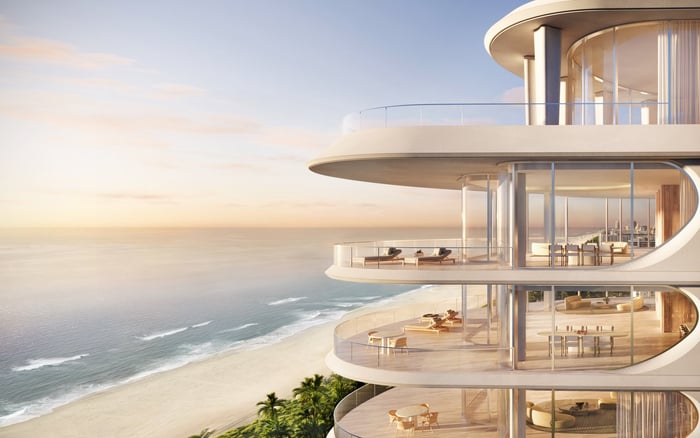
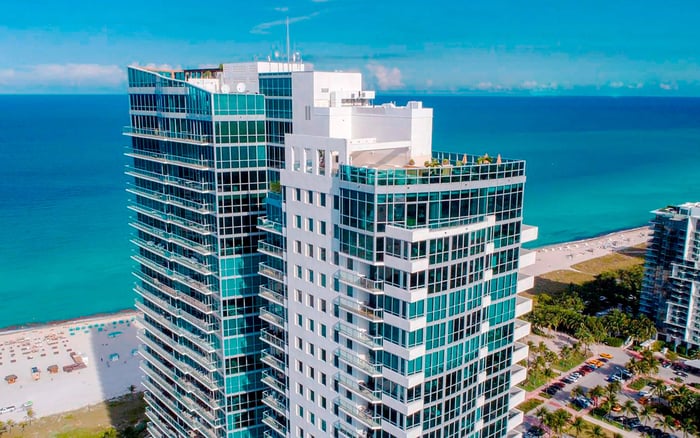
Along the sand, boutique developments can deliver a refined (Oceanfront) lifestyle with fewer moving parts than a standalone compound. In Mid-Beach, Setai Residences Miami Beach is emblematic of this approach: hospitality DNA, service culture, and an address that keeps you close to the city’s best without requiring an estate’s maintenance footprint.
Similarly, Shore Club Private Collections Miami Beach speaks to buyers who want design-forward Miami Beach living with a strong emphasis on privacy-by-management, where arriving home feels orchestrated rather than exposed.
For those who want a recognized luxury flag paired with a residential sensibility, The Ritz-Carlton Residences® Miami Beach offers a brand-led, service-oriented alternative that can suit second residences and international schedules.
And for a more intimate oceanfront posture that still reads as (Exclusive-area), 57 Ocean Miami Beach captures a quieter segment of the Miami Beach coastline, appealing to buyers who prize understated scale.
These alternatives are not substitutes for Star Island’s estate experience. They are parallel answers to the same core question: how to live in Miami Beach with privacy, access, and a sense of permanence, while choosing the operating model that best matches your life.
Star Island transactions can look simple from the outside: a guarded island, a waterfront house, a headline price. In reality, the decision framework is nuanced. Several themes consistently matter.
First, liquidity and timing. With roughly a few dozen homes, opportunities are episodic. A buyer cannot assume that the “right” property will appear on schedule, or that a preferred configuration will be available when needed. This favors purchasers who can move decisively when the correct combination of location, frontage, and condition becomes available.
Second, understand what the premium buys. It is not only the house. It is the island’s structure: a guarded entry, water separation, and the signaling power of a globally recognized address. In that sense, Star Island behaves like a luxury collectible. When the market softens, the best pieces still trade, but the conversation shifts to terms, timing, and selectivity rather than broad discounting.
Third, get specific about day-to-day living. A Star Island estate is a lifestyle of autonomy, and autonomy has a real operating footprint. If you prefer staffed amenities, predictable building services, and a turnkey rhythm, a high-caliber condo residence may align better. This is where the (Second-home) buyer profile often becomes decisive: some want a private compound that feels like a world apart; others want a refined pied-a-terre that is ready upon arrival.
Finally, evaluate the optics of the address itself. Some buyers are drawn to Star Island because it is a known quantity to global wealth. Others prefer to be adjacent to the narrative rather than inside it. Both are valid. The right choice is the one that matches how you want your home to function socially, operationally, and personally.
Star Island’s story is not only about celebrity or single transactions. It is about a neighborhood engineered to be finite. The island was created in the early development era of Miami Beach, completed in 1922, and its capacity is functionally capped by design.
That finiteness helps explain why record-setting trades can occur there and reverberate through the broader market. When a nine-figure sale is reported on Star Island, it does not read like a random outlier. It reads like an extreme expression of the same underlying logic that has always powered the address: scarce waterfront estates, controlled access, and a buyer pool that treats privacy as a hard asset.
In a region known for constant reinvention, Star Island’s greatest luxury may be that it changes slowly. The inventory remains limited, the geometry remains protective, and the market’s attention remains focused because there are only so many chances to buy into the island.
Is Star Island part of Miami Beach? Yes. Star Island is a man-made island neighborhood in Biscayne Bay within the city of Miami Beach.
How many homes are on Star Island? It is commonly cited as roughly 30 to 40 homes, often stated as about 34, which contributes to scarcity.
Why do Star Island sales make headlines so often? With limited inventory and globally recognized prestige, notable transactions can quickly reset market expectations, including recent record-setting reporting.
Is Star Island a gated community? It is widely described as a guard-gated enclave with a single controlled entry point, supporting privacy and security.
For discreet guidance on Miami Beach trophy real estate, connect with MILLION Luxury.
If branded residences are on your mind — as a home or as an allocation — we would be glad to share what we are seeing, privately.
Begin a quiet conversation