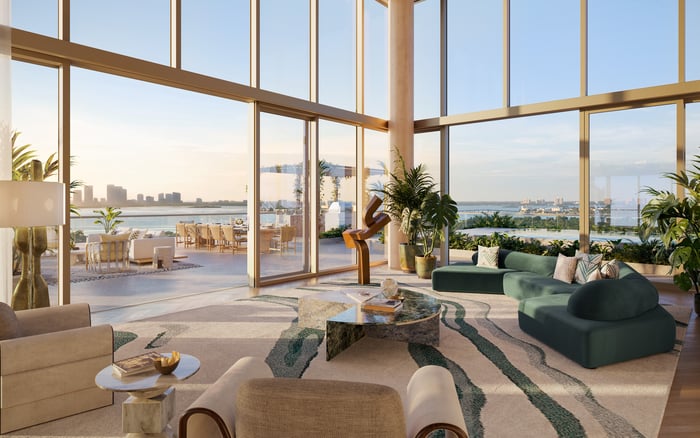
For South Florida HNWIs, the choice between a staffed lobby and smart-access entry is less about fashion than risk allocation. Human oversight still excels at judgment, discretion, and service, while digital systems win on speed, remote control, and auditability. In today’s ultra-luxury market, the strongest answer is increasingly a hybrid model that combines concierge presence at the front door with app-based access at secondary points.
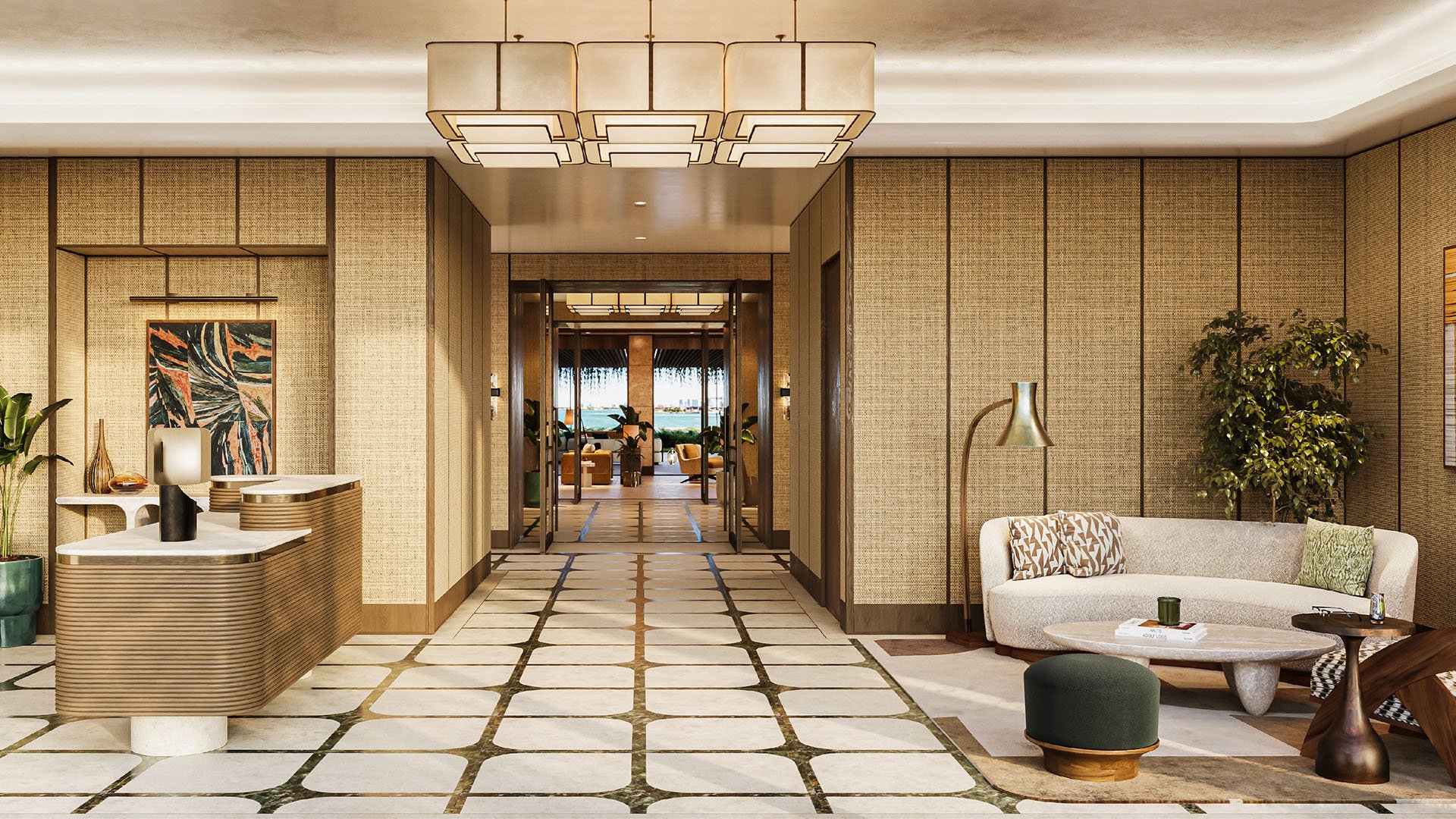
For a high-net-worth buyer, the lobby is more than an arrival point. It is a filter, a service layer, and, in many cases, the building’s clearest expression of discretion. The debate between staffed lobbies and smart-access buildings is often framed as tradition versus innovation, but for South Florida buyers, the more relevant question is simpler: where do you want the risk, and where do you want the convenience?
A staffed lobby offers immediate human judgment. Security and concierge personnel can notice suspicious behavior, unusual deliveries, and access attempts that fall outside the building’s normal rhythm. That kind of live interpretation still matters in residences where privacy, household staffing, visiting guests, and irregular travel schedules are part of daily life.
Smart access, by contrast, is built for fluidity. Residents can enter with keypads, mobile apps, or RFID credentials, authorize temporary access remotely, and receive immediate notifications when someone enters. In a market shaped by constant travel and multiple residences, that convenience is genuinely useful.
In practice, South Florida’s ultra-premium market is moving toward combination rather than purity. A staffed front door paired with technology-enabled secondary access is increasingly the luxury compromise, and for many buyers, the most intelligent one.
For buyers who prioritize discretion, a staffed lobby remains difficult to replace. Human personnel can screen guests, coordinate arrivals, manage emergencies, and keep routine movements from becoming a digital trail stored in a large access database. That appeals to residents who prefer fewer centralized records of their patterns, visitors, and schedules.
There is also a service dimension that technology does not replicate well. Package handling, vehicle assistance, reservation coordination, and arrival management all reinforce the feeling of a fully serviced residence. In buildings positioned at the top of the market, that layer can support retention and perceived value as much as security itself. Projects such as St. Regis® Residences Brickell and The Ritz-Carlton Residences® Sunny Isles naturally sit within the kind of buyer conversation where hospitality and protection are expected to coexist.
But staffed systems are not automatically safer. They remain vulnerable to tailgating, social engineering, and insider risk. Employees may have access to master keys or security overrides, which makes vetting, training, and ongoing monitoring essential. For an owner, that means evaluating the quality of the operator, not merely the presence of a front desk.
Staffing is also expensive. Around-the-clock personnel can represent a meaningful share of operating expenses in South Florida luxury properties. Buyers comparing monthly carrying costs should understand that the elegance of a white-glove arrival sequence carries a real budget line.
Smart-access buildings are popular for reasons that go beyond trend language. They reduce friction. Residents can move through entry points, garages, and amenity areas without lobby bottlenecks, and digital platforms can manage multiple doors from one system. During peak morning departures or evening returns, that matters.
For frequent travelers, remote access control is especially compelling. A resident can authorize a housekeeper, family member, pet caretaker, or service professional without being physically present. Contactless entry has also become a standard expectation in many new luxury developments.
This is one reason newer buildings in Brickell, Miami, and Coral Gables increasingly present smart access as part of the baseline package rather than a niche add-on. In that context, residences such as 2200 Brickell and The Residences at 1428 Brickell align with a buyer profile that values seamless movement, controlled permissions, and a more distributed approach to entry.
Smart systems also create precise audit trails. If an incident occurs, entry and exit logs can help reconstruct what happened. That level of forensic clarity is often stronger than memory-based reporting from staff or residents.
Yet convenience comes with its own exposure. Poorly secured systems can be vulnerable, and privacy concerns can arise when resident names, unit numbers, or access logs are broadly stored. Because many platforms keep identity and entry-pattern data in cloud or on-site systems, data governance becomes part of the security discussion. In other words, smart access can reduce one category of risk while creating another.
Among sophisticated buyers, privacy is often treated as separate from security. It should not be. A staffed building may know who comes and goes, but it does not necessarily require a large centralized digital archive of resident movement. A smart building can deliver elegant convenience while also accumulating sensitive behavioral data.
That does not make technology undesirable. It means the architecture behind the convenience deserves scrutiny. For buyers considering highly designed, service-forward projects like The Perigon Miami Beach or Villa Miami, this is the question to ask after the sales-gallery demonstration ends: where is my access data stored, who can see it, and how is redundancy handled if systems fail?
Reliability is part of privacy, too. Smart access removes queues, but it depends on resilient infrastructure to avoid credential failures or lockouts. In luxury residential life, elegant technology that fails at the wrong moment quickly stops feeling luxurious.
From an ownership perspective, app-based access and remote monitoring can reduce staffing needs, with technology operations often costing less annually than a full personnel model. That can improve operating efficiency and help support more predictable association expenses.
Still, lower cost does not automatically produce stronger demand. In South Florida’s luxury market, fully smart buildings without a staffed presence can generate weaker buyer interest than buildings that preserve some visible human service. For many affluent purchasers, an unattended entrance reads less like innovation and more like a downgrade in experience.
Retrofitting also matters. Older luxury properties that rely heavily on staffed lobbies can face significant costs when adding smart-access infrastructure. That makes the decision especially important for condo boards balancing modernization against reserve planning.
The strongest resale position may therefore belong to buildings that avoid ideological extremes. Human presence supports confidence and hospitality. Smart systems support convenience and operational clarity. Together, they tend to reflect how affluent owners actually live.
The clearest signal in the market is a preference for hybrid security models. Affluent buyers consistently lean toward buildings that combine a staffed main entrance with app-based or credential-based access at garages, elevators, amenities, and secondary entries. That structure respects both sides of the luxury brief.
The front door remains curated, discreet, and personally monitored. Secondary movement becomes frictionless. Audit trails improve. Queueing drops. And residents retain the option to grant temporary access without involving the front desk for every routine request.
This model also fits the way many South Florida residences are now designed: hospitality-inflected, architecturally polished, and operationally complex. In neighborhoods such as Brickell, Miami Beach, Sunny Isles, and Edgewater, the highest-value buildings increasingly treat security and convenience not as opposing concepts but as complementary layers. That is the more mature view, and for most HNWIs, likely the correct one.
Are staffed lobbies safer than smart-access buildings? Not categorically. Staffed lobbies are stronger at real-time human judgment, while smart systems can reduce some physical access risks and create detailed audit trails.
Why do HNWIs still value a concierge presence? Because security in luxury buildings is also about discretion, guest management, emergency coordination, and the quality of daily service.
What is the biggest advantage of smart access? Convenience. Residents can enter without keys, authorize visitors remotely, and move through multiple entry points more efficiently.
What is the biggest risk in smart-access systems? Data exposure and credential compromise are major concerns, especially if encryption, storage, or redundancy are not robust.
Do staffed buildings have vulnerabilities too? Yes. Tailgating, social engineering, and insider-risk issues make hiring standards and supervision crucial.
Is a fully smart building cheaper to operate? Often yes, especially compared with full staffing, though lower operating cost does not always translate into stronger buyer appeal.
Why are hybrid systems popular in South Florida? They combine a monitored front entrance with faster digital access elsewhere, balancing prestige, convenience, and control.
Do older luxury condos face higher upgrade costs? Usually yes. Retrofitting smart-access infrastructure can be expensive depending on the building’s existing systems and layout.
How should buyers evaluate privacy in a smart building? Ask where access data is stored, who can review it, how long it is retained, and what happens if the network goes down.
Which model is best for most luxury buyers today? In many cases, a hybrid approach offers the best balance of service, privacy, convenience, and resale appeal.
When you're ready to tour or underwrite the options, connect with MILLION Luxury.
If branded residences are on your mind — as a home or as an allocation — we would be glad to share what we are seeing, privately.
Begin a quiet conversation