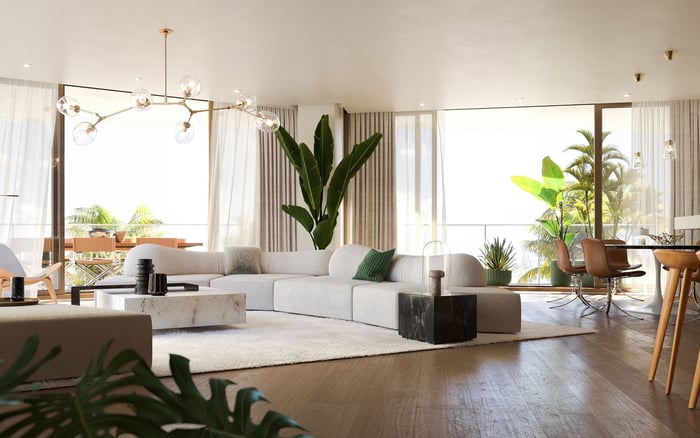
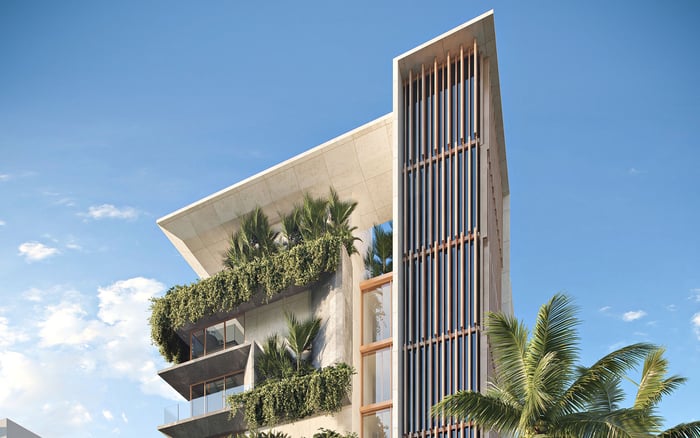
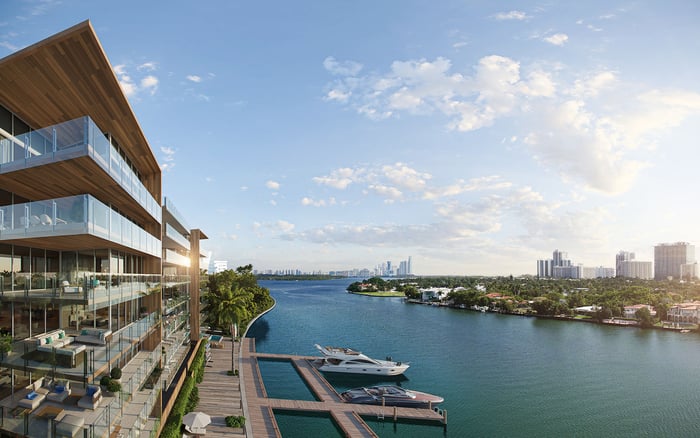
A discreet buyer's read on La Maré Bay Harbor Islands and Onda Bay Harbor, centered on what is publicly unconfirmed, what affluent purchasers should verify, and how to assess Bay Harbor boutique waterfront opportunities with discipline.
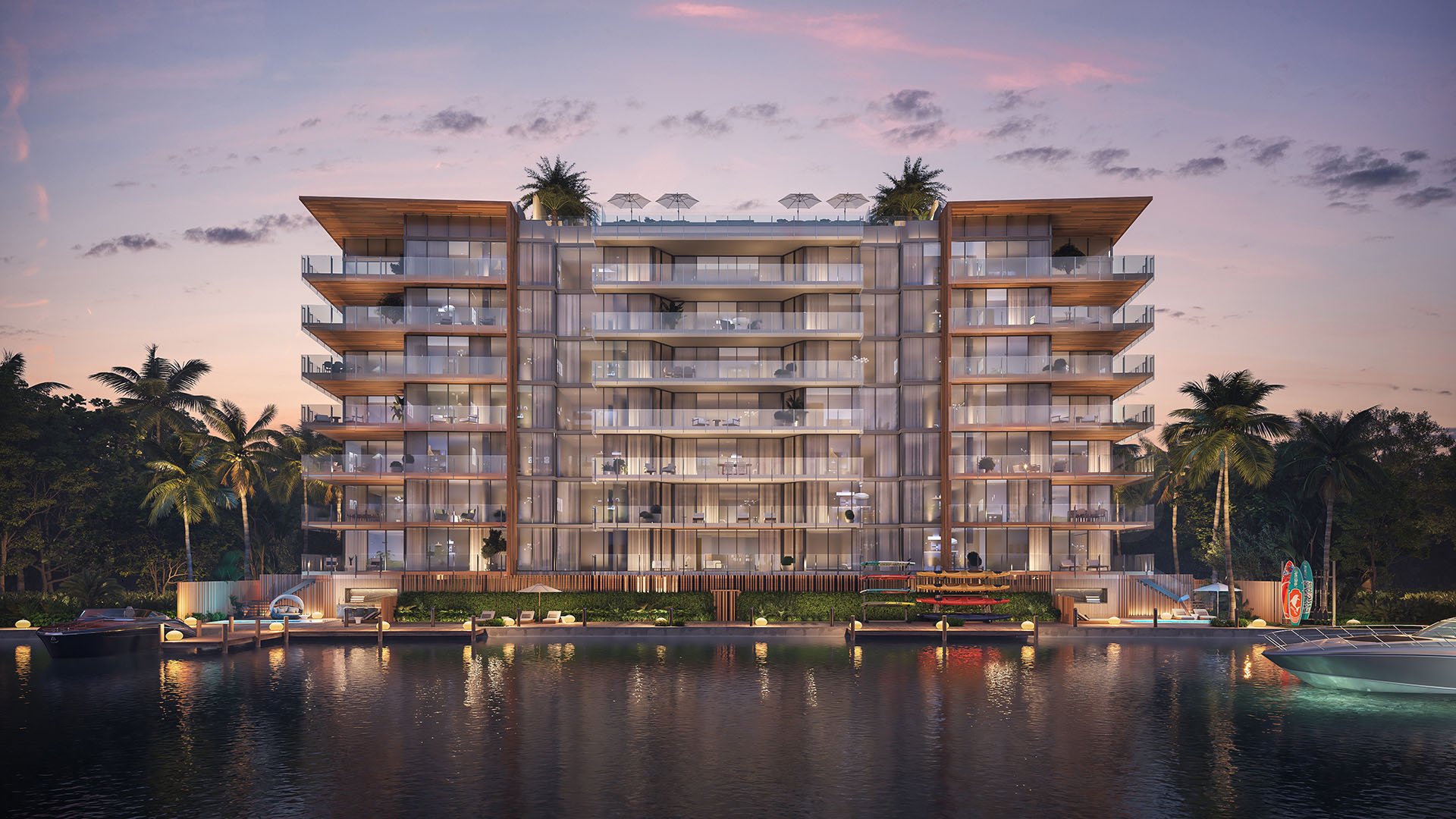
For buyers drawn to Bay Harbor Islands, the appeal is easy to understand. The setting offers a quieter expression of waterfront luxury than many of South Florida’s louder enclaves, shaped by protected bay views, a walkable village character, and the enduring appeal of private boating. Within that context, La Maré Bay Harbor Islands and Onda Bay Harbor suggest the kind of boutique, low-density proposition that often resonates with second-home purchasers and design-driven end users.
Yet this comparison requires an especially careful lens. Neither La Maré Bay Harbor Islands nor Onda Bay Harbor should be treated here as fully verified, broadly documented offerings under those exact names based on the information provided. That does not mean the projects do not exist. It does mean any polished buyer conversation should begin with what is confirmed and, just as importantly, what is not.
For a Bay Harbor audience, that distinction matters. Luxury buyers are rarely purchasing only a residence. They are purchasing certainty around identity, location, execution, and long-term value.
At present, the clearest conclusion is straightforward: publicly disclosed information for both projects remains limited. No verified body of detail in the materials provided establishes these two developments, under those exact names, as fully documented offerings with confirmed developer background, operational specifics, or a broad public marketing presence.
That leaves several plausible interpretations. They may be pre-launch. They may be future developments still moving through branding, approvals, or phased marketing. They may also be marketed under alternate names, or there may be confusion with similarly named residences in the broader South Florida landscape. For a purchaser evaluating new project or pre-construction opportunities, those distinctions are not cosmetic. They are foundational.
In practical terms, that means buyers should resist filling in the blanks. It would be premature to state pricing bands, boating infrastructure, marina depth, residence counts, amenity packages, finish palettes, or sunset orientation as settled facts. The romance of boutique bayfront living is compelling, but here the discipline of verification matters more than the poetry.
When public detail is thin, the comparison shifts from lifestyle adjectives to verification priorities. A serious purchaser should begin with the exact legal development name for each project, then confirm the address, municipality, sponsoring entity, and current stage of marketing. Without those basics, even an elegant brochure can create more ambiguity than clarity.
The next layer is developer identity and execution history. In a compact waterfront market, reputation and delivery record often matter more than abstract promises. Buyers should also confirm whether the project is truly in Bay Harbor Islands, whether it carries private dockage or boat-slip rights, whether slips are deeded, limited, or separately assigned, and whether the water-access profile supports the vessel size they intend to keep.
That level of scrutiny is standard in the upper tier. It is also the difference between buying a concept and buying a residence with durable value. In nearby conversations, purchasers often benchmark against other Bay Harbor Islands names that are more clearly established in the public eye, such as La Baia North Bay Harbor Islands, The Well Bay Harbor Islands, and Bay Harbor Towers. Those references do not answer the La Maré versus Onda question directly, but they illustrate the standard of clarity affluent buyers increasingly expect.
Even with limited public disclosure around these two names, the location thesis remains compelling. Bay Harbor Islands occupies a narrow and highly desirable niche between Miami Beach glamour and mainland practicality. It attracts purchasers who prefer intimate scale over spectacle and who often value waterview serenity as much as headline amenities.
That is why the market continues to reward projects that feel curated rather than oversized. In this corner of the bay, boutique has become more than a descriptor. It signals fewer neighbors, greater privacy, and often a more personal relationship to arrival, service, and waterfront living. For sunset lovers, the promise of bay orientation carries emotional weight. For boaters, the idea of immediate water access can matter even more than a dramatic tower skyline.
Still, buyers should separate the appeal of the neighborhood from assumptions about any one project. Bay Harbor Islands can be exceptional, and a specific development can still require careful confirmation before it deserves a place on a short list.
For both La Maré Bay Harbor Islands and Onda Bay Harbor, the right buyer questions are elegantly simple. What is the exact project name on legal and marketing documents? What is the exact site? Who is developing it? Is the project actively offered today, or still in a preliminary phase? Are the boating components confirmed, and if so, on what terms?
Those answers shape everything from financing to timing to exit strategy. They also influence whether a buyer should treat the opportunity as immediate inventory, forward-looking land value, or a branded concept awaiting formal release. In luxury real estate, uncertainty is not inherently negative. Some opportunities surface before the broader market fully notices them. But early access becomes an advantage only when the fundamentals are clear.
A prudent approach is to compare these names not only to each other, but to the broader evolution of intimate waterfront living across South Florida. Buyers who admire Bay Harbor Islands often also watch polished boutique offerings in adjacent luxury corridors, from Alana Bay Harbor Islands to other design-forward projects across the region. Those comparisons help clarify taste and positioning, even when one project’s public record remains incomplete.
The honest editorial view is this: La Maré Bay Harbor Islands and Onda Bay Harbor may be promising names for buyers seeking marina adjacency, intimate scale, and a refined Bay Harbor lifestyle, but the comparison is not yet mature enough to support a conventional head-to-head based on verified detail alone.
For that reason, the wiser stance is not skepticism for its own sake, but precision. Confirm the naming. Confirm the site. Confirm the developer. Confirm whether the projects are active, renamed, upcoming, or simply being discussed in the market before full release. Once those facts are settled, the real comparison can begin: scale, architecture, boating program, privacy, and sunset exposure.
Until then, the most sophisticated buyers will treat both names as watch-list opportunities rather than fully underwritten choices. That is often how intelligent luxury acquisitions begin.
Are La Maré Bay Harbor Islands and Onda Bay Harbor fully verified luxury developments? Publicly available information remains limited, so neither project can be treated here as a fully documented, broadly established offering under those exact names.
Does that mean the projects do not exist? No. They may be pre-launch, future developments, or marketed under alternate branding.
Can buyers rely on advertised boating access at this stage? Not without direct confirmation. Dockage, boat-slip terms, and navigation details should be verified before any decision.
Is Bay Harbor Islands still attractive for waterfront buyers? Yes. Bay Harbor Islands remains appealing for purchasers who value intimate scale, walkability, and bayfront privacy.
What should be verified first? Start with the legal project name, exact address, municipality, and developer identity.
Why is naming so important in luxury real estate? Because branding can shift before launch, and similar names can create confusion that affects due diligence and buyer expectations.
Can this comparison include pricing or amenity differences? Not responsibly at this stage. Those specifics should only be discussed once they are publicly disclosed and confirmed.
Are these likely boutique residences if they proceed? The names and positioning suggest a boutique profile, but the final scale and program still need confirmation.
How should sunset lovers think about the opportunity? Focus on verified orientation, waterfront exposure, and actual residence positioning rather than assumptions tied to the project name.
What is the smartest next step for an interested buyer? Request confirmed project materials and a current development profile before treating either name as an active purchase option.
When you're ready to tour or underwrite the options, connect with MILLION Luxury.
If branded residences are on your mind — as a home or as an allocation — we would be glad to share what we are seeing, privately.
Begin a quiet conversation