A buyer-focused comparison of two Brickell ownership models through the lens of parking rights, EV charging readiness, valet choreography, and private-driver logistics.
In Brickell, the most sophisticated condominium comparison is no longer limited to views, ceiling heights, amenity decks, or interior finish palettes. For many ultra-luxury buyers, the daily choreography of arrival has become equally important. Parking rights, EV charging, valet protocols, and private-driver logistics determine how a residence actually lives on a Monday morning, after a late dinner, or during a peak-season weekend.
That is the useful lens for comparing St. Regis® Residences Brickell with The Residences at 1428 Brickell. Both belong in the ultra-premium Brickell conversation, but their ownership models point to different operating preferences. St. Regis® Residences Brickell leans toward a hospitality-led, branded-residence experience. The Residences at 1428 Brickell is framed more as a private residential ownership model, where predictability, resident control, and long-term daily use carry particular weight.
For buyers accustomed to multiple vehicles, executive drivers, household staff, and electric mobility, that distinction is material. It can shape convenience, privacy, resale appeal, and even the rhythm of family life.
The St. Regis® Residences Brickell ownership proposition is rooted in branded residential service. In practical terms, the arrival sequence becomes part of the product. Buyers should look closely at how a car is received, how valet staff are trained to manage repeat household patterns, how guests are staged, and how handoffs occur between the porte cochère, lobby, garage, and residence.
For owners who prefer to be met, recognized, and managed with hotel-caliber polish, this can be a compelling advantage. The key is understanding that service is not merely decorative. It is operational infrastructure. If the building is designed and governed well, a staff-mediated arrival can reduce friction, protect privacy, and create a sense of ceremony. If the rules are vague, the same system can become less predictable for households with multiple vehicles, drivers, or unusual schedules.
That is why the parking conversation at St. Regis® Residences Brickell should go beyond the headline question of how many spaces are associated with a home. Buyers should review how access is controlled, whether spaces are assigned or otherwise documented, what valet can and cannot do, how guest parking is treated, and how the condominium declaration and association rules define owner rights.
The Residences at 1428 Brickell appeals to a different daily-use instinct. Its comparative strength is not the theatricality of branded service, but the promise of a more purely residential environment. For some buyers, especially those relocating from single-family estates, private compounds, or low-density buildings, the ideal arrival is quiet, direct, and repeatable.
This is where 1428 Brickell may resonate. The practical question is whether the residential operating model supports predictable self-directed access, clear rules for household vehicles, and a garage experience that feels like part of the private home rather than a hospitality stage. Buyers who want less staff mediation and more personal control should examine how vehicles move through the property, how residents access parking, and how driver-waiting logistics are handled without creating congestion or a hotel-like atmosphere.
In the broader Brickell market, projects such as 2200 Brickell and Baccarat Residences Brickell also remind buyers that mobility design has become a neighborhood-wide luxury issue. The right answer is not universal. It depends on whether the owner wants a staffed arrival sequence or a more private residential cadence.
In the ultra-luxury tier, parking is often discussed too casually during the sales process. Serious buyers should be more precise. The phrase “parking included” is not enough. The important questions are legal, operational, and practical.
Buyers should ask whether parking rights are deeded, assigned, licensed, limited common elements, or otherwise governed by condominium documents. They should confirm how many household vehicles can be accommodated, whether spaces can be transferred with the residence, how guest vehicles are treated, and whether larger vehicles face dimensional or access limitations. For buyers with car collections, staff cars, or family members with separate schedules, small differences in garage rules can become significant daily inconveniences.
At St. Regis® Residences Brickell, that diligence should include the role of valet and staff. At The Residences at 1428 Brickell, it should focus on whether the residential model gives owners the predictable, self-directed access they expect. In both cases, the controlling documents matter more than the sales language. Final parking entitlements, guest policies, garage-use rules, and owner obligations should be reviewed before purchase.
EV readiness is now a core luxury question, not a niche sustainability feature. For many Brickell buyers, the issue is not simply whether charging exists somewhere in the building. It is whether the owner can reliably charge the vehicles that matter to the household, at the times they are actually used.
At St. Regis® Residences Brickell, EV diligence should include charger installation rights, electrical capacity, metering, association approvals, and whether valet staff can manage charging workflows consistently. If a vehicle is moved by staff, who plugs it in, who monitors its status, and how are charging priorities handled when demand increases?
At The Residences at 1428 Brickell, the questions are slightly different. Buyers should determine whether owner spaces can be electrified, how costs are metered, who approves infrastructure upgrades, and how the building can scale as more residents adopt EVs. The most valuable arrangement is not merely today’s charger access. It is a governance structure that can evolve over time without undermining fairness, convenience, or garage capacity.
For New-construction and Pre-construction buyers, this is especially important because today’s EV usage may understate future demand. From an Investment perspective, buildings with clear, scalable EV policies may age more gracefully than those that treat charging as an afterthought.
Private-driver logistics are often overlooked because they are difficult to capture in a floor plan. Yet for ultra-high-net-worth owners, the handoff from residence to car can be one of the most sensitive moments in the day. Privacy, timing, weather protection, security, and staff discretion all converge at the curb.
For St. Regis® Residences Brickell buyers, the porte cochère, valet staging, waiting protocols, and handoff privacy are part of the branded experience. The attraction is coordination. A well-trained team can anticipate patterns, manage black-car arrivals, and create a seamless transition between lobby and vehicle.
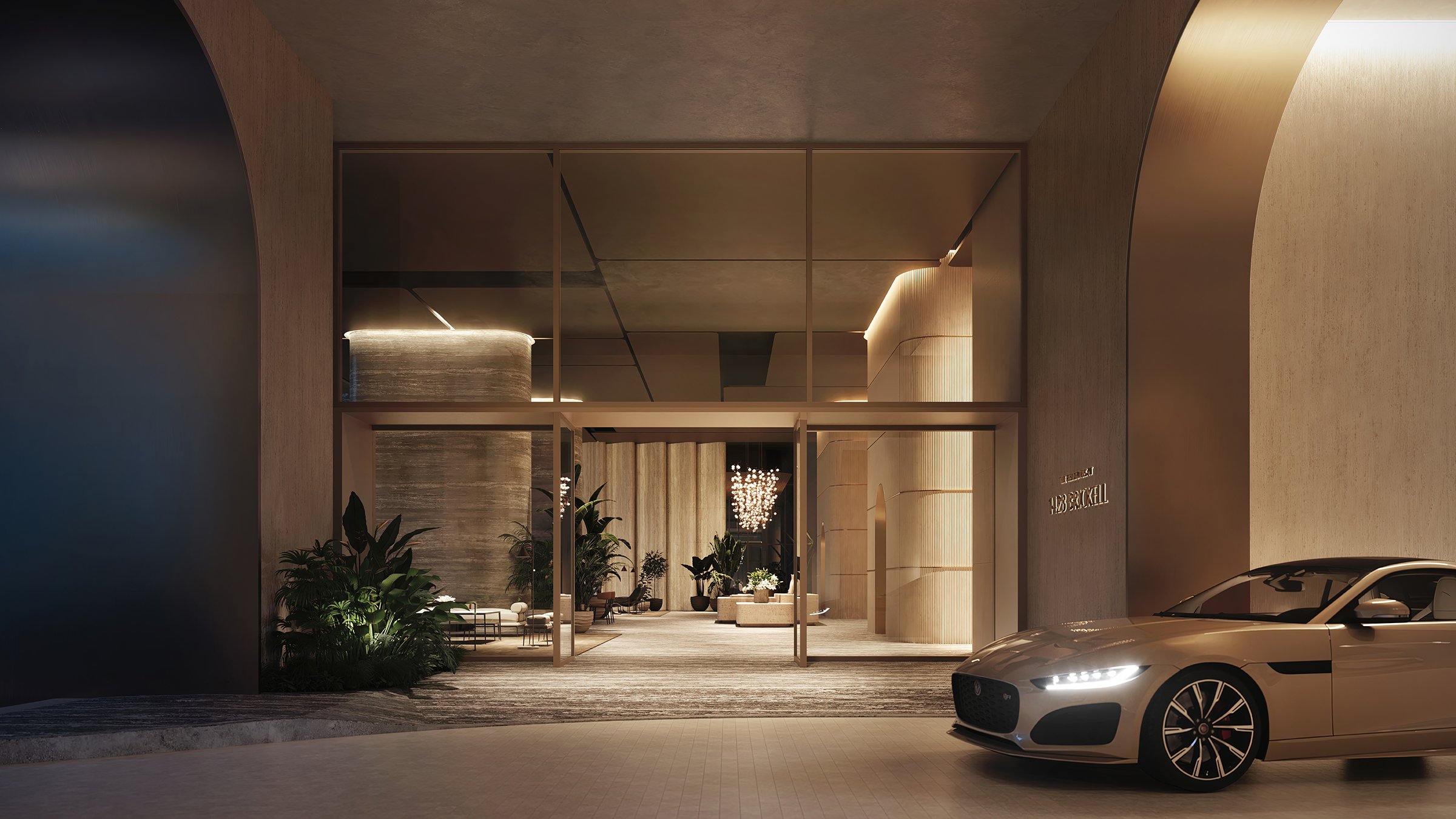
For 1428 Brickell buyers, the ideal may be different: secure pickup and drop-off without the atmosphere of a hotel lobby. That requires a circulation plan that protects resident privacy while still allowing drivers to wait, approach, and depart efficiently. Buyers should ask how long a driver may stage, where vehicles can idle or pause, and how the building handles multiple simultaneous arrivals.
The core distinction is operational. St. Regis® Residences Brickell is stronger for buyers who value branded service, staff-mediated arrival, and hospitality-level polish. The Residences at 1428 Brickell is stronger for buyers who prioritize a non-hotel residential setting, privacy, and potentially more owner-controlled daily access.
Neither model is inherently superior. A buyer with frequent guests, executive transfers, and a preference for concierge orchestration may find the St. Regis® model more natural. A buyer who prizes quiet repetition, less ceremony, and clear personal control may be better aligned with 1428 Brickell.
The more disciplined approach is to treat mobility infrastructure as a permanent lifestyle and resale factor. The right residence should not only look exceptional in the sales gallery. It should also handle the vehicles, charging routines, drivers, guests, and privacy expectations that define how the owner actually lives.
Which building is more service-oriented? St. Regis® Residences Brickell is the more hospitality-led model, with branded service and staff-mediated arrival central to the experience.
Which building is more residential in feel? The Residences at 1428 Brickell is framed as a more private residential ownership model, with emphasis on predictable daily access.
Should buyers rely on sales descriptions for parking rights? No. Parking entitlements, guest access, and garage rules should be verified in the condominium declaration and association documents.
Is valet always an advantage? Valet can be highly convenient when protocols are clear, but buyers should understand how it affects access, timing, privacy, and EV charging.
What should EV buyers ask first? They should ask whether owner spaces can be electrified, how charging is metered, and what approvals are required.
Do private-driver logistics matter for resale? Yes. In the luxury tier, arrival privacy and vehicle choreography can influence both lifestyle satisfaction and future buyer perception.
Is 1428 Brickell better for self-directed parking? It may appeal to buyers who prefer more owner-controlled access, but the final rules should be confirmed in governing documents.
Is St. Regis® Residences Brickell better for chauffeured owners? It may suit buyers who value coordinated service, valet staging, and a polished porte cochère experience.
Should EV capacity be evaluated for future demand? Yes. The best diligence considers not only current charging access but also how the building can scale as EV adoption rises.
What is the main decision point between the two? The central choice is between a hospitality-led ownership experience and a more private residential operating model.
For a confidential assessment and a building-by-building shortlist, connect with MILLION.
If branded residences are on your mind — as a home or as an allocation — we would be glad to share what we are seeing, privately.
Begin a quiet conversation