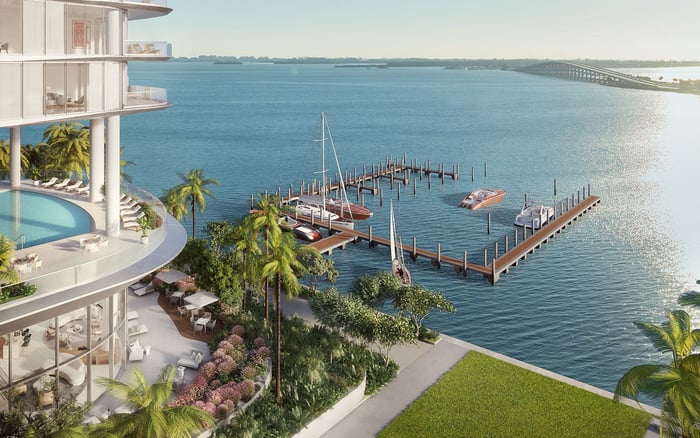
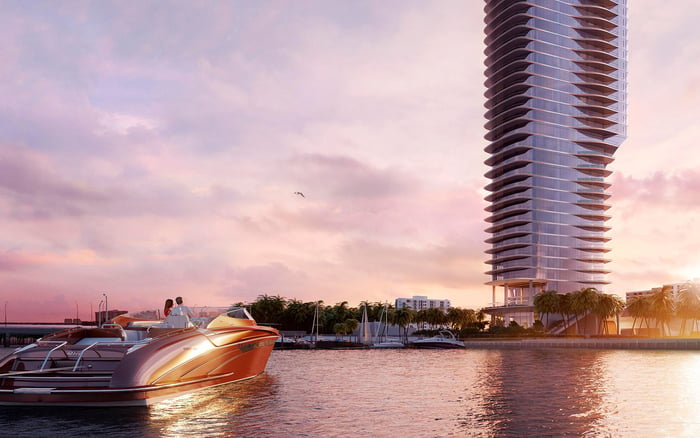
A discreet buyer’s guide to comparing St. Regis® Residences Brickell and Setai Residences Miami Beach through ownership documents, boating practicality, bridge-clearance review, and storm planning.
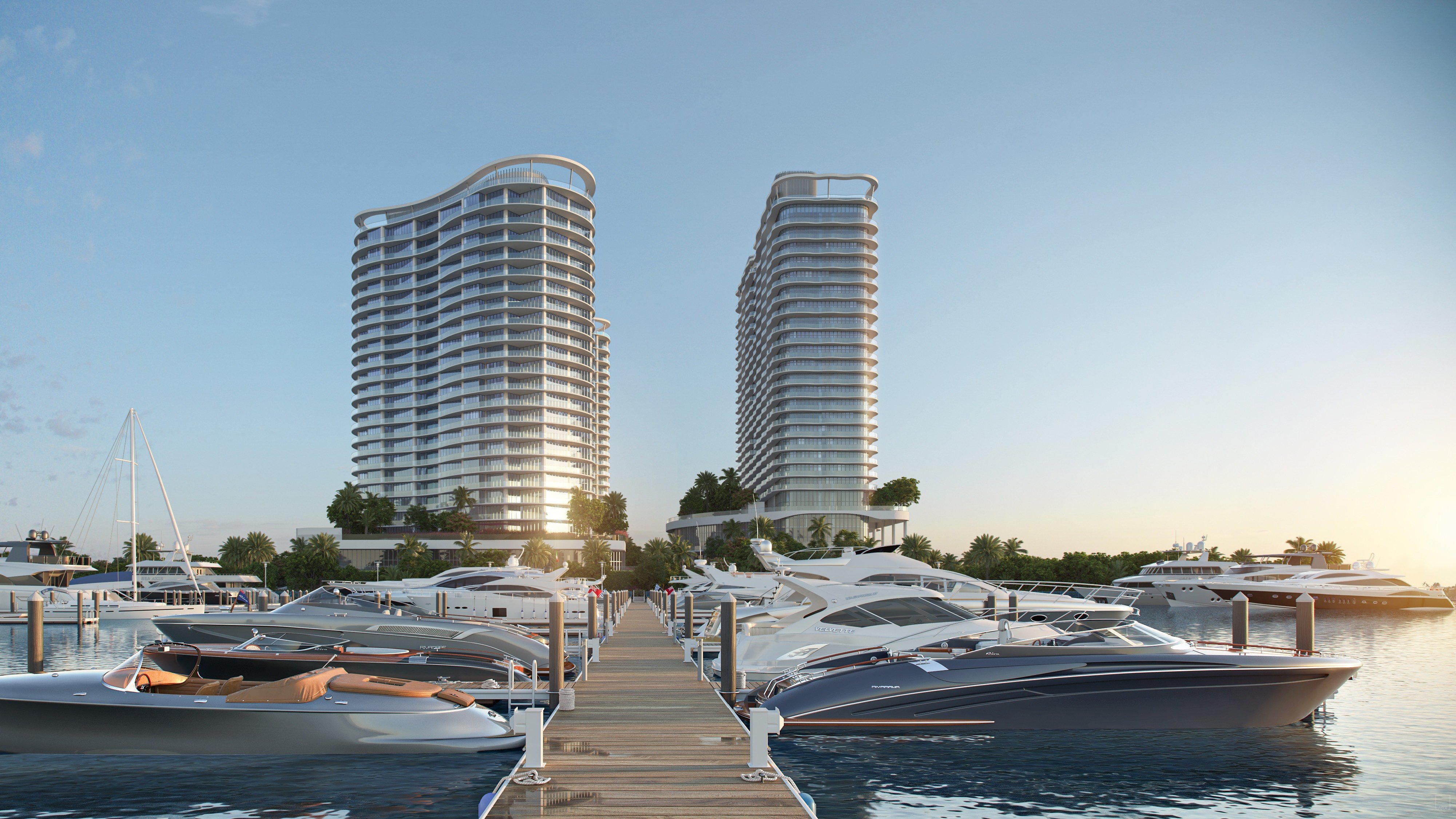
St. Regis® Residences Brickell and Setai Residences Miami Beach invite a sophisticated comparison because they occupy two distinct Miami contexts: one in Brickell, the other in Miami Beach. For a buyer with a yacht, tender, center console, or simply a serious expectation of water access, the question is not which name feels more glamorous. The question is how each ownership structure converts into usable rights, daily convenience, and risk management.
That distinction matters. A residence can feel intuitively connected to the water without granting the specific boating rights an owner expects. A branded address can imply service without defining who controls dockage, launch logistics, storage, storm preparation, or post-storm recovery. A coastal setting can appear effortless in a rendering while still requiring close review of bridge clearance, insurance obligations, association rules, and emergency procedures.
For this buyer profile, St. Regis® Residences Brickell and Setai Residences Miami Beach should be approached as a comparison, not a ranking. The better choice is the one whose documents, site conditions, and operating rules match the owner’s vessel, calendar, family plan, and tolerance for complexity.
The phrase “ownership model” deserves precision. It is not simply whether the residence is branded, private, serviced, or amenitized. It is the structure that defines what is owned, what is licensed, what is shared, what is revocable, and what requires association approval.
For St. Regis® Residences Brickell, the central question is how the Brickell residence is documented for private use, services, assessments, guest access, leasing, and any water-related privileges that may be represented during a sales conversation. For Setai Residences Miami Beach, the same review should be applied separately, because a Miami Beach ownership experience can carry different expectations around access, privacy, hospitality, and coastal operations.
A luxury buyer should ask for the controlling documents before treating any convenience as permanent. If a feature is important, it should appear in the purchase documents, condominium materials, rules, or binding agreements. If it is discussed only conversationally, it belongs in the category of expectation, not ownership.
Boating convenience is often described casually, but it should be measured carefully. “Convenient” can mean many things: a nearby pickup point, valet coordination, a marina relationship, tender storage, a temporary loading zone, or a deeded right. Those are not interchangeable.
A buyer comparing St. Regis® Residences Brickell with Setai Residences Miami Beach should translate every boating phrase into a written question. Is there a marina component, a boat-slip right, a reservation system, or only proximity to third-party services? Who controls access? Can guests, crew, captains, or vendors enter without friction? Are there time limits, insurance requirements, vessel-size limits, or storm removal obligations?
The most valuable boating arrangement is not always the most visually dramatic. It is the one that aligns with the owner’s actual pattern of use. A family that boats every weekend has different needs than an owner who charters seasonally. A captain-managed vessel requires different access than a tender used for sunset transfers. In both cases, the decisive issue is the enforceable right, not the romance of the waterfront.
Bridge clearance is one of the quietest forms of due diligence in Miami luxury real estate. It is also one of the most important. A residence may feel close to open water, yet a vessel’s height, beam, draft, route, and timing can determine whether the location works in practice.
Neither St. Regis® Residences Brickell nor Setai Residences Miami Beach should be evaluated through generic assumptions about boating routes. The buyer should begin with the vessel, then test the residence around it. Overall height, antenna configuration, tower design, tide conditions, and preferred cruising routes can all change the answer.
This is where a high-end purchase becomes highly practical. The buyer’s captain, marine surveyor, or waterfront counsel should confirm whether the desired path is reliable for the actual vessel. If the owner expects spontaneous use, the standard should be higher than occasional access. Luxury, in this context, is not just proximity to water. It is confidence that the boat can move when the owner wants it to move.
Hurricane planning should not wait until after closing. In South Florida, storm resilience is part of the ownership experience, especially for buyers who maintain vessels, outdoor furniture, art, specialty vehicles, or staff-managed residences.
For St. Regis® Residences Brickell, questions should focus on procedures for resident communication, building preparation, common-area shutdowns, generator strategy, elevator protocols, post-storm access, and responsibility for private terrace contents. For Setai Residences Miami Beach, the same storm-planning questions should be tested in the context of a Miami Beach address, including evacuation logistics, coastal exposure, access restoration, and coordination with any hospitality-style services.
Insurance deserves equal attention. The buyer should understand the division between association coverage and owner coverage, the treatment of water intrusion, special assessments, deductibles, and coverage expectations for contents, improvements, and marine assets. A flawless view is not a substitute for a disciplined risk plan.
The decision between these two projects should begin with lifestyle geography, then narrow into documents. Brickell may appeal to a buyer who wants a city-based residence with a strong financial-district rhythm. Miami Beach may appeal to a buyer who prioritizes a coastal address and the culture of island living. Those lifestyle signals are useful, but they are only the beginning.
For buyer-notebook clarity, this is a Brickell and Miami Beach comparison with boating, ownership, and storm readiness at its center. The buyer should resist making the decision on brand familiarity alone. Two residences can share a luxury vocabulary while delivering very different day-to-day experiences.
A disciplined comparison would place the two opportunities side by side across four columns: ownership rights, boating logistics, bridge-clearance practicality, and hurricane planning. The strongest option is the one that produces fewer unanswered questions for the owner’s actual use case.
Before contract confidence becomes emotional momentum, request and review the documents that control the residence. The list should include condominium documents, rules and regulations, budgets, insurance summaries, service descriptions, leasing provisions, pet and guest rules, terrace and exterior-use rules, and any agreements related to boating, dockage, or access.
Then add the marine layer. Ask for written detail on vessel limits, access points, marina or third-party arrangements, captain and crew access, loading procedures, hurricane removal protocols, and any limits on commercial operators or charter-related activity. If bridge clearance is relevant, verify the route against the owner’s vessel profile rather than relying on general statements.
Finally, ask how the building operates in stress conditions. A luxury residence should be judged not only by how it welcomes residents on a perfect winter evening, but by how clearly it performs before, during, and after a storm.
Is this a ranking of St. Regis® Residences Brickell and Setai Residences Miami Beach? No. It is a buyer-focused comparison of two distinct Miami luxury residential projects.
Which project is in Brickell? St. Regis® Residences Brickell is identified as the Brickell project in this comparison.
Which project is in Miami Beach? Setai Residences Miami Beach is identified as the Miami Beach project in this comparison.
Can buyers assume either project includes a private boat slip? No. Any boat-slip, dockage, or marina right should be confirmed in binding documents.
Why is bridge clearance important for luxury buyers? Bridge clearance determines whether a specific vessel can move reliably through a preferred route.
Should the vessel be evaluated before choosing the residence? Yes. Height, draft, beam, route, and owner usage patterns should guide the real estate review.
What should buyers ask about hurricane planning? Ask about building protocols, resident communication, insurance, access, and vessel procedures.
Do branded residences always have the same ownership rules? No. Each project’s documents control usage, services, restrictions, and owner obligations.
Is boating convenience the same as waterfront proximity? No. Proximity is visual and geographic, while convenience depends on enforceable access rights.
What is the most prudent next step for a serious buyer? Review the project documents with counsel, marine advisers, and insurance specialists before relying on assumptions.
If you'd like a private walkthrough and a curated shortlist, connect with MILLION.
If branded residences are on your mind — as a home or as an allocation — we would be glad to share what we are seeing, privately.
Begin a quiet conversation