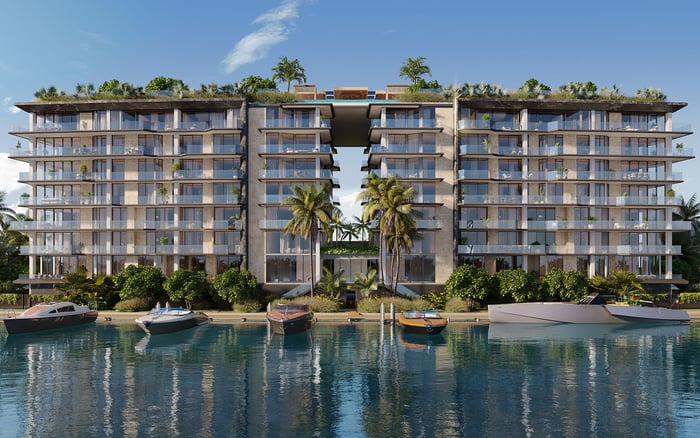
A buyer-focused due-diligence guide comparing St. Regis® Residences Bahia Mar Fort Lauderdale and Bay Harbor Towers through parking rights, EV readiness, and private-driver logistics.

For a certain South Florida buyer, the question is no longer only whether a residence delivers the right view, finish package, or amenity floor. The quieter question is whether the building can support the way the household actually moves. At St. Regis® Residences Bahia Mar Fort Lauderdale and Bay Harbor Towers, that means looking beyond the sales gallery to parking rights, EV-charging infrastructure, and the choreography of private drivers, guests, deliveries, ride-share, and valet operations.
This is not a secondary issue. For multi-vehicle households, EV-heavy garages, staff-supported residences, and buyers who expect seamless chauffeured arrival, mobility is part of the asset. It affects daily friction, privacy, guest experience, and eventual resale appeal. In the ultra-premium tier, a beautiful residence that is operationally awkward can feel less luxurious over time.
Parking is often treated casually in luxury conversations, but the legal structure matters. Buyers comparing St. Regis® Residences Bahia Mar Fort Lauderdale with Bay Harbor Towers should determine whether spaces are deeded, assigned, licensed, or treated as common-element rights. Comparable branded inventory such as St. Regis® Residences Brickell can also make the structure of parking rights part of a broader South Florida diligence conversation. Each structure can carry different implications for control, transferability, flexibility, and resale narrative.
A deeded space may be perceived differently than an assigned right. A licensed arrangement may provide different protections than a property interest. A common-element structure can work well if the management framework is clear, but it should not be assumed to offer the same control as individually conveyed parking. The essential point is not that one structure is universally better. It is that buyers should understand the structure before treating parking as a settled convenience.
This is especially relevant for households with weekend cars, household-staff vehicles, visiting family, security teams, or frequent overnight guests. A residence may feel abundant on paper, yet become constrained if the rights do not match the buyer’s real garage profile.
EV readiness should be tested with the same seriousness as ceiling heights or waterfront exposure. The key questions are practical: how many charging installations the building can support, whether charging is individually metered, who pays for upgrades, and how future demand will be allocated if more residents require charging over time.
At St. Regis® Residences Bahia Mar Fort Lauderdale, the due-diligence lens should focus on whether the proposed residential environment can support a buyer who expects multiple EVs and predictable overnight charging. At Bay Harbor Towers, the same question applies to daily use in a Bay Harbor Islands setting, especially for buyers who split time between residences or keep different vehicles for different routines.
The risk is not simply whether a charger exists. The larger issue is whether the electrical and management framework can scale. A single charging solution may satisfy an early buyer but become less persuasive if demand accelerates and allocation rules are unclear. For new-construction and pre-construction buyers, this is where drawings, engineering narratives, and association policies become part of the luxury conversation.
Private-driver logistics are among the least glamorous and most revealing parts of luxury residential diligence. A chauffeured household needs to know where the driver waits, how long a vehicle may remain at arrival, how valet interacts with private drivers, and how guest cars are separated from deliveries and ride-share traffic.
For St. Regis® Residences Bahia Mar Fort Lauderdale, the Fort Lauderdale context makes the arrival experience central to the promise of ease. For Bay Harbor Towers, the Bay Harbor Islands alternative should be evaluated through the same operating lens: can a driver-supported household function without improvisation during peak hours, guest arrivals, service visits, or storm-season preparation?
In practical terms, the Fort Lauderdale and Bay Harbor comparison is not just geographic. It is operational. The better fit may depend less on broad lifestyle branding and more on how a buyer’s cars, drivers, and guests move through the property on an ordinary Thursday evening.
A polished presentation can suggest ease, but buyers should rely on documents. The appropriate review set may include governing documents, draft condominium materials, parking exhibits, construction drawings, electrical plans, management policies, and any available site-circulation materials. Detailed project-level documentation may not be fully public or may evolve as entitlement and construction processes advance, so the buyer’s advisory team should keep the review current.
The most useful questions are direct. Are spaces conveyed with the residence, separately acquired, or subject to assignment by the association? Can unused spaces be leased or transferred? Are guest spaces controlled by management? How are charging costs metered? Who approves charger installation? What happens if the building requires broader electrical upgrades? Where do private drivers wait when a resident is not ready? How are delivery vehicles, ride-share, valet, and car-service flows separated?
The answers should be read as part of the ownership experience, not as administrative detail. In the luxury market, operational certainty is a form of quiet wealth.
St. Regis® Residences Bahia Mar Fort Lauderdale is framed as a proposed-residence opportunity for buyers evaluating ultra-luxury South Florida developments. That makes it especially important to scrutinize evolving documents and proposed operations before relying on assumptions about future convenience. The more ambitious the residence, the more important the backstage systems become.
Bay Harbor Towers, as an alternative Bay Harbor Islands opportunity for a similar buyer profile, invites a parallel test. The island setting may appeal to buyers seeking a more contained residential rhythm, but that does not remove the need to verify parking, charging, and arrival rules. A serene address still needs disciplined circulation.
For buyers comparing the two, the question is not which property sounds more luxurious. The stronger question is which one supports the household’s actual mobility pattern with the least ambiguity. A two-car household with occasional guests will evaluate this differently than a family office principal with EVs, visiting adult children, household staff, and a standing private-driver schedule.
Resale value in the upper tier is often discussed through design, scarcity, water views, and service. Those factors matter, but mobility infrastructure increasingly belongs in the same conversation. A future buyer may ask the same questions about deeded or assigned parking, EV capacity, guest access, and private-driver operations. If the answers are clean, the residence can feel more liquid. If the answers are uncertain, diligence may become a point of negotiation.
That is why parking and transportation should not be left to the final stage of review. They should be examined early, alongside floor-plan fit and carrying-cost expectations. A residence that works beautifully for the owner’s vehicles, staff, guests, and charging needs is not merely convenient. It is more resilient as a long-term holding.
Why is parking rights due diligence important for these properties? Parking rights can affect daily control, guest planning, and resale conversations, especially for multi-vehicle households.
Should buyers assume parking spaces are deeded? No. Buyers should confirm whether spaces are deeded, assigned, licensed, or governed as common elements.
What should EV buyers verify first? Buyers should review charging capacity, metering, installation approval, upgrade responsibility, and future allocation rules.
Does one charger guarantee long-term EV convenience? Not necessarily. The broader electrical and management framework matters as EV demand grows.
Why do private-driver logistics matter in luxury buildings? They influence privacy, arrival timing, guest experience, and the ability of staff-supported households to operate smoothly.
What documents should buyers request? Governing documents, parking exhibits, construction drawings, electrical plans, and management policies are key review items.
Can project details change during development? Yes. Some documentation may evolve as entitlement, design, construction, and management planning continue.
How should Bay Harbor Towers be evaluated against St. Regis® Residences Bahia Mar Fort Lauderdale? Buyers should compare how each property supports real mobility needs rather than relying on presentation-level assumptions.
Are guest and ride-share flows part of the diligence process? Yes. Guest, valet, delivery, ride-share, and private-driver circulation can shape daily comfort and building efficiency.
Do parking and EV systems affect resale liquidity? They can. Clear, functional mobility infrastructure may strengthen usability for future high-net-worth buyers.
For a tailored shortlist and next-step guidance, connect with MILLION.
If branded residences are on your mind — as a home or as an allocation — we would be glad to share what we are seeing, privately.
Begin a quiet conversation