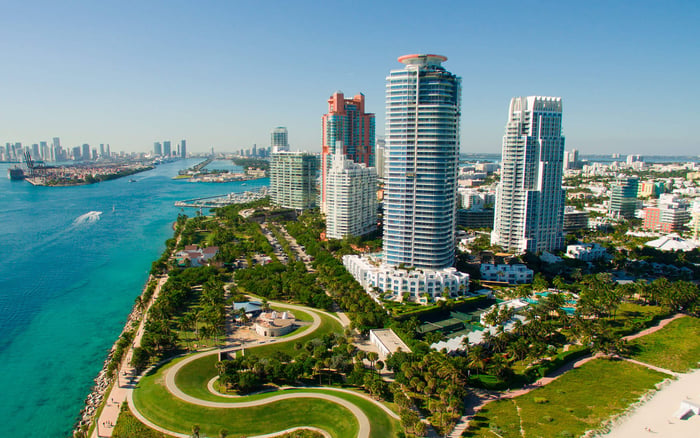
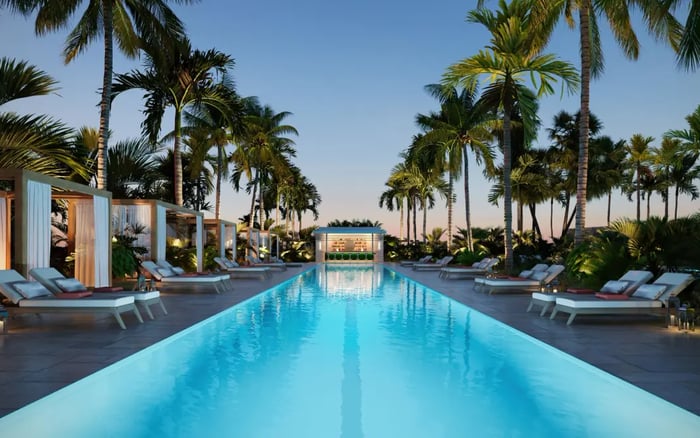
From billionaire bunker enclaves to nine-figure penthouses, South Florida’s luxury market increasingly functions like a residency strategy, a privacy strategy, and a lifestyle allocation all at once.
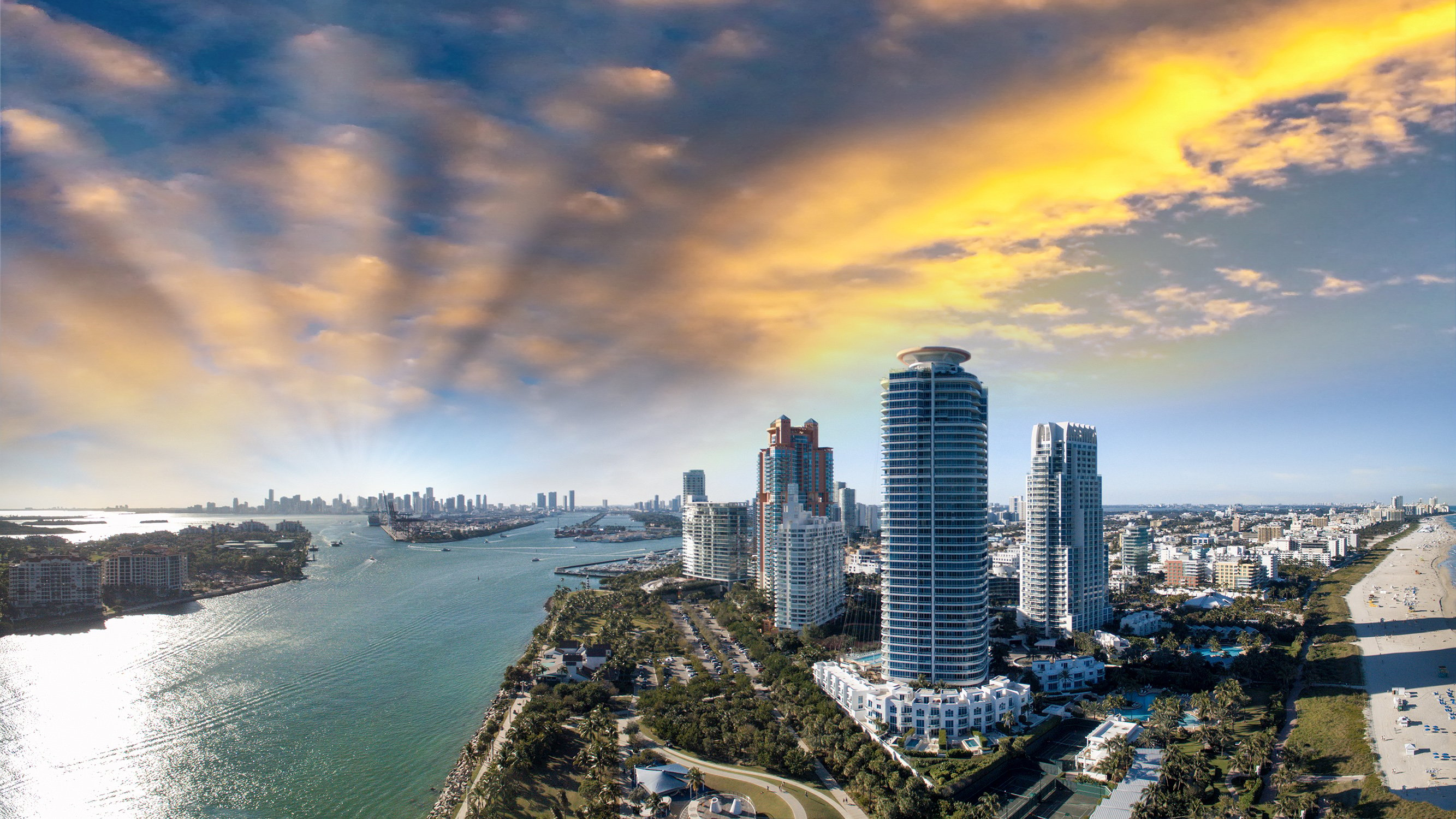
South Florida’s ultra-luxury market is no longer explained by weather and waterfront alone. The region is drawing a concentrated mix of domestic and global buyers because it supports a more current equation: residency flexibility, predictable ownership planning, and privacy at a level many legacy luxury markets struggle to systematize.
That shift is visible in the public record. Miami-area trophy trades have pushed into nine figures, and condominium pricing has reached levels once associated with generational estates. In parallel, high-profile buyers have been widely covered as weighing Florida residency advantages amid policy debates in other states.
For the luxury buyer, the implication is straightforward: at the top end, “value” is increasingly defined by optionality. The strongest properties in Miami Beach are not only purchased as homes. They are acquired as platforms for time in-market, discretion, multi-home living, and a financial life that spans jurisdictions.
One of the most durable tailwinds behind South Florida demand is not a passing trend. It is tax policy.
Florida does not levy a state income tax. For high-income households, that single feature can materially influence where to establish residency, especially when paired with an existing business, investment, or philanthropic footprint that already touches the region.
Florida also has no separate state-level estate tax or inheritance tax. For families building a long-term plan around intergenerational wealth transfer, the lack of state-level estate and inheritance taxes can be an important consideration alongside trust planning and broader structuring.
Then there is Florida’s homestead framework, commonly discussed as an asset-protection tool for a primary residence. The specifics are fact-dependent and require legal counsel, but the underlying concept is well understood among sophisticated buyers: a primary home can carry meaningful protections against certain creditor claims.
Taken together, these policy features create a residency narrative that is unusually clear and actionable. It helps explain why Miami has remained part of the national conversation for tech and finance leaders, and why coverage has repeatedly connected policy debates elsewhere to increased interest in Florida.
In many global luxury markets, privacy is pursued one property at a time: longer drives, larger lots, layered landscaping, and higher walls. In South Florida, certain enclaves deliver privacy as a community-level feature.
Indian Creek, often nicknamed the “Billionaire Bunker,” has been described as ultra-exclusive and heavily secured. Reporting has highlighted the village’s security posture, underscoring a key point about true top-tier enclaves: discretion is not only architectural. It is embedded in governance, access control, and the expectation of quiet.
That security-first positioning has helped make the area a persistent reference point in public coverage of ultra-high-net-worth moves. Reports that Jeff Bezos and Lauren Sánchez were renovating and planning a major home project on Indian Creek read less like celebrity news and more like a market signal about where prominent buyers believe privacy can be maintained with the least friction.
The privacy story is not limited to the coast. Fortune profiled Stone Creek Ranch in Delray Beach as a gated enclave where Mark Wahlberg bought a home for $37 million. The broader takeaway is consistent: some buyers want South Florida’s tax and lifestyle advantages, but do not require an oceanfront address for the move to make sense.
At the top of the market, South Florida’s price discovery is increasingly shaped by three forces: land scarcity, security, and service.
On the single-family side, a major Miami-area benchmark arrived in 2025 when Russian billionaire Vladislav Doronin reportedly sold his Star Island home for $120 million, a Miami-area record. The property’s history includes prior ownership by Shaquille O’Neal, reinforcing how irreplaceable waterfront parcels can circulate among celebrity and ultra-wealth owners over time.
A separate Miami Beach waterfront mansion sale at $105 million, tied to redevelopment plans, reinforced another defining reality at this tier: land value and location can dominate the price conversation. For certain buyers, the house is negotiable. The site is not.
On the condominium side, the ceiling has moved just as decisively. The Real Deal reported Fort Partners sold a Seaway at The Surf Club penthouse for $86 million, setting a new Miami-Dade condo benchmark. And in another widely discussed indicator, BRG International Marketing reported that a penthouse at Shore Club Private Collections was in contract for over $120 million, a figure that would set a new condo record if it closes.
The point is not only that prices are high. It is that buyers will now pay estate-level money for condominium living when the package includes a premier address, meaningful privacy, and service standards that reduce complexity for a multi-home lifestyle.
Ultra-luxury buyers increasingly separate primary-residence emotion from second-home performance. South Florida is unusually effective at serving the second category.
High-service, lock-and-leave residences can be the rational choice for an owner who travels frequently, maintains multiple homes, or simply prefers that day-to-day logistics are handled by staff and established systems. The market’s growing acceptance of eight-figure and higher condo pricing suggests that service is now a core feature of the asset, not a peripheral amenity.
Within Miami Beach, the current conversation often sits at the intersection of brand, operations, and location. A buyer seeking a modern ownership experience may naturally compare projects such as Shore Club Private Collections Miami Beach with other high-touch options that emphasize discretion and long-term consistency.
For buyers who prioritize the classic Miami Beach resort cadence, Setai Residences Miami Beach sits within a segment where hospitality DNA can influence resale desirability, particularly for global owners who want a familiar standard of care.
Those who view a residence as a “private club with a deed” may also consider branded residential offerings like The Ritz-Carlton Residences® Miami Beach, where the appeal often centers on operational reliability and the straightforwardness of arriving, living well, and leaving again.
Meanwhile, boutique oceanfront living remains a distinct draw for buyers who want fewer residences, quieter common areas, and a more intimate footprint on the shoreline. A project such as 57 Ocean Miami Beach reflects that preference: private scale paired with the enduring pull of oceanfront real estate.
This condo-versus-estate decision is rarely ideological. It is situational. The most consistent outcomes come from matching the property type to how you actually live, then treating service as part of your underwriting, especially if the home will function as a global base.
South Florida demand is also a story of mobility. Realtor.com reported that Google co-founder Larry Page bought Miami-area mansions as California’s billionaire wealth-tax debate intensified, and other coverage has connected wealth-tax discussions to billionaire interest in Miami real estate. Whether a buyer is reacting to policy uncertainty or planning proactively, the market is responding to the premise that residency can be optimized.
For an investment-minded buyer, the most practical approach is to evaluate a South Florida acquisition as a three-part decision: legal residency, lifestyle fit, and market entry timing.
A discreet checklist often includes:
In Bal Harbour and along the Miami Beach coastline, buyers often discover that the most valuable “amenity” is not a spa or a gym. It is a building and neighborhood culture that treats privacy as normal.
Is South Florida luxury real estate mainly driven by taxes? Taxes are a major catalyst, particularly Florida’s lack of state income tax and the absence of state-level estate and inheritance taxes, but lifestyle, security, and service also drive demand.
Why are nine-figure condo prices becoming possible in Miami-Dade? Recent benchmark penthouse sales and widely reported contracts suggest buyers are paying estate-level prices for service-rich, lock-and-leave living in prime beachfront locations.
What does “privacy infrastructure” mean for a buyer? It refers to neighborhood and building features that make discretion easier: controlled access, security posture, staffing, and a culture of quiet.
Is an oceanfront condo or a waterfront estate the better choice? It depends on how you use the home. Estates can deliver land and autonomy; condos can deliver simplicity, staffing, and easier multi-home living.
To explore South Florida’s most discreet ultra-luxury options, connect with MILLION Luxury.
If branded residences are on your mind — as a home or as an allocation — we would be glad to share what we are seeing, privately.
Begin a quiet conversation