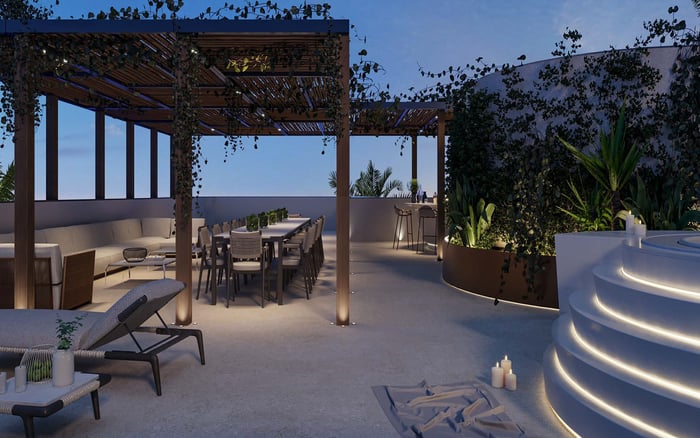
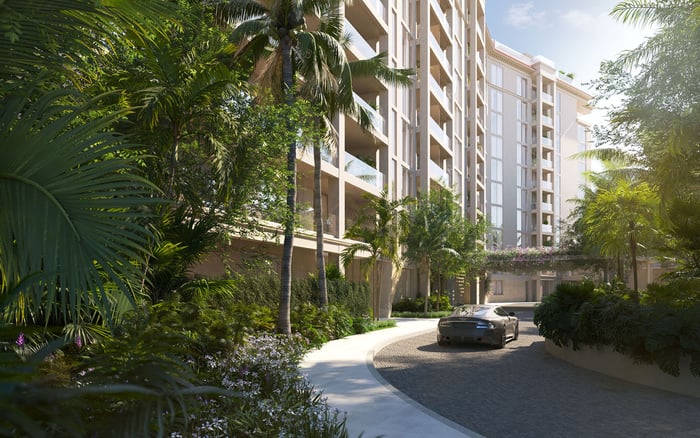
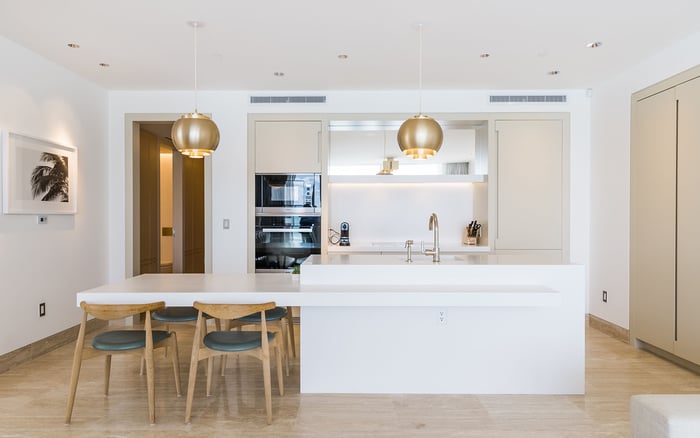
A buyer-oriented comparison of how five-star service operates at The Surf Club Four Seasons Surfside and The Residences at Six Fisher Island, with context from adjacent ultra-luxury South Florida enclaves.
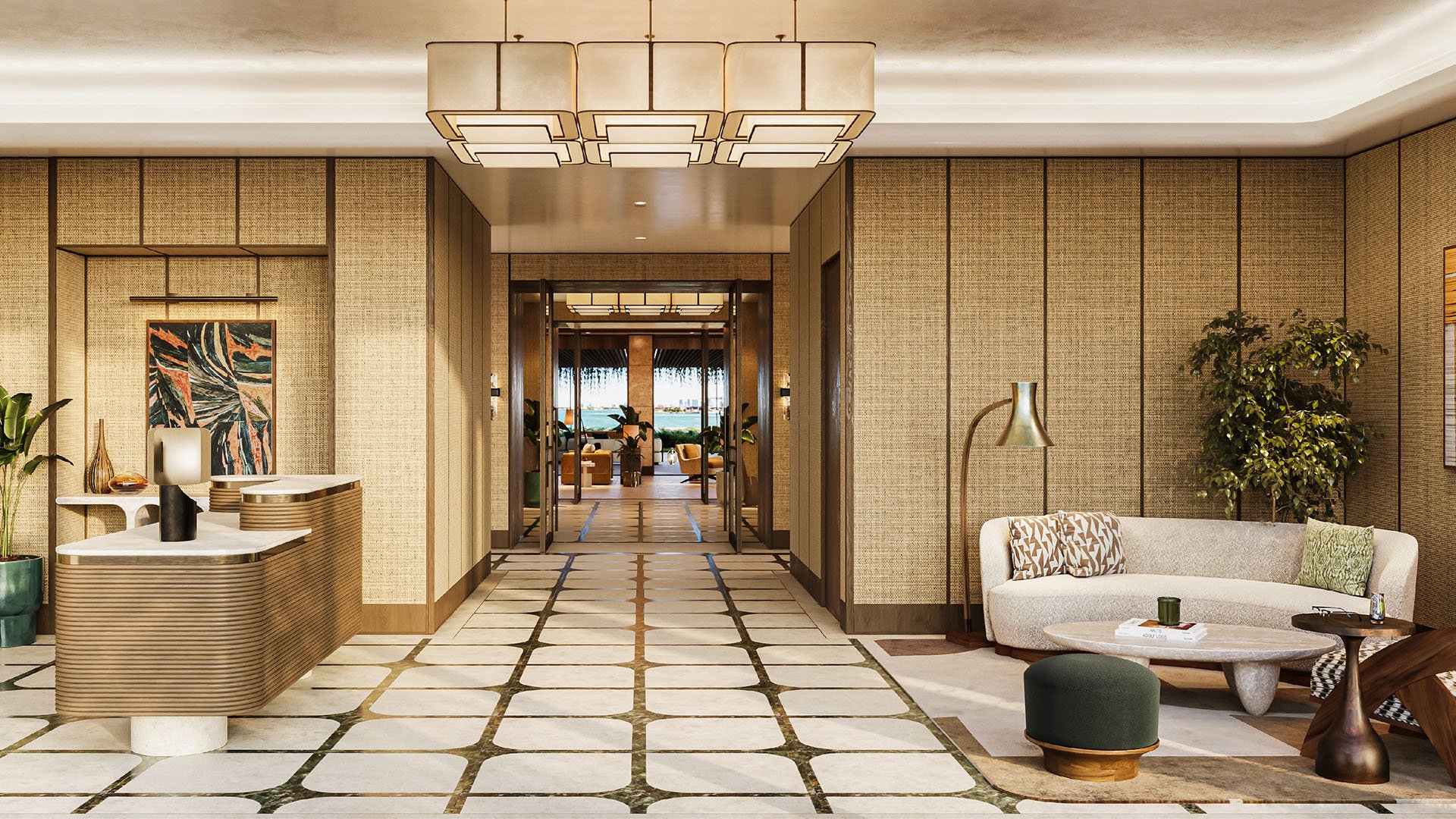
In ultra-prime South Florida, buyers are no longer comparing residences by square footage alone. They are comparing operating cultures. Today’s most sophisticated purchasers want to know how a property receives guests, resolves requests, protects privacy, coordinates wellness, and transforms occasional ownership into seamless daily living. That is where the distinction between a branded residence and a fully developed service ecosystem becomes meaningful.
This is especially true when evaluating The Surf Club Four Seasons Surfside against The Residences at Six Fisher Island. Both names signal rarity. Both sit within tightly controlled coastal environments. Yet their service logic is fundamentally different. One is shaped by the discipline and cadence of a legendary hospitality brand in Surfside. The other is defined by the insular, members-club feel of Fisher-island, where privacy itself becomes a layer of service.
For MILLION Luxury readers, the relevant question is not simply which address feels more exclusive. It is which ecosystem better suits an owner’s rhythm: spontaneous entertaining, seasonal family use, discreet staff coordination, or the expectation that nearly every domestic detail can be handled without visible effort.
At The Surf Club Four Seasons Surfside, service is inseparable from brand choreography. The resident experience is shaped by a hospitality framework that values consistency, polished arrival sequences, and a highly trained front-of-house culture. For many buyers in Surfside, that matters because the property does not merely offer amenities. It delivers a service language that tends to feel familiar from the moment the owner arrives.
This model appeals to purchasers who value predictability. If you are dividing time among multiple homes, a residence embedded in a branded hospitality environment can reduce friction immediately. Packages, dining coordination, guest handling, housekeeping interfaces, vehicle staging, and owner requests often feel less improvised because the building’s operating standards are already deeply institutional.
There is also an intangible advantage to Four Seasons-adjacent living: the sense that lifestyle services are woven into the architecture rather than presented as an optional add-on. In a market where many developments promise concierge support, true differentiation often comes down to execution. Surfside buyers evaluating neighboring product, from Arte Surfside to Ocean House Surfside, are often measuring where service feels bespoke and where it feels simply available.
The likely trade-off is philosophical. Hotel-linked ecosystems are often at their best when residents enjoy a degree of social animation, regular hosting, and a visible amenity culture. For some owners, that is ideal. For others, the very precision that makes the experience elegant may also feel more curated than secluded.
Six Fisher Island represents a different luxury proposition. Here, the concept of five-star service is less about public hospitality polish and more about controlled access, insularity, and a setting where the journey to the residence already filters out the outside world. On Fisher-island, service begins before one reaches the front door. Arrival, access, and separation from mainland pace all become part of the value equation.
For buyers drawn to Fisher-island, the appeal is often not performative luxury but protected continuity. Staff interactions may feel more residential than hotel-like. The ecosystem can read as quieter, more owner-centric, and more dependent on understanding repeat patterns than on producing a theatrical sense of welcome. That distinction is subtle, but sophisticated buyers feel it immediately.
This is also why comparison within Fisher-island matters. A purchaser considering Six may naturally weigh it against legacy island benchmarks such as Palazzo del Sol or other trophy opportunities nearby. In that context, the service conversation is rarely about glamour alone. It is about whether the property supports a deeply private household operation, from family arrivals to domestic staffing and long stays that require discretion without interruption.
For some households, the island setting is the service. Reduced casual traffic, a more insulated social environment, and a membership-like atmosphere can carry more value than a broader hospitality platform. Buyers who prioritize security, routine, and highly selective interaction often respond to this model with unusual conviction.
When these residences are placed side by side, the difference is best understood through daily use.
At The Surf Club Four Seasons Surfside, effortless living often means immediate access to a polished hospitality machine. There is reassurance in systems already tested at a very high level. If the owner values a turn-key rhythm, frequent guest arrivals, and a level of service aligned with an internationally recognizable standard, Surfside can be compelling.
At The Residences at Six Fisher Island, effortless living tends to mean insulation. The experience can feel less like residing beside a five-star hotel and more like occupying a private world where service is calibrated around fewer owners, fewer interruptions, and a stronger threshold between private life and public life. That distinction matters for buyers who define luxury not as an abundance of offerings, but as a reduction of exposure.
Neither model is inherently superior. They simply optimize different forms of convenience. In Surfside, convenience often takes the form of service abundance. On Fisher-island, convenience is selective access and environmental control.
The first question is operational depth. Not the marketing description, but the actual quality of staffing, continuity, and owner recognition. Ask how the building handles peak-season pressure, owner absences, and family guest flow. Service ecosystems reveal themselves in small moments, not on grand tours.
The second question is privacy architecture. That includes arrival sequence, visibility of common areas, and how often a resident is required to move through semi-public spaces. In this regard, buyers often compare enclave-style experiences across South Florida, including places such as The Delmore Surfside, to understand where exclusivity is spatial and where it is simply branded.
Third is lifestyle compatibility. A buyer with children, rotating guests, and a robust household staff may define ideal service very differently from a couple using the residence seasonally. The right answer depends on whether the property can absorb complexity gracefully.
Finally, consider long-term brand and area positioning. Surfside continues to stand out as a highly refined oceanfront pocket with a distinctive hospitality pedigree, while Fisher-island remains one of the region’s most insulated residential environments. Those are not interchangeable narratives, and they shape perception, resale conversations, and owner satisfaction over time.
For the ultra-prime buyer, this is not a contest between good and better. It is a question of temperament. The Surf Club Four Seasons Surfside is compelling for owners who want branded precision, polished hospitality, and a living experience where service feels continuously activated. The Residences at Six Fisher Island is compelling for owners who place the highest premium on privacy, controlled access, and an ecosystem intentionally designed to feel inward-looking.
In today’s South Florida luxury market, the strongest residences are not simply selling views or finishes. They are selling confidence in how life will actually unfold once the purchase closes. That is why service ecosystems have become central to value, especially in enclaves as rarefied as Surfside and Fisher-island.
Which residence is more private? The Residences at Six Fisher Island generally align more closely with buyers seeking maximum privacy because the island setting itself functions as a protective layer.
Which property feels more hotel-like? The Surf Club Four Seasons Surfside is the clearer fit for buyers who want a hospitality-forward environment with branded service cues.
Is branded service always better than private-club style service? Not necessarily. Branded service favors consistency and polish, while private-club style service often prioritizes discretion and familiarity.
Why does the service ecosystem affect value? At the top of the market, owners are paying for reduced friction, better privacy, and confidence that daily needs will be handled smoothly.
Is Surfside better for seasonal owners? It can be especially appealing to seasonal users who want turn-key ease and an established hospitality framework upon arrival.
Is Fisher-island better for long stays? Many buyers find it well suited to extended use because the environment is highly controlled and feels more secluded.
What should a buyer ask during a tour? Ask about staffing continuity, guest handling, arrival logistics, owner recognition, and how the building supports household operations.
Do amenities matter as much as service? In this tier, amenities matter, but service quality often determines whether those amenities feel effortless or underused.
How does location shape service? Surfside supports a polished oceanfront hospitality model, while Fisher-island supports a more insulated and access-controlled way of living.
Who should advise on this decision? A buyer benefits from working with an advisor who understands both the property itself and the service culture of the surrounding enclave.
If you'd like a private walkthrough and a curated shortlist, connect with MILLION Luxury.
If branded residences are on your mind — as a home or as an allocation — we would be glad to share what we are seeing, privately.
Begin a quiet conversation