A discreet buyer’s guide to South Beach and Surfside, examining how each address frames privacy, access, energy, and daily life in Miami Beach luxury real estate.
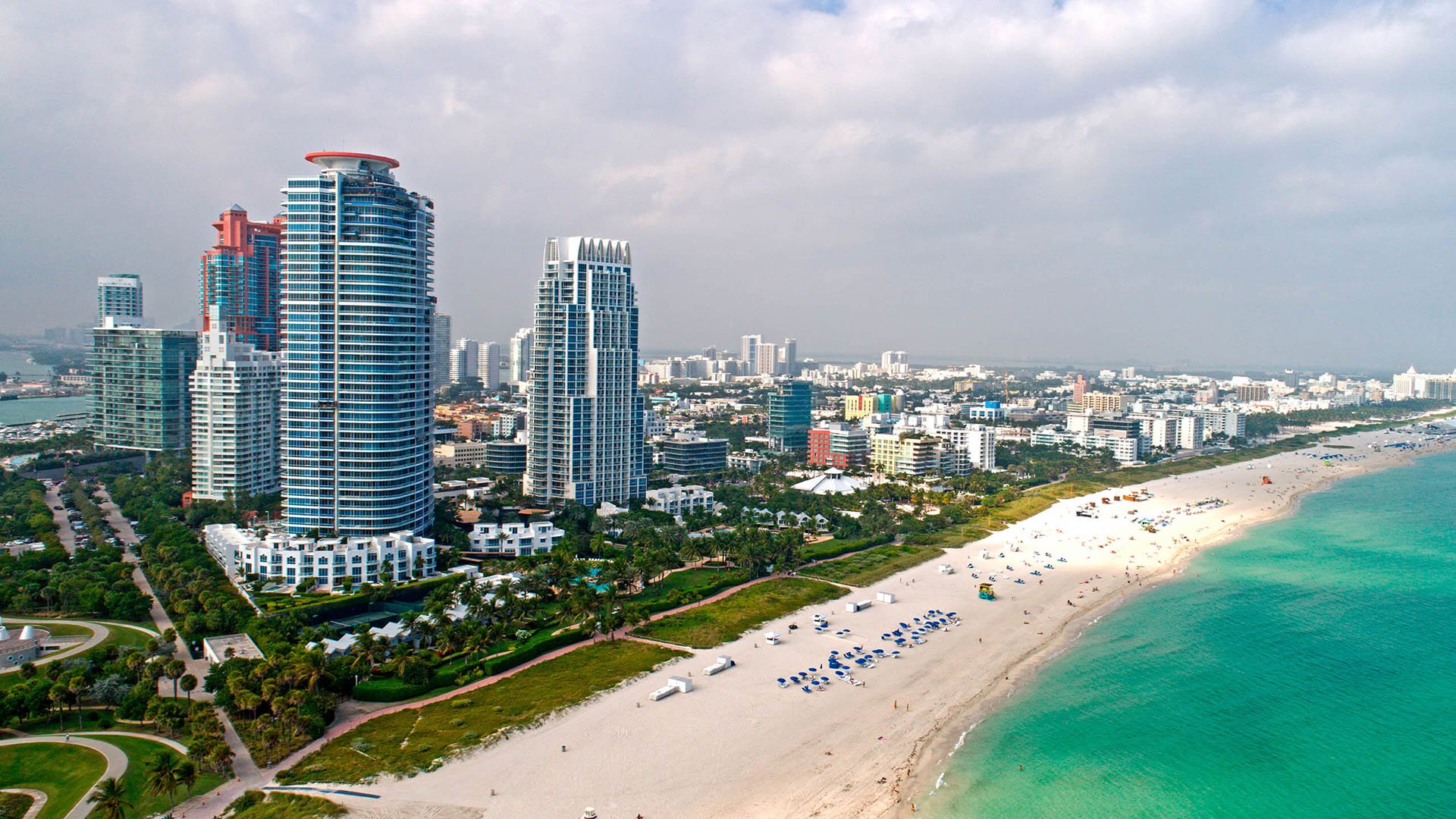
South Beach and Surfside are often discussed as neighboring coastal choices, but for the private buyer, they are not substitutes. They express two distinct attitudes toward visibility. South Beach is cinematic, social, and legible to the world. Surfside is quieter, more residential, and less eager to announce itself. The decision is not simply about proximity to the ocean. It is about how much life you want at the doorstep, how often you want to be recognized, and whether home should participate in the city or stand slightly apart from it.
For the South Florida luxury buyer, privacy is rarely absolute. It is layered. It begins at the street, continues through the arrival sequence, and becomes most personal inside the residence. A guarded entry, discreet lobby, private elevator, deep terrace, and carefully oriented views all matter. Yet the broader neighborhood still sets the tone. South Beach offers immediacy. Surfside offers restraint. Both can be sophisticated. Only one may feel correct for the way you actually live.
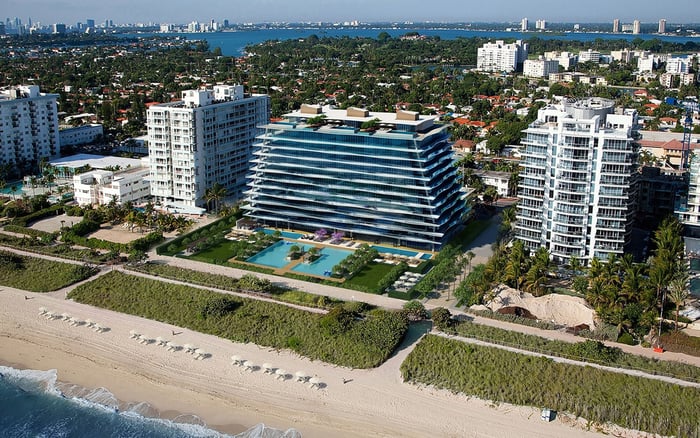
South Beach appeals to buyers who want a residence connected to movement, dining, design, fitness, art, and social gravity. Its privacy question is therefore more nuanced. The address carries recognition, and recognition can be an asset or a cost, depending on temperament. For some owners, the ability to step from a refined residence into a lively urban resort environment is the point. For others, that same convenience can feel too exposed.
The best South Beach living tends to rely on controlled transitions. A buyer should evaluate how a building handles arrival, valet flow, guest management, service access, and the distance between public energy and private rooms. A residence can feel remarkably serene, even in a visible district, if the building is composed correctly. Conversely, a prestigious address can feel compromised if the path from street to home is too theatrical or too porous.
This is where micro-location matters. South of Fifth and Sofi carry a different residential implication than the broader South Beach conversation. Buyers who use those terms are often seeking the benefits of Miami Beach living without constant exposure to its most animated edges. In that context, privacy is not isolation. It is choreography.
Surfside speaks to a different instinct. It is often chosen by buyers who want ocean proximity with a more residential cadence. The mood is less performative and more contained. The appeal is not that one disappears entirely, but that daily life feels less observed. Morning walks, family routines, and evening arrivals can carry a lower public temperature.
That quieter setting can make privacy feel more natural. A buyer may not need as many architectural defenses against the surrounding environment because the environment itself is calmer. Still, the same questions remain. How many residences share the lobby? How visible is the entrance? Are amenity areas positioned for seclusion or display? Does the residence face the water, neighboring buildings, or active public space? Surfside can offer discretion, but the building must still earn it.
For buyers who value boutique scale, Surfside can be especially compelling. Smaller-feeling residential environments may support a more familiar rhythm, fewer daily crossings, and a sense of calm that is difficult to create in a more animated district. The tradeoff is that Surfside does not deliver the same immediate nightlife and cultural density as South Beach. That is a virtue for some, a limitation for others.
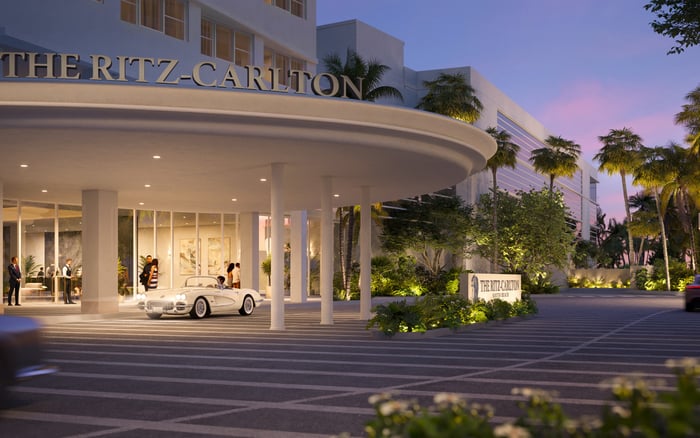
Privacy often reveals itself before the front door opens. In both neighborhoods, the arrival sequence deserves close attention. A private buyer should notice whether the entrance is conspicuous or understated, whether vehicles stack in public view, whether guests pass through shared social zones, and whether staff circulation is separated from owner circulation.
In South Beach, a strong arrival sequence can create a sanctuary within a highly active environment. It allows the owner to enjoy the address without being consumed by it. In Surfside, the same sequence can deepen the sense of removal and make the residence feel closer to a private home than a conventional apartment.
Oceanfront positioning can intensify the privacy calculus. A direct water view may offer emotional spaciousness, but exposure from beach paths, neighboring towers, or amenity decks should be considered. Privacy is not only who can enter the building. It is also who can see how you live.
Many buyers focus on physical privacy: gates, elevators, access control, and residence separation. Those details matter. Yet social privacy can be just as important. South Beach is a place where one’s presence may be noticed. Surfside is more likely to let daily life unfold with less commentary.
A high-profile buyer may prefer Surfside because it reduces casual visibility. A highly social buyer may prefer South Beach because the address keeps dinners, events, wellness routines, and friends close. Neither choice is inherently more luxurious. Luxury is alignment. The more precisely the address matches the owner’s rhythms, the more private it will feel.
This is especially true for second-home owners. If the residence is used for restorative weekends, Surfside may feel instinctively right. If it is used as a base for Miami’s cultural and social calendar, South Beach may offer a more efficient version of pleasure. The private question is not whether the neighborhood is quiet. It is whether the neighborhood asks more of you than you want to give.
Begin with the week you actually intend to live, not the postcard version of the address. Where will you have breakfast? How often will guests come over? Will children, staff, drivers, or visiting family use the residence regularly? Do you want to walk into energy or retreat from it? Do you prefer to be near the room where things happen, or near the door that lets you leave unnoticed?
Then tour at different times. Morning, late afternoon, and evening can reveal three different personalities. Listen to the building. Watch the entry. Study the elevator experience. Stand on the terrace and look not only at the view, but at the sightlines back toward you. Privacy is often won or lost in these small, quiet observations.
The strongest buyers do not ask whether South Beach or Surfside is more prestigious. They ask which address protects their preferred version of life. South Beach offers privacy through design within a more public world. Surfside offers privacy through atmosphere, scale, and restraint. The better choice is the one that lets the owner exhale.
Is South Beach less private than Surfside? Generally, South Beach feels more public because its energy is more visible. A well-designed building can still provide strong privacy.
Is Surfside always the quieter choice? Surfside is typically perceived as more residential and restrained. Individual building design and exact location still matter.
Which area is better for a high-profile buyer? A buyer seeking lower daily visibility may prefer Surfside. A buyer who values access and social proximity may still choose South Beach.
Does oceanfront living guarantee privacy? No. Oceanfront views can feel expansive, but beach exposure and neighboring sightlines should be evaluated carefully.
What should I look for during a private showing? Study the entrance, lobby flow, elevator privacy, staff access, terrace sightlines, and sound levels at different times.
Is boutique living more private? Boutique scale can support fewer daily interactions and a calmer atmosphere. Execution matters more than size alone.
Why do South of Fifth buyers focus on micro-location? Micro-location can change the feeling of South Beach dramatically. Some pockets feel more residential and controlled than others.
Is Sofi the same consideration as broader South Beach? Sofi often attracts buyers seeking South Beach access with a more residential tone. It should be evaluated block by block.
Which address is better for a second home? Surfside may suit restorative use, while South Beach may suit cultural and social access. The right choice depends on routine.
How should I compare South Beach and Surfside discreetly? Compare how each address handles arrival, visibility, services, and daily rhythm. The most private choice is the one that fits your life.
To compare the best-fit options with clarity, connect with MILLION.
If branded residences are on your mind — as a home or as an allocation — we would be glad to share what we are seeing, privately.
Begin a quiet conversation