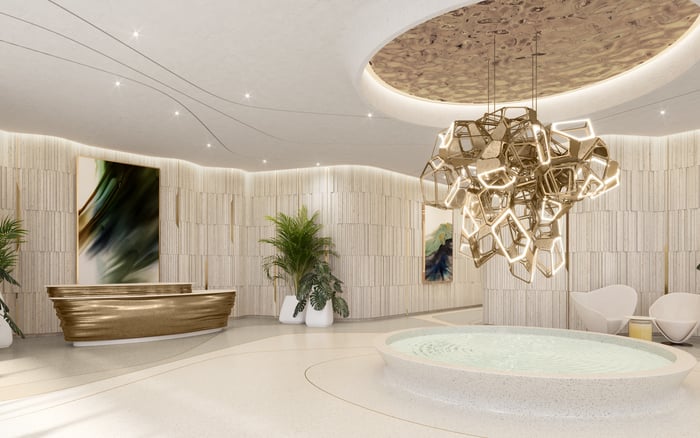
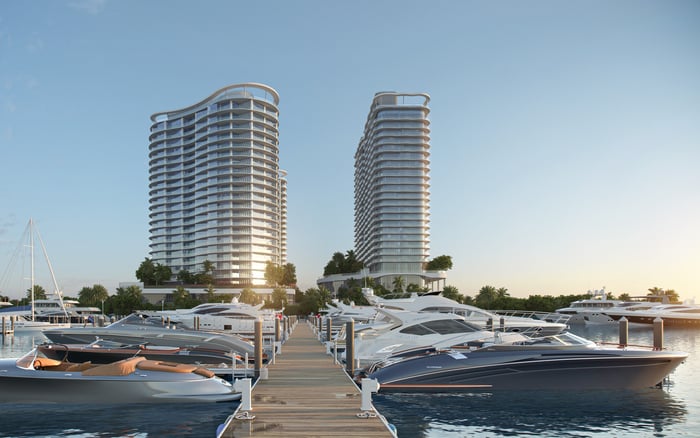
For yacht owners, Fort Lauderdale’s real estate conversation starts at the dock. The most compelling residences are those that treat the marina as an extension of the lobby: protected water, professional service, and a seamless run to the Intracoastal and inlet. This guide outlines what “hundred-foot capable” really means in practice, then spotlights six notable Fort Lauderdale luxury developments and waterfront districts where large-yacht lifestyles are part of the design intent.
Fort Lauderdale is built around boats in a way few U.S. cities can match. The waterways aren’t scenery; they’re infrastructure for daily life-tender rides, dinner reservations, and a quick run offshore. For buyers accustomed to major yachting hubs, the draw is the combination of protected Intracoastal water, a deep marine-service culture, and residential options spanning oceanfront hospitality towers, riverfront enclaves, and marina-oriented districts.
For a yacht in the hundred-foot class, “can dock” is never a simple yes or no. It’s a chain of real-world conditions that all have to align: the run from inlet to berth, bridge constraints, basin geometry, depth, and whether the marina can support true day-to-day operations. On the residential side, it’s also about how naturally the building absorbs the boating routine-valet-to-dock transitions, gear storage, discreet loading, and a concierge team that understands owners and crew.
This editorial is designed for the buyer who wants the residence and the slip to operate as one address.
A hundred-foot yacht is less about length alone and more about the full envelope and operating needs. When evaluating a development, treat the following as non-negotiable discussion points with the marina and the building team.
First, access and constraints. Confirm the approach from the ocean, including bridge clearances and any no-go zones for your air draft. Fort Lauderdale is famously water-connected, but routes are specific: some docks are effectively limited to low-profile vessels, while others can accommodate larger profiles depending on the run-in.
Second, depth and bottom conditions. A marina that feels calm at high tide can become a different proposition at low tide with a deeper draft. Ask about controlling depths, maintenance practices, and whether the basin was designed for larger vessels rather than retrofitted.
Third, turning basin and fairway width. Large yachts need room to rotate and back down without the choreography becoming a spectator sport. The gap between “fits on paper” and “comfortable for crew” is usually maneuvering space.
Fourth, berthing hardware and shore power. Big yachts require proper pilings, robust dock construction, sufficient power capacity, and dependable water connections. If you travel with crew, ask how the marina handles deliveries, fueling arrangements, pump-out logistics, and waste management.
Finally, service culture and privacy. The best experience is nearly invisible: hotel-grade security, staff who manage arrivals and departures without friction, and a layout that reduces dockside congestion.
The addresses below are ranked for buyers seeking a lifestyle that credibly supports the routines of a large-yacht owner. In several cases, the “development” is inseparable from its adjacent marina environment-often the decisive factor for true hundred-foot practicality.
1. St. Regis® Residences Bahia Mar Fort Lauderdale - marina-first living at Bahia Mar
Bahia Mar is a rare Fort Lauderdale setting where the marina is the main event, and the residences are designed to capitalize on it. For a hundred-foot owner, that matters: professional docking infrastructure, a culture oriented around yacht arrivals, and a waterfront environment that reads as international.
For buyers who want a branded residential experience tied to active yachting energy, St. Regis® Residences Bahia Mar Fort Lauderdale is the clearest expression of marina adjacency as lifestyle. The value proposition is stepping from residence life into a purpose-built yachting venue-without needing to “drive to the dock.”
2. Las Olas Isles and the deep-water canal grid - private docks with real boating intent
Las Olas Isles remains a benchmark for buyers who prefer the intimacy of a private dock-and the control that comes with it. For hundred-foot docking, the appeal is a canal network designed around boating access, with many properties and select boutique residential offerings functioning like private marina environments.
The key is selectivity. Not every canal, lot orientation, or dock configuration will suit a large yacht. The strongest opportunities tend to offer straightforward maneuvering, predictable depth, and a clean route to the Intracoastal, with enough privacy that arrivals don’t become a neighborhood event.
3. New River luxury corridor - urban energy, yacht utility
The New River is Fort Lauderdale’s most cinematic waterway, and it has long attracted owners who want an urban lifestyle that still respects boating. A large-yacht owner should evaluate this corridor through an operational lens: river bends, traffic patterns, docking room, and the practicality of provisioning.
What makes the New River compelling is the blend of access to downtown dining, arts, and airports with locations that can be workable for substantial vessels. It isn’t one-size-fits-all, but for the buyer who wants city life without giving up the dock, it remains a serious contender.
4. Beachfront hospitality towers near the Intracoastal run - ocean views with a marina plan
Some Fort Lauderdale buyers prioritize oceanfront living first and a marina strategy second. The best executions make the pairing feel intentional: a resort-caliber building with a realistic plan for where the yacht lives and how you move between the two.
In that context, Four Seasons Hotel & Private Residences Fort Lauderdale suits an owner who values service, discretion, and turnkey living, then aligns docking through a preferred marina relationship rather than an on-site private slip. For certain owners, that division is the point: the residence stays serene while the yacht operates in a professional marina environment.
5. Fort Lauderdale beachfront residential icons - privacy and lock-and-leave ease
For buyers who split time between multiple homes, lock-and-leave buildings can be the most logical pairing with a large yacht. The residence delivers security, staff, and predictable upkeep, while the vessel is handled by a marina team accustomed to complex arrivals.
The Ritz-Carlton Residences® Fort Lauderdale
Fits this profile: a polished, service-forward address that can anchor a Fort Lauderdale season. The key question isn’t whether the building “has a dock,” but how efficiently it supports the yacht lifestyle without turning your home into an operations center.
6. Fort Lauderdale’s luxury inventory beyond the dock - the city-home pairing strategy
Not every buyer wants the residence directly on the water. Many owners prefer a refined in-city address, then select the marina based on vessel needs alone-optimizing for turning basin, depth, crew logistics, and security.
For that approach, Andare Residences Fort Lauderdale represents the kind of luxury base that can perform exceptionally well when paired with the right professional marina. It’s a reminder that “hundred-foot capable” can be achieved with a two-address solution: a residence chosen for lifestyle and a berth chosen for operations.
Approach every option with a disciplined checklist. Start with the yacht’s exact specs-beam, draft, and air draft-then work backwards.
Ask the marina for a realistic pathway analysis: not only whether the boat can reach the slip, but whether it can do so at all tides and under typical traffic conditions. Request confirmation of turning space and any operational limitations during events or peak season.
On the residential side, map daily movement. How do you get from unit to dock, and can you do it discreetly with guests? Where does gear live? How are deliveries handled? If you travel with crew, where do they stage and park, and is there a consistent process for late arrivals?
Also clarify what’s included versus arranged. Many luxury residences can coordinate boating, but the difference between coordination and integration becomes obvious when you’re leaving before dawn or returning after dinner.
A hundred-foot yacht tends to change how a residence is used. Kitchens become provisioning stations; storage becomes more valuable; security becomes more sensitive because schedules are visible on the water. The most successful pairings handle those realities with calm competence.
For some buyers, the ideal is a marina-centric district where the boating scene is part of the social calendar. For others, it’s the opposite: a quiet tower or refined city address where the yacht stays out of sight, professionally handled, and ready when needed. Fort Lauderdale can support both preferences, but the choice should be deliberate.
If you are also considering other South Florida waterfront markets, it can be useful to compare how “marina living” is executed elsewhere. Auberge Beach Residences & Spa Fort Lauderdale, for instance, reflects a hospitality-minded approach within Fort Lauderdale, while communities farther south often prioritize different mixes of private slips, club marinas, and branded service models.
What makes a development truly “hundred-foot capable”? Practical access, depth, maneuvering room, and marina services matter more than marketing language.
Is length overall the only spec that matters for docking? No. Beam, draft, and air draft often determine whether access and safe maneuvering are feasible.
Do I need on-site private slips to own a 100-foot yacht in Fort Lauderdale? Not necessarily; many owners pair a luxury residence with a professional marina nearby.
Are canal-front neighborhoods a safer bet than marinas? They can be, but only if the canal route, turning space, and depth suit your specific vessel.
How should I think about privacy when docking a large yacht? Look for controlled access, discreet arrivals, and a dock layout that avoids public bottlenecks.
What building features matter most for yacht owners? Security, service consistency, storage, and an easy unit-to-car-to-dock routine usually lead.
Can a beachfront tower work well for yacht life? Yes, when the building’s service team and your marina plan create a seamless routine.
What should I ask a marina before signing anything? Confirm depths, turning basin, shore power, access constraints, and how operations work year-round.
Is it better to be closer to the inlet? Often, yes; shorter transit reduces time and complexity, but the best berth still must fit your yacht.
How do I avoid buying a “water-adjacent” home that is not yacht-practical? Validate the entire route and docking reality with your captain before committing.
For a confidential assessment and a building-by-building shortlist, connect with MILLION Luxury.
If branded residences are on your mind — as a home or as an allocation — we would be glad to share what we are seeing, privately.
Begin a quiet conversation