A practical mortgage-interest strategy guide for Singapore-based high-net-worth buyers considering luxury condominium acquisitions in Sunny Isles Beach.
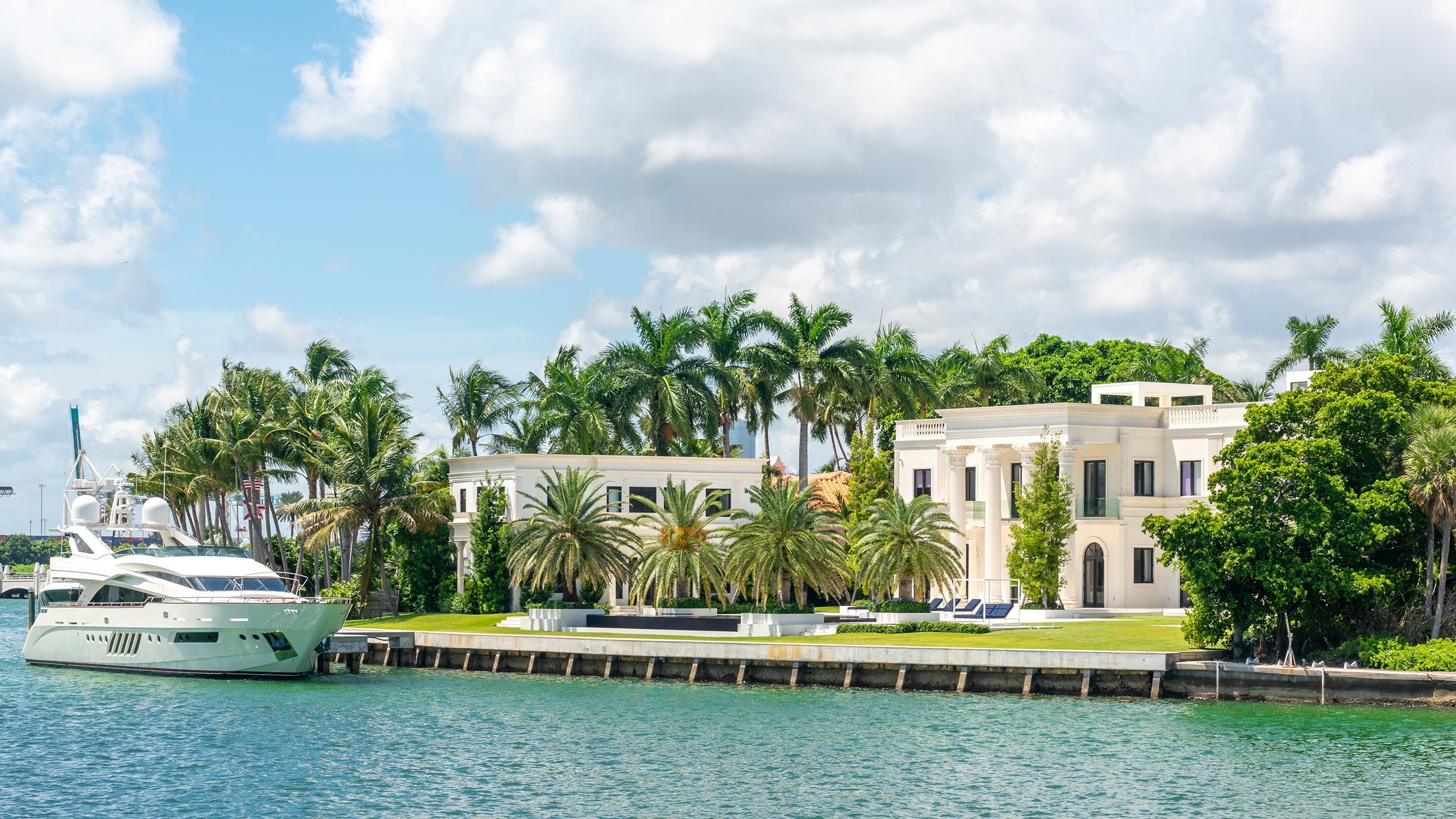
For a Singapore-based buyer, financing a residence in Sunny Isles Beach is less a conventional mortgage decision than a private balance-sheet exercise. The property is in Florida, the loan is typically denominated in U.S. dollars, and the buyer’s income, operating companies, or liquid reserves may remain partly or primarily in Singapore dollars. That mismatch can be manageable when planned and expensive when ignored.
The first principle is to treat the mortgage as a USD liability. If the buyer services the loan from SGD cash flow, the monthly payment is not fixed in practical terms, even when the mortgage rate itself is fixed. Exchange-rate movement can change the real cost of ownership, so interest strategy should sit beside currency strategy, not follow it.
Sunny Isles Beach sharpens the point because luxury condominium purchases often require more customized financing than a routine domestic loan. At the high end, buyers may compare jumbo lending, portfolio lending, private-bank structures, or cash-led acquisitions rather than assuming one standard mortgage path.
Singapore buyers often approach debt with a structured view of affordability, liquidity, and risk. That discipline is useful in Sunny Isles Beach: do not let a trophy residence become a liquidity drain simply because financing is available.
At the high end, the question is rarely whether a buyer can qualify. It is whether borrowing improves the overall capital structure. A buyer comparing St. Regis® Residences Sunny Isles with other Sunny Isles Beach options should model several scenarios: all cash, partial leverage, a larger down payment with a smaller loan, and a portfolio loan tied to broader assets. The winning structure is the one that preserves liquidity without creating avoidable interest, currency, or compliance complexity.
This is where investment logic matters. If funds remain invested in Singapore, the buyer should compare expected portfolio outcomes with the cost of U.S. mortgage interest, while recognizing that tax treatment depends on individual circumstances and qualified advice. No foreign buyer should assume a luxury-property loan produces a specific tax benefit without confirming it in advance.
A fixed-rate mortgage offers payment certainty. That certainty can be valuable for a family using the residence seasonally, or for a buyer who wants predictable carrying costs while managing a cross-border portfolio. The tradeoff is that the initial rate may be higher than some adjustable-rate alternatives.
An adjustable-rate mortgage can begin with a lower rate, but it exposes the borrower to future resets. For a buyer planning a shorter hold, an ARM may be rational if the reset risk is contained within a credible exit or refinance window. For a buyer holding a legacy residence, the same ARM could become a source of stress.
High-net-worth buyers may also consider private-bank or portfolio lending. This can align the property loan with securities, deposits, or broader wealth management relationships. The headline rate, however, is not enough. Compare liquidity requirements, collateral pledges, margin-call risk, prepayment flexibility, and whether the structure remains sensible if markets move against the borrower.
Residences such as Bentley Residences Sunny Isles appeal to buyers who are thinking beyond square footage. The same mindset should apply to debt: the most refined financing is not necessarily the lowest quoted rate, but the one that best fits the buyer’s holding period, currency position, estate planning, and cash management.
U.S. mortgage rates tend to move with broader interest-rate expectations, lender appetite, and borrower-specific factors. For Singapore-based buyers, this means rate timing should be monitored before contract execution, not only after a property is selected. A buyer who waits until the final weeks of closing to discuss financing may lose the ability to choose calmly among fixed, ARM, points, and cash.
Public mortgage-rate averages can be useful for direction, but they are not a precise guide to high-end foreign-national or jumbo pricing. Luxury borrowers can see different quotes based on loan size, down payment, reserves, documentation, property type, and banking relationship. This is especially true in condominium markets, where both the borrower and the building may be reviewed.
The points decision deserves its own model. Discount points are upfront interest paid to reduce the mortgage rate. They can make sense when the buyer expects to hold the loan long enough to reach the break-even point. They are less compelling if the buyer expects to sell, refinance, or repay early.
For buyers comparing Sunny Isles Beach properties, the most useful exercise is a side-by-side schedule: monthly payment, total interest over the expected hold period, upfront points, estimated financing charges, prepayment terms, and a currency sensitivity line showing the impact of a weaker or stronger Singapore dollar.
Florida may feel different from Singapore from a transaction-planning standpoint, but financed purchases still carry costs that can affect the real borrowing decision. A cash buyer and a financed buyer may face different closing profiles, so the mortgage conversation should include more than the quoted coupon.
Buyers should ask their lender and closing advisers to separate recurring ownership costs from one-time financing costs. That distinction matters when comparing a lower rate with upfront points, a larger down payment with a smaller loan, or a private-bank structure that preserves liquidity but carries additional conditions.
Annual carrying costs also require attention. Property taxes, association charges, insurance, maintenance, and reserve expectations can influence whether a loan feels comfortable after closing. A Singapore-based second-home buyer should verify any residency-based assumptions before building them into a long-term budget.
The result is a more nuanced pricing and trends conversation. A residence at The Ritz-Carlton Residences® Sunny Isles is not evaluated only by acquisition price and mortgage coupon. It is evaluated by all-in carrying cost, liquidity retained, tax posture, currency risk, and resale optionality.
Foreign buyers should expect documentation. U.S. lenders generally review identity, income, assets, reserves, and source of funds, and cross-border borrowers may face additional questions around ownership structure and beneficial ownership. Cash buyers should still plan carefully, because a non-financed purchase does not eliminate diligence or reporting considerations.
Exit planning belongs in the same conversation. A foreign seller of U.S. real property may face withholding, tax, and documentation considerations, so ownership structure, loan payoff, and expected sale proceeds should be reviewed before purchase. Mortgage interest strategy is incomplete if it solves only the entry and ignores the exit.
For buyers considering Jade Signature Sunny Isles Beach or comparable high-rise residences, the prudent sequence is clear: establish the ownership structure, test the financing alternatives, review U.S. and Singapore tax implications with qualified advisers, then negotiate rate and terms. At this level, discretion and preparation often matter as much as pricing.
Should a Singapore buyer view a Sunny Isles Beach mortgage as currency exposure? Yes. If income or liquid assets remain primarily in Singapore dollars, a USD mortgage creates SGD/USD exposure even when the interest rate is fixed.
Why do jumbo loans matter in Sunny Isles Beach? High-end condominium purchases often require financing beyond standard consumer assumptions, so buyers may need jumbo, portfolio, private-bank, or cash-led strategies.
Is a fixed-rate mortgage safer than an ARM? A fixed rate gives payment certainty, while an ARM can start lower but may reset later. The better choice depends on hold period, liquidity, and risk tolerance.
When do discount points make sense? Points can work when the upfront cost is recovered through lower monthly payments before the buyer sells, refinances, or repays the loan.
Should a buyer compare cash and financed offers side by side? Yes. The comparison should include liquidity retained, total borrowing cost, currency exposure, closing costs, and flexibility if plans change.
Can foreign buyers assume U.S. mortgage interest will be deductible? No. Tax treatment depends on individual circumstances and applicable rules, so buyers should obtain qualified advice before relying on any benefit.
Does a second-home buyer need to verify residency-based assumptions? Yes. Any assumption tied to residency, exemptions, or long-term carrying costs should be confirmed before it is used in the ownership model.
Will a U.S. lender require identity and source-of-funds documentation? Buyers should expect a compliance review, identity verification, and documentation beyond a simple rate quote, especially in cross-border financing.
Should a cash buyer still plan for documentation? Yes. A cash purchase can simplify financing but does not eliminate diligence, ownership-structure planning, or adviser review.
What is the best way to shortlist comparable options for touring? Start with location fit, delivery status, and daily lifestyle priorities, then compare stacks and elevations to validate views and privacy.
For a tailored shortlist and next-step guidance, connect with MILLION.
If branded residences are on your mind — as a home or as an allocation — we would be glad to share what we are seeing, privately.
Begin a quiet conversation