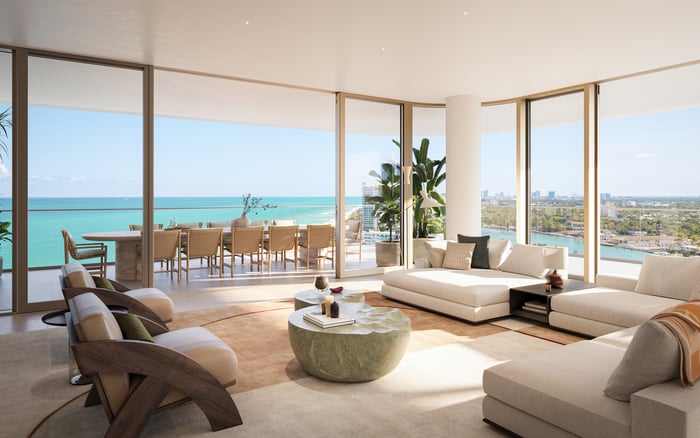
A discreet buyer guide for technology founders and executives relocating to South Florida, focused on condominium governance, board quality, reserves, insurance culture, and long-term operational discipline.

For a Silicon Valley buyer arriving in South Florida, the first instinct is often to compare views, finishes, wellness floors, private elevators, and proximity to the water. Those details matter. Yet the more enduring question is less visible: how well is the building governed?
In the ultra-premium condominium market, governance is the operating system behind the lifestyle. It shapes how capital is preserved, how service standards remain consistent, how conflicts are handled, how privacy is protected, and how decisively a property responds when maintenance, insurance, security, or staffing issues arise. For founders, investors, and executives accustomed to high-performance organizations, the right building should feel similarly disciplined.
Strong governance does not make a residence feel bureaucratic. At its best, it makes ownership quiet. Elevators work, common areas age gracefully, budgets are legible, rules are applied consistently, and the board understands that luxury is not only design. It is continuity.
A South Florida home is often purchased for lifestyle, tax planning, family access, or a change in cadence. In a condominium, however, every owner is also joining a private operating structure. The association, board, management team, and governing documents can affect daily life as much as the floor plan.
Begin by asking how decisions are made. Does the board communicate clearly? Are minutes orderly? Are budgets understandable? Is maintenance proactive rather than reactive? Has the building cultivated a service culture that matches its price point? Buyers coming from Silicon Valley will recognize the difference between a polished interface and strong infrastructure.
The best buildings tend to have a culture of prevention. They plan for capital needs, maintain vendor relationships, document decisions, and avoid allowing deferred maintenance to become a future negotiation. A dramatic lobby may impress for five minutes; a well-run association protects value for years.
Before becoming emotionally committed to a residence, review the association documents with the same seriousness you would bring to a company’s governing documents. The declaration, bylaws, house rules, budget, insurance summaries, reserve information, recent meeting minutes, and any disclosed pending matters should all be part of the conversation.
This is not about looking for perfection. Every building has operational realities. The goal is to understand whether leadership is transparent, whether expenses appear aligned with the building’s ambitions, and whether owners are likely to share a similar view of service, privacy, maintenance, rentals, renovations, and guests.
Rules can be especially important for technology executives who travel frequently or host family, colleagues, or advisors. Guest policies, vendor access, pet rules, amenity reservations, renovation hours, delivery protocols, and leasing restrictions all influence the lived experience. A building with beautiful residences but vague enforcement can feel less private than expected.
Different South Florida settings create different governance questions. Brickell buyers often prioritize access, vertical service, valet efficiency, private entries, and the ability to move between home, office, dining, and airport with minimal friction. In that context, a residence such as The Residences at 1428 Brickell belongs in a conversation that includes not only skyline views, but also how the building intends to manage privacy, staffing, arrivals, and high-frequency owner movement.
On the sand or near the ocean, the questions shift toward exterior maintenance, salt-air exposure, storm protocols, window and façade care, pool and beach operations, and the long-term cost of preserving a coastal asset. A buyer considering Arte Surfside may want a more residential beach setting, but the governance review should still focus on how the property will protect calm, discretion, and architectural integrity over time.
In Edgewater, where bayfront living meets a more urban rhythm, buyers may compare scale, amenities, access, and traffic patterns. Aria Reserve Miami invites a broader question: does the building’s operational model match the buyer’s daily use, whether full-time, seasonal, or occasional?
In Coconut Grove, the conversation often becomes more residential and family-oriented, with attention to greenery, privacy, schools, clubs, marinas, and neighborhood pace. A buyer considering Park Grove Coconut Grove can apply that lens, with governance questions centered on quiet enjoyment, long-term maintenance, and the balance between amenity life and residential restraint.
For buyers considering Boca Raton, governance can become part of a broader search for polish, security, club access, and a more settled cadence. Alina Residences Boca Raton may enter the discussion for those who want an elegant condominium experience outside Miami’s core, where consistency and management culture are central to the appeal.
New construction can offer modern systems, fresh design, and the opportunity to enter early. It can also require a careful review of how governance will transition from developer control to owner control, how budgets are projected, how service levels are funded, and whether the proposed rules align with the buyer’s lifestyle.
Established buildings offer a different advantage: a visible record of ownership culture. You can observe common-area condition, management responsiveness, board communication, staffing continuity, and whether owners have historically supported reinvestment. A mature building with disciplined governance can be exceptionally compelling, even if it is not the newest address in the market.
Neither category is inherently superior. The right answer depends on the buyer’s tolerance for early-stage evolution, desire for immediate certainty, and appetite for reviewing documents before making a commitment. The most sophisticated buyers do not simply ask, “Is it new?” They ask, “Is it well run, and will it remain so?”
Look for signs that the property treats operations as part of the luxury promise. Clear communications, orderly arrivals, attentive security, consistent staffing, clean mechanical areas, well-maintained amenities, and rules enforced without drama all matter.
Financial discipline matters as well. A luxury building should not be afraid of proper funding. Low monthly costs can be attractive at first glance, but they deserve context. If fees are too lean for the level of service and maintenance expected, the shortfall may appear later through special assessments, service gaps, or deferred work.
Privacy is another signal. High-profile buyers should understand how the building manages visitors, vendors, deliveries, photographers, events, and staff access. Discretion is not a slogan. It is a system, and it must be embedded in the culture of the property.
After narrowing the search, compare residences across three layers. First, the private home: exposure, ceiling heights, terrace usability, plan efficiency, acoustics, parking, storage, and finishes. Second, the building experience: lobby sequence, elevators, amenities, service, security, and maintenance. Third, the governance platform: rules, reserves, insurance posture, board culture, management quality, and owner alignment.
For Silicon Valley buyers, this framework feels familiar. A beautiful product still needs sound management. A promising platform still needs aligned stakeholders. A luxury residence still needs a governing structure capable of protecting the experience behind the door.
The best South Florida purchase is rarely the loudest one. It is the home where design, location, operations, and governance reinforce each other so completely that ownership feels effortless.
Why should governance matter as much as views or amenities? Governance determines how the building is maintained, funded, staffed, and protected over time. It directly affects privacy, service quality, and long-term ownership confidence.
What documents should a buyer review before purchasing? Review the declaration, bylaws, rules, budget, insurance information, reserve materials, meeting minutes, and any disclosed pending matters with qualified advisors.
Is new construction safer from a governance perspective? Not automatically. New buildings may have modern systems, but buyers should understand projected budgets, rules, management plans, and the transition to owner governance.
Can an older luxury building be a better choice? Yes, if it has a strong maintenance history, clear financial discipline, consistent service, and an owner culture that supports reinvestment.
What is the biggest red flag in a condominium association? Poor communication, vague records, deferred maintenance, or unclear funding can signal future friction. Luxury ownership depends on transparency and planning.
How do rental rules affect a primary or second home buyer? Rental policies influence privacy, security, neighbor consistency, and the atmosphere of the building. Even buyers who never rent should review them carefully.
What should high-profile buyers ask about privacy? They should ask how the building manages guests, vendors, deliveries, staff access, events, photography, and information flow. Discretion requires procedure.
Does location change the governance questions? Yes. Oceanfront, urban, bayfront, and residential-neighborhood buildings each create different maintenance, access, security, and lifestyle considerations.
How should buyers compare Brickell with quieter residential areas? Brickell may emphasize access and vertical service, while quieter areas may prioritize calm, privacy, and neighborhood rhythm. Governance should match the intended lifestyle.
Who should help evaluate building governance? Buyers should work with experienced real estate, legal, insurance, and financial advisors who understand condominium ownership and luxury building operations.
For a tailored shortlist and next-step guidance, connect with MILLION.
If branded residences are on your mind — as a home or as an allocation — we would be glad to share what we are seeing, privately.
Begin a quiet conversation