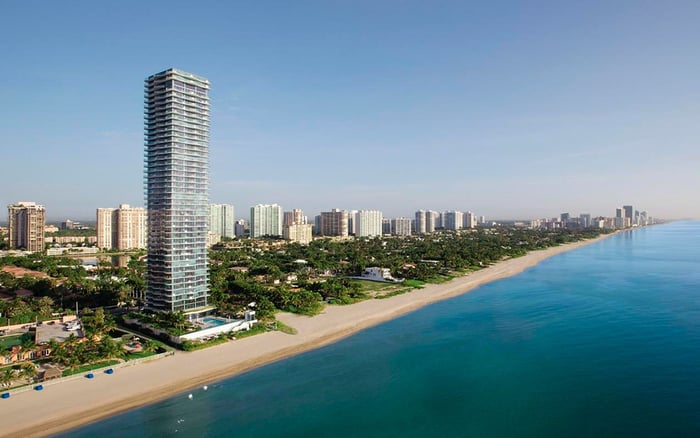
A family-focused guide to the insurance-certificate questions that matter before buying at Shell Bay by Auberge Hallandale, from master policy scope to amenities, lender requirements, renovation planning, household staff, deductibles, and high-value contents coverage.

Shell Bay by Auberge Hallandale requires a more careful insurance conversation than a simple yes-or-no confirmation that coverage exists. For a family buyer, the practical question is whether the insurance structure reflects how the household may live, host, finance, renovate, staff, and protect the residence.
The first review should begin with legal separation. Buyers should ask how the residence, shared amenities, any separately operated facilities, and owner obligations are treated for insurance purposes. If different components are held, operated, or insured separately, a single certificate may tell only part of the risk story.
A certificate can confirm that coverage is represented as current, but it does not always explain who is protected, what is excluded, which deductibles apply, or how a loss might affect an individual owner. That is why families should treat certificates as the starting point for review, not the end of the analysis.
Family buyers should ask for the association’s current certificate of insurance and review it with an insurance advisor, counsel, and the lender if financing is involved. The certificate package should address property coverage, general liability, windstorm, flood, umbrella or excess liability, and directors-and-officers coverage.
Those categories matter because coastal South Florida ownership can involve multiple layers of exposure. Property and windstorm coverage speak to the physical asset. Flood coverage requires separate attention because it may not follow the same logic as other property coverage. General liability and excess liability help frame protection for claims involving common areas. Directors-and-officers coverage is relevant because board-level decisions can become part of an owner’s financial environment.
A certificate should not be treated as a substitute for the policy. It is the natural first document to request because it shows what coverage is represented as current and gives the buyer’s team a starting point for deeper questions.
One of the most important questions is whether the master policy covers only the building shell and common areas or whether it extends to any interior finishes, fixtures, built-ins, or developer-installed upgrades inside residences. This distinction can be central for families purchasing a highly finished home, especially where the perceived value of the residence includes interiors, millwork, stone, smart-home systems, designer lighting, closets, or other upgraded components.
If coverage stops at the shell or common areas, the owner’s own condominium-unit policy becomes more important. If certain interior components are included, the family still needs to know the limits, exclusions, deductibles, and claims process. The point is not to assume that a luxury residence is automatically insured as it is lived in.
A practical review maps the residence item by item, then compares that map against the association policy and private-client coverage. The buyer should know what is insured by the association, what is left to the owner, and what may require scheduled or specialty coverage.
Family buyers should ask whether shared amenities and any separately managed access rights are covered under one coordinated insurance program or under separate policies. This is especially important when the ownership experience includes more than the residence itself.
If certain amenities are insured separately, the family should ask whether residents receive any certificate, named-insured status, additional-insured status, waiver, indemnity, or contractual protection tied to use. A family may use a property differently than an occasional owner: children, guests, household staff, visiting relatives, and friends can all interact with shared areas in ways that should be understood before closing.
The goal is clarity. An access right, amenity privilege, or use arrangement is not the same thing as insurance protection. Buyers should ask how the documents connect and where they do not.
Buyers using financing should confirm whether the building’s master insurance certificate satisfies lender requirements before contract deadlines and closing. This is a practical issue as much as a risk issue. If a lender asks for revised wording, additional evidence, or confirmation of coverage, delays can become expensive.
Families should also ask whether the lender requires separate proof of HO-6 condominium-unit coverage, personal liability coverage, flood coverage, or loss-assessment coverage. These requirements may overlap with the family’s own risk planning, but they should not be treated as identical. A lender’s minimum may protect the loan file, while the family’s insurance program should protect the household’s actual exposure.
This is where a private-client insurance advisor can be useful. The advisor can coordinate the owner policy, umbrella coverage, scheduled valuables, and loss-assessment protection so the purchase does not rely on fragmented assumptions.
Luxury buyers often focus on coverage limits, but deductibles deserve equal attention. Large windstorm, hurricane, or flood deductibles at the association level can translate into special assessments or loss-assessment claims. The family should ask how deductibles are calculated, how they are allocated, and whether changes require owner notice.
Loss-assessment coverage can be overlooked because it feels secondary to the residence itself. In reality, it may become important when a shared building loss creates a financial obligation for owners. A family purchasing in a coastal luxury setting should understand not only what is insured, but also what amount remains the community’s responsibility after a claim.
Many families plan custom interiors after closing. Buyers should ask how renovations affect certificate requirements, contractor insurance, additional-insured endorsements, and post-renovation coverage obligations. A contractor’s certificate should not be accepted casually. It should be reviewed for limits, policy dates, workers’ compensation, general liability, and whether the association or owner must be named in a particular way.
Household staffing adds another layer. Families employing nannies, chefs, drivers, housekeepers, or security staff should ask whether personal workers’ compensation, employment-practices liability, or domestic-staff coverage is needed beyond association policies. The association’s coverage is not designed to replace a family’s private employment-risk planning.
Guest use also matters. Buyers who may lend the residence to guests should ask whether guest occupancy or amenity access changes insurance-certificate obligations. The same applies to high-value contents. Art, jewelry, wine, collectibles, designer furnishings, and couture-level interiors should be addressed through private-client coverage rather than assuming they are protected by the association’s master policy.
Buyers should ask how often insurance certificates are renewed and whether owners receive notice of cancellations, non-renewals, deductible changes, or coverage reductions. A certificate reviewed at contract signing may not tell the same story months later, particularly if the closing timeline is extended.
Before closing, families should ask counsel and an insurance advisor to compare the developer’s disclosures, condominium documents, governing documents, lender requirements, and insurance certificates. The exercise should be practical: identify the insured parties, the property covered, the exclusions, the deductible structure, the renewal process, the lender requirements, and the owner’s separate obligations.
For Shell Bay by Auberge Hallandale, the luxury proposition should be matched by an equally careful insurance review.
What is the first insurance question a family buyer should ask at Shell Bay? Ask how the residence, shared amenities, separately operated facilities, and owner obligations are treated for insurance purposes.
Which certificates should buyers request? Buyers should request current evidence of property, general liability, windstorm, flood, umbrella or excess liability, and directors-and-officers coverage.
Does the master policy automatically cover interiors? Not necessarily. Buyers should confirm whether coverage includes only the building shell and common areas or also finishes, fixtures, built-ins, and upgrades.
Why do custom interiors affect insurance planning? Renovations may trigger contractor insurance requirements, additional-insured endorsements, association approvals, and updated owner coverage after completion.
Are amenities always covered by the condominium policy? Not always. Buyers should ask whether amenity areas or separately managed access rights are insured under the association policy or under separate policies.
What should financed buyers confirm before closing? They should confirm that the master certificate satisfies lender requirements and whether separate HO-6, flood, liability, or loss-assessment coverage is required.
Why are deductibles important for luxury buyers? Large windstorm, hurricane, or flood deductibles can still create special-assessment exposure, even when the association has insurance in place.
Do families with household staff need separate coverage? They should ask about workers’ compensation, employment-practices liability, and domestic-staff coverage beyond the association’s policies.
Are art, jewelry, wine, and designer furnishings protected by the association policy? Buyers should not assume so. High-value contents are typically best addressed through private-client coverage tailored to the household.
What is the best way to shortlist comparable options for touring? Start with location fit, delivery status, and daily lifestyle priorities, then compare stacks and elevations to validate views and privacy.
To compare the best-fit options with clarity, connect with MILLION.
If branded residences are on your mind — as a home or as an allocation — we would be glad to share what we are seeing, privately.
Begin a quiet conversation