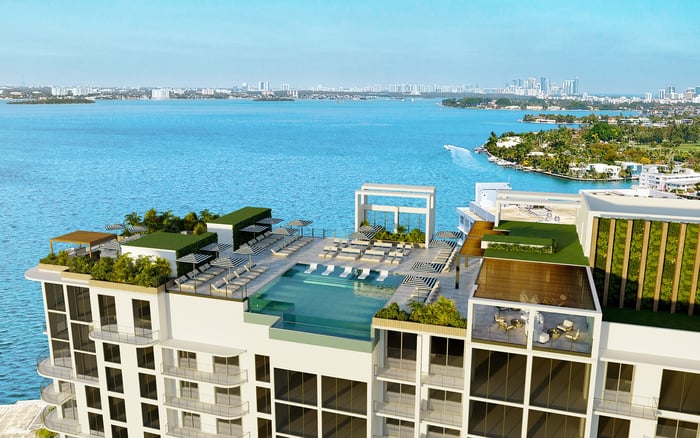
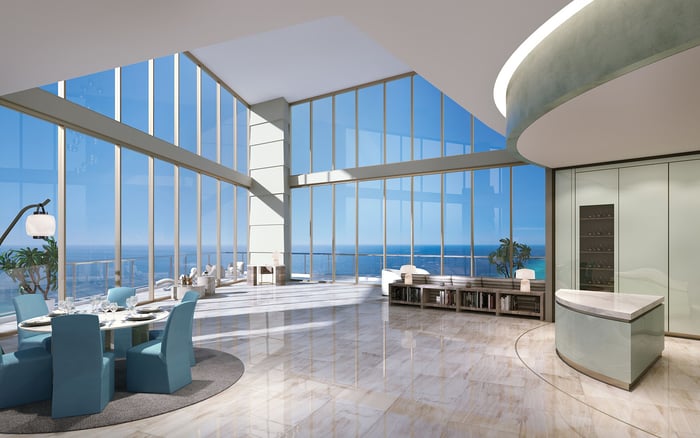
A buyer-focused comparison of Shell Bay by Auberge Hallandale and Armani Casa Residences Pompano Beach, centered on pre-construction confidence, deposit discipline, developer credibility, and the marine-use questions that matter to serious waterfront purchasers.

For a certain South Florida buyer, the distinction between Shell Bay by Auberge Hallandale and Armani Casa Residences Pompano Beach is not simply aesthetic. Both belong in the luxury pre-construction conversation, and both invite a vision of refined coastal living shaped by service, privacy, and proximity to the water. Yet the more consequential question is practical: how much certainty can a purchaser establish before the building is complete?
That question becomes sharper when the buyer owns a boat, expects visiting vessels, or wants the residence to function as part of a broader marine lifestyle. Marina rules, vessel draft, guest-vessel access, insurance standards, association governance, and transferability of use rights can shape the ownership experience as much as floor plan, ceiling height, or kitchen specification.
This is where Shell Bay by Auberge Hallandale and Armani Casa Residences Pompano Beach should be compared with restraint. The glossy layer matters, but the durable layer is documentary. A sophisticated purchaser should treat every promise as provisional until the purchase agreement, marina documentation, association language, and construction disclosures align.
Pre-construction buying rewards patience and penalizes assumption. Renderings, model residences, and sales presentations can express intent, but they are not a substitute for the operative documents. The buyer who wants confidence should ask which features are binding, which are subject to change, and which are described only as aspirational.
In this context, pre-construction confidence has three parts. First, the buyer should understand the development team’s completion history and whether prior projects reflect consistent delivery discipline. Second, the buyer should examine the contract for outside dates, remedy provisions, change rights, and assignment restrictions. Third, the buyer should reconcile all lifestyle expectations with enforceable language, especially where marina use or waterfront access is part of the appeal.
A buyer comparing Hallandale and Pompano Beach should also remember that a branded environment can add real value, but branding alone does not resolve legal or operational questions. Service culture, design language, and hospitality cues should be evaluated alongside governance structure, maintenance obligations, and long-term control.
Deposit structure is not merely a schedule of payments. It is the buyer’s capital exposure before delivery. In a premium pre-construction purchase, the timing of deposits, the conditions for return, and the events that allow either party to terminate deserve close attention.
A disciplined buyer should identify each deposit milestone and ask what must occur before the next payment is due. Is the payment tied to contract execution, construction progress, permitting progress, or a calendar date? Are funds held in escrow, and under what conditions may they be released? What happens if the buyer’s circumstances change, the project changes, or the expected completion window extends?
For waterfront-oriented buyers, the deposit analysis should include the marine component. If a buyer’s willingness to proceed depends on a particular type of boat access, slip eligibility, draft capacity, or guest-vessel accommodation, that expectation should be addressed before deposit exposure increases. A residence may be extraordinary and still fail the buyer’s intended use case if the marine rules are narrower than expected.
The word marina can sound simple, but in luxury residential ownership it often contains layers. A buyer should ask whether vessel access is appurtenant to the residence, separately licensed, leased, assigned by association policy, subject to a waitlist, or limited by size, draft, beam, insurance, or operational hours. Even where water access appears visually compelling, the actual use rights may depend on documents that are not obvious in a sales gallery.
Draft is especially important because it is not just a matter of preference. It is a physical and operational constraint. A buyer should confirm whether the relevant approach, basin, slip, and tidal conditions are compatible with the intended vessel. If the buyer expects to host friends arriving by boat, guest-vessel policies should be reviewed with the same seriousness as parking, valet, and private elevator access.
Guest access can be deceptively sensitive. The documents may distinguish between owner vessels, transient vessels, charter activity, service vessels, and guests who arrive by water. A residence meant to entertain at a high level should have clear rules for how visitors arrive, where they may dock, how long they may remain, and who controls approvals.
Developer track record should be evaluated in practical terms. The strongest question is not whether a development is compelling, but whether the team has shown an ability to execute complex residential environments with discipline. Waterfront or marina-adjacent developments involve additional coordination, because the buyer is not purchasing only interior space. The experience may depend on infrastructure, operations, association governance, and long-term maintenance.
For Shell Bay by Auberge Hallandale, the buyer should examine how the promised residential experience is translated into enforceable obligations. For Armani Casa Residences Pompano Beach, the same standard applies. In both cases, the brand narrative may be elegant, but the buyer’s confidence should come from the legal architecture of the transaction and the documented credibility of the parties responsible for delivery.
A serious purchaser should also request clarity on change rights. Pre-construction contracts often allow substitutions or modifications. The key is whether those rights are broad, narrow, material, or subject to objective standards. If the buyer is making a decision based on a particular amenity mix, marine-use expectation, or service model, counsel should evaluate how protected those assumptions truly are.
Hallandale and Pompano Beach occupy different positions within the South Florida luxury map, and the choice may depend on how the buyer lives between Miami, Fort Lauderdale, airports, private clubs, and the Intracoastal corridor. The correct answer is personal, not universal.
A Hallandale buyer may be focused on proximity to the broader Miami and Broward luxury circuit, with interest in privacy, club culture, and access to regional dining and entertainment. A Pompano Beach buyer may be drawn to a coastal setting with its own evolving luxury identity and a slightly different relationship to the northern Broward waterfront.
The marine question should remain central. The best location is the one that fits the buyer’s vessel, cruising habits, guest patterns, and service expectations. A beautiful residence that complicates boat use may be less valuable to a yacht-minded buyer than a slightly different address with clearer operational alignment.
The most useful comparison is a document-driven matrix. Start with the residence: price structure, floor plan, finish expectations, terrace utility, parking, storage, service access, and building governance. Then move to the development: construction timeline, deposit schedule, outside date, default remedies, assignment rights, and change provisions.
Next, isolate the marine issues. Ask whether the purchase includes, excludes, or conditionally allows any vessel-related rights. Confirm draft, slip dimensions, access route, guest policy, fuel or service limitations, dockmaster authority, insurance requirements, and whether commercial or charter activity is restricted. Do not assume that a waterfront lifestyle automatically includes unrestricted water access.
Finally, compare the soft factors. Which environment feels more aligned with the buyer’s family, travel rhythm, entertaining style, and appetite for pre-completion risk? Shell Bay by Auberge Hallandale and Armani Casa Residences Pompano Beach may both appeal to affluent buyers, but the better choice is the one whose documents support the life the buyer actually intends to live.
Is brand reputation enough to justify a pre-construction purchase? No. Brand reputation may support confidence, but the purchase agreement and project documents determine the buyer’s enforceable rights.
Should marina access be reviewed before signing a contract? Yes. Marina use, slip eligibility, draft, guest access, and operating rules should be reviewed before meaningful deposit exposure.
What is the most important deposit question? Buyers should understand when each deposit is due, where funds are held, and what events allow a refund or termination.
Can a buyer assume guest vessels will be allowed? No. Guest-vessel access should be confirmed in the applicable rules, including time limits, approvals, and docking procedures.
Why does draft matter in a luxury residential purchase? Draft determines whether a vessel can safely use the relevant waterway, approach, basin, or slip under real operating conditions.
How should developer track record be evaluated? Focus on completion discipline, complexity of prior work, documented obligations, and the team’s ability to deliver what is promised.
Are change rights common in pre-construction contracts? Yes. Buyers should review how broad those rights are and whether substitutions or design changes could affect their intended use.
Is Hallandale better than Pompano Beach for boat owners? It depends on the buyer’s vessel, cruising habits, service needs, and desired relationship to Miami and Broward destinations.
Should a marine surveyor or captain be involved? For serious boat owners, input from a qualified marine professional can help test draft, access, and operational assumptions.
What should buyers do before increasing deposit exposure? They should align contract terms, marine-use expectations, and counsel review before the next payment milestone arrives.
For a confidential assessment and a building-by-building shortlist, connect with MILLION.
If branded residences are on your mind — as a home or as an allocation — we would be glad to share what we are seeing, privately.
Begin a quiet conversation