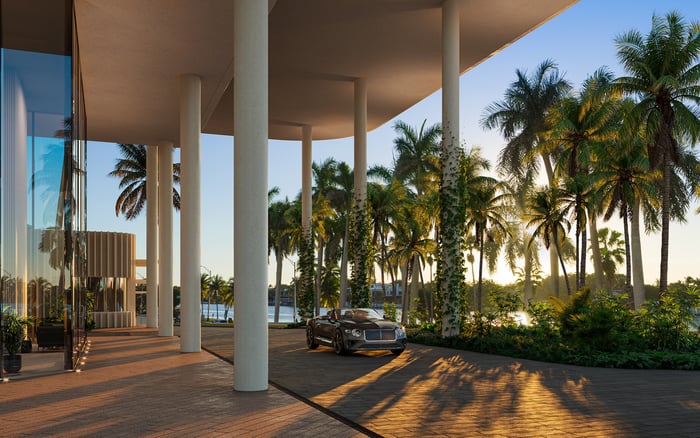
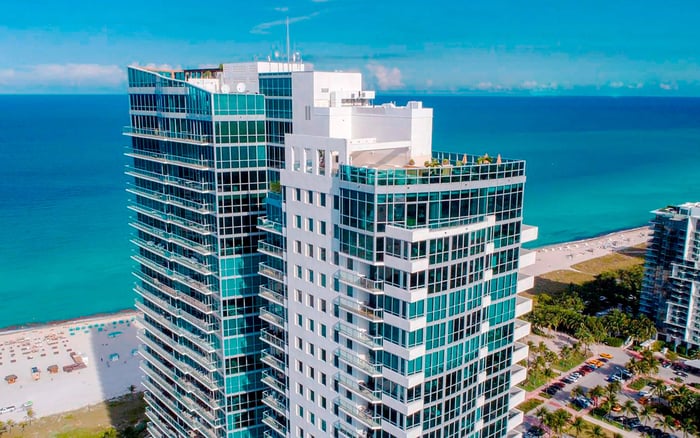
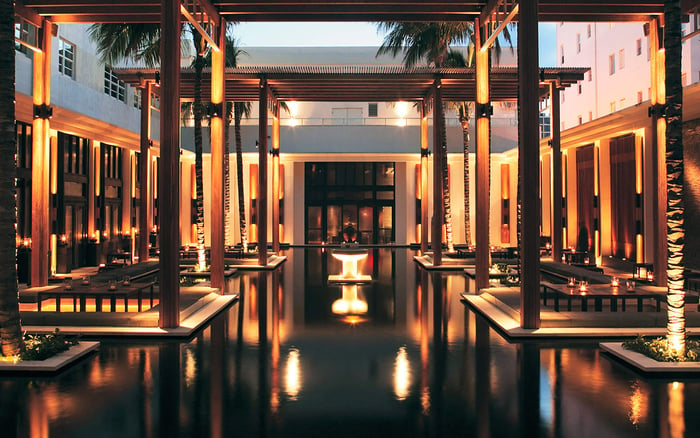
A buyer-focused comparison of Setai Residences Miami Beach and Muse Residences Sunny Isles Beach, weighing beach access, wind exposure, and peak-season crowding through the lens of neighborhood rhythm versus high-rise drama.
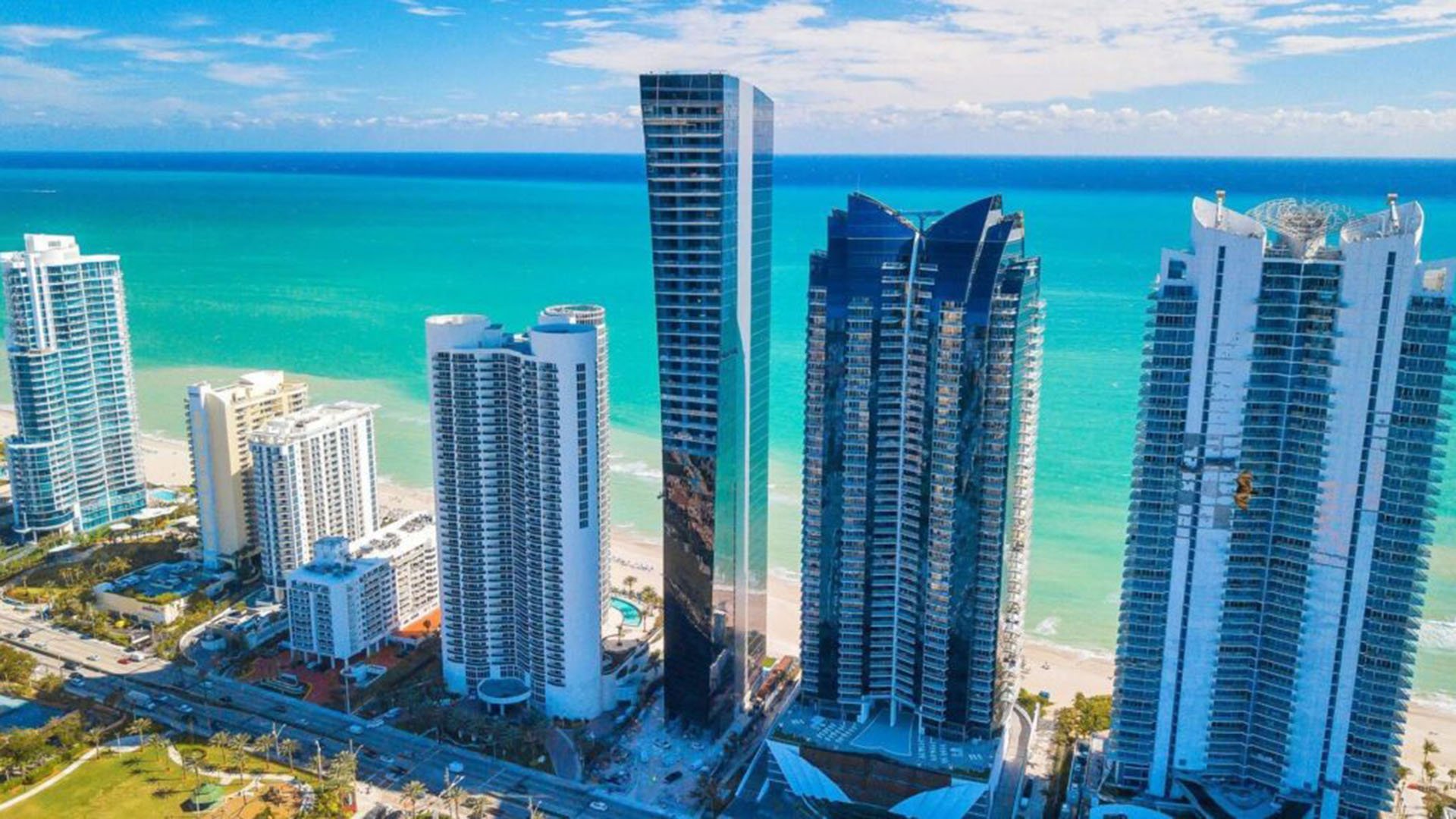
For a buyer comparing Setai Residences Miami Beach with Muse Residences Sunny Isles Beach, the question is not simply which building is more luxurious. Both belong in the ultra-luxury, direct oceanfront conversation. The sharper question is how each property feels once daily life begins: the walk to the sand, the breeze on the terrace, the texture of the surrounding streets, and the energy of peak season.
Setai Residences Miami Beach is the more natural match for a buyer who wants oceanfront living within an established South Beach setting. Its appeal rests on proximity to a more walkable, human-scale Miami Beach rhythm, where luxury is integrated into a broader neighborhood experience rather than expressed primarily through height.
Muse Residences Sunny Isles Beach, by contrast, is the more vertical proposition. It speaks to buyers who want a high-rise residential atmosphere, broad views, and the architectural drama associated with the Sunny Isles oceanfront skyline. For some buyers, that is precisely the point. For the buyer described here, however, the decision leans toward Setai.
Beach access is often reduced to a binary question: direct or not direct. In this comparison, both properties are framed around direct oceanfront living, so the more useful question is experiential. How does it feel to move from residence to beach? What kind of public life surrounds that transition? Does the beachfront feel like part of a neighborhood, a resort corridor, or a tower district?
At Setai Residences Miami Beach, the beach experience is inseparable from South Beach. That means a broader public beachfront culture, visible street activity, and a setting where the ocean is one part of a larger daily pattern. The appeal is not isolation. It is the ability to live on the sand while remaining connected to a neighborhood with a more established pedestrian identity.
At Muse Residences Sunny Isles Beach, the beach experience is more residential-tower-oriented. The surrounding context is shaped by neighboring luxury high-rises and a skyline-forward coastal identity rather than historic low-rise texture. This can feel more private and more view-driven, but also more vertical in its day-to-day atmosphere.
Oceanfront buyers should therefore ask less about distance and more about mood. Setai is better suited to those who want the beach to open into a layered neighborhood. Muse better suits those who want the beach framed by tower living, height, and a stronger sense of residential enclosure.
There is no standardized public wind ranking here that would allow a credible numerical comparison between Setai and Muse. For a serious buyer, that distinction matters. Wind should be evaluated through lived experience, not unsupported claims.
The practical questions are simple. How usable are the balconies on breezy afternoons? How comfortable do the pool deck and beachfront seating areas feel during seasonal changes? Does the building’s height and surrounding tower context create moments of downdraft at entry points, terraces, or outdoor amenity areas?
Setai’s South Beach setting may feel less dominated by a continuous wall of towers, which matters for buyers sensitive to the psychological effect of vertical enclosure. Muse, by nature of its Sunny Isles identity, places the buyer in a more high-rise coastal environment, where balcony life, elevation, and exposure become central parts of ownership.
This does not mean one is categorically calmer than the other. It means the buyer should test the spaces at the times they expect to use them. A morning coffee balcony, late-afternoon pool routine, and evening walk to the sand can reveal more than any generalized statement about coastal wind.
Peak-season crowding is not one single phenomenon. It changes by neighborhood, beach culture, building context, and visitor pattern. Setai’s South Beach environment is more destination-driven. During high-demand periods, buyers should expect more visible public energy, more street activity, and a beachfront culture that attracts residents, hotel guests, visitors, and locals.
That energy can be a virtue. For many Miami Beach buyers, the movement is part of the attraction. It gives daily life a sense of animation and makes the neighborhood feel less hermetic than a pure tower district. For others, especially those seeking quiet above all else, it can feel more exposed during peak weeks.
Muse’s Sunny Isles setting is more residential and second-home oriented in character. The crowd pattern is likely to feel different: less tied to South Beach’s destination identity and more shaped by the rhythms of luxury towers along the oceanfront. It may feel more private in tone, but it is still a prime beachfront location, not a secluded coastal village.
For search shorthand, Miami Beach and Sunny Isles may look like adjacent coastal choices, yet the lived experience is distinct. One is neighborhood-integrated and culturally visible. The other is more tower-composed, residential, and skyline-oriented.
Setai Residences Miami Beach is the stronger editorial recommendation for the buyer who wants oceanfront luxury but does not want skyline drama to dominate the daily experience. It offers a more contextually compatible setting for someone drawn to low-rise neighborhood rhythm, walkability, and the layered public life of South Beach.
This buyer likely values the transition from residence to beach, but also what happens before and after the beach: the walk, the street texture, the sense of place, and the ability to feel part of a mature Miami Beach environment. Setai’s advantage is not that it escapes activity. It is that the activity belongs to a broader neighborhood fabric.
Muse Residences Sunny Isles Beach remains compelling for the buyer who wants height, view orientation, and a more private high-rise atmosphere. Its appeal is strongest for those who prefer a tower-forward coastal lifestyle and see Sunny Isles verticality as an advantage rather than a compromise.
For view-driven buyers, Muse may be the more emotionally persuasive choice. It better matches an owner who wants expansive outlooks, architectural presence, and a residential experience defined by elevation. If the priority is drama, privacy, and skyline identity, Muse is a natural fit.
For the specific buyer who prefers low-rise neighborhood rhythm over skyline drama, Setai is the better-aligned choice. It delivers oceanfront luxury while preserving a stronger connection to South Beach’s walkable, human-scale context.
Muse is not the lesser property. It is simply the more vertical answer. The right decision depends on whether the buyer wants to live with the city at eye level or above it, with the ocean framed by neighborhood life or by tower architecture.
Which property better fits a buyer who wants low-rise neighborhood rhythm? Setai Residences Miami Beach is the better fit because its setting feels more integrated with South Beach neighborhood life.
Is Muse Residences Sunny Isles Beach better for skyline views? Yes. Muse is the more natural choice for buyers prioritizing height, views, and a tower-forward coastal identity.
Do both properties offer direct oceanfront living? Both are framed as ultra-luxury direct oceanfront residences, making beach access central to the comparison.
Is Setai’s beach always less crowded than Muse’s beach? No. Crowding should be understood qualitatively, with Setai tied to South Beach destination energy and Muse tied to residential tower patterns.
Does the research support a measured wind ranking? No. Wind exposure should be assessed through balcony, pool deck, beachfront, and entry experience rather than unsupported figures.
Who should prefer the South Beach setting? Buyers who want walkability, public beachfront culture, and a more established neighborhood feel should give Setai serious weight.
Who should prefer the Sunny Isles setting? Buyers who want privacy, verticality, expansive views, and a high-rise residential atmosphere may find Muse more compelling.
Is peak-season activity necessarily a drawback? Not necessarily. Some buyers value South Beach energy, while others may prefer the more residential tone associated with Sunny Isles.
What should buyers test during a private showing? They should test the balcony, pool deck, beach transition, lobby arrival, and surrounding street feel at the times they expect to use them.
What is the simplest buyer-facing conclusion? Choose Setai for neighborhood rhythm and South Beach context; choose Muse for tower privacy, views, and skyline presence.
For a tailored shortlist and next-step guidance, connect with MILLION.
If branded residences are on your mind — as a home or as an allocation — we would be glad to share what we are seeing, privately.
Begin a quiet conversation