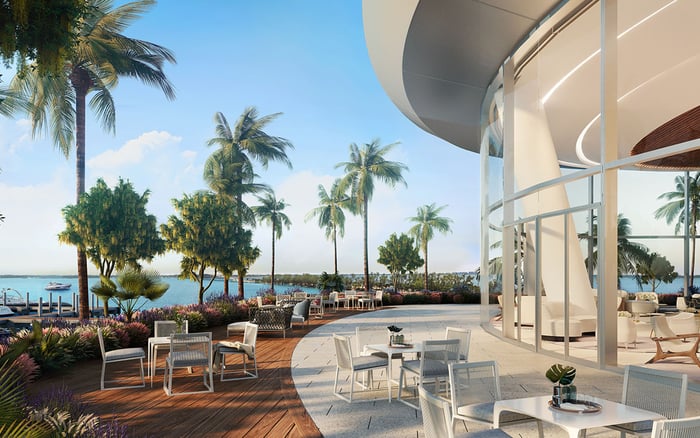
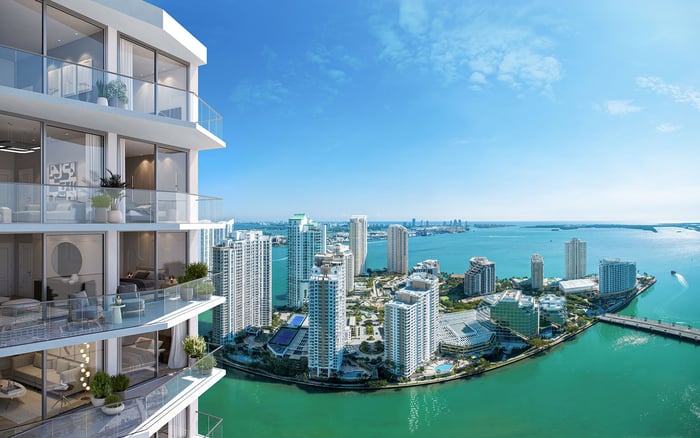
For Biscayne Bay buyers, the ideal floor is rarely the highest available. In most Miami waterfront settings, floors 8 through 15 offer the strongest balance of long-term view protection, reduced flood and salt exposure, quieter daily living, and durable resale appeal. The best answer, however, still depends on orientation, podium height, adjacent redevelopment potential, and the construction quality of the tower itself.
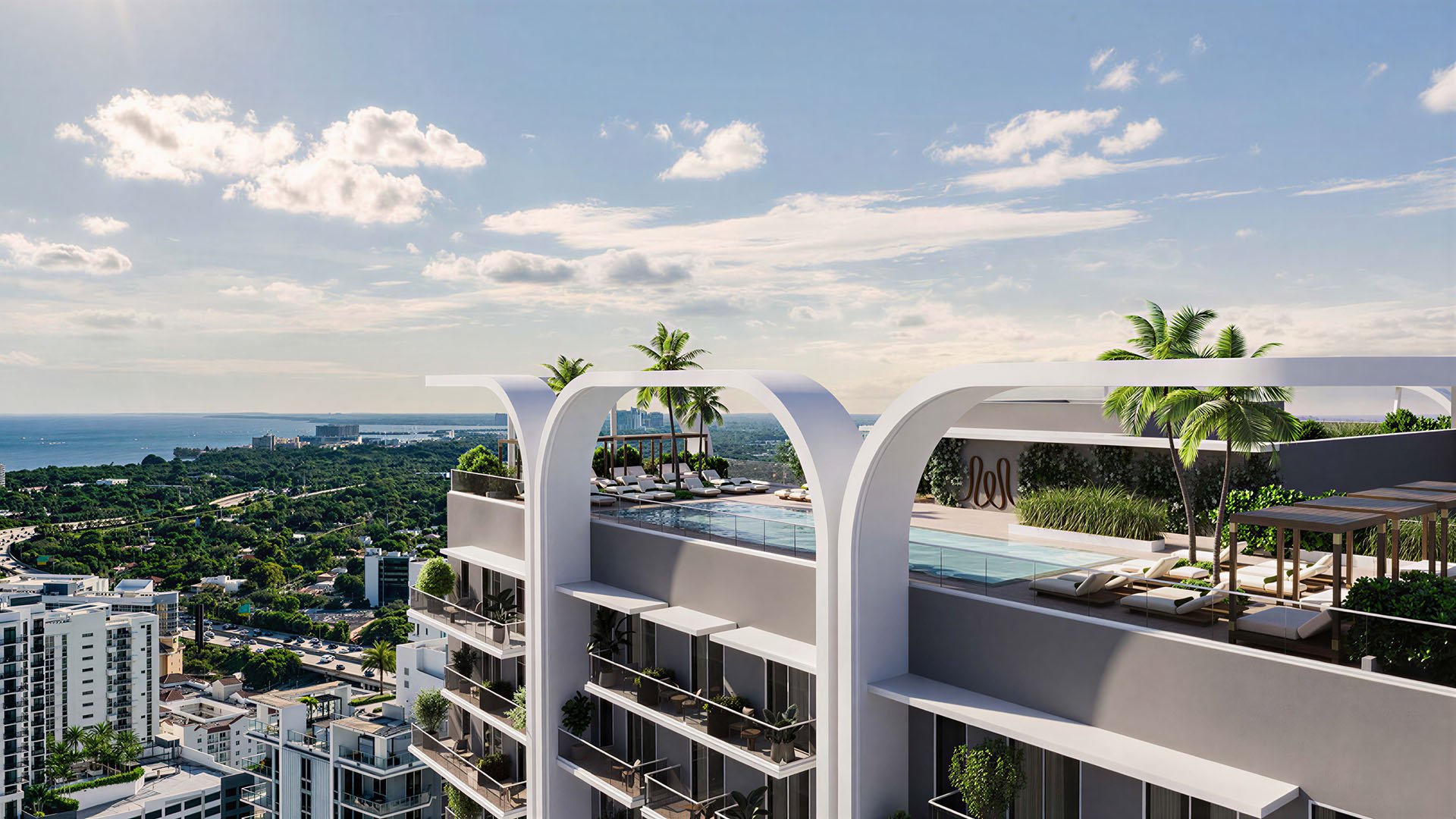
For a waterfront buyer in Miami, view quality is never just about what appears in the sales gallery. The more important question is what will still be visible years from now. On Biscayne Bay, that answer is shaped by flood exposure, neighboring development rights, building design, orientation, and the practical wear coastal conditions place on a residence.
The instinct to buy the highest available floor is understandable, especially in a market where panoramic water views command a meaningful premium. Yet the highest residence is not automatically the smartest choice. Very low floors can sit too close to the salt-spray zone, future redevelopment, service activity, and flood-related carrying costs. Very high floors can deliver extraordinary drama, but they also face greater wind pressure and often higher long-term envelope and maintenance demands.
For many discerning buyers, the sweet spot is more measured: high enough to preserve Biscayne Bay sightlines, but not so high that exposure and operational considerations become unnecessarily intense. In many cases, that points to floors 8 through 15.
Across waterfront residential stock, floors 8 through 15 often offer the best balance between view retention and everyday livability. This range is usually high enough to clear podiums, landscaping, marina infrastructure, and the lower rooflines most likely to interrupt current views. It is also often elevated enough to reduce exposure to the lowest flood-related and salt-air stress points that affect residences closer to grade.
That does not make the range universal. A low-rise bayfront building with an unusually tall podium may push the ideal higher. A slender tower beside protected open space may preserve lower-floor views better than expected. Still, as a working rule for Biscayne Bay buyers, mid-upper floors are often the most defensible place to begin.
In projects where water orientation is central to the residential experience, such as Una Residences Brickell or Aria Reserve Miami, the discussion is rarely just about elevation. It is about how a unit’s floor interacts with the bay, neighboring parcels, and the architecture’s ability to frame those views over time.
Lower waterfront floors can be visually appealing when they feel intimate with the water, but they are usually the most vulnerable from a long-term protection standpoint. The first challenge is simple redevelopment risk. In dense bayfront corridors, nearby parcels evolve. A current view between two buildings can narrow quickly once an adjacent site is improved within its allowable zoning envelope.
The second issue is environmental exposure. Lower levels are more vulnerable to moisture, water intrusion pressure, and the corrosive effects of salt-laden air. Balconies, railings, glazing systems, and exterior finishes typically endure more punishment closer to the waterline and spray zone. That can shape maintenance expectations over time, especially in buildings where the envelope is not exceptionally robust.
There is also the matter of daily experience. In many multifamily towers, lower stories are closer to parking structures, service circulation, loading activity, and street noise. Even when the view remains pleasing, the residence can feel less insulated and less serene than a comparable home a few levels higher.
For buyers studying bayfront opportunities in places like Villa Miami, these distinctions matter as much as the glamour of the rendering. A protected view should also feel composed, quiet, and durable.
At the other extreme, penthouses and very high floors offer undeniable advantages: broader horizon lines, greater privacy, and a more cinematic relationship with Biscayne Bay. In certain trophy buildings, that is precisely the point. But the highest floors also experience stronger wind exposure, placing greater demands on glazing, seals, and the overall building envelope.
For some owners, that is a perfectly acceptable trade. For others, especially those seeking a second-home profile with straightforward ownership, the better value lies just below the crown. A residence high enough for commanding water views, yet not at the most exposed elevations, can be a more elegant long-term hold.
This is one reason mid-upper floors often trade so well. They tend to satisfy both the emotional and practical sides of the purchase. They feel elevated and private, but not excessively exposed.
A buyer deciding between the 10th floor with southeast exposure and the 14th floor facing inland should not assume the higher residence is superior. On Biscayne Bay, east and southeast-facing lines are often the most defensible because they orient toward open water rather than future streetwall development.
That principle is especially relevant in Brickell, Edgewater, and North Bay Village, where neighboring parcels can continue to mature. A slightly lower residence with a cleaner bay-facing line can prove more resilient than a nominally higher one with a more vulnerable angle.
In refined bayfront developments such as The Residences at Mandarin Oriental, Miami or Pagani North Bay Village, buyers should weigh the unit line with as much seriousness as the floor number. The most enduring views are usually a combination of height and direction, not height alone.
Before deciding that a specific floor is ideal, there are four variables worth examining closely.
First, study the podium. If amenities, parking, and lobby volumes lift the residential floors well above grade, the effective elevation of a fifth or sixth floor may already feel far more protected than the number suggests.
Second, review the neighboring sites. The durability of a Biscayne Bay view depends in part on what adjacent parcels can become. A floor that seems perfectly secure today may be more vulnerable if nearby zoning allows substantial future height.
Third, understand flood posture. While Biscayne Bay is more sheltered than the open Atlantic, storm surge remains a material concern for low-elevation waterfront property. Lower floors also tend to feel the carrying-cost consequences of flood exposure more acutely than units positioned higher in the building.
Fourth, ask about envelope quality. Better glazing, stronger seals, and resilient coastal materials become particularly important as wind pressure rises with height and salt exposure remains a constant factor.
For most buyers seeking strong Biscayne Bay view protection, the most sensible order of preference is straightforward. Start with an east or southeast-facing line. Then look first at floors 8 through 15. If the building has an unusually tall podium or nearby redevelopment risk, move slightly higher. If the site has unusually open surroundings and strong setback protection, a somewhat lower floor may still work beautifully.
This framework also helps explain why high-floor and low-floor labels deserve a more nuanced reading. High floors are not automatically best, and low floors are not automatically compromised. The objective is to find the level where view permanence, resilience, privacy, and comfort align.
In Brickell and Edgewater, where waterview homes compete partly on sightline durability, that balance often defines resale strength as much as interior finishes. The best bayfront purchase is rarely the one with the most dramatic brochure language. It is the one whose outlook remains elegant after the skyline changes.
What is the ideal floor for protecting a Biscayne Bay view? In many Miami waterfront buildings, floors 8 through 15 offer a strong balance of view security, comfort, and resilience.
Why are very low floors less desirable on the bay? They are generally more exposed to salt spray, moisture stress, noise, and future obstruction from nearby redevelopment.
Are penthouses always the best choice for bay views? Not necessarily. They maximize panorama, but they also take on the greatest wind exposure and often higher maintenance expectations.
Does orientation matter as much as floor level? Yes. East and southeast-facing residences often protect Biscayne Bay views better than higher units facing inland corridors.
Can a lower floor still be a smart purchase? Yes, especially if the building has a tall podium, open neighboring setbacks, and a strong direct bay-facing line.
Why do mid-floor units often feel more livable? They commonly avoid more of the noise and activity associated with parking, service, and street-level circulation.
How does flood risk affect floor choice? Lower levels are generally more exposed to flood-related vulnerability and carrying-cost pressure tied to elevation.
Will future development affect my view? It can. In dense waterfront districts, neighboring zoning and allowable building heights can materially change long-term sightlines.
Is Biscayne Bay safer than the ocean for low floors? The bay is more sheltered than the open Atlantic, but low-elevation waterfront property still carries meaningful storm-surge risk.
What should I prioritize after floor and orientation? Review the podium height, adjacent parcels, building envelope quality, and whether the residence truly delivers durable waterview positioning.
For a confidential assessment and a building-by-building shortlist, connect with MILLION Luxury.
If branded residences are on your mind — as a home or as an allocation — we would be glad to share what we are seeing, privately.
Begin a quiet conversation