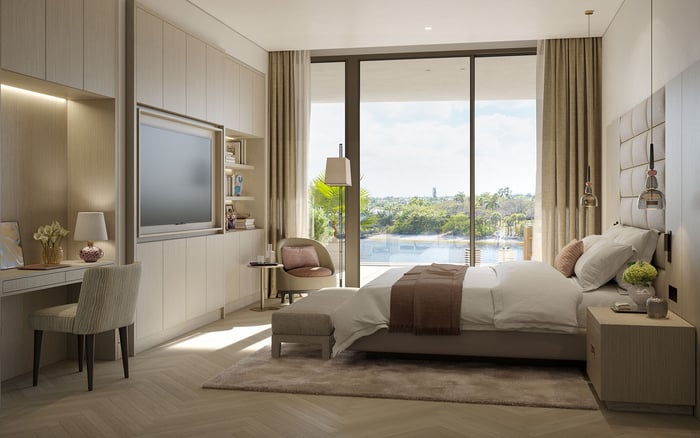
A buyer-focused look at theater-room ventilation ownership at Rosewood Residences Hillsboro Beach, where ducts, fans, dampers, unit boundaries, and association control can shape long-term comfort and cost.
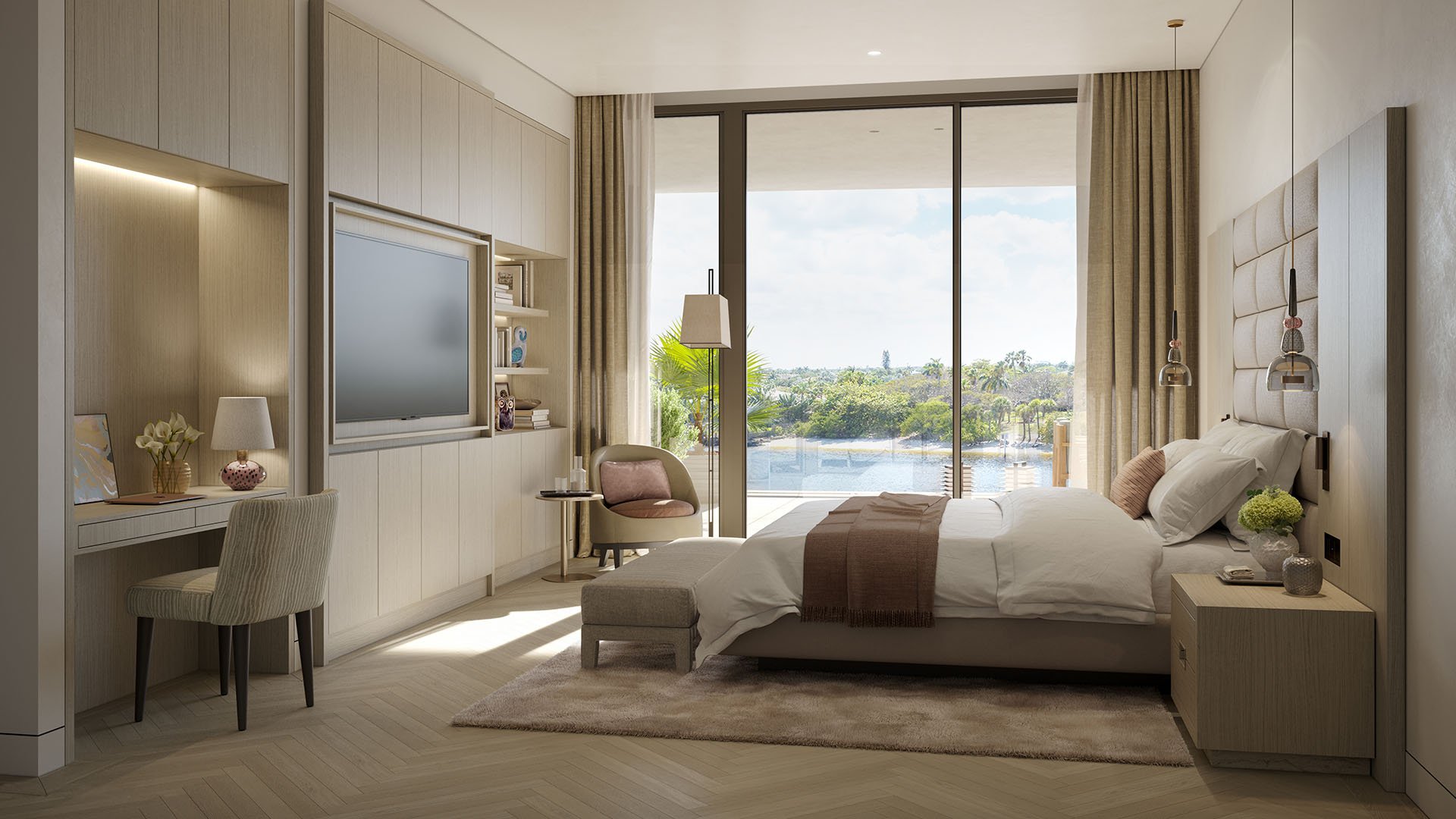
At Rosewood Residences Hillsboro Beach, the most important question behind a private in-unit theater is not simply whether the room is ventilated. In a luxury oceanfront condominium, the more consequential issue is who owns, controls, maintains, repairs, and may modify the ventilation system serving that room.
That distinction can seem technical until it becomes practical. A theater room is often sealed, acoustically treated, equipment-heavy, and used for extended periods with the doors closed. Ventilation affects comfort, acoustics, humidity control, odor management, equipment heat, and the overall perception of quality. If the room feels stale, noisy, humid, or overheated, the problem may not be visible in the finishes. It may sit behind them, in ducts, fans, dampers, silencers, condensate elements, or access panels.
Rosewood Residences Hillsboro Beach sits within the South Florida luxury condominium market, where ownership documents and building systems can shape the day-to-day experience as much as finishes and views. The same condominium fundamentals still govern the ownership experience: what belongs to the owner, what belongs to the association, and what is reserved to one residence as a limited common element.
In a high-end residence, mechanical performance is part of the architecture of ease. A theater room may include specialty seating, acoustic wall treatments, projection or display systems, concealed speakers, and equipment that generates heat. The room may also be intentionally isolated from surrounding living areas, making air movement more complicated than it would be in an open family room.
If ventilation is too loud, it can undermine the acoustic experience. If it is undersized, the room can become warm or stale. If humidity is poorly managed, finishes and electronics may be affected. If odors linger, the space can feel less refined than the rest of the home. These are not merely engineering concerns. They are daily-use concerns for owners who expect a residence to perform with the same polish it presents visually.
For buyers comparing oceanfront living across Broward, this is the kind of detail that separates a beautiful plan from a complete ownership experience. The question is not whether a theater is desirable. It is whether the invisible systems behind the theater have been clearly allocated, documented, and made serviceable.
The answer usually begins with the condominium documents and the mechanical design. A component located fully inside the unit and serving only that residence may give the owner more control. That same arrangement can also create more direct responsibility for maintenance, repair, and replacement.
A different conclusion may apply if the theater ventilation connects to shared risers, common fans, central exhaust, common mechanical rooms, or other infrastructure outside the unit boundary. In that case, the association may control key components even when the theater itself serves only one residence. The owner may receive the benefit without having unilateral authority over every part of the system.
A third category can be more nuanced: limited common elements. These are components or spaces that may be assigned to a particular residence while still falling outside pure unit ownership. If a fan, damper, access space, or duct section is treated this way, the documents should explain who maintains it, who pays for repairs, and who may authorize modifications.
This is why buyers should resist relying on assumptions. A ceiling grille inside the theater does not necessarily mean the entire ventilation path belongs to the owner. Conversely, the presence of common infrastructure does not automatically resolve every maintenance question. The controlling documents and drawings matter.
The essential materials are straightforward, even when the reading is technical. Buyers should review the recorded condominium declaration, unit boundary definitions, limited-common-element schedules, mechanical plans, and association maintenance provisions. Together, these materials should show where the residence ends, where common property begins, and how responsibility is assigned.
The mechanical plans are especially important because ventilation does not always follow the same logic as the floor plan. A theater may receive air through a dedicated supply-and-return strategy, or it may rely on branch ductwork serving other parts of the residence. It may include silencers or dampers placed to preserve acoustic performance. It may have access panels located outside the theater itself.
A careful buyer should ask whether any fans, silencers, dampers, condensate components, or access points are located outside the unit boundary. If they are, the next question is who can enter, service, replace, or alter them. In a new-construction or pre-construction setting, the best moment to clarify these matters is before closing and before any theater customization becomes more ambitious.
Ownership is only one part of the analysis. Control is equally important. A future owner may want to upgrade the theater, add equipment, change acoustic treatments, increase AV heat load, or reconfigure cabinetry that affects airflow. Each of those decisions can change the room’s mechanical profile.
If the ventilation system is fully within the unit and dedicated to that residence, the owner may have broader flexibility. Even then, modifications may still require proper review if they affect performance, noise, humidity, or building systems. If the system connects to common elements, the association may have approval rights, and a mechanical-engineer review may be required before changes proceed.
That review is not a nuisance when handled early. It is a form of asset protection. A luxury condominium is a shared structure, and one owner’s mechanical change can affect noise transmission, pressure balance, condensation risk, or service access. The better question is not simply, “Can I upgrade the theater?” It is, “What approvals are required, and will the system support the upgrade without compromising the residence?”
For Rosewood Residences Hillsboro Beach, the more sophisticated buyer question is precise: does the theater-room ventilation sit entirely inside the private unit, or does it depend on common or limited-common infrastructure?
That single question opens the right diligence path. It leads to the unit boundary definitions. It leads to the limited-common-element schedules. It leads to the mechanical drawings. It leads to association maintenance language. Most importantly, it helps prevent an owner from discovering after closing that a seemingly private room depends on systems the owner cannot access or alter without approval.
For Hillsboro Beach buyers, the issue is especially relevant because a private theater can support a lifestyle of privacy and retreat. But privacy in use does not always mean private ownership of every component behind the walls.
Small mechanical ambiguities can become expensive in an oceanfront condominium setting. Access may be more complex. Service coordination may involve building staff or association approval. Replacement decisions may touch common systems. If responsibility is unclear, even a modest repair can become a negotiation among the owner, association, contractors, and consultants.
The aim is not to turn a theater-room feature into a red flag. It is to treat it as a high-value diligence item. In the best case, the documents confirm a clean allocation of control and maintenance. In a more complex case, the buyer still gains clarity before planning upgrades, relying on the room for frequent use, or assuming future flexibility.
Luxury is often judged by stone, millwork, views, and branding. But long-term satisfaction is also built on quiet mechanical competence. At Rosewood Residences Hillsboro Beach, theater-room ventilation deserves that same level of attention.
Who owns the theater-room ventilation at Rosewood Residences Hillsboro Beach? The answer depends on the recorded condominium documents, unit boundaries, limited-common-element schedules, and mechanical design. Buyers should verify before closing rather than assume private-room use equals private ownership.
Why does the unit boundary matter? The unit boundary can determine whether ducts, fans, dampers, and access points are owner property, common property, or limited common elements. That distinction affects control, maintenance, and repair responsibility.
Can the association control ventilation that serves only one theater room? Yes, if key components connect to shared risers, common fans, central exhaust, or common mechanical rooms. A system can serve one residence while still relying on association-controlled infrastructure.
What if all equipment is inside the residence? If the ventilation equipment is fully within the unit and dedicated only to that residence, the owner may have more control. The owner may also have more direct maintenance and replacement responsibility.
Which documents should a buyer request? The most important materials are the declaration, unit boundary definitions, limited-common-element schedules, mechanical plans, and association maintenance provisions. These documents should be reviewed together.
What should buyers ask about the ventilation design? Ask whether the theater has a dedicated supply-and-return strategy or relies on branch ductwork serving other areas. Also ask where fans, dampers, silencers, and access panels are located.
Do future AV upgrades affect ventilation? They can, because added equipment may increase heat load or change airflow needs. Buyers should confirm whether upgrades require association approval or mechanical-engineer review.
Can acoustic upgrades create mechanical issues? Yes, acoustic treatments can change airflow paths, access, or room tightness. Any modification should preserve comfort, humidity control, and serviceability.
Is this mainly a legal issue or an engineering issue? It is both. The documents define rights and responsibilities, while the mechanical plans show how the system actually serves the room.
Why is this important in a luxury oceanfront condominium? Small mechanical uncertainties can become costly when access, approval, and shared systems are involved. Clear answers protect comfort, control, and long-term ownership quality.
If you'd like a private walkthrough and a curated shortlist, connect with MILLION.
If branded residences are on your mind — as a home or as an allocation — we would be glad to share what we are seeing, privately.
Begin a quiet conversation