A buyer-focused guide to evaluating shaded dining terraces in South Florida penthouses, from exposure and privacy to entertaining flow, weather protection, and resale utility.
In South Florida, the shaded dining terrace has become one of the clearest tests of a residence. Square footage still matters, but the more refined question is how often the terrace can be used with comfort, discretion, and ease. A large outdoor area that becomes too bright, too windy, or too exposed at the dinner hour may feel less valuable than a smaller, better-proportioned space that supports breakfast, lunch, cocktails, and evening dining with grace.
For the buyer comparing an oceanfront penthouse, a bayfront residence, and a city aerie in Brickell, the strongest terrace is not automatically the one with the widest view. It is the one that delivers shade at the hours you actually live outdoors, accommodates a proper dining table without compromising circulation, and feels composed when guests arrive. The difference is subtle, but in the upper tier of the market, subtlety is often where value resides.
The first evaluation should be temporal. Visit or review the terrace at the hour you expect to use it most. Morning coffee, midday family meals, sunset dinners, and late-night entertaining each reveal a different performance profile. A terrace that is serene at 9 a.m. may be intense at 4 p.m.; another may feel ordinary in daylight but exceptional after dark.
Shade should be considered in layers. Permanent architectural shade, such as deep overhangs or recessed loggias, usually feels more integrated than temporary solutions. Movable screens, umbrellas, and pergolas can add flexibility, but they should not read as afterthoughts. The most persuasive terrace experience is one where architecture, furnishings, lighting, and airflow work as a single composition.
Buyers should also look beyond direct sun. Reflected glare from water, glass, and neighboring towers can affect comfort. A shaded dining table can still feel harsh if the view plane bounces strong light directly into the seating area. The test is not whether the terrace is technically covered; it is whether guests can sit there without squinting, overheating, or retreating indoors.
An oceanfront dining terrace offers one of South Florida’s great privileges: the sensory presence of open water. The sound, horizon, and salt air create an atmosphere that city and bay settings cannot fully replicate. Yet the same qualities that make oceanfront living desirable also demand a more exacting evaluation.
Wind is the first concern. A dining terrace should be breezy, not restless. If chairs need to be unusually heavy, if table settings feel vulnerable, or if conversation is interrupted by gusts, the space may be better suited to lounging than dining. Deep setbacks, side walls, and thoughtful placement of the dining zone can soften the exposure while preserving the view.
Privacy also matters. Some oceanfront terraces face beach activity, neighboring balconies, or adjacent amenity decks. A penthouse may sit high above most visual intrusion, but buyers should still understand sightlines from surrounding buildings. The finest shaded dining areas allow guests to enjoy the horizon without feeling observed.
Materials deserve particular attention near the ocean. Outdoor dining surfaces, upholstery, lighting, and hardware should be selected for durability in a coastal environment. A beautiful terrace that requires constant correction can become less pleasurable over time. In this setting, restraint is often a virtue: fewer, better elements tend to perform better than a crowded arrangement.
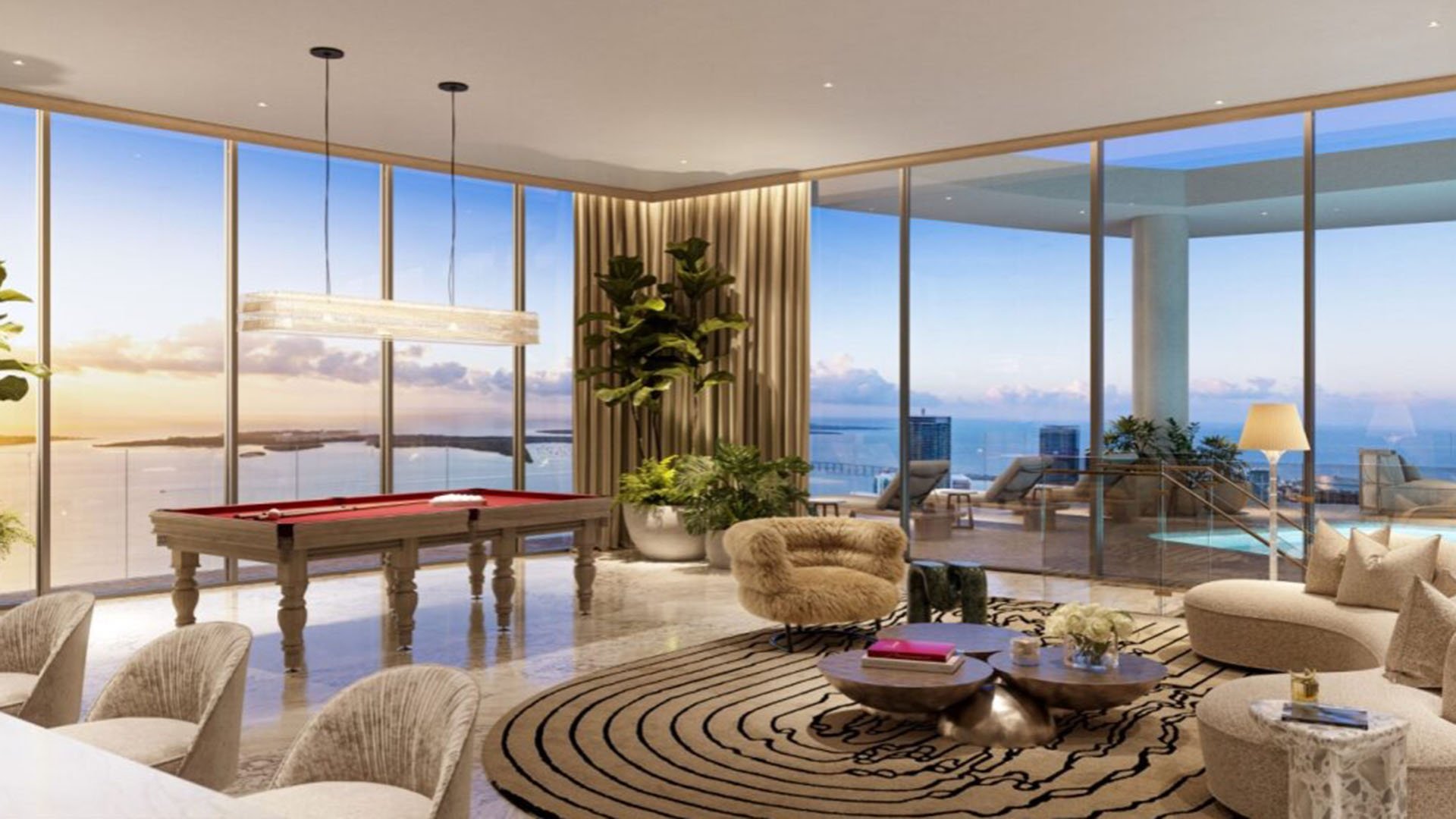
Bayfront terraces often deliver the most cinematic dining experience, especially when the exposure supports sunset views. The light can be warmer, the water calmer, and the skyline more layered. For many buyers, the bayfront shaded dining terrace is the sweet spot between resort atmosphere and urban energy.
The key is to assess how the dining zone relates to the view corridor. A terrace may have a magnificent panorama, but if the dining table must sit awkwardly in a corner to remain shaded, the experience loses force. Ideally, the primary table should occupy a natural position that gives guests both comfort and orientation toward the water.
Flexibility is especially important on bayfront terraces. The same space may host a quiet breakfast, a family lunch after the pool, or a formal dinner for visiting friends. Look for enough depth to separate dining from casual seating without making the arrangement feel fragmented. A well-planned bayfront terrace should not force a choice between conversation and view.
Buyers should also consider evening lighting. Sunset can be the main event, but after dusk the terrace needs a second life. Integrated, low-glare lighting around the dining area, service path, and threshold can turn a scenic platform into an outdoor room. When lighting is too bright, it competes with the view; when it is too dim, dining becomes impractical.
A city penthouse dining terrace offers a different kind of glamour. The attraction is not only the view, but the feeling of being suspended within the architecture of the city. In Brickell and other vertical neighborhoods, the terrace becomes an extension of an urban salon, with skyline, lights, and movement as the backdrop.
Here, acoustics are central. Traffic, mechanical systems, nearby rooftops, and neighboring entertainment spaces can all influence comfort. A terrace may photograph beautifully but feel less intimate if sound carries aggressively. Buyers should consider whether conversation can remain effortless at a full table.
Service flow is equally important. A city penthouse often supports more formal entertaining, so the path from kitchen to outdoor dining should be short, intuitive, and protected. Thresholds should feel generous enough for guests and staff to move without bottlenecks. If the terrace requires multiple turns, narrow passages, or stair transitions, the romance of outdoor dining can become operationally awkward.
City terraces also reward stronger night design. A waterview may be partial, framed, or distant, but the urban glow can be extraordinary when the lighting plan is disciplined. The best examples create a sense of enclosure without losing the skyline. Planters, ceiling planes, screens, and furniture scale can make an elevated terrace feel like a private room rather than an exposed platform.
When comparing residences, isolate the true dining zone. Can the terrace hold the table size you prefer with chairs pulled out and guests circulating behind them? Is there space for a console, bar cart, or service station? Does the table interrupt access to a lounge area, summer kitchen, or principal bedroom terrace door?
A common mistake is to admire total outdoor square footage without mapping the useful rectangle. Columns, curved edges, planters, mechanical areas, and narrow bands of balcony space can reduce practical dining capacity. A more compact but well-shaped terrace may outperform a larger one with awkward geometry.
Ceiling height and overhead coverage also influence mood. A shaded dining terrace should feel protective, not compressed. If the overhang is too low or the furniture is too bulky, the area can feel heavy. If the cover is too shallow, shade may disappear at the precise hour it is needed.
Resale value is important, but lifestyle fit should lead the decision. A buyer who entertains often may prioritize a terrace with a clear dining axis, wet bar adjacency, and evening privacy. A seasonal resident may care more about morning shade, low-maintenance materials, and easy transitions from interior living spaces. A family may value a layout where dining, lounging, and pool access remain visually connected.
The best shaded terrace feels inevitable. It does not require explanation. Guests understand where to sit, the host can serve comfortably, the view is present without overwhelming the table, and the shade supports the ritual rather than competing with it.
For MILLION readers, the decision is less about choosing ocean, bay, or city as a category. It is about choosing the terrace that turns climate, architecture, and personal rhythm into a daily luxury.
What should I compare first when evaluating shaded dining terraces? Begin with orientation and the hour you plan to dine outdoors most often. Shade that works at the wrong time has limited practical value.
Is an oceanfront terrace always better for dining? Not necessarily. Oceanfront settings can be exceptional, but wind, glare, and privacy should be studied carefully.
What makes a bayfront terrace strong for entertaining? A strong bayfront terrace usually combines sunset orientation, comfortable shade, flexible seating, and a natural dining position.
Why are city penthouse terraces different? City terraces depend heavily on acoustics, lighting, skyline composition, and efficient service flow from the kitchen.
How much terrace depth is ideal? The important measure is usable dining depth, including chair movement and circulation, rather than total outdoor square footage.
Should I prioritize permanent shade or flexible shade? Permanent architectural shade often feels more refined, while flexible elements can help fine-tune comfort across seasons.
How do I judge privacy on a terrace? Stand or sit where guests would dine and study sightlines from nearby buildings, amenity decks, and adjacent balconies.
Does outdoor lighting affect terrace value? Yes, because lighting determines whether the terrace works after sunset. Low-glare, integrated lighting is usually the most elegant.
Can a smaller terrace outperform a larger one? Yes. Shape, shade, circulation, and view orientation can make a smaller terrace more useful than a larger awkward one.
What is the most overlooked detail? Service flow is often underestimated. The path between kitchen, table, and interior entertaining areas should feel effortless.
For a confidential assessment and a building-by-building shortlist, connect with MILLION.
If branded residences are on your mind — as a home or as an allocation — we would be glad to share what we are seeing, privately.
Begin a quiet conversation